Kirjojen hintavertailu. Mukana 12 168 210 kirjaa ja 12 kauppaa.

Kirjailija

Christopher J. Devine

Kirjat ja teokset yhdessä paikassa: 8 kirjaa, julkaisuja vuosilta 2020-2024, suosituimpien joukossa News Media Coverage of the Vice-Presidential Selection Process. Vertaile teosten hintoja ja tarkista saatavuus suomalaisista kirjakaupoista.

8 kirjaa

Kirjojen julkaisuhaarukka 2020-2024.

News Media Coverage of the Vice-Presidential Selection Process

News Media Coverage of the Vice-Presidential Selection Process

Christopher J. Devine

Springer International Publishing AG
2024
nidottu
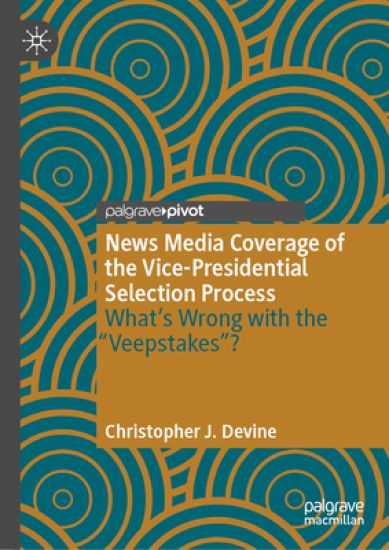
This book provides the first systematic, empirical analysis of the media’s approach to US vice-presidential selection (or the “veepstakes”). In their news coverage, Devine finds that media outlets typically treat vice-presidential selection as little more than a game—by focusing on how potential running mates might help to win the election, rather than how they might help the next president to govern. Based on an original content analysis of hundreds of veepstakes profiles from 2000–2020, this book quantifies the news media’s relative emphasis on various selection criteria, in general and across different electoral circumstances. The analysis suggests that journalists generally fail to serve the public interest by emphasizing electoral over governing considerations. However, Devine also points to positive examples of media coverage that help the public to evaluate potential running mates’ governing credentials, and suggests ways in which scholars, journalists, and citizens might encourage media outlets to provide more substantive, responsible coverage of the vice-presidential selection process in future elections.
Constitutional Law for Criminal Justice

Constitutional Law for Criminal Justice

Jacqueline R. Kanovitz; Jefferson L. Ingram; Christopher J. Devine

TAYLOR FRANCIS LTD
2024
nidottu
Constitutional Law for Criminal Justice, Sixteenth Edition, offers criminal justice professionals the training they need to recognize the constitutional principles that apply to their daily work. Jacqueline R. Kanovitz, Jefferson L. Ingram, and Christopher J. Devine provide a comprehensive, well-organized, and up-to-date analysis of constitutional issues that affect the U.S. justice system.Chapter 1 of Part I summarizes the organization and content of the Constitution, the Bill of Rights, and the Fourteenth Amendment. The next eight chapters cover the constitutional principles that regulate investigatory detentions, traffic stops, arrests, use of force, search and seizure, technologically assisted surveillance, the Wiretap Act, interrogations and confessions, self-incrimination, witness identification procedures, the right to counsel, procedural safeguards during criminal trials, First Amendment issues relevant to law enforcement, and capital punishment. The final chapter covers the constitutional rights of criminal justice professionals in the workplace, their protection under Title VII of the Civil Rights Act, and their accountability under 42 U.S.C. § 1983 for violating the constitutional rights of others. Part II contains abstracts of key judicial decisions exemplifying how the doctrines covered in earlier chapters are being applied by the courts. The combination of text and cases creates flexibility in structuring class time.This book makes complex concepts accessible to students in all levels of criminal justice education. The chapters begin with an outline and end with a summary. Key Terms and Concepts are defined in the Glossary. Tables, figures, and charts are used to synthesize and simplify information. The result is an incomparably clear, student-friendly textbook that has remained a leader in criminal justice education for more than 50 years.The accompanying Instructor and Student Resource website provides free digital materials designed to test student knowledge and save time when preparing lessons. Resources include:Student access to practical quizzes including multiple-choice and true-or-false questions, and case studies with interactive questions and answers to test and apply knowledgeA downloadable comprehensive study guide, glossary, and appendix including the text of the United States Constitution to enhance understanding of each chapter alongside studyStep-by-step Instructor Guides and premade lesson slides that correspond to the chapters in an editable format to saving valuable time on lesson preparationInstructor access to test-bank questions for further exam practicePassword-protected instructor resources available on the Instructor Resources Download Hub
Constitutional Law for Criminal Justice

Constitutional Law for Criminal Justice

Jacqueline R. Kanovitz; Jefferson L. Ingram; Christopher J. Devine

TAYLOR FRANCIS LTD
2024
sidottu
Constitutional Law for Criminal Justice, Sixteenth Edition, offers criminal justice professionals the training they need to recognize the constitutional principles that apply to their daily work. Jacqueline R. Kanovitz, Jefferson L. Ingram, and Christopher J. Devine provide a comprehensive, well-organized, and up-to-date analysis of constitutional issues that affect the U.S. justice system.Chapter 1 of Part I summarizes the organization and content of the Constitution, the Bill of Rights, and the Fourteenth Amendment. The next eight chapters cover the constitutional principles that regulate investigatory detentions, traffic stops, arrests, use of force, search and seizure, technologically assisted surveillance, the Wiretap Act, interrogations and confessions, self-incrimination, witness identification procedures, the right to counsel, procedural safeguards during criminal trials, First Amendment issues relevant to law enforcement, and capital punishment. The final chapter covers the constitutional rights of criminal justice professionals in the workplace, their protection under Title VII of the Civil Rights Act, and their accountability under 42 U.S.C. § 1983 for violating the constitutional rights of others. Part II contains abstracts of key judicial decisions exemplifying how the doctrines covered in earlier chapters are being applied by the courts. The combination of text and cases creates flexibility in structuring class time.This book makes complex concepts accessible to students in all levels of criminal justice education. The chapters begin with an outline and end with a summary. Key Terms and Concepts are defined in the Glossary. Tables, figures, and charts are used to synthesize and simplify information. The result is an incomparably clear, student-friendly textbook that has remained a leader in criminal justice education for more than 50 years.The accompanying Instructor and Student Resource website provides free digital materials designed to test student knowledge and save time when preparing lessons. Resources include:Student access to practical quizzes including multiple-choice and true-or-false questions, and case studies with interactive questions and answers to test and apply knowledgeA downloadable comprehensive study guide, glossary, and appendix including the text of the United States Constitution to enhance understanding of each chapter alongside studyStep-by-step Instructor Guides and premade lesson slides that correspond to the chapters in an editable format to saving valuable time on lesson preparationInstructor access to test-bank questions for further exam practicePassword-protected instructor resources available on the Instructor Resources Download Hub
I’m Here to Ask for Your Vote

I’m Here to Ask for Your Vote

Christopher J. Devine

Columbia University Press
2023
pokkari
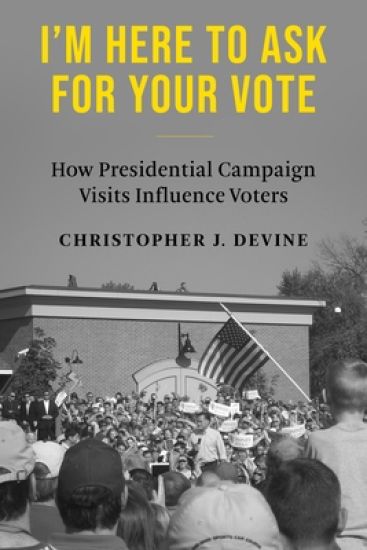
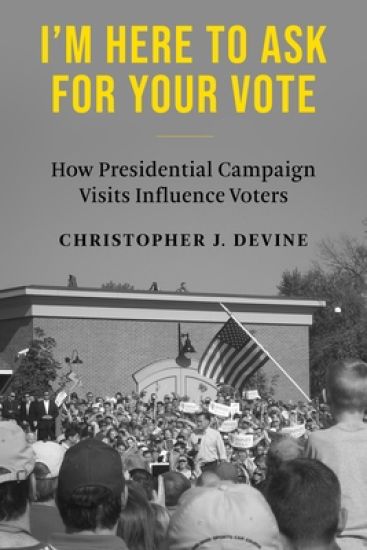
During presidential campaigns, candidates crisscross the country nonstop—visiting swing states, their home turf, and enemy territory. But do all those campaign visits make a difference when Election Day comes? If so, how and under what conditions? Do they mobilize the partisan faithful or persuade undecided voters? What do campaigns try to achieve through campaign visits—and when do they succeed?I’m Here to Ask for Your Vote is a comprehensive and compelling examination of the strategy and effectiveness of presidential campaign visits. Christopher J. Devine uses an original database of presidential and vice-presidential campaign visits from 2008 through 2020 to estimate the effects of visits on vote choice and turnout, both among individual voters and within counties. He finds that campaign visits do not usually influence voting behavior, but when they do, most often it is by persuading undecided voters—as was the case for John McCain in 2008 and even Donald Trump in 2020. Challenging the recent emphasis on candidates playing to their base, this book suggests that persuasion is still a viable campaign strategy, in which candidate visits may play a major role.I’m Here to Ask for Your Vote is an authoritative and engaging analysis designed for scholars, strategists, students, and other readers interested in understanding how campaign visits—and campaigns more broadly—shape presidential election outcomes.
I’m Here to Ask for Your Vote

I’m Here to Ask for Your Vote

Christopher J. Devine

Columbia University Press
2023
sidottu
During presidential campaigns, candidates crisscross the country nonstop—visiting swing states, their home turf, and enemy territory. But do all those campaign visits make a difference when Election Day comes? If so, how and under what conditions? Do they mobilize the partisan faithful or persuade undecided voters? What do campaigns try to achieve through campaign visits—and when do they succeed?I’m Here to Ask for Your Vote is a comprehensive and compelling examination of the strategy and effectiveness of presidential campaign visits. Christopher J. Devine uses an original database of presidential and vice-presidential campaign visits from 2008 through 2020 to estimate the effects of visits on vote choice and turnout, both among individual voters and within counties. He finds that campaign visits do not usually influence voting behavior, but when they do, most often it is by persuading undecided voters—as was the case for John McCain in 2008 and even Donald Trump in 2020. Challenging the recent emphasis on candidates playing to their base, this book suggests that persuasion is still a viable campaign strategy, in which candidate visits may play a major role.I’m Here to Ask for Your Vote is an authoritative and engaging analysis designed for scholars, strategists, students, and other readers interested in understanding how campaign visits—and campaigns more broadly—shape presidential election outcomes.
News Media Coverage of the Vice-Presidential Selection Process

News Media Coverage of the Vice-Presidential Selection Process

Christopher J. Devine

Springer International Publishing AG
2023
sidottu
This book provides the first systematic, empirical analysis of the media’s approach to US vice-presidential selection (or the “veepstakes”). In their news coverage, Devine finds that media outlets typically treat vice-presidential selection as little more than a game—by focusing on how potential running mates might help to win the election, rather than how they might help the next president to govern. Based on an original content analysis of hundreds of veepstakes profiles from 2000–2020, this book quantifies the news media’s relative emphasis on various selection criteria, in general and across different electoral circumstances. The analysis suggests that journalists generally fail to serve the public interest by emphasizing electoral over governing considerations. However, Devine also points to positive examples of media coverage that help the public to evaluate potential running mates’ governing credentials, and suggests ways in which scholars, journalists, and citizens might encourage media outlets to provide more substantive, responsible coverage of the vice-presidential selection process in future elections.
Do Running Mates Matter?

Do Running Mates Matter?

Christopher J. Devine; Kyle C. Kopko

University Press of Kansas
2020
sidottu
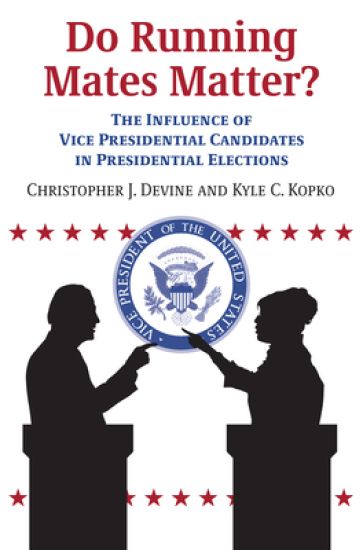
The American vice presidency, as the saying goes, 'is not worth a bucket of warm spit.' Yet vice presidential candidates, many people believe, can make all the difference in winning-or losing-a presidential election. Is that true, though? Did Sarah Palin, for example, sink John McCain's campaign in 2008? Did Joe Biden help Barack Obama win? Do running mates actually matter? In the first book to put this question to a rigorous test, Christopher J. Devine and Kyle C. Kopko draw upon an unprecedented range of empirical data to reveal how, and how much, running mates influence voting in presidential elections.Building on their previous work in The VP Advantage and evidence from over 200 statistical models spanning the 1952 to 2016 presidential elections, the authors analyze three pathways by which running mates might influence vote choice. First, of course, they test for direct effects, or whether evaluations of the running mate influence vote choice among voters in general. Next, they test for targeted effects-if, that is, running mates win votes among key subsets of voters who share their gender, religion, ideology, or geographic identity. Finally, the authors examine indirect effects-that is, whether running mates shape perceptions of the presidential candidate who selected them, which in turn influence vote choice. Here, in this last category, is where we see running mates most clearly influencing presidential voting-especially when it comes to their qualifications for holding office and taking over as president, if necessary. Picking a running mate from a key voting bloc probably won't make a difference, the authors conclude. But picking an experienced, well-qualified running mate will make the presidential candidate look better to voters---and win some votes.With its wealth of data and expert analysis, this finely crafted study, the most comprehensive to date, finally provides clear answers to one of the most enduring questions in presidential politics: can the running mate make a difference in this election?
Do Running Mates Matter?

Do Running Mates Matter?

Christopher J. Devine; Kyle C. Kopko

University Press of Kansas
2020
nidottu
The American vice presidency, as the saying goes, 'is not worth a bucket of warm spit.' Yet vice presidential candidates, many people believe, can make all the difference in winning-or losing-a presidential election. Is that true, though? Did Sarah Palin, for example, sink John McCain's campaign in 2008? Did Joe Biden help Barack Obama win? Do running mates actually matter? In the first book to put this question to a rigorous test, Christopher J. Devine and Kyle C. Kopko draw upon an unprecedented range of empirical data to reveal how, and how much, running mates influence voting in presidential elections.Building on their previous work in The VP Advantage and evidence from over 200 statistical models spanning the 1952 to 2016 presidential elections, the authors analyze three pathways by which running mates might influence vote choice. First, of course, they test for direct effects, or whether evaluations of the running mate influence vote choice among voters in general. Next, they test for targeted effects-if, that is, running mates win votes among key subsets of voters who share their gender, religion, ideology, or geographic identity. Finally, the authors examine indirect effects-that is, whether running mates shape perceptions of the presidential candidate who selected them, which in turn influence vote choice. Here, in this last category, is where we see running mates most clearly influencing presidential voting-especially when it comes to their qualifications for holding office and taking over as president, if necessary. Picking a running mate from a key voting bloc probably won't make a difference, the authors conclude. But picking an experienced, well-qualified running mate will make the presidential candidate look better to voters---and win some votes.With its wealth of data and expert analysis, this finely crafted study, the most comprehensive to date, finally provides clear answers to one of the most enduring questions in presidential politics: can the running mate make a difference in this election?