Kirjailija
Christopher Johnson
Kirjat ja teokset yhdessä paikassa: 36 kirjaa, julkaisuja vuosilta 1993-2026, suosituimpien joukossa No Reflection, Are You Who You Thought You Were?. Vertaile teosten hintoja ja tarkista saatavuus suomalaisista kirjakaupoista.
36 kirjaa
Kirjojen julkaisuhaarukka 1993-2026.
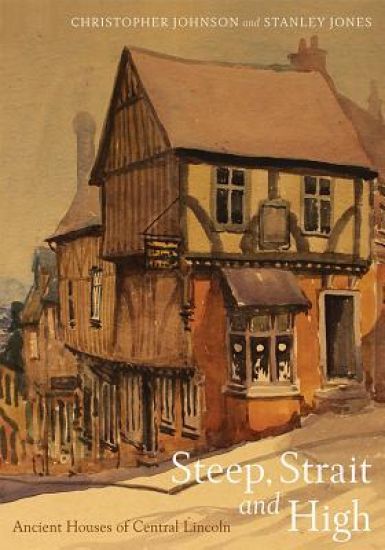
Architectural and historical surveys of many of the most important buildings in Lincoln. This volume illuminates the development of different building styles in timber, stone and brick over a period of 750 years, in one of the oldest areas of Lincoln. High quality and detailed architectural drawings are accompanied by documentary accounts which explain the historical context, and tell some of the fascinating and tragic stories of the people who lived and worked there from the mid-twelfth century until the First World War, including the medieval Jewish community. Steep Hill is already internationally regarded for the quality of its cultural environment as well as its picturesque architecture, and the Strait and the upper part of the long High Street have a wide range of different architectural styles in their buildings, of considerable interest. Steep, Strait and High forms the final volume in a series of architectural and historical surveys of the historic buildings of Lincoln, based on forty-five years of research, originally undertaken by the Survey of Ancient Houses, sponsored by the Lincoln Civic Trust, and now continued in the work of the Survey of Lincoln. Christopher Johnson, Chair of theSurvey of Lincoln, was an archivist and latterly service manager at Lincolnshire Archives prior to becoming Information and Records Manager at Lincolnshire County Council; Stanley Jones was a lecturer at Sheffield College of Art,and has been deeply involved in the Survey of Ancient Houses in Lincoln.
New Forms of Love: A collection of new verse. A simple sonnet structure is used as the base from which experimentation may flame.
Christopher Johnson
Createspace Independent Publishing Platform
2015
nidottu
The boy who stopped the world from crying
Christopher Johnson
Createspace Independent Publishing Platform
2013
nidottu
At the turn of the twentieth century, widespread clearcutting resulted in ecological ruin and devastating fires in America's Eastern forests. A coalition of citizens, organisations, and business and political leaders fought against this pattern, and in 1911, they achieved a landmark victory with the Weeks Act, which protected millions of acres of Eastern forests. "Forests of the People" tells the fascinating story of this vital legislation. While these protected forests survive today, many of the critical issues facing American forests in the twentieth century persist, and new threats have arisen - including oil shale drilling, invasive species, and development around national parks. In "Forests for the People", Christopher Johnson and David Govatski draw upon the lessons and victories of the past to examine the vital issues facing American forests today and illuminate paths to better forest management.
Welcome to the age of the incredible shrinking message. Your guide to this new landscape, Christopher Johnson reveals the once-secret knowledge of poets, copywriters, brand namers, political speechwriters, and other professional verbal miniaturists. Each chapter discusses one tool that helps short messages grab attention, communicate instantly, stick in the mind, and roll off the tongue. Piled high with examples from corporate slogans to movie titles to product names, Microstyle shows readers how to say the most with the least, while offering a lively romp through the historic transformation of mass media into the media of the personal.
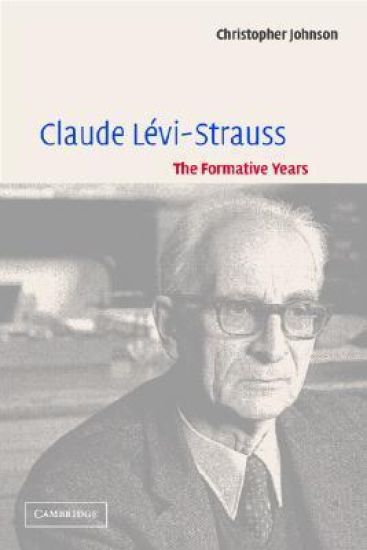
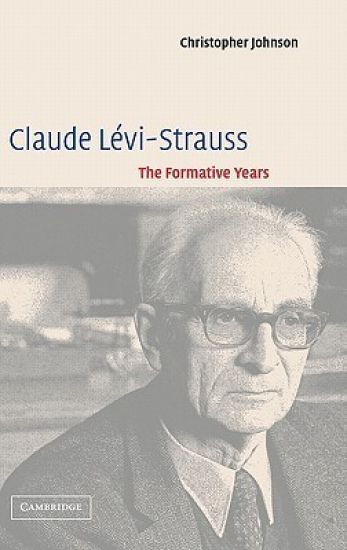
Lévi-Strauss is one of the major intellectual figures of the twentieth century. His theory of structuralism has been influential not only in anthropology, but across the entire field of the humanities and social sciences. This book looks at the formative period of his career, from the 1940s to the early 1960s, where he attempts to define both his own place in anthropology and the place of anthropology in the wider context of the human sciences in France. Through a close reading of key texts, Christopher Johnson provides an introduction to key aspects of Lévi-Strauss’ thought, at the same time posing more general questions concerning the construction of theory and the different modes of conceptualization that inform theory. Johnson looks at the ideological and autobiographical dimensions of Lévi-Strauss’ work, and demonstrates how the impact of structuralism as an intellectual movement has clearly been greater than the sum of its theoretical parts.
Lévi-Strauss is one of the major intellectual figures of the twentieth century. His theory of structuralism has been influential not only in anthropology, but across the entire field of the humanities and social sciences. This book looks at the formative period of his career, from the 1940s to the early 1960s, where he attempts to define both his own place in anthropology and the place of anthropology in the wider context of the human sciences in France. Through a close reading of key texts, Christopher Johnson provides an introduction to key aspects of Lévi-Strauss' thought, at the same time posing more general questions concerning the construction of theory and the different modes of conceptualization that inform theory. Johnson looks at the ideological and autobiographical dimensions of Lévi-Strauss' work, and demonstrates how the impact of structuralism as an intellectual movement has clearly been greater than the sum of its theoretical parts.
System and Writing in the Philosophy of Jacques Derrida
Christopher Johnson
Cambridge University Press
1993
pokkari
This is an important new critical analysis of Derrida’s theory of writing, based upon close readings of key texts ranging from his stringent critique of structuralist criticism to his sympathetic and dialogical analysis of Freud’s scriptural models. It reveals a dimension of Derrida’s thinking which, although consistently present in his works, has been neglected in favour of those ‘deconstructionist’ clichés used in much recent literary criticism. Christopher Johnson highlights the special character of Derrida’s philosophy that comes from the fertilising contact that Derrida has had with contemporary natural science and with systems theory. In addition, he shows how Derrida’s philosophy of system and writing rejoins an atomist and materialist tradition repressed by centuries of idealist metaphysics. This study casts new light on an exacting set of intellectual issues facing philosophy and critical theory today.