Kirjojen hintavertailu. Mukana 12 152 606 kirjaa ja 12 kauppaa.
Kirjailija
Christopher Kelly
Kirjat ja teokset yhdessä paikassa: 31 kirjaa, julkaisuja vuosilta 2003-2022, suosituimpien joukossa Landscape Architecture Frontiers 047. Vertaile teosten hintoja ja tarkista saatavuus suomalaisista kirjakaupoista.
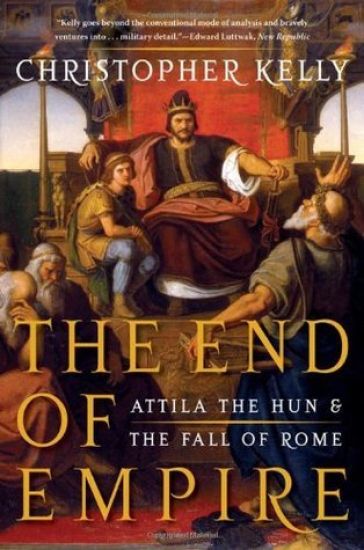
Conjuring up images of savagery and ferocity, Attila the Hun has become a byword for barbarianism. But, as the Romans of the fifth century knew, Attila did more than just terrorize villages on the edge of an empire. Drawing on original texts, this riveting narrative follows Attila and the Huns from the steppes of Kazakhstan to the opulent city of Constantinople and the Great Hungarian Plain, uncovering an unlikely marriage proposal, a long-standing relationship with a treacherously ambitious Roman general, and a thwarted Roman assassination plot. Attila the Hun and the Fall of Rome reframes the warrior king as a political strategist, capturing the story of how a small, but dedicated, opponent dealt a seemingly invincible empire defeats from which it would never recover.
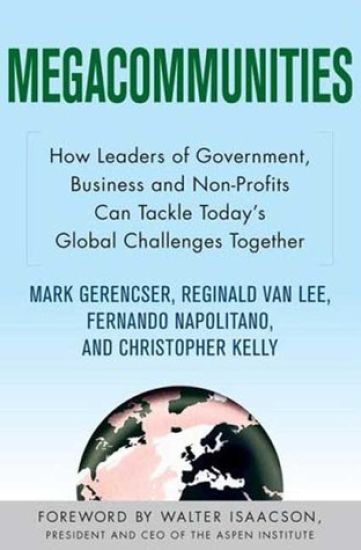
In this pioneering book, four senior managers of the global consultancy Booz Allen Hamilton show how leaders in business, government, and civil society can reach across national and sector divisions, forming collaborative 'megacommunities' that are directed toward a common goal. The authors share the success stories of megacommunities already at work today, looking at examples that range from tackling monopolies to urban revitalization to conservation efforts. They also explain to leaders how to achieve balance between organizational differences and be able to operate optimally. What Megacommunities around the globe can achieve: IMPROVING ENERGY AVAILABILITY AROUND THE WORLD In order to tackle one of today's major problems, local companies need to be working with national energy providers, residents, government bodies, NGOS, and universities HELPING COMMUNITIES GROW In changing neighborhoods like Harlem, the megacommunity includes local small businesses, community groups, global companies, and foundations like Bill Clinton's CONSERVING THE ENVIRONMENT In saving the world's rainforests, providers, distributors, sellers, and consumers of lumber team up with local communities, the World Wildlife Fund, and Goldman Sachs PREVENTING THE SPREAD OF HIV/AIDS In India, a megacommunity brings together both public, private, and civil-sector organizations, including PepsiCo, the Gates Foundation, U.S. healthcare experts, UN development programs, and local NGOs
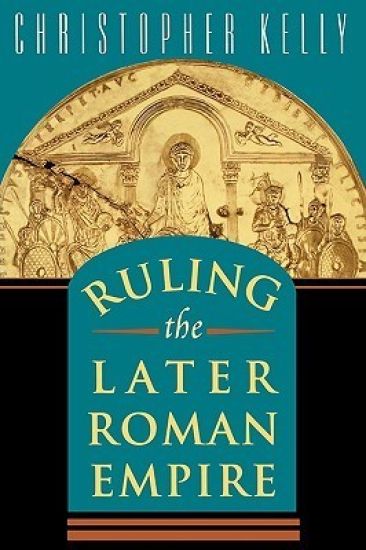
In this highly original work, Christopher Kelly paints a remarkable picture of running a superstate. He portrays a complex system of government openly regulated by networks of personal influence and the payment of money. Focusing on the Roman Empire after Constantine's conversion to Christianity, Kelly illuminates a period of increasingly centralized rule through an ever more extensive and intrusive bureaucracy.The book opens with a view of its times through the eyes of a high-ranking official in sixth-century Constantinople, John Lydus. His On the Magistracies of the Roman State, the only memoir of its kind to come down to us, gives an impassioned and revealing account of his career and the system in which he worked. Kelly draws a wealth of insight from this singular memoir and goes on to trace the operation of power and influence, exposing how these might be successfully deployed or skillfully diverted by those wishing either to avoid government regulation or to subvert it for their own ends. Ruling the Later Roman Empire presents a fascinating procession of officials, emperors, and local power brokers, winners and losers, mapping their experiences, their conflicting loyalties, their successes, and their failures. This important book elegantly recaptures the experience of both rulers and ruled under a sophisticated and highly successful system of government.
The Roman Empire was a remarkable achievement. It had a population of sixty million people spread across lands encircling the Mediterranean and stretching from drizzle-soaked northern England to the sun-baked banks of the Euphrates in Syria, and from the Rhine to the North African coast. It was, above all else, an empire of force - employing a mixture of violence, suppression, order, and tactical use of power to develop an astonishingly uniform culture. This Very Short Introduction covers the history of the Empire from Augustus (the first Emperor) to Marcus Aurelius, describing how the empire was formed, how it was run, its religions and its social structure. It examines how local cultures were "romanised" and how people in far away lands came to believe in the emperor as a god. The book also examines how the Roman Empire has been considered and depicted in more recent times, from the writings of Edward Gibbon, to the differing attitudes of the Victorians and recent Hollywood blockbuster films. ABOUT THE SERIES: The Very Short Introductions series from Oxford University Press contains hundreds of titles in almost every subject area. These pocket-sized books are the perfect way to get ahead in a new subject quickly. Our expert authors combine facts, analysis, perspective, new ideas, and enthusiasm to make interesting and challenging topics highly readable.
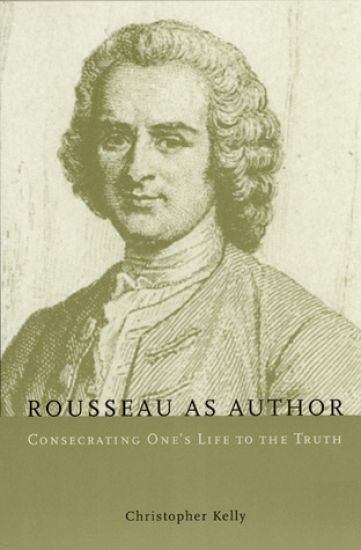
For Rousseau, "consecrating one's life to the truth" (his personal credo) meant publicly taking responsibility for what one published and only publishing what would be of public benefit. Christopher Kelly argues that this commitment is central to understanding the relationship between Rousseau's writings and his political philosophy. Unlike many other writers of his day, Rousseau refused to publish anonymously, even though he risked persecution for his writings. But Rousseau felt that authors must be self-restrained, as well as bold, and must carefully consider the potential political effects of what they might publish: sometimes seeking the good conflicts with writing the truth. Kelly shows how this understanding of public authorship played a crucial role in Rousseau's conception - and practice - of citizenship and political action. "Rousseau as Author" should be a ground-breaking book not just for Rousseau scholars, but for anyone studying Enlightenment ideas about authorship and responsibility.
For Rousseau, "consecrating one's life to the truth" (his personal credo) meant publicly taking responsibility for what one published and only publishing what would be of public benefit. Christopher Kelly argues that this commitment is central to understanding the relationship between Rousseau's writings and his political philosophy. Unlike many other writers of his day, Rousseau refused to publish anonymously, even though he risked persecution for his writings. But Rousseau felt that authors must be self-restrained, as well as bold, and must carefully consider the potential political effects of what they might publish: sometimes seeking the good conflicts with writing the truth. Kelly shows how this understanding of public authorship played a crucial role in Rousseau's conception - and practice - of citizenship and political action. "Rousseau as Author" should be a ground-breaking book not just for Rousseau scholars, but for anyone studying Enlightenment ideas about authorship and responsibility.