Kirjojen hintavertailu. Mukana 12 657 676 kirjaa ja 12 kauppaa.

Kirjailija

Christopher Kempf

Kirjat ja teokset yhdessä paikassa: 4 kirjaa, julkaisuja vuosilta 2017-2022, suosituimpien joukossa Late in the Empire of Men. Vertaile teosten hintoja ja tarkista saatavuus suomalaisista kirjakaupoista.

4 kirjaa

Kirjojen julkaisuhaarukka 2017-2022.

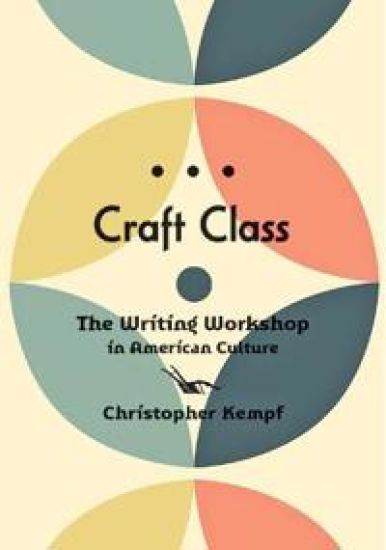
Craft Class

Craft Class

Christopher Kempf

Johns Hopkins University Press
2022
sidottu
The hidden history of the creative writing workshop and the socioeconomic consequences of the craft labor metaphor.In a letter dated September 1, 1912, drama professor George Pierce Baker recommended the term "workshop" for an experimental course in playwriting he had been planning with former students at Harvard and Radcliffe. This was the first time that term, now ubiquitous, was used in the context of creative writing pedagogy. Today, the MFA (master of fine arts) industry is a booming one, with more than 200 programs and thousands of residencies and conferences for aspiring writers nationwide. Almost all of these offerings operate on the workshop model.In Craft Class, Christopher Kempf argues that the primary institutional form of creative writing studies, the workshop, has remained invisible before our scholarly eyes. While Baker and others marshaled craft toward economic critique, craft pedagogies consolidated the authority of elite educational institutions as the MFA industry grew. Transcoding professional-managerial soft skills—linguistic facility, social and emotional discernment, symbolic fluency—in the language of manual labor, the workshop nostalgically invokes practices that the university itself has rendered obsolete. The workshop poem or short story thus shares discursive space with the craft IPA or hand-loomed Pottery Barn rug—a space in which one economic practice rewrites itself in the language of another, just as right-wing corporatism continuously rewrites itself in the language of populism.Delineating an arc that extends from Boston's fin de siècle Society of Arts and Crafts through 1930s proletarian workshops to the pedagogies of Black Mountain College and the postwar MFA, Craft Class reveals how present-day creative writing restructures transhistorical questions of labor, education, and aesthetic and economic production. With the rise of the workshop in American culture, Kempf shows, manual and mental labor have been welded together like steel plates. What fissures does that weld seal shut? And on whose behalf does the poet punch in?
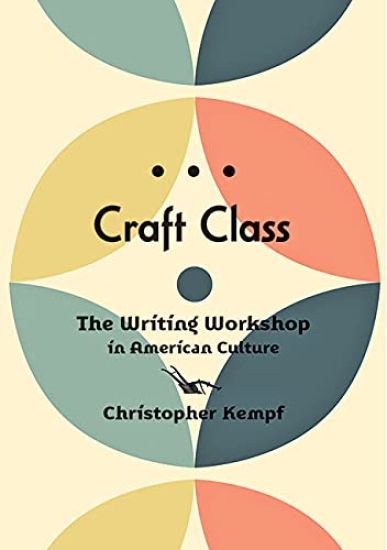
Craft Class

Craft Class

Christopher Kempf

Johns Hopkins University Press
2022
pokkari
The hidden history of the creative writing workshop and the socioeconomic consequences of the craft labor metaphor.In a letter dated September 1, 1912, drama professor George Pierce Baker recommended the term "workshop" for an experimental course in playwriting he had been planning with former students at Harvard and Radcliffe. This was the first time that term, now ubiquitous, was used in the context of creative writing pedagogy. Today, the MFA (master of fine arts) industry is a booming one, with more than 200 programs and thousands of residencies and conferences for aspiring writers nationwide. Almost all of these offerings operate on the workshop model.In Craft Class, Christopher Kempf argues that the primary institutional form of creative writing studies, the workshop, has remained invisible before our scholarly eyes. While Baker and others marshaled craft toward economic critique, craft pedagogies consolidated the authority of elite educational institutions as the MFA industry grew. Transcoding professional-managerial soft skills—linguistic facility, social and emotional discernment, symbolic fluency—in the language of manual labor, the workshop nostalgically invokes practices that the university itself has rendered obsolete. The workshop poem or short story thus shares discursive space with the craft IPA or hand-loomed Pottery Barn rug—a space in which one economic practice rewrites itself in the language of another, just as right-wing corporatism continuously rewrites itself in the language of populism.Delineating an arc that extends from Boston's fin de siècle Society of Arts and Crafts through 1930s proletarian workshops to the pedagogies of Black Mountain College and the postwar MFA, Craft Class reveals how present-day creative writing restructures transhistorical questions of labor, education, and aesthetic and economic production. With the rise of the workshop in American culture, Kempf shows, manual and mental labor have been welded together like steel plates. What fissures does that weld seal shut? And on whose behalf does the poet punch in?
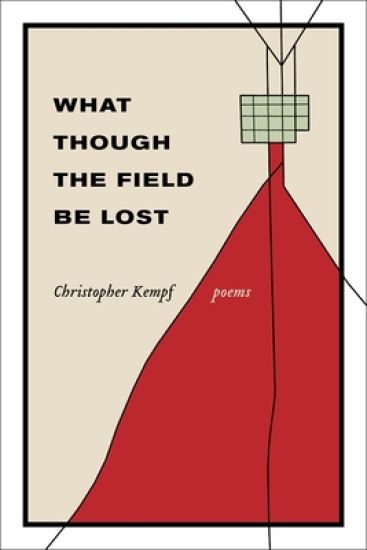
What Though the Field Be Lost

What Though the Field Be Lost

Christopher Kempf

Louisiana State University Press
2021
nidottu
Based on two years living and researching in Gettysburg, Pennsylvania, Christopher Kempf's What Though the Field Be Lost uses the battlefield there as setting and subject for poetry that engages ongoing conversations about race, regional identity, and the ethics of memory in the United States. With empathy and humility, Kempf reveals the overlapping planes of historical past and public present, integrating archival materials-language from monuments, soldiers' letters, and eyewitness accounts of the fighting-with reflections on present-day social and political unrest. Monument protests, police shootings, and heated battle reenactments expose the ambivalences and evasions involved in the consolidation of national (and nationalist) identity. As the book's title, an allusion to Milton's Satan, suggests, What Though the Field Be Lost shows that, though the Civil War may be over, the field at Gettysburg and all it stands for remain sharply contested.Shuttling between past and present, the personal and the public, What Though the Field Be Lost examines the many pasts that inhere, now and forever, in the places we occupy.
Late in the Empire of Men

Late in the Empire of Men

Christopher Kempf

Four Way Books
2017
nidottu
Winner of the Four Way Books Levis Prize in Poetry (2015) Late in the Empire of Men, Kempf s powerful debut collection, reads the author s coming-of-age in Ohio and California against the westward trajectory of American history, a trajectory he simultaneously situates in the larger context of empire both political and anthropocentric by looking back to Rome and Carthage and by glancing forward to a time when, as he writes in the poem Dominion, the idea of people/is over. Employing a baroque layering of image and allusion, patterned sonic texturing, and post-narrative self-consciousness, Kempf reveals how commonplace rhetorical practices football s valorization of a warrior ethos, for example work to conscript young American men, in particular, into patterns of thought and behavior constitutive of an imperialist state."