Kirjojen hintavertailu. Mukana 12 595 353 kirjaa ja 12 kauppaa.

Kirjailija

Christopher P. Wilson

Kirjat ja teokset yhdessä paikassa: 6 kirjaa, julkaisuja vuosilta 2000-2020, suosituimpien joukossa Cop Knowledge. Vertaile teosten hintoja ja tarkista saatavuus suomalaisista kirjakaupoista.

Mukana myös kirjoitusasut: Christopher P Wilson

6 kirjaa

Kirjojen julkaisuhaarukka 2000-2020.

Learning to Live with Crime

Learning to Live with Crime

Christopher P Wilson

Ohio State University Press
2020
pokkari
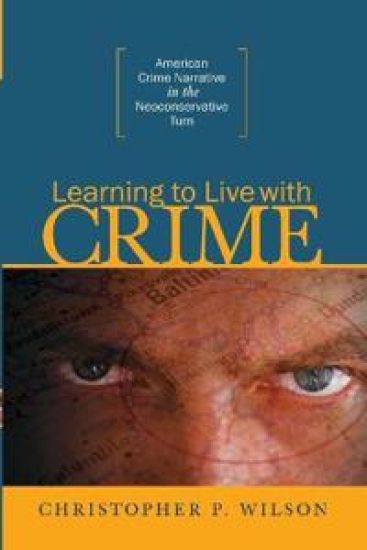
Since the mid-1960s, the war on crime has reshaped public attitudes about state authority, criminal behavior, and the responsibilities of citizenship. But how have American writers grappled with these changes? What happens when a journalist approaches the workings of organized crime not through its legendary Godfathers but through a workaday, low-level figure who informs on his mob? Why is it that interrogation scenes have become so central to prime-time police dramas of late? What is behind writers' recent fascination with "cold case" homicides, with private security, or with prisons? In Learning to Live with Crime, Christopher P. Wilson examines this war on crime and how it has made its way into cultural representation and public consciousness. Under the sway of neoconservative approaches to criminal justice and public safety, Americans have been urged to see crime as an inevitable risk of modern living and to accept ever more aggressive approaches to policing, private security, and punishment. The idea has been not simply to fight crime but to manage its risks; to inculcate personal vigilance in citizens; and to incorporate criminals' knowledge through informants and intelligence gathering. At its most scandalous, this study suggests, contemporary law enforcement has even come to mimic crime's own operations.

White Collar Fictions

White Collar Fictions

Christopher P. Wilson

University of Georgia Press
2010
pokkari
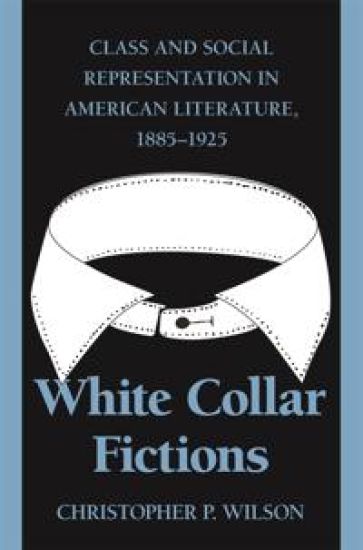
At the turn of the twentieth century, representations of “white collar” Americans—the “middle” social strata H. L. Mencken ridiculed as boobus Americanus—took on an ever-greater prominence within American literature and popular culture. Magazines like the Saturday Evening Post idolized businessmen and “average Americans,” while books like Winesburg, Ohio and Babbitt produced new portraits of “middle America.” In White Collar Fictions, Christopher P. Wilson explores how these white collar representations became part and parcel of a new social class coming to terms with its own power, authority, and contradictions. By investigating the material experience and social vocabularies within white collar life itself, Wilson uncovers the ways in which writers helped create a new cultural vocabulary—“Babbittry,” the “little people,” the “Average American”—that served to redefine power, authority, and commonality in American society. An innovative study that integrates literary analysis with social history, White Collar Fictions reexamines the life and work of Sherwood Anderson, Sinclair Lewis, and such nearly forgotten authors as O. Henry, Edna Ferber, Robert Grant, and Elmer Rice.
The Labor of Words

The Labor of Words

Christopher P. Wilson

University of Georgia Press
2010
pokkari
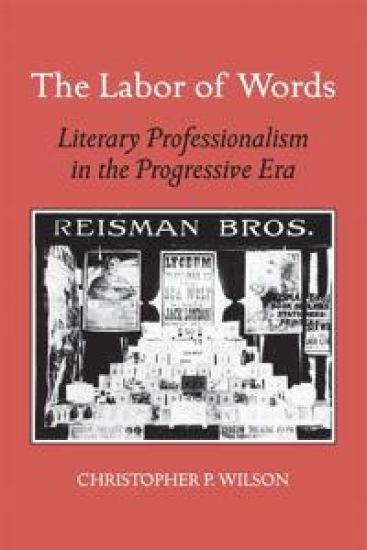
In the three decades after 1885, a virtual explosion in the nation’s print media—newspaper tabloids, inexpensive magazines, and best-selling books—vaulted the American writer to unprecedented heights of cultural and political influence. The Labor of Words traces the impact of this mass literary marketplace on Progressive era writers. Using the works and careers of Jack London, Upton Sinclair, David Graham Phillips, and Lincoln Steffens as case studies, Christopher P. Wilson measures the advantages and costs of the new professional literary role and captures the drama of this transformative epoch in American journalism and letters.
Cop Knowledge

Cop Knowledge

Christopher P. Wilson

University of Chicago Press
2000
nidottu
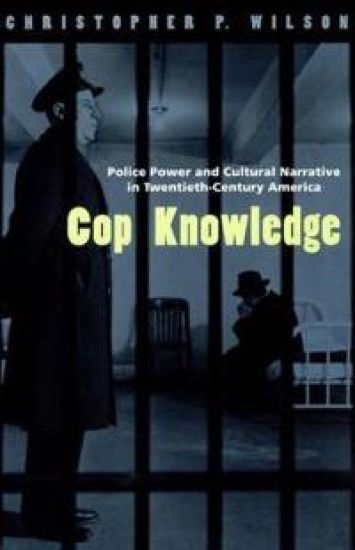
Whether they appear in mystery novels or headline news stories, on prime-time TV or the silver screen, few figures have maintained such an extraordinary hold on the American cultural imagination as modern police officers. Why are we so fascinated with the police and their power? What relation do these pervasive media representations bear to the actual history of modern policing? Christopher P. Wilson explores these questions by examining narratives of police power in crime news, popular fiction, and film, showing how they both reflect and influence the real strategies of law enforcement on the beat, in the squad room and in urban politics. He takes us from Theodore Roosevelt's year of reform with the 1890s NYPD to the rise of "community policing", from the classic "police procedural" film "The Naked City" to the best-selling novels of LAPD veteran Joseph Wambaugh. Wilson concludes by demonstrating the ways in which popular storytelling about police power has been intimately tied to the course of modern liberalism, and to the rising tide of neoconservatism today.
Cop Knowledge

Cop Knowledge

Christopher P. Wilson

University of Chicago Press
2000
sidottu
Whether they appear in mystery novels or headline news stories, on prime-time TV or the silver screen, few figures have maintained such an extraordinary hold on the American cultural imagination as modern police officers. Why are we so fascinated with the police and their power? What relation do these pervasive media representations bear to the actual history of modern policing? Christopher P. Wilson explores these questions by examining narratives of police power in crime news, popular fiction, and film, showing how they both reflect and influence the real strategies of law enforcement on the beat, in the squad room and in urban politics. He takes us from Theodore Roosevelt's year of reform with the 1890s NYPD to the rise of "community policing", from the classic "police procedural" film "The Naked City" to the best-selling novels of LAPD veteran Joseph Wambaugh. Wilson concludes by demonstrating the ways in which popular storytelling about police power has been intimately tied to the course of modern liberalism, and to the rising tide of neoconservatism today.