

Kirjailija
Christopher Palmer
Kirjat ja teokset yhdessä paikassa: 11 kirjaa, julkaisuja vuosilta 2003-2026, suosituimpien joukossa Las Orejas de Amor de Papá Conejo. Vertaile teosten hintoja ja tarkista saatavuus suomalaisista kirjakaupoista.
11 kirjaa
Kirjojen julkaisuhaarukka 2003-2026.


In a cozy burrow at the edge of a wildflower meadow, Benny Bunny grows up wrapped in love-especially from his devoted Daddy Bunny. From feeding and diaper changes to doctor visits and first days of school, Daddy Bunny is always there with comfort, care, and a special reminder: their bunny ears are shaped like hearts, a quiet symbol of love that's always present, even when they're apart. As Benny grows, he faces big changes-a new baby sister, moments of jealousy, and eventually Mommy and Daddy Bunny living in separate burrows. Through each transition, Daddy Bunny gently reassures Benny that love doesn't disappear when families change. It stretches, adapts, and remains strong. In time, Benny learns to carry that message forward, sharing the secret of the bunny ears of love with his little sister and helping her feel brave, too. Target Age Ages 3-7 Themes - Unconditional parental love - Emotional reassurance - Coping with change - Sibling adjustment - Divorce and family transitions - Father-child bonding - Security and attachment Why This Book Daddy's Bunny Ears of Love offers a tender, emotionally honest story that helps young children navigate fear, change, and uncertainty-especially in the context of evolving family structures. Centered on a nurturing, emotionally present father, the book highlights reassurance, consistency, and unconditional love as anchors during life's hardest moments. With warmth and repetition, the story normalizes feelings of sadness, fear, jealousy, and confusion, giving children language and imagery to understand that love remains steady-even when circumstances change.

In a cozy burrow at the edge of a wildflower meadow, Benny Bunny grows up wrapped in love-especially from his devoted Daddy Bunny. From feeding and diaper changes to doctor visits and first days of school, Daddy Bunny is always there with comfort, care, and a special reminder: their bunny ears are shaped like hearts, a quiet symbol of love that's always present, even when they're apart. As Benny grows, he faces big changes-a new baby sister, moments of jealousy, and eventually Mommy and Daddy Bunny living in separate burrows. Through each transition, Daddy Bunny gently reassures Benny that love doesn't disappear when families change. It stretches, adapts, and remains strong. In time, Benny learns to carry that message forward, sharing the secret of the bunny ears of love with his little sister and helping her feel brave, too. Target Age Ages 3-7 Themes - Unconditional parental love - Emotional reassurance - Coping with change - Sibling adjustment - Divorce and family transitions - Father-child bonding - Security and attachment Why This Book Daddy's Bunny Ears of Love offers a tender, emotionally honest story that helps young children navigate fear, change, and uncertainty-especially in the context of evolving family structures. Centered on a nurturing, emotionally present father, the book highlights reassurance, consistency, and unconditional love as anchors during life's hardest moments. With warmth and repetition, the story normalizes feelings of sadness, fear, jealousy, and confusion, giving children language and imagery to understand that love remains steady-even when circumstances change.

Apocalypse is traditional and familiar, and it is an actual threat; it is feared, desired, and banal. Apocalypse in Crisis discusses fictions from the 1940s to the present, examining shifts in the imagination of apocalypse from the postwar British disaster novels, through novels of the countercultural sixties, feminist interventions, and recent revisions and critiques. As empire fades, ideas of sexuality shift, and attitudes to nature and to the city change, so apocalyptic fictions change. The individual subject is asserted, immolated, transcended, abandoned; individual deaths are substituted for mass death; death is faked or erased. The subjects and survivors of catastrophe set about re-establishing civilization, or they abandon it, finding new ways of being and of dying; they respond to it when it comes from outside, as an invasion, or they are immersed in it, as it shifts from being an event to being a condition. They flee the city for the country, or accept that they must draw on the energies of the world city in order to survive. The book includes detailed discussion of novels by H. G. Wells, George M. Stewart, Nevil Shute, John Wyndham, Arthur C. Clarke, J. G. Ballard, Brian Aldiss, Doris Lessing, Angela Carter, Anna Kavan, Arno Schmidt, Anthony Burgess, Ursula K. Le Guin, Tom Perrotta, Douglas Coupland, Don DeLillo, China Miéville, Jeff VanderMeer, and Kim Stanley Robinson.

Apocalypse is traditional and familiar, and it is an actual threat; it is feared, desired, and banal. Apocalypse in Crisis discusses fictions from the 1940s to the present, examining shifts in the imagination of apocalypse from the postwar British disaster novels, through novels of the countercultural sixties, feminist interventions, and recent revisions and critiques. As empire fades, ideas of sexuality shift, and attitudes to nature and to the city change, so apocalyptic fictions change. The individual subject is asserted, immolated, transcended, abandoned; individual deaths are substituted for mass death; death is faked or erased. The subjects and survivors of catastrophe set about re-establishing civilization, or they abandon it, finding new ways of being and of dying; they respond to it when it comes from outside, as an invasion, or they are immersed in it, as it shifts from being an event to being a condition. They flee the city for the country, or accept that they must draw on the energies of the world city in order to survive. The book includes detailed discussion of novels by H. G. Wells, George M. Stewart, Nevil Shute, John Wyndham, Arthur C. Clarke, J. G. Ballard, Brian Aldiss, Doris Lessing, Angela Carter, Anna Kavan, Arno Schmidt, Anthony Burgess, Ursula K. Le Guin, Tom Perrotta, Douglas Coupland, Don DeLillo, China Miéville, Jeff VanderMeer, and Kim Stanley Robinson.
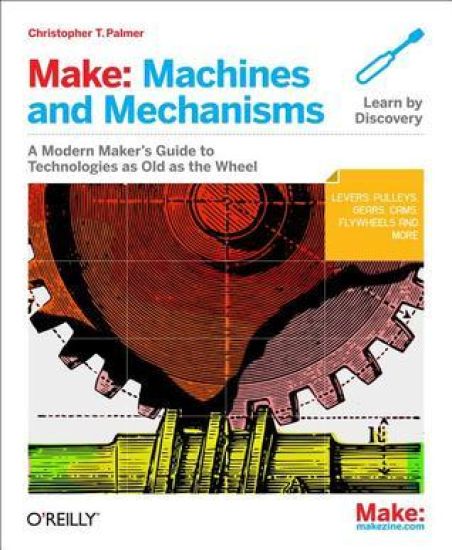
If you want a deeper understanding of machines and mechanisms, this is your guide. You'll learn what each part of a machine does and how to build it. Rather than blueprints, this fascinating hands-on book provides full-color illustrations and vivid examples of how to build and integrate various mechanisms. You'll learn how to develop your own "mental toolkit" that lets you envision and then build what you need, without wasting time and materials - and without the frustration. Make: Machines and Mechanisms is perfect for makers, artists, students, CNC hobbyists, robot builders, and non-technical people who love to take things apart, rebuild them, or design something from scratch. Topics include: Levers, axles, and shafts Bearings, wheels, and gears Cranks and rods, pulleys, and inclined planes Drive belts and cams Oscillating links, joints, and hinges Springs, weights, flywheels, and screws Ratchets and latches Rotational links, U-joints, flexible shafts

If you want a deeper understanding of machines and mechanisms, this is your guide. You'll learn what each part of a machine does and how to build it. Rather than blueprints, this fascinating hands-on book provides full-color illustrations and vivid examples of how to build and integrate various mechanisms. You'll learn how to develop your own "mental toolkit" that lets you envision and then build what you need, without wasting time and materials-and without the frustration. Make: Machines and Mechanisms is perfect for makers, artists, students, CNC hobbyists, robot builders, and non-technical people who love to take things apart, rebuild them, or design something from scratch. Topics include: Levers, axles, and shafts Bearings, wheels, and gears Cranks and rods, pulleys, and inclined planes Drive belts and cams Oscillating links, joints, and hinges Springs, weights, flywheels, and screws Ratchets and latches Rotational links, U-joints, flexible shafts
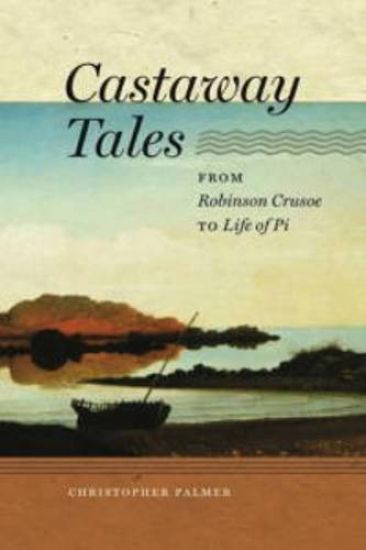
Ever since Robinson Crusoe washed ashore, the castaway story has survived and prospered, inspiring a multitude of writers of adventure fiction to imitate and adapt its mythic elements. In his brilliant critical study of this popular genre, Christopher Palmer traces the castaway tales’ history and changes through periods of settlement, violence, and reconciliation, and across genres and languages. Showing how subsequent authors have parodied or inverted the castaway tale, Palmer concentrates on the period following H. G. Wells’s The Island of Dr. Moreau. These much darker visions are seen in later novels including William Golding’s Lord of the Flies, J. G. Ballard’s Concrete Island, and Iain Banks’s The Wasp Factory. In these and other variations, the castaway becomes a cannibal, the castaway’s island is relocated to center of London, female castaways mock the traditional masculinity of the original Crusoe, or Friday ceases to be a biddable servant. By the mid-twentieth century, the castaway tale has plunged into violence and madness, only to see it return in young adult novels—such as Scott O’Dell’s Island of the Blue Dolphins and Terry Pratchett’s Nation—to the buoyancy and optimism of the original. The result is a fascinating series of revisions of violence and pessimism, but also reconciliation.

Once the sole possession of fans and buffs, the SF author Philip K Dick is now finding a much wider audience, as the success of the films Blade Runner and Minority Report shows. The kind of world he predicted in his funny and frightening novels and stories is coming closer to most of us: shifting realities, unstable relations, uncertain moralities. Philip K Dick: Exhilaration and Terror of the Postmodern examines a wide range of Dick’s work, including his short stories and posthumously published realist novels. Christopher Palmer analyses the puzzling and dazzling effects of Dick’s fiction, and argues that at its heart is a clash between exhilarating possibilities of transformation, and a frightening lack of ethical certainties. Dick’s work is seen as the inscription of his own historical predicament, the clash between humanism and postmodernism being played out in the complex forms of the fiction. The problem is never resolved, but Dick’s ways of imagining it become steadily more ingenious and challenging.