Kirjojen hintavertailu. Mukana 12 595 353 kirjaa ja 12 kauppaa.

Kirjailija

Christopher Pelling

Kirjat ja teokset yhdessä paikassa: 11 kirjaa, julkaisuja vuosilta 1999-2025, suosituimpien joukossa Herodotus and the Question Why. Vertaile teosten hintoja ja tarkista saatavuus suomalaisista kirjakaupoista.

11 kirjaa

Kirjojen julkaisuhaarukka 1999-2025.

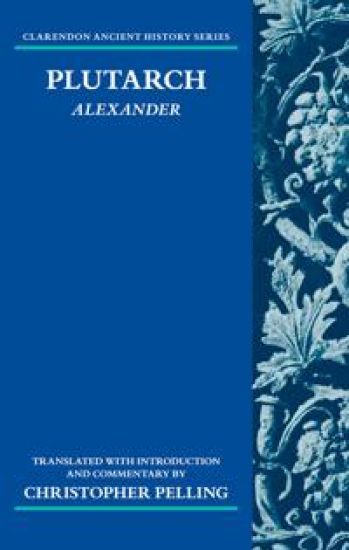
Plutarch: Alexander

Plutarch: Alexander

Christopher Pelling

Oxford University Press
2025
sidottu
Alexander the Great changed the world that he knew--but how he did it, and how much of his story is truth and how much is invented, is hard to tell. One of our most important sources for his achievements and personality is Plutarch's Life of Alexander, and this is the first detailed commentary in English for over fifty years, along with a thorough introduction and translation. It is a sister volume to the author's 2011 edition (also in the Clarendon Ancient History Series) of Plutarch's Caesar, the Life paired with Alexander in Plutarch's series of Parallel Lives. The life of Alexander the Great was clouded in legend from his own lifetime, not least because Alexander himself curated his image with such care. Disentangling the truth is not an easy task, especially because our surviving narratives, including Plutarch's, all date from centuries later under the Roman empire. Plutarch's Life of Alexander is especially important for Alexander's early years, but for his later achievements too it often supplements or corrects our other accounts; it is also a considerable literary achievement, as Plutarch produces a memorable picture of a brilliant soldier, full of spirit and ambition, gradually coarsened by his own successes and his suspicions of his friends until his final months at Babylon in a court full of superstition, terror, and dread. Plutarch had to navigate his way through an unusually vast stock of material to produce this portrait. This commentary discusses those literary techniques in detail as well as providing a thorough investigation of the historical issues that Plutarch's narrative raises.
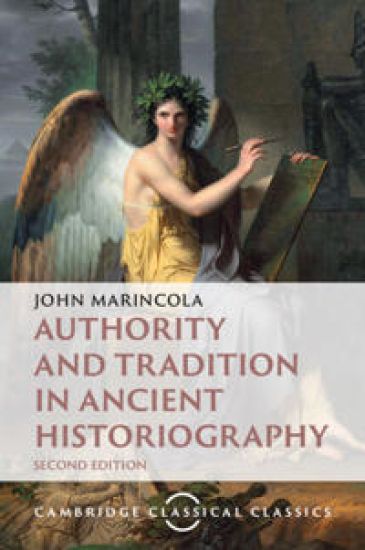
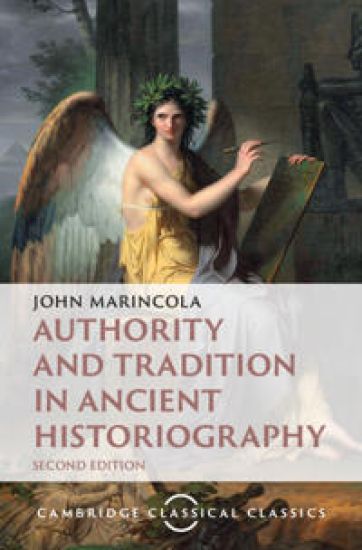
Authority and Tradition in Ancient Historiography

Authority and Tradition in Ancient Historiography

John Marincola; Christopher Pelling

Cambridge University Press
2025
pokkari
How did Greek and Roman historians claim the authority to narrate the deeds embraced by their histories? In this acclaimed and influential book, John Marincola examines all aspects of their self-presentation, surveying the entire field from Herodotus (fifth century BCE) to Ammianus Marcellinus (fourth century CE). He shows how each historian claimed veracity by imitating, modifying, and manipulating the traditions established by his predecessors. After discussing the tension between individuality and imitation, he analyses the recurring style used to establish the historian's authority: how he came to write history; the qualifications brought to the task; the inquiries and efforts he made in his research; and his claims to possess a reliable character. By showing how each historian used the tradition to claim and maintain his own authority, the book – now including a substantial new Introduction – helps us better understand the complex nature of ancient historiography.
Authority and Tradition in Ancient Historiography

Authority and Tradition in Ancient Historiography

John Marincola; Christopher Pelling

Cambridge University Press
2025
sidottu
How did Greek and Roman historians claim the authority to narrate the deeds embraced by their histories? In this acclaimed and influential book, John Marincola examines all aspects of their self-presentation, surveying the entire field from Herodotus (fifth century BCE) to Ammianus Marcellinus (fourth century CE). He shows how each historian claimed veracity by imitating, modifying, and manipulating the traditions established by his predecessors. After discussing the tension between individuality and imitation, he analyses the recurring style used to establish the historian's authority: how he came to write history; the qualifications brought to the task; the inquiries and efforts he made in his research; and his claims to possess a reliable character. By showing how each historian used the tradition to claim and maintain his own authority, the book – now including a substantial new Introduction – helps us better understand the complex nature of ancient historiography.
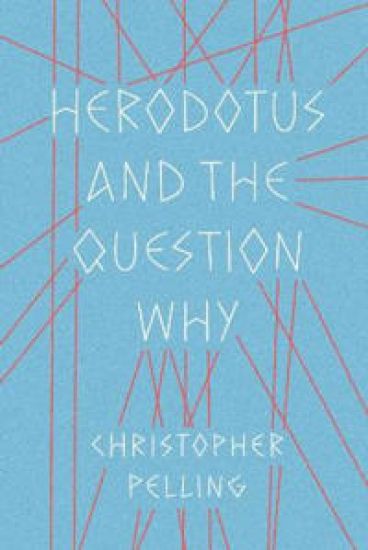
Herodotus and the Question Why

Herodotus and the Question Why

Christopher Pelling

University of Texas Press
2021
nidottu
In the 5th century BCE, Herodotus wrote the first known Western history to build on the tradition of Homeric storytelling, basing his text on empirical observations and arranging them systematically. Herodotus and the Question Why offers a comprehensive examination of the methods behind the Histories and the challenge of documenting human experiences, from the Persian Wars to cultural traditions.In lively, accessible prose, Christopher Pelling explores such elements as reconstructing the mentalities of storyteller and audience alike; distinctions between the human and the divine; and the evolving concepts of freedom, democracy, and individualism. Pelling traces the similarities between Herodotus's approach to physical phenomena (Why does the Nile flood?) and to landmark events (Why did Xerxes invade Greece? And why did the Greeks win?), delivering a fascinating look at the explanatory process itself. The cultural forces that shaped Herodotus's thinking left a lasting legacy for us, making Herodotus and the Question Why especially relevant as we try to record and narrate the stories of our time and to fully understand them.
Herodotus and the Question Why

Herodotus and the Question Why

Christopher Pelling

University of Texas Press
2019
sidottu
In the 5th century BCE, Herodotus wrote the first known Western history to build on the tradition of Homeric storytelling, basing his text on empirical observations and arranging them systematically. Herodotus and the Question Why offers a comprehensive examination of the methods behind the Histories and the challenge of documenting human experiences, from the Persian Wars to cultural traditions.In lively, accessible prose, Christopher Pelling explores such elements as reconstructing the mentalities of storyteller and audience alike; distinctions between the human and the divine; and the evolving concepts of freedom, democracy, and individualism. Pelling traces the similarities between Herodotus's approach to physical phenomena (Why does the Nile flood?) and to landmark events (Why did Xerxes invade Greece? And why did the Greeks win?), delivering a fascinating look at the explanatory process itself. The cultural forces that shaped Herodotus's thinking left a lasting legacy for us, making Herodotus and the Question Why especially relevant as we try to record and narrate the stories of our time and to fully understand them.
Twelve Voices from Greece and Rome

Twelve Voices from Greece and Rome

Christopher Pelling; Maria Wyke

Oxford University Press
2016
nidottu
Twelve Voices from Greece and Rome is a book for all readers who want to know more about the literature that underpins Western civilization. Chistopher Pelling and Maria Wyke provide a vibrant and distinctive introduction to twelve of the greatest authors from ancient Greece and Rome, writers whose voices still resonate strongly across the centuries: Homer, Sappho, Herodotus, Euripides, Thucydides, Plato, Caesar, Cicero, Virgil, Horace, Juvenal and Tacitus. To what vital ideas do these authors give voice? And why are we so often drawn to what they say even in modern times? Twelve Voices investigates these tantalizing questions, showing how these great figures from classical antiquity still address some of our most fundamental concerns in the world today (of war and courage, dictatorship and democracy, empire, immigration, city life, art, madness, irrationality, and religious commitment), and express some of our most personal sentiments (about family and friendship, desire and separation, grief and happiness). These twelve classical voices can sound both compellingly familiar and startlingly alien to the twenty-first century reader. Yet they remain suggestive and inspiring, despite being rooted in their own times and places, and have profoundly affected the lives of those prepared to listen to them right up to the present day.
Twelve Voices from Greece and Rome

Twelve Voices from Greece and Rome

Christopher Pelling; Maria Wyke

Oxford University Press
2014
sidottu
Twelve Voices from Greece and Rome is a book for all readers who want to know more about the literature that underpins Western civilization. Chistopher Pelling and Maria Wyke provide a vibrant and distinctive introduction to twelve of the greatest authors from ancient Greece and Rome, writers whose voices still resonate strongly across the centuries: Homer, Sappho, Herodotus, Euripides, Thucydides, Plato, Caesar, Cicero, Virgil, Horace, Juvenal and Tacitus. To what vital ideas do these authors give voice? And why are we so often drawn to what they say even in modern times? Twelve Voices investigates these tantalizing questions, showing how these great figures from classical antiquity still address some of our most fundamental concerns in the world today (of war and courage, dictatorship and democracy, empire, immigration, city life, art, madness, irrationality, and religious commitment), and express some of our most personal sentiments (about family and friendship, desire and separation, grief and happiness). These twelve classical voices can sound both compellingly familiar and startlingly alien to the twenty-first century reader. Yet they remain suggestive and inspiring, despite being rooted in their own times and places, and have profoundly affected the lives of those prepared to listen to them right up to the present day.
Plutarch Caesar

Plutarch Caesar

Christopher Pelling

Oxford University Press
2011
nidottu
Plutarch's Life of Caesar deals with the best known Roman of them all, Julius Caesar, and his vivid narrative covers most of the major events of the last generation of the Republic, as well as painting an insightful picture of this man who sacrificed everything for power. Pelling's volume gives a new translation of the Life together with a full introduction and running commentary on the events it describes. Culminating in the crossing of the Rubicon, Caesar's victory in the Civil War, and finally his assassination on the Ides of March, 44 BC, it goes on to trace the first stages of the new phase of civil war which followed and, in its turn, led to the establishment of the principate. The volume also discusses both the historical and the literary aspects of the Life, relating it both to the broader history of the Republic and to Plutarch's other works, especially the Life of Alexander with which it forms a pair of Parallel Lives. A separate section of the Introduction also discusses Shakespeare's adaptation of Plutarch in Julius Caesar, and points out ways in which the subtle remoulding of Plutarch's material can illuminate the techniques and interests of both authors.
Plutarch Caesar

Plutarch Caesar

Christopher Pelling

Oxford University Press
2011
sidottu
Plutarch's Life of Caesar deals with the best known Roman of them all, Julius Caesar, and his vivid narrative covers most of the major events of the last generation of the Republic, as well as painting an insightful picture of this man who sacrificed everything for power. Pelling's volume gives a new translation of the Life together with a full introduction and running commentary on the events it describes. Culminating in the crossing of the Rubicon, Caesar's victory in the Civil War, and finally his assassination on the Ides of March, 44 BC, it goes on to trace the first stages of the new phase of civil war which followed and, in its turn, led to the establishment of the principate. The volume also discusses both the historical and the literary aspects of the Life, relating it both to the broader history of the Republic and to Plutarch's other works, especially the Life of Alexander with which it forms a pair of Parallel Lives. A separate section of the Introduction also discusses Shakespeare's adaptation of Plutarch in Julius Caesar, and points out ways in which the subtle remoulding of Plutarch's material can illuminate the techniques and interests of both authors.
Plutarch and History

Plutarch and History

Christopher Pelling

Classical Press of Wales
2011
nidottu
Much of ancient history can only be written thanks to evidence supplied by Plutarch. The historical methods and qualities of this vital source were for long subjected to little systematic analysis. However, over the last two decades an authoritative and profoundly influential set of studies has appeared in the field, the work of Christopher Pelling. Dispersed until now in a wide range of international journals and symposia, these fifteen studies are here published in a single volume, revised by the author with up-to-date annotations and bibliography. Together with three new studies, they form an essential reference-work for serious students of classical Greece and Rome.
Literary Texts and the Greek Historian

Literary Texts and the Greek Historian

Christopher Pelling

Routledge
1999
nidottu
Our knowledge of Greek history rests largely on literary texts - not merely historians (especially Herodotus, Thucylides and Xenephon), but also tragedies, comedies, speeches, biographies and philosophical works. These texts are themselves among the most skilled and highly wrought productions of a brilliant rhetorical culture. How is the historian to use them? This book addresses this problem by taking a series of extended test-cases, and discussing how we should and should not try to exploit the texts. In some instances we can investigate 'what really happened', and the ways in which the texts manipulate, remould, or colour it according to their own rhetorical strategies; in others the most illuminating aspect may be those strategies themselves, and what they tell us about the culture - how it figured questions of sex and gender, politics, citizenship and the city, the law and the courts and how wars happen. Literary Texts and the Greek Historian concentrates on Athens in the second half of the fifth-century, when many of the principal genres came together, but includes some examples from earlier (Aeschylus ^Oresteia>) and later (including Aristotles poetics). Literary Texts and the Greek Historian examines the range of responses to these texts and suggests new ways in which literary criticism can illuminate the society from which these texts sprang.