Kirjojen hintavertailu. Mukana 12 571 569 kirjaa ja 12 kauppaa.

Kirjailija

Christopher Peterson

Kirjat ja teokset yhdessä paikassa: 11 kirjaa, julkaisuja vuosilta 2004-2020, suosituimpien joukossa Scratch the Itchy Teeth. Vertaile teosten hintoja ja tarkista saatavuus suomalaisista kirjakaupoista.

11 kirjaa

Kirjojen julkaisuhaarukka 2004-2020.

Scratch the Itchy Teeth

Scratch the Itchy Teeth

Christopher Peterson

Fomite
2020
pokkari
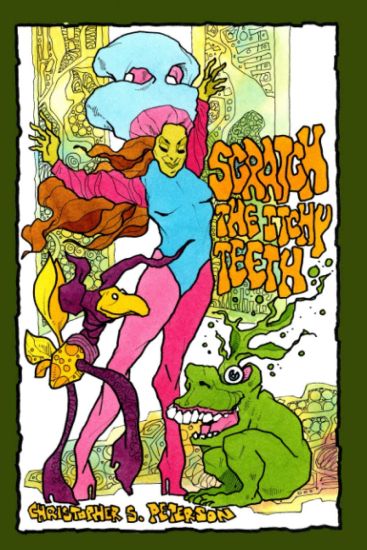
Scratch the Itchy Teeth is a becrazed carnival ride, the varietal voices of these mind-altering stories uttering fiery satanic verses. In addition, the book is a psychedelic bottle rocket with an insane genie inside, on a space-age acid-trip to a colorful Weirdsville. It is a literary hallucinogen capable of giving the reader insectean antennae.
Monkey Trouble

Monkey Trouble

Christopher Peterson

Fordham University Press
2017
pokkari
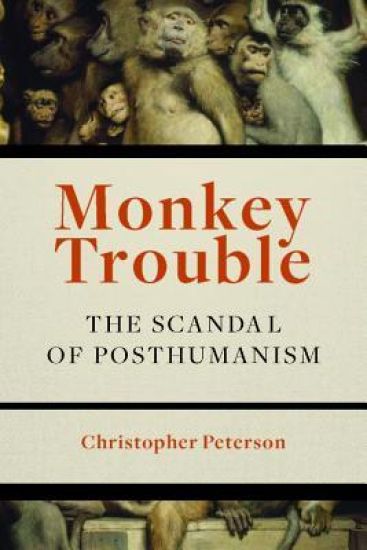
According to scholars of the nonhuman turn, the scandal of theory lies in its failure to decenter the human. The real scandal, however, is that we keep trying. The human has become a conspicuous blind spot for many theorists seeking to extend hospitality to animals, plants, and even insentient things. The displacement of the human is essential and urgent, yet given the humanist presumption that animals lack a number of allegedly unique human capacities, such as language, reason, and awareness of mortality, we ought to remain cautious about laying claim to any power to eradicate anthropocentrism altogether. Such a power risks becoming yet another self-accredited capacity thanks to which the human reaffirms its sovereignty through its supposed erasure. Monkey Trouble argues that the turn toward immanence in contemporary posthumanism promotes a cosmocracy that absolves one from engaging in those discriminatory decisions that condition hospitality as such. Engaging with recent theoretical developments in speculative realism and object-oriented ontology, as well as ape and parrot language studies, the book offers close readings of literary works by J.M. Coetzee, Charles Chesnutt, and Walt Whitman and films by Alfonso Cuarón and Lars von Trier. Anthropocentrism, Peterson argues, cannot be displaced through a logic of reversal that elevates immanence above transcendence, horizontality over verticality. This decentering must cultivate instead a human/nonhuman relationality that affirms the immanent transcendency spawned by our phantasmatic humanness.
Monkey Trouble

Monkey Trouble

Christopher Peterson

FORDHAM UNIVERSITY PRESS
2017
sidottu
According to scholars of the nonhuman turn, the scandal of theory lies in its failure to decenter the human. The real scandal, however, is that we keep trying. The human has become a conspicuous blind spot for many theorists seeking to extend hospitality to animals, plants, and even insentient things. The displacement of the human is essential and urgent, yet given the humanist presumption that animals lack a number of allegedly unique human capacities, such as language, reason, and awareness of mortality, we ought to remain cautious about laying claim to any power to eradicate anthropocentrism altogether. Such a power risks becoming yet another self-accredited capacity thanks to which the human reaffirms its sovereignty through its supposed erasure. Monkey Trouble argues that the turn toward immanence in contemporary posthumanism promotes a cosmocracy that absolves one from engaging in those discriminatory decisions that condition hospitality as such. Engaging with recent theoretical developments in speculative realism and object-oriented ontology, as well as ape and parrot language studies, the book offers close readings of literary works by J.M. Coetzee, Charles Chesnutt, and Walt Whitman and films by Alfonso Cuarón and Lars von Trier. Anthropocentrism, Peterson argues, cannot be displaced through a logic of reversal that elevates immanence above transcendence, horizontality over verticality. This decentering must cultivate instead a human/nonhuman relationality that affirms the immanent transcendency spawned by our phantasmatic humanness.
Pursuing the Good Life

Pursuing the Good Life

Christopher Peterson

Oxford University Press Inc
2013
sidottu
What makes life most worth living? And how can we pursue a good life? The new perspective of positive psychology takes these questions seriously and provides some useful answers. In Pursuing the Good Life, Christopher Peterson, one of the founders and leaders of positive psychology, compiles for the first time a collection of his reflections on what positive psychologists have learned about the good life, with meditations on how to make it part of everyday life. With the humor, warmth, and wisdom that have made him an award-winning teacher, Peterson explores a range of concerns on the groundswell of positive psychology and the lessons it embraces. What are the potential pitfalls and problems of this perspective? What are the roles played by positive emotions and happiness, by strengths of character, by optimism, and by good relationships with others? How can we pursue the good life in families, workplaces, schools, and sports, no matter who we are or where we live? There is no one correct form of the good life, but the masterful insight collected here offers the mindfulness to chase it.
Bestial Traces

Bestial Traces

Christopher Peterson

Fordham University Press
2012
sidottu
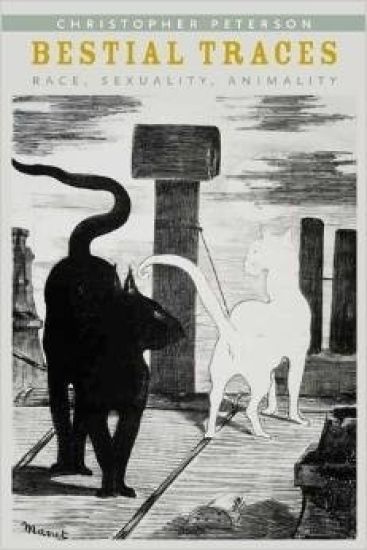
On February 18th, 2009, Sean Delonas published a controversial cartoon in the New York Post depicting two policemen shooting and killing a monkey with the caption: "They'll have to find someone else to write the next stimulus bill." On the adjoining page was a photo of President Barack Obama signing this very piece of legislation into law. Although public debate over the cartoon has centered entirely on its potentially racist overtones, we might ask from a Darwinian perspective how the stereotype of the black ape works to disavow a universally shared human apehood. How might we comprehend animality in non-pejorative terms? Whereas in contemporary race and sexuality studies the topic of animality emerges almost exclusively in order to index the dehumanization that makes discrimination possible, Bestial Traces argues that a more fundamental disavowal of human animality conditions the bestialization of racial and sexual minorities. Hence, when conservative politicians such as Senator Rick Santorum equate homosexuality with bestiality, they betray an anxious effort to deny the animality inherent in all sexuality. Focusing on literary texts by Edgar Allan Poe, Joel Chandler Harris, Richard Wright, Philip Roth, and J.M. Coetzee, together with philosophical texts by Derrida, Heidegger, Agamben, Freud, and Nietzsche, Peterson maintains that the representation of social and political others as animals can be mitigated but never finally abolished. Insofar as humanizing the abject only vacates the structurally empty and infinitely transposable position of "the animal," he argues that all forms of belonging—no matter how open and hospitable they are toward others—inevitably produce "beasts" whose exclusion contradicts our apparent desire for nonviolence. While one might argue that absolute political equality and inclusion remain desirable—even if ultimately unattainable—ideals, Bestial Traces shows that by maintaining such principles we exacerbate rather than ameliorate violence precisely by failing to confront how discrimination and exclusion condition all social relations.
Bestial Traces

Bestial Traces

Christopher Peterson

Fordham University Press
2012
pokkari
On February 18th, 2009, Sean Delonas published a controversial cartoon in the New York Post depicting two policemen shooting and killing a monkey with the caption: "They'll have to find someone else to write the next stimulus bill." On the adjoining page was a photo of President Barack Obama signing this very piece of legislation into law. Although public debate over the cartoon has centered entirely on its potentially racist overtones, we might ask from a Darwinian perspective how the stereotype of the black ape works to disavow a universally shared human apehood. How might we comprehend animality in non-pejorative terms? Whereas in contemporary race and sexuality studies the topic of animality emerges almost exclusively in order to index the dehumanization that makes discrimination possible, Bestial Traces argues that a more fundamental disavowal of human animality conditions the bestialization of racial and sexual minorities. Hence, when conservative politicians such as Senator Rick Santorum equate homosexuality with bestiality, they betray an anxious effort to deny the animality inherent in all sexuality. Focusing on literary texts by Edgar Allan Poe, Joel Chandler Harris, Richard Wright, Philip Roth, and J.M. Coetzee, together with philosophical texts by Derrida, Heidegger, Agamben, Freud, and Nietzsche, Peterson maintains that the representation of social and political others as animals can be mitigated but never finally abolished. Insofar as humanizing the abject only vacates the structurally empty and infinitely transposable position of "the animal," he argues that all forms of belonging—no matter how open and hospitable they are toward others—inevitably produce "beasts" whose exclusion contradicts our apparent desire for nonviolence. While one might argue that absolute political equality and inclusion remain desirable—even if ultimately unattainable—ideals, Bestial Traces shows that by maintaining such principles we exacerbate rather than ameliorate violence precisely by failing to confront how discrimination and exclusion condition all social relations.
Kindred Specters

Kindred Specters

Christopher Peterson

University of Minnesota Press
2007
nidottu
The refusal to recognize kinship relations among slaves, interracial couples, and same-sex partners is steeped in historical and cultural taboos. In Kindred Specters, Christopher Peterson explores the ways in which non-normative relationships bear the stigma of death that American culture vehemently denies. Probing Derrida’s notion of spectrality as well as Orlando Patterson’s concept of “social death,” Peterson examines how death, mourning, and violence condition all kinship relations. Through Charles Chesnutt’s The Conjure Woman, Peterson lays bare concepts of self-possession and dispossession, freedom and slavery. He reads Toni Morrison’s Beloved against theoretical and historical accounts of ethics, kinship, and violence in order to ask what it means to claim one’s kin as property. Using William Faulkner’s Absalom, Absalom! he considers the political and ethical implications of comparing bans on miscegenation and gay marriage. Tracing the connections between kinship and mourning in American literature and culture, Peterson demonstrates how racial, sexual, and gender minorities often resist their social death by adopting patterns of affinity that are strikingly similar to those that govern normative relationships. He concludes that socially dead “others” can be reanimated only if we avow the mortality and mourning that lie at the root of all kinship relations. Christopher Peterson is visiting assistant professor of literature at Claremont McKenna College.
A Primer in Positive Psychology

A Primer in Positive Psychology

Christopher Peterson

Oxford University Press Inc
2006
nidottu
Positive psychology is the scientific study of what goes right in life, from birth to death and at all stops in between. Every life has peaks and valleys; positive psychology does not deny this valleys, but holds that: what is good about life is as genuine as what is bad and, therefore, deserves equal attention from psychologists. A Primer in Positive Psychology is thoroughly grounded in scientific research and covers major topics of concern to the field: positive experiences such as pleasure and flow; positive traits such as character strengths, values, and talents; and the social institutions that enable these subjects as well as what recent research might contribute to this knowledge. Every chapter contains exercises that illustrate positive psychology, a glossary, suggestions of articles and books for further reading, and lists of films, websites, and popular songs that embody chapter themes. A comprehensive overview of positive psychology by one of the acknowledged leaders in the field, this textbook provides students with a thorough introduction to an important area of psychology.
Character Strengths and Virtues

Character Strengths and Virtues

Christopher Peterson; Martin Seligman

Oxford University Press Inc
2004
sidottu
This groundbreaking handbook of human strengths and virtues is the first progress report from a prestigious group of researchers in the Values in Action Classification Project, which has undertaken a systematic classification and measurement of universal strengths and virtues. This landmark work makes possible for the first time a science of human strengths that goes beyond armchair philosophy and political science. The handbook begins with the background of the VIA classification scheme and defines terms before describing in thorough detail the current state of knowledge with respect to each of the 24 character strengths in the classification. Addressing issues of assessment and measurement, practical applications, and directions for future research, this work will demand the attention of any psychologist who is interested in positive psychology and its relevance to clinical, personality, and social psychology.