

Kirjailija
Christopher Phillips
Kirjat ja teokset yhdessä paikassa: 32 kirjaa, julkaisuja vuosilta 1996-2025, suosituimpien joukossa Finnegan the Philosofish Fights Global Warming. Vertaile teosten hintoja ja tarkista saatavuus suomalaisista kirjakaupoista.
32 kirjaa
Kirjojen julkaisuhaarukka 1996-2025.

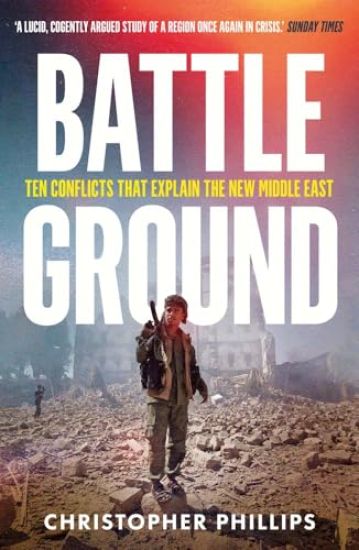
The essential guide to geopolitics in the modern Middle East The Middle East is in crisis. The shocking events of the war in Gaza have rocked the entire region. More than a decade ago, the Arab Spring had raised hopes of a new beginning but instead ushered in a series of civil wars, coups, and even harsher autocracies. Tensions were exacerbated by the meddling of outsiders, as regional and global powers sought to further their interests. The United States, for so long the dominant actor, had stepped back, leaving a vacuum behind it to be fought over. Christopher Phillips explores geopolitical rivalries in the region, and the major external powers vying for influence: Russia, China, the EU, and the US. Moving through ten key flashpoints, from Syria to Palestine, Phillips argues that the United States’ overextension after the Cold War, and retreat in the 2010s, has imbalanced the region. Today, the Middle East remains blighted by conflicts of unprecedented violence and a post-American scramble for power – leaving its fate in the balance.
The essential guide to geopolitics in the modern Middle East The Middle East is in crisis. The shocking events of the war in Gaza have rocked the entire region. More than a decade ago, the Arab Spring had raised hopes of a new beginning but instead ushered in a series of civil wars, coups, and even harsher autocracies. Tensions were exacerbated by the meddling of outsiders, as regional and global powers sought to further their interests. The United States, for so long the dominant actor, had stepped back, leaving a vacuum behind it to be fought over. Christopher Phillips explores geopolitical rivalries in the region, and the major external powers vying for influence: Russia, China, the EU, and the US. Moving through ten key flashpoints, from Syria to Palestine, Phillips argues that the United States’ overextension after the Cold War, and retreat in the 2010s, has imbalanced the region. Today, the Middle East remains blighted by conflicts of unprecedented violence and a post-American scramble for power – leaving its fate in the balance.

Finnegan the Philosofish Fights Global Warming
Christopher Phillips
Independently Published
2023
pokkari

Christopher Phillips dedicou sua vida a carregar a tocha de S crates e sua busca por "Conhece-te a ti mesmo". No entanto, ap s a morte de seu amado pai e mentor, o criador do crescente movimento global S crates Caf teve pouca escolha a n o ser confrontar a verdade inescap vel: que existem algumas coisas que n o podemos saber com certeza. Esta mistura comovente, perspicaz e, em ltima an lise, esperan osa e til de mem rias e explora o filos fica come a na pequena ilha vulc nica de N siros, na Gr cia, e se desenrola atrav s do espa o e do tempo enquanto o autor explora as conex es entre suas circunst ncias imediatas e a eterna sabedoria dos fil sofos populares. Neste livro pessoal e investigativo, o aclamado "fil sofo do povo" compartilha li es aprendidas de seus encontros ntimos e muitas vezes inesperados com seres humanos extraordinariamente perceptivos, vivos e falecidos h muito tempo, na forma de viajantes cansados e alguns dos maiores pensadores da hist ria, de Her clito ao Dr. Cornel West. queles que lutam para superar a desesperan a que pode resultar de uma perda grave, rev s ou trai o - o que o poeta Percy Bysshe Shelley chama de circunst ncias da vida "mais escuras que a morte ou a noite" -, o autor destaca, com rescri es filos ficas tanto oportunas quanto atemporais, como cultivar um "esp rito socr tico" que leva a um amor renovado, paci ncia e esperan a na outra extremidade do t nel.


Christopher Phillips um homem com uma miss o - reviver o amor do questionamento que S crates inspirou h muito tempo, na antiga Atenas. Phillips n o s apresenta os fundamentos do pensamento filos fico neste 'charmoso' guia, ele tamb m lembra o que o levou a iniciar o seu programa e recria algumas das sess es mais revigorantes, que v m a revelar, por vezes, surpreendentes reflex es, muitas vezes profundas sobre o significado do amor, amizade, trabalho, vida, e etc. Em s ntese - uma leitura divertida sobre a fa sca que acende quando as pessoas come am a fazer perguntas significativas.

Christopher Phillips has devoted his life to carrying the torch of Socrates and his quest to “Know Thyself.” Yet upon the death of his beloved father and mentor, the originator of the burgeoning global Socrates Café movement had little choice but to confront the inescapable truth: that there are some things we cannot know for sure. This moving, insightful and ultimately hopeful and helpful blend of memoir and philosophical exploration begins in Phillips’ native stomping grounds of the tiny volcanic island of Nisyros, Greece and unfurls through space and time as the author explores the connections between his immediate circumstances and the eternal wisdom of popular philosophers. –In this personal and probing book, the acclaimed ‘philosopher for the people’ shares lessons gleaned from his intimate and often unexpected encounters with uncommonly perceptive human beings both living and long deceased, in the form of weary travelers and some of history’s greatest thinkers, from Heraclitus to Dr. Cornel West. Along the way, he charts a pathway for sculpting what Shakespeare describes as a “soul of goodness,” which meshes with Plato’s paradigm-shattering conception of the “healthiness of soul.” For those struggling to overcome the hopelessness that can result from grievous loss, setback, or betrayal – what Phillips’ touchstone Percy Blythe Shelley calls life circumstances “darker than death or night” – the author spotlights, with philosophical prescriptions both timely and timeless, how to cultivate a ‘Socratic spirit’ that leads to renewed love, forbearance, and hope at the other end of the tunnel.
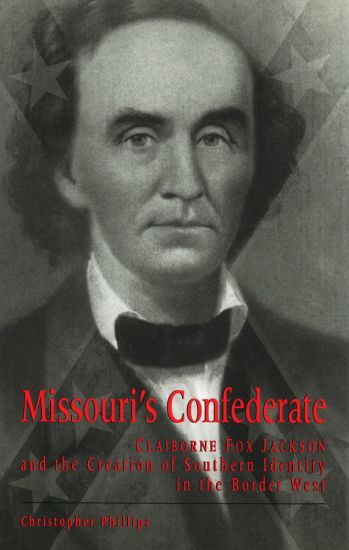
Claiborne Fox Jackson (1806-1862) remains one of Missouri's most controversial historical figures. Elected Missouri's governor in 1860 after serving as a state legislator and Democratic party chief, Jackson was the force behind a movement for the neutral state's secession before a federal sortie exiled him from office. Although Jackson's administration was replaced by a temporary government that maintained allegiance to the Union, he led a rump assembly that drafted an ordinance of secession in October 1861 and spearheaded its acceptance by the Confederate Congress. Despite the fact that the majority of the state's populace refused to recognize the act, the Confederacy named Missouri its twelfth state the following month. A year later Jackson died in exile in Arkansas, an apparent footnote to the war that engulfed his region and that consumed him.In this first full-length study of Claiborne Fox Jackson, Christopher Phillips offers much more than a traditional biography. His extensive analysis of Jackson's rise to power through the tangle that was Missouri's antebellum politics and of Jackson's complex actions in pursuit of his state's secession complete the deeper and broader story of regional identity--one that began with a growing defense of the institution of slavery and which crystallized during and after the bitter, internecine struggle in the neutral border state during the American Civil War. Placing slavery within the realm of western democratic expansion rather than of plantation agriculture in border slave states such as Missouri, Philips argues that southern identity in the region was not born, but created. While most rural Missourians were proslavery, their "southernization" transcended such boundaries, with southern identity becoming a means by which residents sought to reestablish local jurisdiction in defiance of federal authority during and after the war. This identification, intrinsically political and thus ideological, centered—and still centers—upon the events surrounding the Civil War, whether in Missouri or elsewhere. By positioning personal and political struggles and triumphs within Missourians' shifting identity and the redefinition of their collective memory, Phillips reveals the complex process by which these once Missouri westerners became and remain Missouri southerners.Missouri's Confederate not only provides a fascinating depiction of Jackson and his world but also offers the most complete scholarly analysis of Missouri's maturing antebellum identity. Anyone with an interest in the Civil War, the American West, or the American South will find this important new biography a powerful contribution to our understanding of nineteenth-century America and the origins—as well as the legacy—of the Civil War.

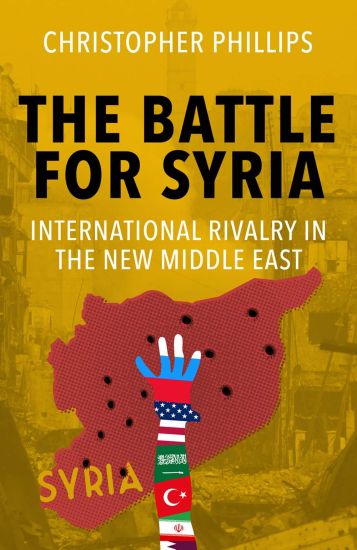
An unprecedented analysis of the crucial but underexplored roles the United States and other nations have played in shaping Syria’s ongoing civil war“One of the best informed and non-partisan accounts of the Syrian tragedy yet published.”—Patrick Cockburn, Independent Syria’s brutal, long-lasting civil war is widely viewed as a domestic contest that began in 2011 and only later drew foreign nations into the fray. But in this book Christopher Phillips shows the crucial roles that were played by the United States, Russia, Iran, Saudi Arabia, Turkey, and Qatar in Syria’s war right from the start. Phillips untangles the international influences on the tragic conflict and illuminates the West’s strategy against ISIS, the decline of U.S. power in the region, and much more. Originally published in 2016, the book has been updated with two new chapters.
The war of 1914-1918 was the first great generalconflict to be fought between highly industrial societies able to manufactureand transport immense quantities of goods over land and sea. Yet the armies ofthe First World War were too vast in scale, their movements too complex, andthe infrastructure upon which they depended too specialised to be operated byprofessional soldiers alone. In Civilian Expertise at War, Christopher Phillipsexamines the relationship between industrial society and industrial warfarethrough the lens of Britain's transport experts. He analyses the multipleconnections between the army, the government, and the senior executives of someof pre-war Britain's largest industrial enterprises to illustrate the Britisharmy's evolving understanding both of industrial warfare's particular characterand of the role to be played by non-military experts in the prosecution of sucha conflict.This book reveals that Britain's transport experts were akey component of Britain's conduct of the First World War. It demonstrates thata pre-existing professional relationship between the army, government, andprivate enterprise existed before 1914, and that these bonds were strengthenedby the outbreak of war. It charts the range of wartime roles into whichBritain's transport experts were thrust in the opening years of the conflict,as both military and political leaders grasped with the challenges before them.It details the application of recognisably civilian technologies and methods tothe prosecution of war and documents how - in the conflict's principal theatre,the western front - the freedom of action for Britain's transport experts wasconstrained by the political and military requirements of coalitionwarfare.Christopher Phillips is a lecturer in international security in the Department of International Politics at AberystwythUniversity.
The war of 1914-1918 was the first great generalconflict to be fought between highly industrial societies able to manufactureand transport immense quantities of goods over land and sea. Yet the armies ofthe First World War were too vast in scale, their movements too complex, andthe infrastructure upon which they depended too specialised to be operated byprofessional soldiers alone. In Civilian Expertise at War, Christopher Phillipsexamines the relationship between industrial society and industrial warfarethrough the lens of Britain's transport experts. He analyses the multipleconnections between the army, the government, and the senior executives of someof pre-war Britain's largest industrial enterprises to illustrate the Britisharmy's evolving understanding both of industrial warfare's particular characterand of the role to be played by non-military experts in the prosecution of sucha conflict.This book reveals that Britain's transport experts were akey component of Britain's conduct of the First World War. It demonstrates thata pre-existing professional relationship between the army, government, andprivate enterprise existed before 1914, and that these bonds were strengthenedby the outbreak of war. It charts the range of wartime roles into whichBritain's transport experts were thrust in the opening years of the conflict,as both military and political leaders grasped with the challenges before them.It details the application of recognisably civilian technologies and methods tothe prosecution of war and documents how - in the conflict's principal theatre,the western front - the freedom of action for Britain's transport experts wasconstrained by the political and military requirements of coalitionwarfare.Christopher Phillips is a lecturer in international security in the Department of International Politics at AberystwythUniversity.

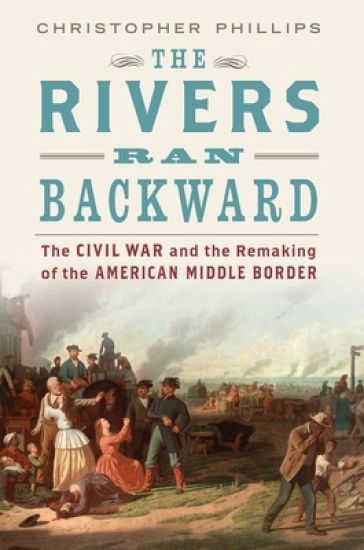
The Rivers Ran Backward: The Civil War and the Remaking of the American Middle Border
Christopher Phillips
Oxford University Press
2019
nidottu
Most Americans imagine the Civil War in terms of clear and defined boundaries of freedom and slavery: a straightforward division between the slave states of Kentucky and Missouri and the free states of Illinois, Indiana, Ohio, and Kansas. However, residents of these western border states, Abraham Lincoln's home region, had far more ambiguous identities-and contested political loyalties-than we commonly assume. In The Rivers Ran Backward, Christopher Phillips sheds light on the fluid political cultures of the "Middle Border" states during the Civil War era. Far from forming a fixed and static boundary between the North and South, the border states experienced fierce internal conflicts over their political and social loyalties. White supremacy and widespread support for the existence of slavery pervaded the "free" states of Ohio, Indiana, and Illinois, which had much closer economic and cultural ties to the South, while those in Kentucky and Missouri held little identification with the South except over slavery. Debates raged at every level, from the individual to the state, in parlors, churches, schools, and public meeting places, among families, neighbors, and friends. Ultimately, the pervasive violence of the Civil War and the cultural politics that raged in its aftermath proved to be the strongest determining factor in shaping these states' regional identities, leaving an indelible imprint on the way in which Americans think of themselves and others in the nation. The Rivers Ran Backward reveals the complex history of the western border states as they struggled with questions of nationalism, racial politics, secession, neutrality, loyalty, and even place-as the Civil War tore the nation, and themselves, apart. In this major work, Phillips shows that the Civil War was more than a conflict pitting the North against the South, but one within the West that permanently reshaped American regions.

Whether through government propaganda or popular transnational satellite television channels, Arab citizens encounter a discourse that reinforces a sense of belonging to their own state and a broader Arab world on a daily basis. Looking through the lens of nationalism theory, this book examines how and why Arab identity continues to be reproduced in today’s Middle East, and how that Arab identity interacts with strengthening ties to religion and the state.Drawing on case studies of two ideologically different Arab regimes, Syria and Jordan, Christopher Phillips explores both the implications this everyday Arab identity will have on western policy towards the Middle East and its real life impact on international relations. Offering an original perspective on this topical issue, this book will be of interest to academics and practitioners working on the Arab world and political affairs, as well as students of International Relations, Political Science and the Middle East, notably Syria and Jordan, and policymakers in the region.
Most Americans believe that the Ohio River was a clearly defined and static demographic and political boundary between North and South, an extension of the Mason-Dixon Line. Once settled, the new states west of the Appalachians -- the slave states of Kentucky and Missouri and of the free states of Illinois, Indiana, Ohio, and Kansas -- formed a fixed boundary between freedom and slavery, extending the border that inevitably produced the war. None of this is true, except perhaps the outcome of war. But the centrality of the Civil War and its outcome in the making of these tropes is undeniable. Historian Christopher Phillips contests the assumption that regional identities throughout the "Middle Border" states were stable in the era of the Civil War. States such as Missouri and Kentucky tended to identify as more western than southern during the first half of the nineteenth century. Conversely, much of the population of the lower Midwestern states of Ohio, Illinois, and Indiana had stronger cultural, economic, and political ties to slave states than to New England or the Middle Atlantic. But across the region the Civil War left an indelible imprint on the way in which residents thought of themselves and other Americans, proving as much a shaper as a product of regional identities. A sweeping argument employing a strong narrative, telling vignettes, and the voices of regional and national figures, this book makes a major contribution to Civil War history and to American history on a broader scale.