Kirjojen hintavertailu. Mukana 12 595 353 kirjaa ja 12 kauppaa.

Kirjailija

Christopher Pierson

Kirjat ja teokset yhdessä paikassa: 15 kirjaa, julkaisuja vuosilta 1995-2021, suosituimpien joukossa Samtaler med Anthony Giddens. Vertaile teosten hintoja ja tarkista saatavuus suomalaisista kirjakaupoista.

15 kirjaa

Kirjojen julkaisuhaarukka 1995-2021.

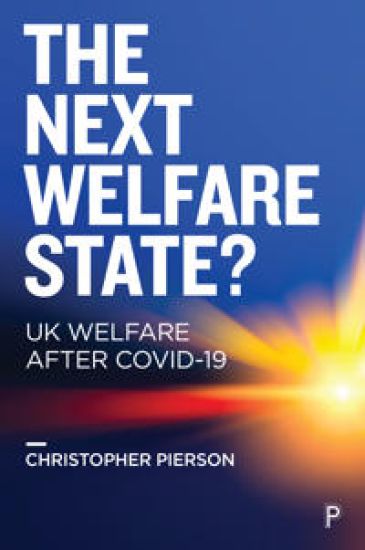
The Next Welfare State?

The Next Welfare State?

Christopher Pierson

Policy Press
2021
sidottu
COVID-19 has transformed the British welfare state. The government has created millions of new beneficiaries, spent tens of billions of pounds it doesn’t have and created a mountain of public debt. And yet, when the crisis has passed, we will be left with all the old problems of welfare and well-being which we have systematically failed to address over the past 50 years. In this book, Christopher Pierson argues that we need to think quite differently about how we can ensure our collective well-being in the future. To do this, he looks backwards to the welfare state’s origins and development as well as forwards, unearthing some surprising solutions in unexpected places.
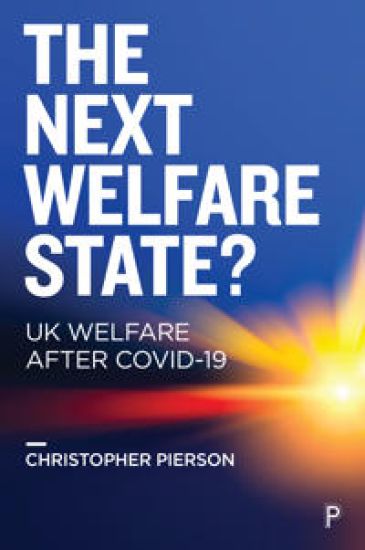
The Next Welfare State?

The Next Welfare State?

Christopher Pierson

Policy Press
2021
nidottu
COVID-19 has transformed the British welfare state. The government has created millions of new beneficiaries, spent tens of billions of pounds it doesn’t have and created a mountain of public debt. And yet, when the crisis has passed, we will be left with all the old problems of welfare and well-being which we have systematically failed to address over the past 50 years. In this book, Christopher Pierson argues that we need to think quite differently about how we can ensure our collective well-being in the future. To do this, he looks backwards to the welfare state’s origins and development as well as forwards, unearthing some surprising solutions in unexpected places.
Just Property

Just Property

Christopher Pierson

Oxford University Press
2020
sidottu
This third and concluding volume of Just Property brings critical accounts of property right up to the present. The book is made up of five pairs of chapters located in five major ideological traditions of modernity: liberalism, libertarianism, social democracy, conservatism, and feminism. As before, the focus is on particular thinkers and their daring, puzzling and sometimes outrageous views. The concluding chapter returns to the project's opening questions about property and inequality and about property under the imperative of growth to limits. If we are to confront the enormous challenges that loom in front of us, we have, above all else, to think again, and quite radically, about the place of property in our collective lives.
Samtaler med Anthony Giddens

Samtaler med Anthony Giddens

Anthony Giddens; Christopher Pierson

Gyldendal
2019
nidottu
I Samtaler med Anthony Giddens har Christopher Pierson med stor viden og den gode interviewers sans for at spørge ind til sagens kerne fået en af nyere tids væsentligste samfundsteoretikere til at fortælle om og kommentere den udvikling, han forskningsmæssigt har gennemgået af det moderne samfund. Med præcision og klarhed i formuleringen præsenterer Anthony Giddens hovedtemaerne og begreberne i sin samfundsteori og redegør samtidig for de sociologiske forfatterskaber, der har betydet noget for hans egen udvikling. Ud over de syv samtaler bringer bogen fire eksempler på tidsskrifts- og avisartikler af Giddens samt en introduktion til hans sociologi skrevet af Martin O’Brien. Samtaler med Anthony Giddens udkom for første gang på dansk i 2002 og genudgives nu i Hans Reitzels Forlags serie Klassikere.
Just Property

Just Property

Christopher Pierson

Oxford University Press
2016
sidottu
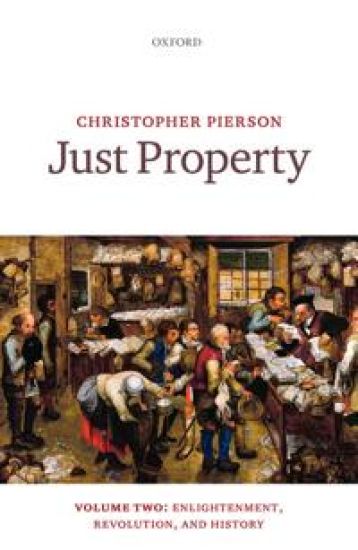
Property remains the bedrock of the societies we all inhabit. It underpins our core institutions - including families, states and economies - and it is the medium through which the intensifying politics of inequality is played out. There is plenty of evidence that its importance is increasing in a world of growing wealth inequality and depletion of natural resources. Volume Two of Just Property traces the development of ideas about property in the Western world from the early eighteenth century, through the Enlightenment and the experience of the French Revolution, to the critical stance of socialists and anarchists in the nineteenth century. It ranges across the thought of Bernard Mandeville, David Hume, Adam Smith, Voltaire, Rousseau, Kant, Hegel, the Abbe de Sieyes, Burke, Wollstonecraft, Charles Fourier, Karl Marx, Proudhon and Peter Kropotkin. Many themes persist from an earlier period, as does the influence of Christianity and the Roman Law but there are also many innovations. In general, the authority of God and the natural law recedes and the themes of utility and securing general welfare became more prominent. In the wake of Locke, labour, though sometimes in the form of 'past labour', that is capital, attains a new prominence. For its admirers, a newly-unfettered private property is the means of securing personal freedom, constraining authoritarian governments, promoting the arts and sciences, and delivering an unprecedented improvement in the material condition of the whole population. For its critics, private property is the central component in a new political economy of systemic and unlimited class exploitation. It penetrates everywhere and corrupts everything that it touches. With these arguments, we are clearly on the terrain of modernity, witnessing a set of arguments and counter-arguments with which we all still struggle.
Just Property

Just Property

Christopher Pierson

Oxford University Press
2013
sidottu
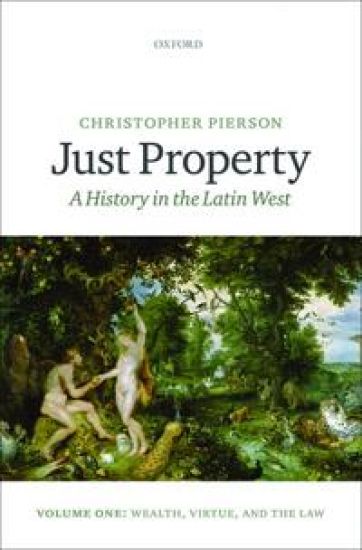
We live in a world which is characterised by both a radical inequality in wealth and incomes and the accelerating depletion of scarce natural resources. One of the things that prevents us from addressing these problems, perhaps even prevents us from seeing them as problems, is our belief that individuals and corporations have claims to certain resources and income streams that are non-negotiable, even when these claims seem manifestly hostile to our collective long-term well-being. This book is an attempt to understand how, why and when we came to believe these things. This first volume traces ideas about private property and its justification in the Latin West, starting with the ancient Greeks. It follows several lines of thinking which run through the Roman and medieval worlds. It traces the profound impact of the rise of Christianity and the instantiation of both natural and Roman Law. It considers the complex interplay of religious and legal ideas as these developed through the Renaissance, the Reformation and the counter-Reformation leading on to the ideas associated with modern natural law. The first volume concludes with a close re-reading of Locke. We can find well-made arguments for private property throughout this history but these were not always the arguments which we now assume them to have been and they were almost always radically conditional, qualified by other considerations, above all, a sense of what the securing of the common good required. These arguments included an appeal to the natural law, to the dispensations of a just God, to utility, to securing economic growth and to maintaining the peace. They almost never included the claim that individuals have naturally- or God-given rights that trump the well-being, especially the basic well-being, of other individuals. In late modernity, we have lost sight of many of these arguments - to our collective loss.
The Modern State

The Modern State

Christopher Pierson

Routledge
2011
sidottu
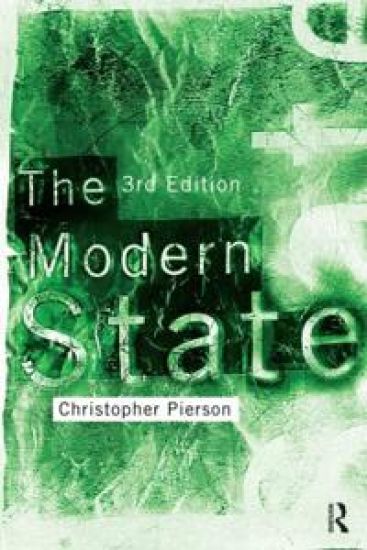
The new edition of this well-established and highly regarded textbook continues to provide the clearest and most comprehensive introduction to the modern state. It examines the state from its historical origins at the birth of modernity to its current jeopardized position in the globalized politics of the 21st Century. The book has been entirely revised and updated throughout, including substantial new material on the financial crisis and the environment. Subjects covered include:• The evolution of the state system • Placing the state in modernity• States and societies • State and economy • States and citizens • States and the international order • States of the twenty-first century This book is essential reading for all those studying the state, international relations and comparative politics.
The Modern State

The Modern State

Christopher Pierson

Routledge
2011
nidottu
The new edition of this well-established and highly regarded textbook continues to provide the clearest and most comprehensive introduction to the modern state. It examines the state from its historical origins at the birth of modernity to its current jeopardized position in the globalized politics of the 21st Century. The book has been entirely revised and updated throughout, including substantial new material on the financial crisis and the environment. Subjects covered include:• The evolution of the state system • Placing the state in modernity• States and societies • State and economy • States and citizens • States and the international order • States of the twenty-first century This book is essential reading for all those studying the state, international relations and comparative politics.
Beyond the Welfare State?

Beyond the Welfare State?

Christopher Pierson

Polity Press
2006
nidottu
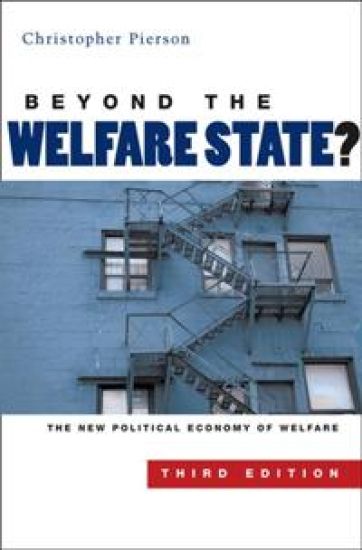
Over the past decade, Beyond the Welfare State? has become established as the key text on the emergence and development of welfare states. It offers a comprehensive and remarkably well-informed introduction to the ever more intense debates that surround the history and, still more importantly, the future of welfare in advanced industrialised states. Comprehensively revised and re-written, this third edition of the book embraces all of the most important theoretical and empirical developments in welfare state studies of recent years. Working within an explicitly comparative framework, the book draws on a wealth of international evidence to survey what are now the most pressing issues surrounding the future of welfare: among them, globalisation, demographic change, declining fertility, postindustrialism and immigration. It draws extensively on the explosion of work on welfare states that has emerged within the North American political science community over the past ten years as well as giving detailed attention to developments with the UK, continental and northern Europe and beyond. Beyond the Welfare State? remains the most comprehensive and up-to-date guide to the complex of issues that surround welfare reform. It is required reading for anyone who wants to come to terms with what is really at stake in arguments about the future of welfare.
Beyond the Welfare State?

Beyond the Welfare State?

Christopher Pierson

Polity Press
2006
sidottu
Over the past decade, Beyond the Welfare State? has become established as the key text on the emergence and development of welfare states. It offers a comprehensive and remarkably well-informed introduction to the ever more intense debates that surround the history and, still more importantly, the future of welfare in advanced industrialised states. Comprehensively revised and re-written, this third edition of the book embraces all of the most important theoretical and empirical developments in welfare state studies of recent years. Working within an explicitly comparative framework, the book draws on a wealth of international evidence to survey what are now the most pressing issues surrounding the future of welfare: among them, globalisation, demographic change, declining fertility, postindustrialism and immigration. It draws extensively on the explosion of work on welfare states that has emerged within the North American political science community over the past ten years as well as giving detailed attention to developments with the UK, continental and northern Europe and beyond. Beyond the Welfare State? remains the most comprehensive and up-to-date guide to the complex of issues that surround welfare reform. It is required reading for anyone who wants to come to terms with what is really at stake in arguments about the future of welfare.
Hard Choices

Hard Choices

Christopher Pierson

Polity Press
2001
nidottu
This text discusses the changes that occured in social democratic parties' politics at the turn of the century. It disputes the belief that many parties abandoned their ideology, arguing that social democracy remains just what it always was - a politics of messy compromises and hard choices.
Hard Choices

Hard Choices

Christopher Pierson

Polity Press
2001
sidottu
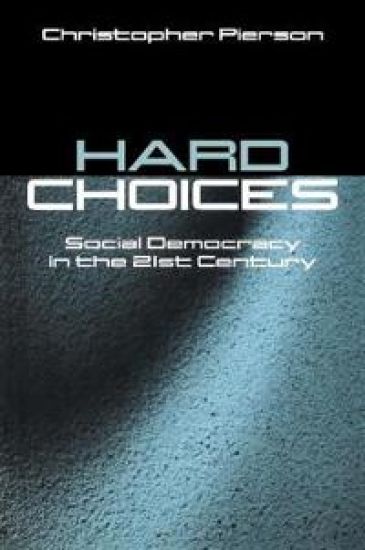
As the twenty-first century dawned, social democratic parties across Europe and beyond found themselves newly, and rather surprisingly, in the ascendant. Britain's New Labour was only the most spectacular in a whole series of political restorations. For many, this renewal only became possible when 'modernizing' social democratic parties jettisoned their old ideological and institutional baggage, setting off down a 'third way' that rejected the outmoded ideas of both left and right. The argument of Hard Choices is that this view is doubly misleading: it misrepresents the past and misunderstands the present. The first half of the book restores some of the complexity to social democracy's past and shows that it was much more subtle, varied and intelligent than its latter-day critics suppose. Turning to the present, the second half of the book shows how a few contemporary half-truths - relating to globalization and demographic change - have been used to justify the abandonment of the defining core of a social democratic politics. The book does not argue that 'nothing has really changed'. In fact, a great deal has changed and policy-makers have to adjust to a range of new circumstances, constraints (and opportunities). But those who exhort us simply to abandon the 'traditional' terrain of the centre-left are wrong. Social democracy remains just what it always was - a politics of messy compromises and hard choices. This book will appeal to undergraduates, postgraduates and scholars in politics, social policy and political sociology, as well as the interested general reader.
Conversations with Anthony Giddens

Conversations with Anthony Giddens

Anthony Giddens; Christopher Pierson

Polity Press
1998
nidottu
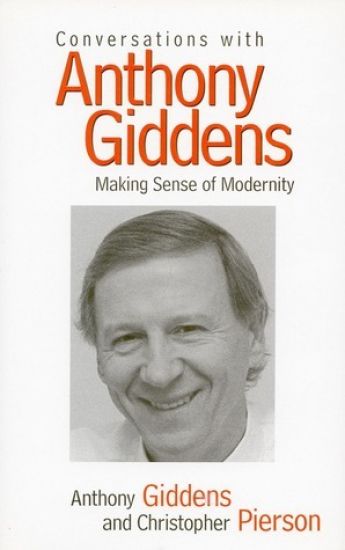
Anthony Giddens has been described as 'the most important English social philosopher of our time'. Over twenty-five years, and even more books, he has established himself as the most widely-read and widely-cited social theorist of his generation. His ideas have profoundly influenced the writing and teaching of sociology and social theory throughout the English-speaking world. In recent years, his writing has become much more explicitly political, and in 1996 he took up his high-profile appointment as Director of the London School of Economics and Political Science. It is in this new position and with these new political ideas that he has been described as the key intellectual figure of New Labour in Britain. Following the astonishing success of Labour in the 1997 General Election, his ideas have been the focus of intense interest. In this series of extended interviews with Chris Pierson, Giddens lays out with customary clarity and directness the principal themes in the development of his social theory and the distinctive political agenda which he recommends. This volume will be of great interest to second- and third-year students in sociology and social theory, politics and political theory, as well as to the general reader.
Conversations with Anthony Giddens

Conversations with Anthony Giddens

Anthony Giddens; Christopher Pierson

STANFORD UNIVERSITY PRESS
1998
sidottu
Anthony Giddens has been described as “the most important English social philosopher of our time.” Over 25 years, with a dazzling series of books that attest to his unrelenting productivity, he has established himself as today’s most widely read and widely cited social theorist. In recent years, his writings have become more explicitly political, and in 1996 he became Director of the London School of Economics and Political Science. It is in this position that he has been accepted as the key intellectual figure of Tony Blair’s New Labour government. Giddens’s interests have always been remarkably diverse, ranging from Continental philosophy to self-help therapy, and his work builds on a critical engagement with an extraordinary array of texts from within and beyond the canon of the social sciences. His ideas have profoundly influenced the writing and teaching of the central ideas of the rapidly changing study of modernity. These seven extended interviews with Christopher Pierson, conducted shortly after Giddens’s arrival at the LSE, seek to cover the full range of his thought since the early 1970’s, beginning with his engagement with the makers of “classical” sociology and concluding with his thoughts on the nature of world politics under what Giddens terms “reflexive modernity.” The style of the interviews is conversational, and Giddens sets forth his ideas with his customary clarity and directness. In addition to the interviews, four short pieces at the end of the book give examples of Giddens’s recent thought, treating Tony Blair’s political philosophy, the risk society concept in the context of British politics, and the dangers of chemical contamination. The volume concludes with a conversation between Giddens and European financier and philanthropist George Soros.
Socialism After Communism

Socialism After Communism

Christopher Pierson

Polity Press
1995
nidottu
In this book the author examines the concept of "the end of socialism" assessing the evidence that underpins this position, analysing market socialism and confronting the question of whether any form of socialism can any longer be thought to be "feasible".