Kirjojen hintavertailu. Mukana 12 595 353 kirjaa ja 12 kauppaa.

Kirjailija

Christopher S. Browning

Kirjat ja teokset yhdessä paikassa: 4 kirjaa, julkaisuja vuosilta 2013-2023, suosituimpien joukossa International Security. Vertaile teosten hintoja ja tarkista saatavuus suomalaisista kirjakaupoista.

4 kirjaa

Kirjojen julkaisuhaarukka 2013-2023.

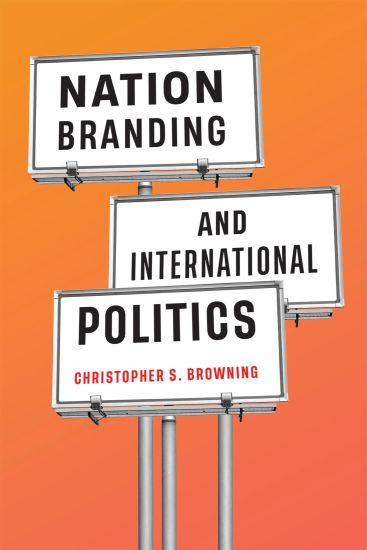
Nation Branding and International Politics

Nation Branding and International Politics

Christopher S. Browning

MCGILL-QUEEN'S UNIVERSITY PRESS
2023
sidottu
Nation branding is regarded as essential for competitiveness among countries, but the idea of branding nations is often derided as lacking seriousness. While nation branding has been on the radar of scholars of marketing, communication, and media studies, as well as political geography for decades, it has only made a small dent into the international relations field.In Nation Branding and International Politics Christopher Browning argues that international relations should take nation branding seriously. Nation branding not only involves the issues of culture, identity, and status – which are of principal concern to IR – but it is also a different and potentially fruitful way of reconceptualizing statehood. Mobilizing work on ontological security, anxiety, status, and distinction, and grounding the analysis in a broader historical context, Browning finds that nation branding is politically significant, though not necessarily for the reasons its advocates claim. Specifically, the book raises important questions about nation branding’s influence on the constitution of national identity, the reframing of citizenship, and the topography of contemporary geopolitics.Nation Branding and International Politics considers how status, prestige, and reputation are constructed and maintained in international society, and how, perhaps, this construction and maintenance may be changing – just as the practice of nation branding is changing.
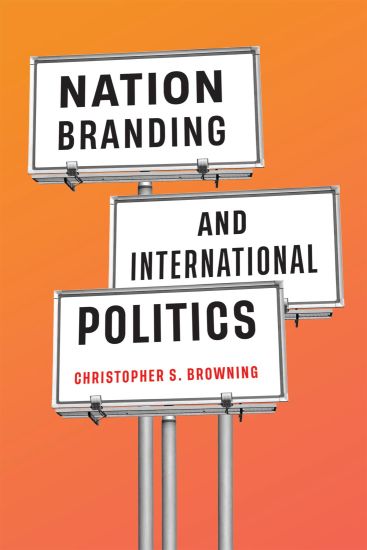
Nation Branding and International Politics

Nation Branding and International Politics

Christopher S. Browning

MCGILL-QUEEN'S UNIVERSITY PRESS
2023
nidottu
Nation branding is regarded as essential for competitiveness among countries, but the idea of branding nations is often derided as lacking seriousness. While nation branding has been on the radar of scholars of marketing, communication, and media studies, as well as political geography for decades, it has only made a small dent into the international relations field.In Nation Branding and International Politics Christopher Browning argues that international relations should take nation branding seriously. Nation branding not only involves the issues of culture, identity, and status – which are of principal concern to IR – but it is also a different and potentially fruitful way of reconceptualizing statehood. Mobilizing work on ontological security, anxiety, status, and distinction, and grounding the analysis in a broader historical context, Browning finds that nation branding is politically significant, though not necessarily for the reasons its advocates claim. Specifically, the book raises important questions about nation branding’s influence on the constitution of national identity, the reframing of citizenship, and the topography of contemporary geopolitics.Nation Branding and International Politics considers how status, prestige, and reputation are constructed and maintained in international society, and how, perhaps, this construction and maintenance may be changing – just as the practice of nation branding is changing.

Vicarious Identity in International Relations

Vicarious Identity in International Relations

Christopher S. Browning; Pertti Joenniemi; Brent J. Steele

Oxford University Press Inc
2021
sidottu
Vicarious identification, or "living through another" is a familiar social-psychological concept. Shaped by insecurity and a lack of self-fulfilment, it refers to the processes by which actors gain a sense of self-identity, purpose, and self-esteem through appropriating the achievements and experiences of others. As this book argues, it is also an under-appreciated and increasingly relevant strategy of international relations. According to this theory, states identify and establish special relationships with other nations (often in an aspirational way) in order to strengthen their sense of self, security, and status on the global stage. This identification is also central to the politics of citizenship and can be manipulated by states to justify their global ambitions. For example, why might the United States look at Israel as a model for its own foreign policies? What shaped the politics of Brexit and why is the United Kingdom so attached to its transatlantic "special relationship" with the United States? And, why did Denmark so enthusiastically ally with the United States during the global War on Terror? Vicarious identity, as the authors argue, is at the core of these international dynamics. Vicarious Identity in International Relations examines the ways in which vicarious identity is relevant to global politics: across individuals; between citizens and states; and across states, regional communities, or civilizations. It looks at a range of cases (the United States, the United Kingdom, and Denmark), which illustrate that vicarious political identity is dynamic and emerges in different contexts, but particularly when nations face crisis, both internally and externally. In addition, the book outlines a qualitative methodology for analyzing vicarious identity at the collective level.
International Security

International Security

Christopher S. Browning

Oxford University Press
2013
nidottu
The subject of international security is never out of the headlines. The subjects of war and peace, military strategy, the proliferation of nuclear weapons and revisionist states remain central to the discussion, but burgeoning concerns such as climate change, migration, poverty, health, and international terrorism have complicated the field. So what really matters? The traditional prioritization of state security or the security needs of individuals, humanity, and the biosphere? And where do the problems lie? Are states themselves as much a part of the problem as the solution for people's security needs? With globalization, the international security environment has become more interdependent than ever before with the establishment of complex networks that make responding to and managing security challenges increasingly difficult, but increasingly necessary. This Very Short Introduction shows that international security is both vibrant and deeply contested, with stakeholders frequently in disagreement over questions of priority and approach. Christopher S. Browning outlines the nature of the key debates about contemporary international security challenges, and discusses the inherent difficulties that exist in tackling them. He also asks to what extent such debates are infused with questions of power, politics, justice, morality, and responsibility. ABOUT THE SERIES: The Very Short Introductions series from Oxford University Press contains hundreds of titles in almost every subject area. These pocket-sized books are the perfect way to get ahead in a new subject quickly. Our expert authors combine facts, analysis, perspective, new ideas, and enthusiasm to make interesting and challenging topics highly readable.