Kirjojen hintavertailu. Mukana 12 390 323 kirjaa ja 12 kauppaa.

Kirjailija

Christopher Shields

Kirjat ja teokset yhdessä paikassa: 12 kirjaa, julkaisuja vuosilta 1999-2024, suosituimpien joukossa Aristotle. Vertaile teosten hintoja ja tarkista saatavuus suomalaisista kirjakaupoista.

12 kirjaa

Kirjojen julkaisuhaarukka 1999-2024.

Fractured Goodness

Fractured Goodness

Christopher Shields

Oxford University Press
2024
sidottu
Aristotle offers a searing rejection of Plato's commitment to a Form of the Good; core among his complaints is that goodness is not univocal, that is, that there is no single essence-specifying account of goodness covering all the many varieties of goodness there are. Aristotle's anti-Platonic arguments have been variously received: many of his readers regard them as wholly successful while many others maintain they are abject failures. This volume reconstructs and assesses these arguments afresh and asks a simple question: if they are sound, what is left for Aristotle? In particular, what principles does he have to vouchsafe the commensurability of the good things he himself regards as commensurable?
Ancient Philosophy

Ancient Philosophy

Christopher Shields

TAYLOR FRANCIS LTD
2023
sidottu
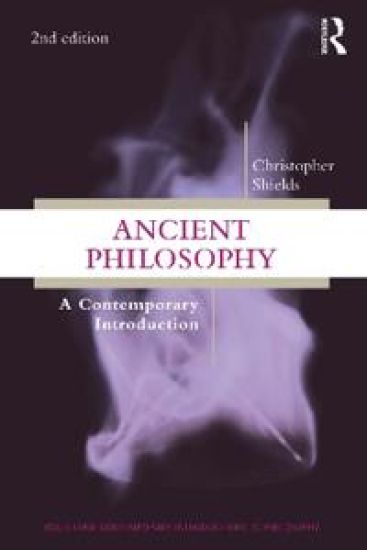
In Ancient Philosophy (2012), Christopher Shields expanded on the coverage of Socrates, Plato, and Aristotle in his earlier book, Classical Philosophy (2003), to include the philosophy of the Hellenistic era. In this new edition (2023), Shields reaches even further to include material on Neoplatonism and on Augustine and Proclus, capturing—from Thales of Miletus to the end of the sixth century CE—all of what might be called ancient philosophy. It traces the important connections between the periods and individuals of more than 1,200 years of philosophy’s history without losing sight of the novelties and dynamics unique to each. The coverage of the Presocratics, Sophists, Plato, and Stoicism has also been expanded so as to highlight Plato’s responses to the Sophistic movement in the development of his Theory of Forms.And, finally, a valuable companion volume, with Shields’s focused translations of the important sources referred to in Ancient Philosophy, Second Edition, will soon be published, obviating the need for a massive anthology of discordant voices. Ancient Philosophy, Second Edition, retains its helpful structure: each philosophical position receives: (1) a brief introduction, (2) a sympathetic review of its principal motivations and primary supporting arguments, and (3) a short assessment, inviting readers to evaluate its plausibility. The result is a book that brings the ancient arguments to life, making the introduction truly contemporary. It continues to serve as both a first stop and a well-visited resource for any student of the subject.Key updates in the second edition Extends the range of coverage well into the sixth century CE by offering a new chapter on Neoplatonism and early Christian philosophy, featuring discussions of Proclus and Augustine. Explains the conflicts between Plato and the Sophists by highlighting their approaches to rhetoric as an instrument of persuasion, offering a helpful explanation of two senses of argument. Includes new coverage of Plato’s argument from the Simplicity of the Soul, Argument from Affinity, and Argument against Rhetoric. Includes coverage of Aristotle’s political naturalism . May be used with a soon-to-be-published companion volume of primary source material, all of it translated by Christopher Shields specifically for the reader of this Second Edition.
Ancient Philosophy

Ancient Philosophy

Christopher Shields

TAYLOR FRANCIS LTD
2023
nidottu
In Ancient Philosophy (2012), Christopher Shields expanded on the coverage of Socrates, Plato, and Aristotle in his earlier book, Classical Philosophy (2003), to include the philosophy of the Hellenistic era. In this new edition (2023), Shields reaches even further to include material on Neoplatonism and on Augustine and Proclus, capturing—from Thales of Miletus to the end of the sixth century CE—all of what might be called ancient philosophy. It traces the important connections between the periods and individuals of more than 1,200 years of philosophy’s history without losing sight of the novelties and dynamics unique to each. The coverage of the Presocratics, Sophists, Plato, and Stoicism has also been expanded so as to highlight Plato’s responses to the Sophistic movement in the development of his Theory of Forms.And, finally, a valuable companion volume, with Shields’s focused translations of the important sources referred to in Ancient Philosophy, Second Edition, will soon be published, obviating the need for a massive anthology of discordant voices. Ancient Philosophy, Second Edition, retains its helpful structure: each philosophical position receives: (1) a brief introduction, (2) a sympathetic review of its principal motivations and primary supporting arguments, and (3) a short assessment, inviting readers to evaluate its plausibility. The result is a book that brings the ancient arguments to life, making the introduction truly contemporary. It continues to serve as both a first stop and a well-visited resource for any student of the subject.Key updates in the second edition Extends the range of coverage well into the sixth century CE by offering a new chapter on Neoplatonism and early Christian philosophy, featuring discussions of Proclus and Augustine. Explains the conflicts between Plato and the Sophists by highlighting their approaches to rhetoric as an instrument of persuasion, offering a helpful explanation of two senses of argument. Includes new coverage of Plato’s argument from the Simplicity of the Soul, Argument from Affinity, and Argument against Rhetoric. Includes coverage of Aristotle’s political naturalism . May be used with a soon-to-be-published companion volume of primary source material, all of it translated by Christopher Shields specifically for the reader of this Second Edition.
The Philosophy Of Aquinas

The Philosophy Of Aquinas

Robert Pasnau; Christopher Shields

Routledge
2021
nidottu
This book introduces Thomas Aquinas's own principal fascinations in philosophy: rational theology, metaphysics, human nature, philosophy of mind, and value theory. It offers an introduction to his overarching explanatory framework in a distinctive deployment of an approach familiar from Aristotle.
The Philosophy Of Aquinas

The Philosophy Of Aquinas

Robert Pasnau; Christopher Shields

Routledge
2019
sidottu
This book introduces Thomas Aquinas's own principal fascinations in philosophy: rational theology, metaphysics, human nature, philosophy of mind, and value theory. It offers an introduction to his overarching explanatory framework in a distinctive deployment of an approach familiar from Aristotle.
The Philosophy of Aquinas

The Philosophy of Aquinas

Christopher Shields; Robert Pasnau

Oxford University Press Inc
2016
sidottu
This new and updated edition of Christopher Shields and Robert Pasnau's The Philosophy of Aquinas introduces the Aquinas' overarching explanatory framework in order to provide the necessary background to his philosophical investigations across a wide range of areas: rational theology, metaphysics, philosophy of human nature, philosophy of mind, and ethical and political theory. Although not intended to provide a comprehensive evaluation of all aspects of Aquinas' far-reaching writings, the volume presents a systematic introduction to the principal areas of his philosophy and attends no less to Aquinas' methods and argumentative strategies than to his ultimate conclusions. The authors have updated the second edition in light of recent scholarship on Aquinas, while streamlining and refining their presentation of the key elements of Aquinas' philosophy.
The Philosophy of Aquinas

The Philosophy of Aquinas

Christopher Shields; Robert Pasnau

Oxford University Press Inc
2016
nidottu
This new and updated edition of Christopher Shields and Robert Pasnau's The Philosophy of Aquinas introduces the Aquinas' overarching explanatory framework in order to provide the necessary background to his philosophical investigations across a wide range of areas: rational theology, metaphysics, philosophy of human nature, philosophy of mind, and ethical and political theory. Although not intended to provide a comprehensive evaluation of all aspects of Aquinas' far-reaching writings, the volume presents a systematic introduction to the principal areas of his philosophy and attends no less to Aquinas' methods and argumentative strategies than to his ultimate conclusions. The authors have updated the second edition in light of recent scholarship on Aquinas, while streamlining and refining their presentation of the key elements of Aquinas' philosophy.
Aristotle

Aristotle

Christopher Shields

Routledge
2013
sidottu
In this extensively revised new edition of his excellent guidebook, Christopher Shields introduces the whole of Aristotle’s philosophy, showing how his powerful conception of human nature shaped much of his thinking on the nature of the soul and the mind, ethics, politics, and the arts.Beginning with a brief biography, Shields carefully explains the fundamental elements of Aristotle’s thought: his explanatory framework, his philosophical methodology, and his four-causal explanatory scheme. Subsequently he discusses Aristotle’s metaphysics, the theory of categories, logical theory, and his conception of the human being as a composite of soul and body.The last part concentrates on Aristotle’s value theory as applied to ethics and politics, and assesses his approach to happiness, virtue, and the best life for human beings, before turning to a consideration of Aristotle's theory of rhetoric and the arts, with a special focus on his perennially controversial treatment of tragedy.This second edition includes an expanded discussion of Aristotle's method, and new sections on key issues in perception, thought, akrasia, and mimesis. It concludes with an expanded assessment of Aristotle's legacy, sketching currently emerging Neo-Aristotelian movements in metaphysics and virtue ethics.
Aristotle

Aristotle

Christopher Shields

Routledge
2013
nidottu
In this extensively revised new edition of his excellent guidebook, Christopher Shields introduces the whole of Aristotle’s philosophy, showing how his powerful conception of human nature shaped much of his thinking on the nature of the soul and the mind, ethics, politics, and the arts.Beginning with a brief biography, Shields carefully explains the fundamental elements of Aristotle’s thought: his explanatory framework, his philosophical methodology, and his four-causal explanatory scheme. Subsequently he discusses Aristotle’s metaphysics, the theory of categories, logical theory, and his conception of the human being as a composite of soul and body.The last part concentrates on Aristotle’s value theory as applied to ethics and politics, and assesses his approach to happiness, virtue, and the best life for human beings, before turning to a consideration of Aristotle's theory of rhetoric and the arts, with a special focus on his perennially controversial treatment of tragedy.This second edition includes an expanded discussion of Aristotle's method, and new sections on key issues in perception, thought, akrasia, and mimesis. It concludes with an expanded assessment of Aristotle's legacy, sketching currently emerging Neo-Aristotelian movements in metaphysics and virtue ethics.
Ancient Philosophy

Ancient Philosophy

Christopher Shields

Routledge
2011
sidottu
In this re-titled and substantially revised update of his Classical Philosophy (2003), Christopher Shields expands his coverage to include the Hellenistic era, and now offers an introduction to more than 1,000 years of ancient philosophy. From Thales and other Pre-Socratics through Socrates, Plato, and Aristotle, and on to Epicureanism, Stoicism, and Scepticism, Ancient Philosophy traces the important connections between these periods and individuals without losing sight of the novelties and dynamics unique to each.The coverage of Plato and Aristotle also has been expanded. It now includes, for example, updated coverage of Plato's allegories of the cave and the divided line and the metaphor of the sun as well as features of Plato's epistemology. Shields also adds new discussion on Aristotle's theory of virtue and his approach to the Socratic problem of akrasia, or weakness of will.In terms of its structure, Ancient Philosophy is presented so that each philosophical position receives: (1) a brief introduction, (2) a sympathetic review of its principal motivations and primary supporting arguments, and (3) a short assessment, inviting readers to evaluate its plausibility. The result is a book that brings the ancient arguments to life, making the introduction truly contemporary. It will serve as both a first stop and a well visited resource for any student of the subject.Ancient Philosophy offers a vivid picture of the ideas that flourished at philosophy's long birth and considers their relevance, both to the historical development of the Western philosophical tradition, and to philosophy today.
Order in Multiplicity

Order in Multiplicity

Christopher Shields

Clarendon Press
2002
nidottu
Aristotle attaches particular significance to the homonymy of many central concepts in philosophy and science: that is, to the diversity of ways of being common to a single general concept. His preoccupation with homonymy influences his approach to almost every subject that he considers, and it clearly structures the philosophical methodology that he employs both when criticizing others and when advancing his own positive theories. Where there is homonymy there is multiplicity: Aristotle aims to find the order within this multiplicity, and believes that doing so is crucial to scientific inquiry and philosophical progress. Christopher Shields investigates and evaluates Aristotle's approach to questions about homonymy, characterizing the metaphysical and semantic commitments necessary to establish the homonymy of a given concept. Then, in a series of case-studies, Shields examines in detail some of Aristotle's principal applications of homonymy--to the body, sameness and oneness, life, goodness, and being. Shields's aim is not only to give a fuller understanding of Aristotle's methodology and to illuminate his specific doctrines in a variety of areas, but to show that this methodology remains fruitful today.
Order in Multiplicity

Order in Multiplicity

Christopher Shields

Clarendon Press
1999
sidottu
Aristotle attaches particular significance to the homonymy of many central concepts in philosophy and science: that is, to the diversity of ways of being common to a single general concept. His preoccupation with homonymy influences his approach to almost every subject that he considers, and it clearly structures the philosophical methodology that he employs both when criticizing others and when advancing his own positive theories. Where there is homonymy there is multiplicity: Aristotle aims to find the order within this multiplicity, and believes that doing so is crucial to scientific inquiry and philosophical progress. Christopher Shields investigates and evaluates Aristotle's approach to questions about homonymy, characterizing the metaphysical and semantic commitments necessary to establish the homonymy of a given concept. Then, in a series of case-studies, Shields examines in detail some of Aristotle's principal applications of homonymy--to the body, sameness and oneness, life, goodness, and being. Shields's aim is not only to give a fuller understanding of Aristotle's methodology and to illuminate his specific doctrines in a variety of areas, but to show that this methodology remains fruitful today.