Kirjojen hintavertailu. Mukana 12 657 676 kirjaa ja 12 kauppaa.

Kirjailija

Christopher Stray

Kirjat ja teokset yhdessä paikassa: 4 kirjaa, julkaisuja vuosilta 1998-2023, suosituimpien joukossa Marginal Comment. Vertaile teosten hintoja ja tarkista saatavuus suomalaisista kirjakaupoista.

4 kirjaa

Kirjojen julkaisuhaarukka 1998-2023.

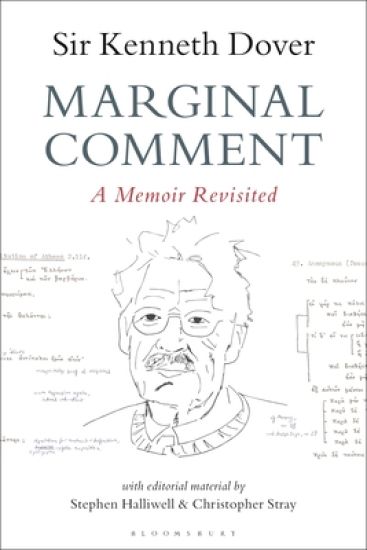
Marginal Comment

Marginal Comment

K. J. Dover; Stephen Halliwell; Christopher Stray

BLOOMSBURY PUBLISHING PLC
2023
nidottu
Marginal Comment, which attracted keen and widespread interest on its original publication in 1994, is the remarkable memoir of one of the most distinguished classical scholars of the modern era. Its author, Sir Kenneth Dover, whose academic publications included the pathbreaking book Greek Homosexuality (1978, reissued by Bloomsbury in 2016), conceived of it as an ‘experimental’ autobiography – ruthlessly candid in retracing the full range of the author’s experiences, both private and public, and unflinching in its attempt to analyse the entanglements between the life of the mind and the life of the body.Dover’s distinguished career involved not only an influential series of writings about the ancient Greeks but also a number of prominent positions of leadership, including the presidencies of Corpus Christi College, Oxford, and the British Academy. It was in those positions that he became involved in several high-profile controversies, including the blocking of an honorary degree for Margaret Thatcher from Oxford University, and a bitter debate in the British Academy over the fellowship of Anthony Blunt after his exposure as a former Soviet spy. This edition of Marginal Comment is much more than a reissue: it includes an introduction which frames the book in relation to its author’s life and work, as well as annotations based in part on materials originally excluded by Dover but left in his personal papers on this death. Now newly available, the memoir provides not only the self-portrait of an exceptional individual but a rich case-study in the intersections between an intellectual life and its social contexts.
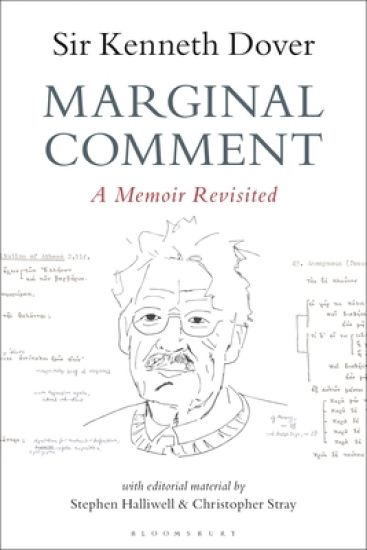
Marginal Comment

Marginal Comment

K. J. Dover; Stephen Halliwell; Christopher Stray

BLOOMSBURY PUBLISHING PLC
2023
sidottu
Marginal Comment, which attracted keen and widespread interest on its original publication in 1994, is the remarkable memoir of one of the most distinguished classical scholars of the modern era. Its author, Sir Kenneth Dover, whose academic publications included the pathbreaking book Greek Homosexuality (1978, reissued by Bloomsbury in 2016), conceived of it as an ‘experimental’ autobiography – ruthlessly candid in retracing the full range of the author’s experiences, both private and public, and unflinching in its attempt to analyse the entanglements between the life of the mind and the life of the body.Dover’s distinguished career involved not only an influential series of writings about the ancient Greeks but also a number of prominent positions of leadership, including the presidencies of Corpus Christi College, Oxford, and the British Academy. It was in those positions that he became involved in several high-profile controversies, including the blocking of an honorary degree for Margaret Thatcher from Oxford University, and a bitter debate in the British Academy over the fellowship of Anthony Blunt after his exposure as a former Soviet spy. This edition of Marginal Comment is much more than a reissue: it includes an introduction which frames the book in relation to its author’s life and work, as well as annotations based in part on materials originally excluded by Dover but left in his personal papers on this death. Now newly available, the memoir provides not only the self-portrait of an exceptional individual but a rich case-study in the intersections between an intellectual life and its social contexts.
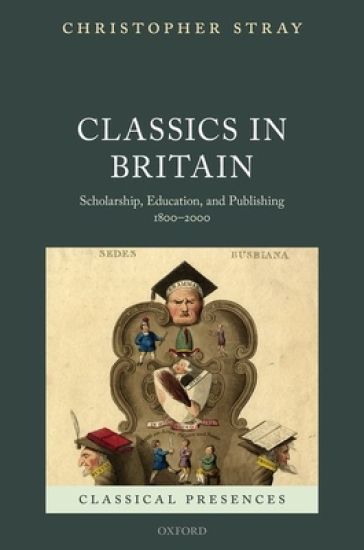
Classics in Britain

Classics in Britain

Christopher Stray

Oxford University Press
2018
sidottu
This unique volume summarizes and reflects the work of a leading voice in the history of Classics in Britain, bringing together both previously published articles, now newly revised, and never before published work. Topics range from the school classroom to the politics of universities, and from the social uses of classical knowledge to the publishing of textbooks: although the volume as a whole maintains a particular focus on the role of books and journals in the reception of Classics, the chapters also draw on anecdotal and documentary sources to offer a vivid exploration of the more obscure corners of the world of nineteenth- and twentieth-century scholars, teachers, and pupils. The book is divided into three parts, the first of which illustrates the utility of comparative analysis of institutions, focusing on Oxford and Cambridge in particular; the second looks at the transformative role of printing and publishing, and at the history of the Hellenic Society (1879) and the Classical Association (1903), in relation to the changing place of Classics in British society. The third focuses on pedagogy, examining textbooks and classroom activity and stressing the dialectical nature of reception, as evidenced by the resistance of pupils to their teachers' lessons. Engaging and insightful in isolation, together they offer an expansive and unparalleled overview of the history and sociology of classical education and scholarship between 1800 and 2000.
Classics Transformed

Classics Transformed

Christopher Stray

Clarendon Press
1998
sidottu
The first book to give a general account of the transformation of classics in English schools and universities from being the amateur knowledge of the Victorian gentleman to that of the professional scholar, from an elite social marker to a marginalized academic subject. The challenges to the authority of classics in 19th-century England are analysed, as is the wide range of ideological responses by its practitioners. The impact of university reform on the content and organization of classical knowledge is described in detail, with special reference to Cambridge. Chapters are devoted to the effects of state intervention, social snobbery and democracy on the provision of classics in schools, and the dissensions within the bodies set up to defend it. The narrative is carried through to the abolition of Compulsory Latin in 1960 and the absence of classics from the National Curriculum in 1988.