Kirjojen hintavertailu. Mukana 12 657 676 kirjaa ja 12 kauppaa.

Kirjailija

Christopher Tilley

Kirjat ja teokset yhdessä paikassa: 26 kirjaa, julkaisuja vuosilta 1987-2021, suosituimpien joukossa Stone Worlds. Vertaile teosten hintoja ja tarkista saatavuus suomalaisista kirjakaupoista.

26 kirjaa

Kirjojen julkaisuhaarukka 1987-2021.

A Phenomenology of Landscape

A Phenomenology of Landscape

Christopher Tilley

Berg Publishers
1997
nidottu
Offers a new approach to landscape perception.This book is an extended photographic essay about topographic features of the landscape. It integrates philosophical approaches to landscape perception with anthropological studies of the significance of the landscape in small-scale societies. This perspective is used to examine the relationship between prehistoric sites and their topographic settings. The author argues that the architecture of Neolithic stone tombs acts as a kind of camera lens focussing attention on landscape features such as rock outcrops, river valleys, mountain spurs in their immediate surroundings. These monuments played an active role in socializing the landscape and creating meaning in it.A Phenomenology of Landscape is unusual in that it links two types of publishing which have remained distinct in archaeology: books with atmospheric photographs of monuments with a minimum of text and no interpretation; and the academic text in which words provide a substitute for visual imagery. Attractively illustrated with many photographs and diagrams, it will appeal to anyone interested in prehistoric monuments and landscape as well as students and specialists in archaeology, anthropology and human geography.
A Phenomenology of Landscape

A Phenomenology of Landscape

Christopher Tilley

BLOOMSBURY PUBLISHING PLC
1994
sidottu
Offers a new approach to landscape perception.This book is an extended photographic essay about topographic features of the landscape. It integrates philosophical approaches to landscape perception with anthropological studies of the significance of the landscape in small-scale societies. This perspective is used to examine the relationship between prehistoric sites and their topographic settings. The author argues that the architecture of Neolithic stone tombs acts as a kind of camera lens focussing attention on landscape features such as rock outcrops, river valleys, mountain spurs in their immediate surroundings. These monuments played an active role in socializing the landscape and creating meaning in it.A Phenomenology of Landscape is unusual in that it links two types of publishing which have remained distinct in archaeology: books with atmospheric photographs of monuments with a minimum of text and no interpretation; and the academic text in which words provide a substitute for visual imagery. Attractively illustrated with many photographs and diagrams, it will appeal to anyone interested in prehistoric monuments and landscape as well as students and specialists in archaeology, anthropology and human geography. 'Reception, perception and interpretation are key to understanding landscapes. This book provides a useful starting point for comprehension of these topics.'Dr. Stuart Prior, University of Bristol
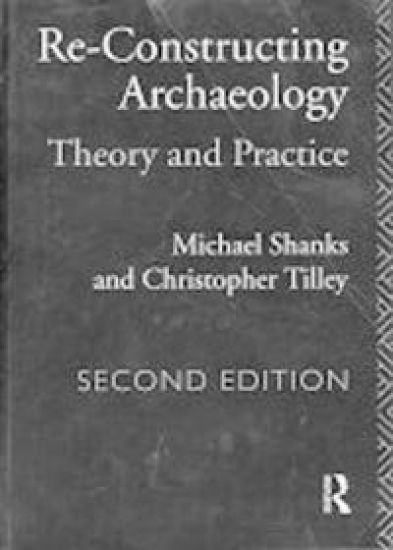
Re-constructing Archaeology

Re-constructing Archaeology

Michael Shanks; Christopher Tilley

Routledge
1992
nidottu
InRe-Constructing Archaeology, Shanks and Tilley aim to challenge the disciplinary practices of both traditional and the `new' archaeology and to present a radical alternative - a critically self-consious archaeology aware of itself as pracitce in the present, and equally a social archaeology that appreciates artefacts not merely as ovjects of analysis but as part of a social world of past and present that is charged with meaning. It is a fresh and invigorating contribution to the emergence of a philosophically and politically informed archaeology.
Social Theory and Archaeology

Social Theory and Archaeology

Michael Shanks; Christopher Tilley

Polity Press
1987
nidottu
Archaeological theory and method have recently become the subject of vigorous debate centred on the growing realization that archaeological theory is social theory and as such can be looked at by means of a wide variety of sociological frameworks, such as structuralism and post-structuralism, Marxism and critical theory. In this analysis, Shanks and Tilley argue against the functionalism and positivism which result from an inadequate assimilation of social theory into the day-to-day practice of archaeology. Aimed at an advanced undergraduate audience, the book presents a challenge to the traditional idea of the archaeologist as explorer or discoverer and the more recent emphasis on archaeology as behavioural science. The authors examine and evaluate the new possibilities for a self-reflexive, critical and political practice of archaeology, productively linking the past to the present.