Kirjojen hintavertailu. Mukana 12 390 323 kirjaa ja 12 kauppaa.

Kirjailija

Christopher Watkin

Kirjat ja teokset yhdessä paikassa: 10 kirjaa, julkaisuja vuosilta 2009-2025, suosituimpien joukossa Michel Serres. Vertaile teosten hintoja ja tarkista saatavuus suomalaisista kirjakaupoista.

10 kirjaa

Kirjojen julkaisuhaarukka 2009-2025.

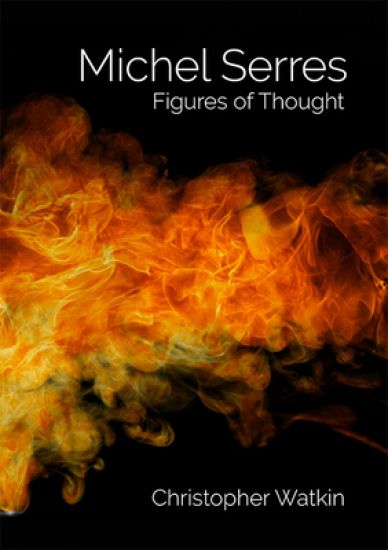
Michel Serres

Michel Serres

Christopher Watkin

Edinburgh University Press
2020
sidottu
Christopher Watkin provides a true overview of Serres' thinking. Using diagrams to explain Serres' thought, the first half of the book carefully explores Serres' 'global intuition' how he understands and engages with the world and his 'figures of thought', the repeated intellectual moves that characterise his unique approach. The second half explores in detail Serres' revolutionary contributions to the areas of language, objects and ecology. All told, Watkin shows that Michel Serres has produced a cross-disciplinary body of work that provides a crucial and as yet under-exploited reference for current debates in post-humanism, object oriented ontology, ecological thought and the environmental humanities.
The State of Nature and the Shaping of Modernity

The State of Nature and the Shaping of Modernity

Christopher Watkin

Cambridge University Press
2025
sidottu
The state of nature is a powerful idea at the heart of the fragmented and sometimes conflicting stories the modern West tells about itself. It also makes sense of foundational Western commitments to equality and accumulation, freedom and property, universality and the individual. By exploring the social and cultural imaginaries that emerge from the distinct and often contradictory accounts of the state of nature in the writing of Hobbes, Locke and Rousseau, The State of Nature and the Shaping of Modernity offers a fresh perspective on some of the most pressing debates of our time, showing how the state of nature idea provides a powerful lens through which to focus the complex forces shaping today's political and cultural landscape. It also explores how ideas about human nature and origins drive today's debates about colonialism, secularism, and the environment, and how they can shed new light on some of society's most heated debates.
Biblical Critical Theory

Biblical Critical Theory

Christopher Watkin; Timothy Keller

ZONDERVAN
2023
sidottu
*With a foreword from Tim Keller*A bold vision for Christians who want to engage the world in a way that is biblically faithful and culturally sensitive.In Biblical Critical Theory, Christopher Watkin shows how the Bible and its unfolding story help us make sense of modern life and culture.Critical theories exist to critique what we think we know about reality and the social, political, and cultural structures in which we live. In doing so, they make visible the values and beliefs of a culture in order to scrutinize and change them.Biblical Critical Theory exposes and evaluates the often-hidden assumptions and concepts that shape late-modern society, examining them through the lens of the biblical story running from Genesis to Revelation, and asking urgent questions like:How does the Bible's storyline help us understand our society, our culture, and ourselves?How do specific doctrines help us engage thoughtfully in the philosophical, political, and social questions of our day?How can we analyze and critique culture and its alternative critical theories through Scripture? Informed by the biblical-theological structure of Saint Augustine's magisterial work The City of God (and with extensive diagrams and practical tools), Biblical Critical Theory shows how the patterns of the Bible's storyline can provide incisive, fresh, and nuanced ways of intervening in today's debates on everything from science, the arts, and politics to dignity, multiculturalism, and equality. You'll learn the moves to make and the tools to use in analyzing and engaging with all sorts of cultural artifacts and events in a way that is both biblically faithful and culturally relevant.It is not enough for Christians to explain the Bible to the culture or cultures in which we live. We must also explain the culture in which we live within the framework and categories of the Bible, revealing how the whole of the Bible sheds light on the whole of life.If Christians want to speak with a fresh, engaging, and dynamic voice in the marketplace of ideas today, we need to mine the unique treasures of the distinctive biblical storyline.
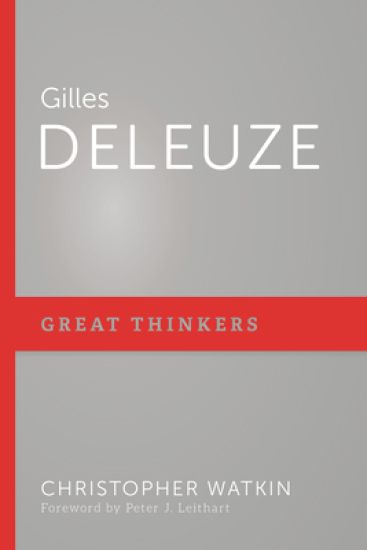
Gilles Deleuze

Gilles Deleuze

Christopher Watkin

P R Publishing Co (Presbyterian Reformed)
2020
nidottu
Deleuze has profoundly influenced how our society understands everything from knowledge and truth to sexuality and identity. Christopher Watkin, a scholar of French literature and philosophy, introduces Deleuze's thought and brings his writing into sustained conversation with prominent biblical themes and motifs from Reformed theology. As you engage with Deleuze's thought, you will discover a model of cultural engagement that you can use to understand any thinker or school.
Michel Serres

Michel Serres

Christopher Watkin

Edinburgh University Press
2020
nidottu
Christopher Watkin provides a true overview of Serres' thinking. Using diagrams to explain Serres' thought, the first half of the book carefully explores Serres' 'global intuition' how he understands and engages with the world and his 'figures of thought', the repeated intellectual moves that characterise his unique approach. The second half explores in detail Serres' revolutionary contributions to the areas of language, objects and ecology. All told, Watkin shows that Michel Serres has produced a cross-disciplinary body of work that provides a crucial and as yet under-exploited reference for current debates in post-humanism, object oriented ontology, ecological thought and the environmental humanities.
French Philosophy Today

French Philosophy Today

Christopher Watkin

Edinburgh University Press
2016
sidottu
Alain Badiou, Quentin Meillassoux, Catherine Malabou, Michel Serres and Bruno Latour: this new generation of French philosophers is laying fresh claim to the human. Across a number of new strains of philosophy, they are rethinking humanity's relationships: to 'nature' and 'culture', to the objects that surround us, to the possibility of social and political change, to ecology and even to our own brains. Christopher Watkin draws out both the promises and perils of these new philosophies. And he shows just how high the stakes are for our technologically advanced but socially atomised and ecologically vulnerable society.
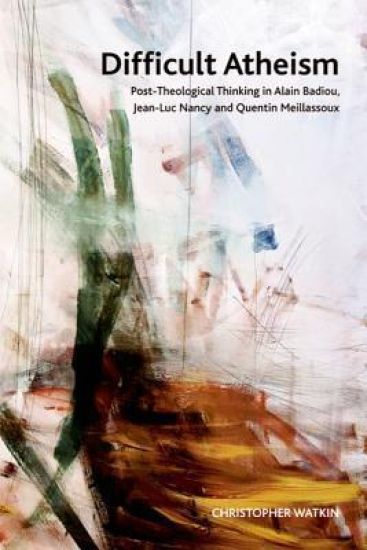
Difficult Atheism

Difficult Atheism

Christopher Watkin

Edinburgh University Press
2013
nidottu
This title reassesses the term 'atheism' in the context of contemporary French philosophy. Drawing primarily on the work of Alain Badiou and Jean-Luc Nancy, plus Quentin Meillassoux and Slavoj Zizek, Watkin explores the theme of atheism through the ideas of the death of God and nihilism, and probes the limits of any 'atheistic politics'. He argues that rigorous atheism is elusive, and that Continental thought, even in its most stridently atheistic guises, has yet to fully come to terms with the death of God.
From Plato to Postmodernism

From Plato to Postmodernism

Christopher Watkin

Bristol Classical Press
2011
nidottu
From Plato to Postmodernism presents the cultural history of the West in one concise volume. Nearly four thousand years of Western history are woven together into an unfolding story in which we see how movements and individuals contributed to the philosophy, literature and art that have shaped today’s world. The story begins with the West’s Greco-Roman and Judeo-Christian origins, moving through the Middle Ages, Renaissance, Enlightenment and Romanticism to twenty-first century postmodernity. The author covers key figures such as Moses, Michelangelo, Mozart and Marx, setting them in context and highlighting their main contributions. Illustrations and a comprehensive glossary help explain important terms such as ‘gothic’, ‘baroque’, ‘stream of consciousness’ and ‘the death of God’, and clarify movements such as Neoplatonism, Renaissance humanism and existentialism.For students, this book bridges the gap between what is taught in schools and the cultural knowledge required at university, providing an indispensible grounding in the story of Western culture. For all readers, it offers an invitation to take an enjoyable tour through the fascinating history of Western thought, literature and art.
Difficult Atheism

Difficult Atheism

Christopher Watkin

Edinburgh University Press
2011
sidottu
Difficult Atheism shows how contemporary French philosophy is rethinking the legacy of the death of God in ways that take the debate beyond the narrow confines of atheism into the much broader domain of post-theological thinking. Christopher Watkin argues that Alain Badiou, Jean-Luc Nancy and Quentin Meillassoux each elaborate a distinctive approach to the post-theological, but that each approach still struggles to do justice to the death of God.
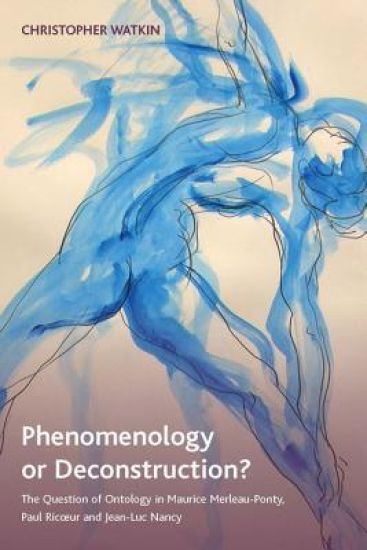
Phenomenology or Deconstruction?

Phenomenology or Deconstruction?

Christopher Watkin

Edinburgh University Press
2009
sidottu
Phenomenology or Deconstruction? challenges traditional understandings of the relationship between phenomenology and deconstruction through new readings of the work of Maurice Merleau-Ponty, Paul RicA"ur and Jean-Luc Nancy. A constant dialogue with Jacques Derrida's engagement with phenomenological themes provides the impetus to establishing a new understanding of 'being' and 'presence' that exposes significant blindspots inherent in traditional readings of both phenomenology and deconstruction. In reproducing neither a stock phenomenological reaction to deconstruction nor the routine deconstructive reading of phenomenology, Christopher Watkin provides a fresh assessment of the possibilities for the future of phenomenology, along with a new reading of the deconstructive legacy. Through detailed studies of the philosophy of Merleau-Ponty, RicA"ur and Nancy, he shows how a phenomenological tradition much wider and richer than Husserlian or Heideggerean thought alone can take account of Derrida's critique of ontology and yet still hold a commitment to the ontological. This new reading of being and presence fundamentally re-draws our understanding of the relation of deconstruction and phenomenology, and provides the first sustained discussion of the possibilities and problems for any future 'deconstructive phenomenology'.