Kirjojen hintavertailu. Mukana 12 181 888 kirjaa ja 12 kauppaa.

Kirjailija

Christopher Winch

Kirjat ja teokset yhdessä paikassa: 22 kirjaa, julkaisuja vuosilta 1998-2026, suosituimpien joukossa Practical Rationality, Learning and Convention. Vertaile teosten hintoja ja tarkista saatavuus suomalaisista kirjakaupoista.

22 kirjaa

Kirjojen julkaisuhaarukka 1998-2026.

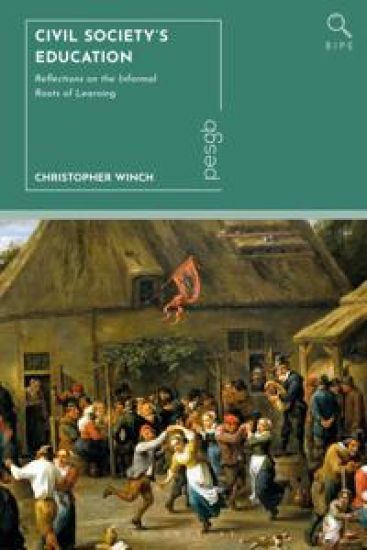
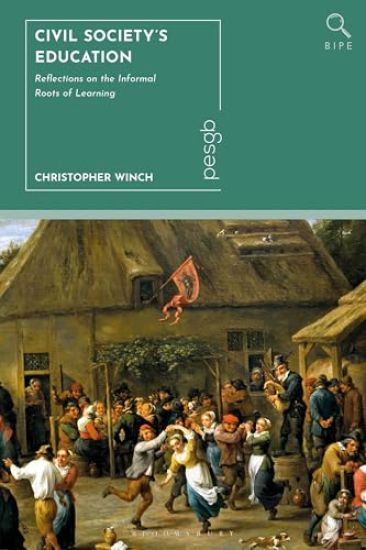
Civil Society’s Education

Civil Society’s Education

Christopher Winch

BLOOMSBURY PUBLISHING PLC
2026
nidottu
This book examines the relationship between the educational activities of civil society and those of the state via three case studies in vocational education, political education, and educational markets. Winch argues that the narrower educational activities of the state cannot be understood independently of those that take place in civil society which consists of institutions such as families, churches, businesses, trade unions, charities and political associations. Drawing on arguments and ideas in the work of Hume, Wittgenstein, Rhees, Vico, Hegel and Gramsci and building on the work of authors such as Bakhurst, Roedl and Hamlyn, the book breaks new ground in offering a philosophical account of civil society and the place of education within it. It is relevant to a range of societies, including those without a state or where the state has little influence, located in geographically and temporally diverse contexts.
Practical Rationality, Learning and Convention
This collection of articles by one of the leading philosophers of education in the English-speaking world takes up themes in the philosophy of language, epistemology and the philosophy of learning to shed light on philosophical puzzles concerning learning, concept formation, knowing how, the following of norms and whether there is a single concept of rationality that can be applied universally. Winch writes from a Wittgensteinian perspective, seeking dissolution rather than solution to philosophical problems. The collection also has a strong practical emphasis; the topics chosen are nearly all related to practical problems of educational policy and practice as well as have intrinsic philosophical interest.
Civil Society’s Education

Civil Society’s Education

Christopher Winch

BLOOMSBURY PUBLISHING PLC
2025
sidottu
This book examines the relationship between the educational activities of civil society and those of the state via three case studies in vocational education, political education, and educational markets. Winch argues that the narrower educational activities of the state cannot be understood independently of those that take place in civil society which consists of institutions such as families, churches, businesses, trade unions, charities and political associations. Drawing on arguments and ideas in the work of Hume, Wittgenstein, Rhees, Vico, Hegel and Gramsci and building on the work of authors such as Bakhurst, Roedl and Hamlyn, the book breaks new ground in offering a philosophical account of civil society and the place of education within it. It is relevant to a range of societies, including those without a state or where the state has little influence, located in geographically and temporally diverse contexts.
Practical Rationality, Learning and Convention
This collection of articles by one of the leading philosophers of education in the English-speaking world takes up themes in the philosophy of language, epistemology and the philosophy of learning to shed light on philosophical puzzles concerning learning, concept formation, knowing how, the following of norms and whether there is a single concept of rationality that can be applied universally. Winch writes from a Wittgensteinian perspective, seeking dissolution rather than solution to philosophical problems. The collection also has a strong practical emphasis; the topics chosen are nearly all related to practical problems of educational policy and practice as well as have intrinsic philosophical interest.
Language, Ability and Educational Achievement
This title, first published in 1990, engages in the current debates about the teaching of literacy and the reform of education. Based on his dissatisfaction with prevalent theories of educational achievement and his experience of teaching in elementary schools, Winch argues that the dichotomy of biological inheritance and environmental influence is inadequate to describe the diverse phenomena of educational achievement. This title will be of interest to students of the philosophy of education.
Language, Ability and Educational Achievement
This title, first published in 1990, engages in the current debates about the teaching of literacy and the reform of education. Based on his dissatisfaction with prevalent theories of educational achievement and his experience of teaching in elementary schools, Winch argues that the dichotomy of biological inheritance and environmental influence is inadequate to describe the diverse phenomena of educational achievement. This title will be of interest to students of the philosophy of education.
The Philosophy of Human Learning

The Philosophy of Human Learning

Christopher Winch

Routledge
2015
nidottu
The Philosophy of Human Learning addresses current concerns with the nature of human learning from a distinctive philosophical perspective. Using insights derived from the work of Wittgenstein, it mounts a vigorous attack on influential contemporary accounts of learning, both in the 'romantic' Rousseauian tradition and in the 'scientific' cognotivist tradition. These two schools, Professor Winch argues, are more closely related than is commonly realised.
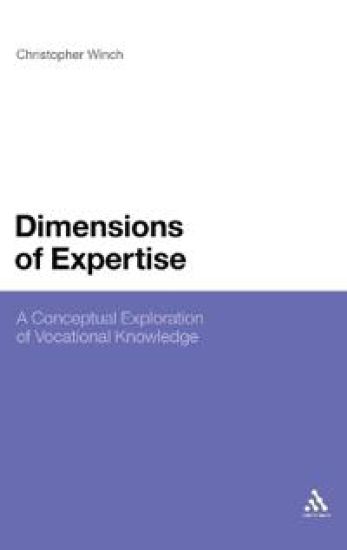
Dimensions of Expertise

Dimensions of Expertise

Christopher Winch

Continuum Publishing Corporation
2012
nidottu
A detailed philosophical debate on the nature of expertise is long overdue and Dimensions of Expertise opens up that debate. Christopher Winch firstly explores an account of know-how, derived primarily from the pioneering work of Gilbert Ryle, and moves on to relate this epistemological debate to discussions concerning the nature of expertise in vocational and professional education, including attempts to provide a theory of expertise.
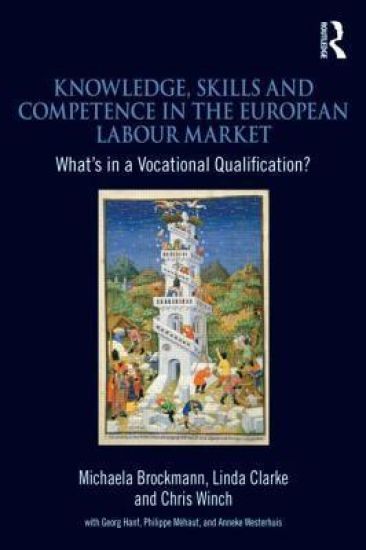
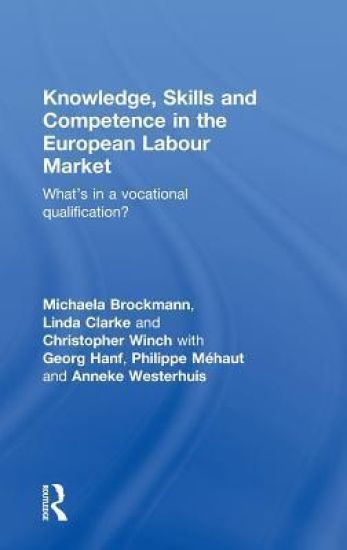
Knowledge, Skills and Competence in the European Labour Market

Knowledge, Skills and Competence in the European Labour Market

Michaela Brockmann; Linda Clarke; Christopher Winch

Routledge
2011
nidottu
For the free movement of labour across the European Union, establishing transparency and comparability of qualifications across member states is vital.This book examines how qualifications, knowledge, skills and competences are understood in different national contexts and trans-nationally and reveals a complex picture of differences and similarities both within and between countries. Against the background of EU policy initiatives, and in particular the European Qualifications Framework, an important focus is on the prospects and difficulties of establishing cross-national recognition of qualifications.Drawing on case studies of particular sectors and occupations in England, France, Germany and the Netherlands, this insightful book, written by leading academics in the field, will be a vital resource for students and researchers involved with vocational education and training, continuing professional development, human resource management and European Union policy.
Knowledge, Skills and Competence in the European Labour Market

Knowledge, Skills and Competence in the European Labour Market

Michaela Brockmann; Linda Clarke; Christopher Winch

Routledge
2011
sidottu
For the free movement of labour across the European Union, establishing transparency and comparability of qualifications across member states is vital.This book examines how qualifications, knowledge, skills and competences are understood in different national contexts and trans-nationally and reveals a complex picture of differences and similarities both within and between countries. Against the background of EU policy initiatives, and in particular the European Qualifications Framework, an important focus is on the prospects and difficulties of establishing cross-national recognition of qualifications.Drawing on case studies of particular sectors and occupations in England, France, Germany and the Netherlands, this insightful book, written by leading academics in the field, will be a vital resource for students and researchers involved with vocational education and training, continuing professional development, human resource management and European Union policy.
Using Educational Research to Inform Practice

Using Educational Research to Inform Practice

Lorraine Foreman-Peck; Christopher Winch

Routledge
2010
sidottu
This book gives practical guidance on how educational research can inform professional practice. Written in a clear and accessible style, it details the way in which evidence based knowledge can be used to develop teaching and learning, bringing together a range of resources for all levels of reader but specifically designed to aid the progressive practitioner researcher. The authors draw on their experience of empirical work in education to provide thoroughly up-to-date reference material, including illustrative case studies, practical guidelines and exercises, and definitions of educational and research terms. The case studies and critical literature surveys have been chosen to demonstrate the use (and mis-use) of research evidence in thinking about a range of important topics in further and higher education, such as, learning styles, deep and surface learning, dyslexia in higher education, the assessment of group work, teaching critical thinking, problem based learning, and dissertation marking. Drawing on their philosophical backgrounds, the authors also address the much conceptual confusions which have led to scepticism regarding the wisdom or even the possibility of using research evidence to inform teaching. Other guidance includes: relating practitioner knowledge to educational research ethical and practical issues on research within the institution evaluating the strengths and limitations of research evidence researching ideas through the examination of case studies practitioner research and contributions to the knowledge baseUsing Educational Research to Inform Practice provides the necessary understanding for conducting research, thinking about its value and applying research evidence to practice in universities and colleges and therefore will be essential reading for those resource managers who are responsible for providing courses and support in higher education institutions. In addition, this book is particularly aimed at further and higher lecturers undertaking professional development courses and experienced and senior staff who wish to use research to improve management practices.
Using Educational Research to Inform Practice

Using Educational Research to Inform Practice

Lorraine Foreman-Peck; Christopher Winch

Routledge
2010
nidottu
This book gives practical guidance on how educational research can inform professional practice. Written in a clear and accessible style, it details the way in which evidence based knowledge can be used to develop teaching and learning, bringing together a range of resources for all levels of reader but specifically designed to aid the progressive practitioner researcher. The authors draw on their experience of empirical work in education to provide thoroughly up-to-date reference material, including illustrative case studies, practical guidelines and exercises, and definitions of educational and research terms. The case studies and critical literature surveys have been chosen to demonstrate the use (and mis-use) of research evidence in thinking about a range of important topics in further and higher education, such as, learning styles, deep and surface learning, dyslexia in higher education, the assessment of group work, teaching critical thinking, problem based learning, and dissertation marking. Drawing on their philosophical backgrounds, the authors also address the much conceptual confusions which have led to scepticism regarding the wisdom or even the possibility of using research evidence to inform teaching. Other guidance includes: relating practitioner knowledge to educational research ethical and practical issues on research within the institution evaluating the strengths and limitations of research evidence researching ideas through the examination of case studies practitioner research and contributions to the knowledge baseUsing Educational Research to Inform Practice provides the necessary understanding for conducting research, thinking about its value and applying research evidence to practice in universities and colleges and therefore will be essential reading for those resource managers who are responsible for providing courses and support in higher education institutions. In addition, this book is particularly aimed at further and higher lecturers undertaking professional development courses and experienced and senior staff who wish to use research to improve management practices.
Dimensions of Expertise

Dimensions of Expertise

Christopher Winch

Continuum International Publishing Group Ltd.
2010
sidottu
This title opens up the debate into the nature of skill, skilfulness and expertise in vocational and professional education. A detailed philosophical debate on the nature of expertise is long overdue and "Dimensions of Expertise" opens up that debate. Christopher Winch firstly explores an account of know-how, derived primarily from the pioneering work of Gilbert Ryle, and moves on to relate this epistemological debate to discussions concerning the nature of expertise in vocational and professional education, including attempts to provide a theory of expertise.
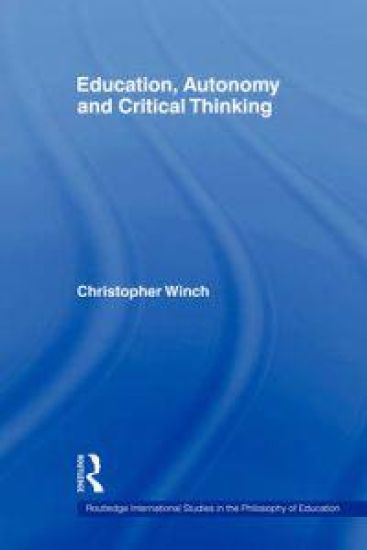
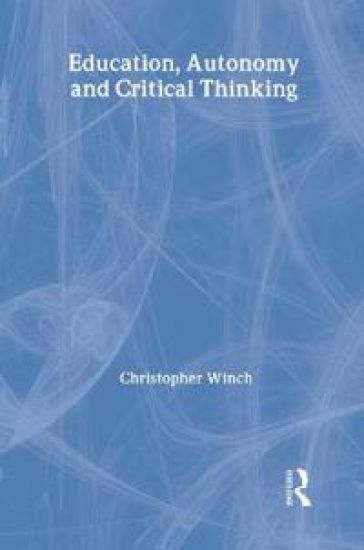
Education, Autonomy and Critical Thinking
The concepts of autonomy and of critical thinking are of key importance in many contemporary accounts of the aims of education. Education, Autonomy and Critical Thinking analyzes their relationship to each other and to education, explores their roles in mortality and politics, and examines the part critical thinking has to play in fulfilling the educational aim of preparing young people for autonomy.Assessing the significance of the concern with critical rationality as a key intellectual component for a worthwhile life involving autonomy, this book also examines important views about what critical thinking is and how it can be cultivated. Drawing from discussions on epistemology and the philosophy of language which concern the nature of rationality, Christopher Winch produces a powerful critique of concepts central to contemporary philosophy of education - autonomy and critical thinking.
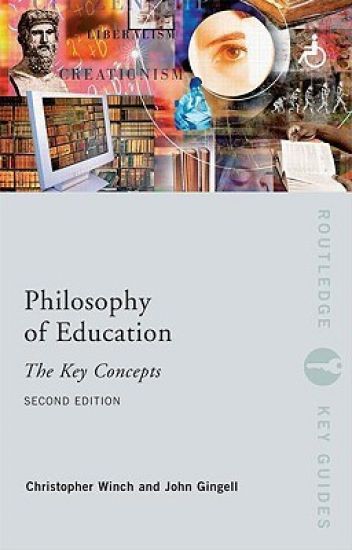
Philosophy of Education: The Key Concepts

Philosophy of Education: The Key Concepts

John Gingell; Christopher Winch

Routledge
2008
nidottu
This new edition of Philosophy of Education: The Key Concepts is an easy to use A-Z guide summarizing all the key terms, ideas and issues central to the study of educational theory today. Fully updated, the book is cross-referenced throughout and contains pointers to further reading, as well as new entries on such topics as: Citizenship and Civic Education Liberalism Capability Well-being Patriotism Globalisation Open-mindedness Creationism and Intelligent Design. Comprehensive and authoritative this highly accessible guide provides all that a student, teacher or policy-maker needs to know about the latest thinking on education in the 21st century.'
Philosophy of Education: The Key Concepts

Philosophy of Education: The Key Concepts

John Gingell; Christopher Winch

Routledge
2008
sidottu
This new edition of Philosophy of Education: The Key Concepts is an easy to use A-Z guide summarizing all the key terms, ideas and issues central to the study of educational theory today. Fully updated, the book is cross-referenced throughout and contains pointers to further reading, as well as new entries on such topics as: Citizenship and Civic Education Liberalism Capability Well-being Patriotism Globalisation Open-mindedness Creationism and Intelligent Design. Comprehensive and authoritative this highly accessible guide provides all that a student, teacher or policy-maker needs to know about the latest thinking on education in the 21st century.'
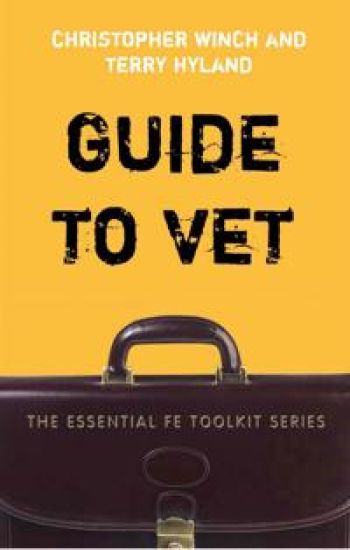
A Guide to Vocational Education and Training

A Guide to Vocational Education and Training

Christopher Winch; Terry Hyland

Continuum International Publishing Group Ltd.
2007
nidottu
This is an accessible and clearly written survival guide to Vocational Education and Training in the UK. Christopher Winch draws on recent research to answer key questions such as: Why is VET such an important area? How can European models be used to develop VET in the UK? How is VET structured and provided? And, what are the main issues facing VET today? All in all, the most user-friendly and useful guide to VET ever published.
Education, Autonomy and Critical Thinking
The concepts of autonomy and of critical thinking are of key importance in many contemporary accounts of the aims of education. Education, Autonomy and Critical Thinking analyzes their relationship to each other and to education, explores their roles in mortality and politics, and examines the part critical thinking has to play in fulfilling the educational aim of preparing young people for autonomy.Assessing the significance of the concern with critical rationality as a key intellectual component for a worthwhile life involving autonomy, this book also examines important views about what critical thinking is and how it can be cultivated. Drawing from discussions on epistemology and the philosophy of language which concern the nature of rationality, Christopher Winch produces a powerful critique of concepts central to contemporary philosophy of education - autonomy and critical thinking.
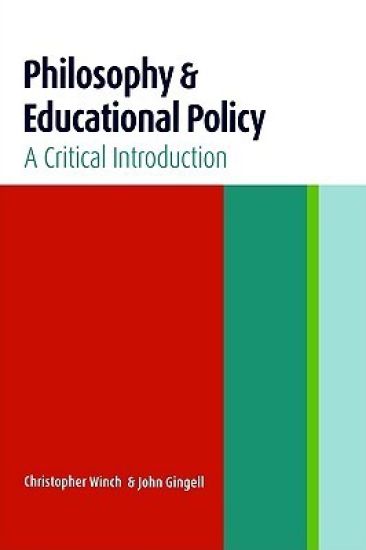
Philosophy and Educational Policy

Philosophy and Educational Policy

John Gingell; Christopher Winch

Routledge
2004
sidottu
What are the concepts and theories behind current debates about education?This comprehensive introduction to philosophy of education discusses issues that are of current public interest and debate. It locates education at the heart of questions concerned with culture, ethics, politics, economics and shows how key educational issues have to be approached in a contextual way. Written in a clear and accessible manner with current issues in mind the book covers:the curriculumteaching and learningeducational researchassessmentmoral, personal and civic educationautonomy and multicultural issues in a liberal societyeducation and workprivatisation and marketsThis book will be particularly useful to students on Education Studies courses, to those preparing for a career in teaching, to students of politics and to serving teachers undertaking further study in education.
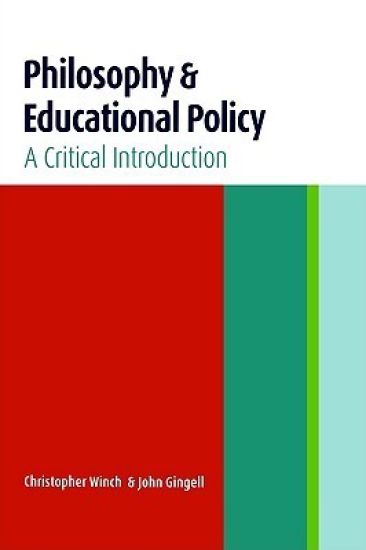
Philosophy and Educational Policy

Philosophy and Educational Policy

John Gingell; Christopher Winch

Routledge
2004
nidottu
What are the concepts and theories behind current debates about education?This comprehensive introduction to philosophy of education discusses issues that are of current public interest and debate. It locates education at the heart of questions concerned with culture, ethics, politics, economics and shows how key educational issues have to be approached in a contextual way. Written in a clear and accessible manner with current issues in mind the book covers:the curriculumteaching and learningeducational researchassessmentmoral, personal and civic educationautonomy and multicultural issues in a liberal societyeducation and workprivatisation and marketsThis book will be particularly useful to students on Education Studies courses, to those preparing for a career in teaching, to students of politics and to serving teachers undertaking further study in education.