Kirjojen hintavertailu. Mukana 12 268 450 kirjaa ja 12 kauppaa.

Kirjailija

Christos Christodoulou

Kirjat ja teokset yhdessä paikassa: 7 kirjaa, julkaisuja vuosilta 2000-2021, suosituimpien joukossa Applications Of Neural Networks in Electromagnetics. Vertaile teosten hintoja ja tarkista saatavuus suomalaisista kirjakaupoista.

7 kirjaa

Kirjojen julkaisuhaarukka 2000-2021.

Machine Learning Applications in Electromagnetics and Antenna Array Processing

Machine Learning Applications in Electromagnetics and Antenna Array Processing

Manel Martinez-Ramon; Arjun Gupta; Jose Luis Rojo-Alvarez; Christos Christodoulou

Artech House Publishers
2021
sidottu
This practical resource provides an overview of machine learning (ML) approaches as applied to electromagnetics and antenna array processing. Detailed coverage of the main trends in ML, including uniform and random array processing (beamforming and detection of angle of arrival), antenna optimization, wave propagation, remote sensing, radar, and other aspects of electromagnetic design are explored. An introduction to machine learning principles and the most common machine learning architectures and algorithms used today in electromagnetics and other applications is presented, including basic neural networks, gaussian processes, support vector machines, kernel methods, deep learning, convolutional neural networks, and generative adversarial networks. Applications in electromagnetics and antenna array processing that are solved using machine learning are discussed, including antennas, remote sensing, and target classification.
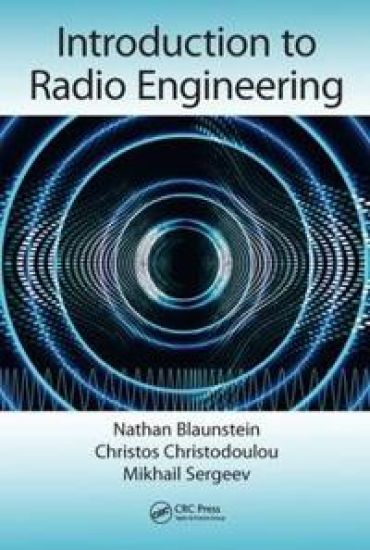
Introduction to Radio Engineering

Introduction to Radio Engineering

Nathan Blaunstein; Christos Christodoulou; Mikhail Sergeev

CRC Press
2020
nidottu
The book introduces the basic foundations of high mathematics and vector algebra. Then, it explains the basic aspects of classical electrodynamics and electromagnetism. Based on such knowledge readers investigate various radio propagation problems related to guiding structures connecting electronic devices with antenna terminals placed at the different radar systems. It explains the role of antennas in process of transmission of radio signals between the terminals. Finally, it shows the relation between the main operational charactistics of each kind of radar and the corresponding knowledge obtained from the previous chapters.
Introduction to Radio Engineering

Introduction to Radio Engineering

Nathan Blaunstein; Christos Christodoulou; Mikhail Sergeev

Productivity Press
2016
sidottu
The book introduces the basic foundations of high mathematics and vector algebra. Then, it explains the basic aspects of classical electrodynamics and electromagnetism. Based on such knowledge readers investigate various radio propagation problems related to guiding structures connecting electronic devices with antenna terminals placed at the different radar systems. It explains the role of antennas in process of transmission of radio signals between the terminals. Finally, it shows the relation between the main operational charactistics of each kind of radar and the corresponding knowledge obtained from the previous chapters.
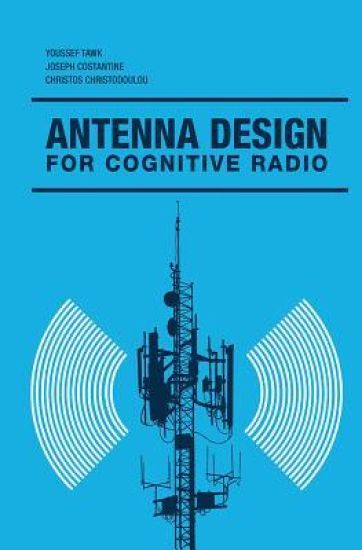
Antenna Design for Cognitive Radio

Antenna Design for Cognitive Radio

Christos Christodoulou; Joseph Costantine; Youssef Tawk

Artech House Publishers
2016
sidottu
This one-of-a-kind new resource presents cognitive radio from an antenna design perspective and introduces the concept of cognitive radio as a protocol that benefits from under-utilized regions of the spectrum. This book covers topics that govern the operation of a cognitive radio and discusses the use of reconfigurable antennas, reconfigurable filtennas, and MIMO antennas for cognitive radio. The analysis and design of different antenna systems are presented, compared and evaluated. New approaches to improve spectrum efficiency are explored by demonstrating how to design software controlled cognitive radio antenna systems. This new resource shows how to communicate using either interweave or underlay cognitive radio and demonstrates the benefits of designing appropriate sensing and communicating antennas.
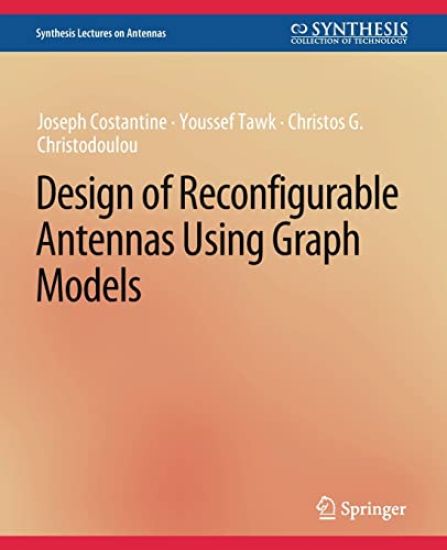
Design of Reconfigurable Antennas Using Graph Models

Design of Reconfigurable Antennas Using Graph Models

Joseph Costantine; Youssef Tawk; Christos Christodoulou

Springer International Publishing AG
2013
nidottu
This lecture discusses the use of graph models to represent reconfigurable antennas. The rise of antennas that adapt to their environment and change their operation based on the user's request hasn't been met with clear design guidelines. There is a need to propose some rules for the optimization of any reconfigurable antenna design and performance. Since reconfigurable antennas are seen as a collection of self-organizing parts, graph models can be introduced to relate each possible topology to a corresponding electromagnetic performance in terms of achieving a characteristic frequency of operation, impedance, and polarization. These models help designers understand reconfigurable antenna structures and enhance their functionality since they transform antennas from bulky devices into mathematical and software accessible models. The use of graphs facilitates the software control and cognition ability of reconfigurable antennas while optimizing their performance. This lecture also discusses the reduction of redundancy, complexity and reliability of reconfigurable antennas and reconfigurable antenna arrays. The full analysis of these parameters allows a better reconfigurable antenna implementation in wireless and space communications platforms. The use of graph models to reduce the complexity while preserving the reliability of reconfigurable antennas allow a better incorporation in applications such as cognitive radio, MIMO, satellite communications, and personal communication systems. A swifter response time is achieved with less cost and losses. This lecture is written for individuals who wish to venture into the field of reconfigurable antennas, with a little prior experience in this area, and learn how graph rules and theory, mainly used in the field of computer science, networking, and control systems can be applied to electromagnetic structures. This lecture will walk the reader through a design and analysis process of reconfigurable antennas using graph models with a practical and theoretical outlook.
Support Vector Machines for Antenna Array Processing and Electromagnetics

Support Vector Machines for Antenna Array Processing and Electromagnetics

Manel Martínez-Ramón; Christos Christodoulou

Springer International Publishing AG
2007
nidottu
Support Vector Machines (SVM) were introduced in the early 90's as a novel nonlinear solution for classification and regression tasks. These techniques have been proved to have superior performances in a large variety of real world applications due to their generalization abilities and robustness against noise and interferences. This book introduces a set of novel techniques based on SVM that are applied to antenna array processing and electromagnetics. In particular, it introduces methods for linear and nonlinear beamforming and parameter design for arrays and electromagnetic applications.
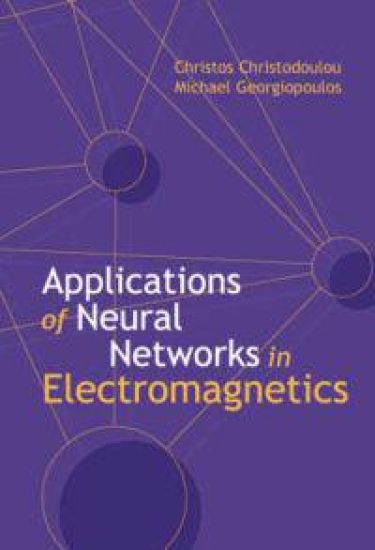
Applications Of Neural Networks in Electromagnetics

Applications Of Neural Networks in Electromagnetics

Christos Christodoulou; Michael Georgiopoulos

Artech House
2000
sidottu
An explanation of how the high-speed capabilities and "learning" abilities of neural networks can be applied to solving numerous complex optimization problems in electromagnetics. It seeks to help the reader understand the basics and strengths and limitations of each main network architecture in use today. Moreover, it identifies situations when the use of neural networks is the best problem-solving option.