Kirjojen hintavertailu. Mukana 12 595 353 kirjaa ja 12 kauppaa.

Kirjailija

Chuck Parsons

Kirjat ja teokset yhdessä paikassa: 17 kirjaa, julkaisuja vuosilta 2004-2022, suosituimpien joukossa Ben Thompson. Vertaile teosten hintoja ja tarkista saatavuus suomalaisista kirjakaupoista.

17 kirjaa

Kirjojen julkaisuhaarukka 2004-2022.

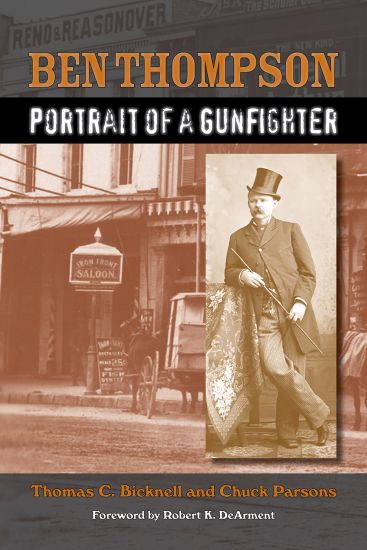
Ben Thompson

Ben Thompson

Thomas C. Bicknell; Chuck Parsons; Robert K. DeArment

University of North Texas Press,U.S.
2018
sidottu
Ben Thompson was a remarkable man, and few Texans can claim to have crowded more excitement, danger, drama, and tragedy into their lives than he did. He was an Indian fighter, Texas Ranger, Confederate cavalryman, mercenary for a foreign emperor, hired gun for a railroad, an elected lawman, professional gambler, and the victor of numerous gunfights.As a leading member of the Wild West's sporting element, Ben Thompson spent most of his life moving in the unsavory underbelly of the West: saloons, dance-houses, billiard halls, bordellos, and gambling dens. During these travels many of the Wild West's most famous icons—Wyatt Earp, Doc Holliday, Bat Masterson, Wild Bill Hickok, John Wesley Hardin, John Ringo, and Buffalo Bill Cody—became acquainted with Ben Thompson. Some of these men called him a friend; others considered him a deadly enemy. In life and in death no one ever doubted Ben Thompson's courage; one Texas newspaperman asserted he was “perfectly fearless, a perfect lion in nature when aroused.” This willingness to trust his life to his expertise with a pistol placed Thompson prominently among the western frontier's most flamboyant breed of men: gunfighters.
A Lawless Breed

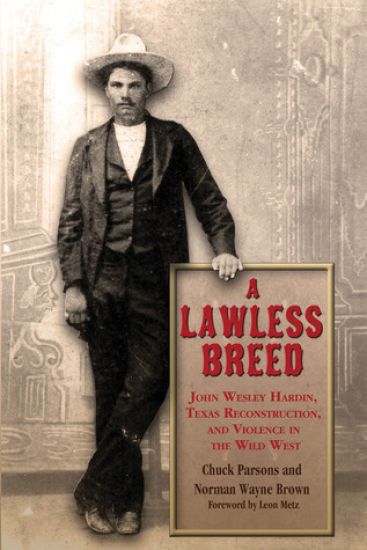
A Lawless Breed

Chuck Parsons; Norman Wayne Brown; Leon C. Metz

University of North Texas Press,U.S.
2014
nidottu
John Wesley Hardin! His name spread terror in much of Texas in the years following the Civil War as the most wanted fugitive with a $4,000 reward on his head. A Texas Ranger wrote that he killed men just to see them kick. Hardin began his killing career in the late 1860s and remained a wanted man until his capture in 1877 by Texas Rangers and Florida law officials. He certainly killed twenty men; some credited him with killing forty or more. After sixteen years in Huntsville prison he was pardoned by Governor Hogg. For a short while he avoided trouble and roamed westward, eventually establishing a home of sorts in wild and woolly El Paso as an attorney. He became embroiled in the dark side of that city and eventually lost his final gunfight to an El Paso constable, John Selman. Hardin was forty-two years old.Besides his reputation as the deadliest man with a six-gun, he left an autobiography in which he detailed many of the troubles of his life. In A Lawless Breed, Chuck Parsons and Norman Wayne Brown have meticulously examined his claims against available records to determine how much of his life story is true, and how much was only a half truth, or a complete lie. As a killer of up to forty men, Hardin obviously had psychological issues, which the authors probe and explain in laymen’s terms. To Hardin, those three dozen or more killings were a result of being forced to defend his life, his honor, or to preserve his freedom against those who would rob or destroy him or his loved ones. Was he a combination freedom fighter/man-killer, or merely a blood-lust killer who became a national celebrity? This deeply researched biography of Hardin and his friends and family will remain the definitive study for years to come.
The Sutton-Taylor Feud

The Sutton-Taylor Feud

Chuck Parsons

University of North Texas Press,U.S.
2013
nidottu
The Sutton-Taylor Feud of DeWitt, Gonzales, Karnes, and surrounding counties began shortly after the Civil War ended. The blood feud continued into the 1890s when the final court case was settled with a governmental pardon. Of all the Texas feuds, the one between the Sutton and Taylor forces lasted longer and covered more ground than any other. William E. Sutton was the only Sutton involved, but he had many friends to wage warfare against the large Taylor family. The causes are still shrouded in mystery and legend, as both sides argued they were just and right. In April 1868 Charles Taylor and James Sharp were shot down in Bastrop County, alleged horse thieves attempting to escape. During this period many men were killed ""while attempting to escape."" The killing on Christmas Eve 1868 of Buck Taylor and Dick Chisholm was perhaps the final spark that turned hard feelings into fighting with bullets and knives. William Sutton was involved in both killings. ""Who sheds a Taylor's blood, by a Taylor's hand must fall"" became a fact of life in South Texas. Violent acts between the two groups now followed. The military reacted against the killing of two of their soldiers in Mason County by Taylors. The State Police committed acts that were not condoned by their superiors in Austin. Mobs formed in Comanche County in retaliation for John Wesley Hardin's killing of a Brown County deputy sheriff. One mob ""liberated"" three prisoners from the DeWitt County jail, thoughtfully hanging them close to the cemetery for the convenience of their relatives. An ambush party killed James Cox, slashing his throat from ear to ear—as if the buckshot in him was not sufficient. A doctor and his son were called from their home and brutally shot down. Texas Rangers attempted to quell the violence, but when they were called away, the killing began again. In this definitive study of the Sutton-Taylor Feud, Chuck Parsons demonstrates that the violence between the two sides was in the tradition of the family blood feud, similar to so many other nineteenth-century American feuds. His study is well augmented with numerous illustrations and appendices detailing the feudists, their attempts at treaties, and their victims.
King Fisher

King Fisher

Chuck Parsons; Thomas C Bicknell

UNIVERSITY OF NORTH TEXAS PRESS,U.S.
2022
sidottu
America’s Wild West created an untold number of notorious characters, and in southwestern Texas, John King Fisher (1855– 1884) was foremost among them. To friends and foes alike, he insisted he be called “King.” He found a home in the tough sun-beaten Nueces Strip, a lawless land between the Nueces River and the Rio Grande. There he gathered a gang of rustlers around him at his ranch on Pendencia Creek. For a decade King and his gang raided both sides of the Rio Grande, shooting down any who opposed them. Newspapers claimed King killed potential witnesses—he was never convicted of cattle or horse stealing, or murder.King’s reign ended when he was arrested by Texas Ranger Captain Leander McNelly. In no uncertain terms he advised Fisher to change his ways, so King became deputy sheriff of Uvalde County. But his hard-won respectability would not last. On a spring night in 1884, King made the mistake of accompanying the truly notorious gambler and gunfighter Ben Thompson on a tour of San Antonio, where several years prior Thompson shot down Jack Harris at the latter’s saloon and theater, the Vaudeville. Recklessly, King Fisher accompanied Thompson back to the theater, where assassins were waiting. When the smoke cleared, Fisher was stretched out beside Thompson, dead from thirteen gunshot wounds.
Texas Ranger Lee Hall

Texas Ranger Lee Hall

Chuck Parsons

University of North Texas Press,U.S.
2020
sidottu
Jesse Lee Hall (1849-1911) was one of many young men seeking a new life following the Civil War, when he left North Carolina to find adventure in Texas. After a stint as a deputy sheriff and a Sergeant-at-Arms in the House of Representatives, he joined Captain Leander McNelly's Texas Ranger Special State Troops in 1876. This was the career move that he had needed as he soon found enough action in South Texas.When McNelly could no longer command due to illness, Hall was named to take his place. Hall was involved in arresting King Fisher and his gang, and he (with a small squad) arrested seven of the Sutton faction, effectively ending the bloody Sutton-Taylor Feud. One of his men, John B. Armstrong, finally captured the most wanted man in Texas, John Wesley Hardin, in far-off Florida. In 1878 Hall took part in the gun battle ending the career of outlaw Sam Bass.Nearing his fiftieth birthday, Hall hoped to join Teddy Roosevelt's 'Rough Riders,' but that did not happen. Instead he was posted to the Philippines, where as a commander during the Philippine Insurrection he was so badly injured that he was given a medical discharge. The old warrior died in San Antonio in 1911, loved and respected, having a reputation equaled by few.
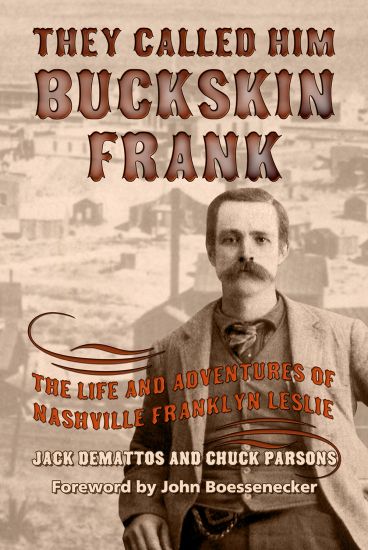
They Called Him Buckskin Frank

They Called Him Buckskin Frank

Jack DeMattos; Chuck Parsons

University of North Texas Press,U.S.
2018
sidottu
Nashville Franklyn “Buckskin Frank” Leslie was a man of mystery during his lifetime. His reputation has rested on two gunfights—both in storied Tombstone, Arizona—but he was much more than a deadly gunfighter. Jack DeMattos and Chuck Parsons have combined their research efforts to help solve the questions of where Leslie came from and how he died.Leslie developed a reputation as a man to be left alone. Such notables as the Earps, Doc Holliday, and John Ringo wisely avoided confrontations with him. Leslie was a “lady killer” both figuratively and—in one celebrated incident—literally. Beyond his gunfighting legacy, DeMattos and Parsons also explore Leslie’s scouting with General Crook on the Great Plains and his alleged service as a deputy for Wild Bill Hickok in Abilene, Kansas.
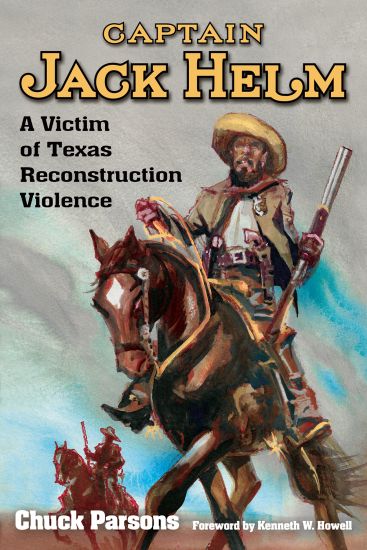
Captain Jack Helm

Captain Jack Helm

Chuck Parsons; Kenneth W. Howell

University of North Texas Press,U.S.
2018
sidottu
In Captain Jack Helm, Chuck Parsons explores the life of John Jackson “Jack” Helm, whose main claim to fame has been that he was a victim of man-killer John Wesley Hardin. That he was, but he was much more in his violence-filled lifetime during Reconstruction Texas. First as a deputy sheriff, then county sheriff, and finally captain of the notorious Texas State Police, he developed a reputation as a violent and ruthless man-hunter. He arrested many suspected lawbreakers, but often his prisoner was killed before reaching a jail for “attempting to escape.” This horrific tendency ultimately brought about his downfall. Helm’s aggressive enforcement of his version of “law and order” resulted in a deadly confrontation with two of his enemies in the midst of the Sutton-Taylor Feud.
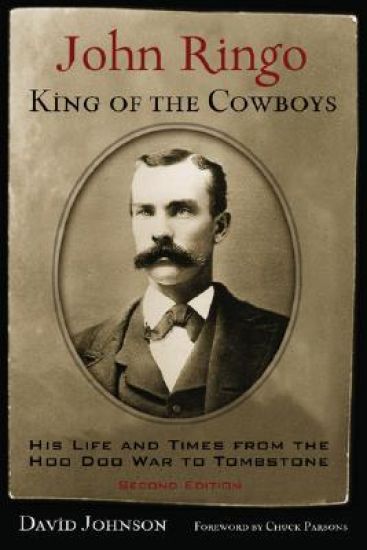
John Ringo, King of the Cowboys

John Ringo, King of the Cowboys

David Johnson; Chuck Parsons

University of North Texas Press,U.S.
2017
nidottu
Few names in the lore of western gunmen are as recognizable. Few lives of the most notorious are as little known. Romanticized and made legendary, John Ringo fought and killed for what he believed was right. As a teenager, Ringo was rushed into sudden adulthood when his father was killed tragically in the midst of the family's overland trek to California. As a young man he became embroiled in the blood feud turbulence of post-Reconstruction Texas.The Mason County ?Hoo Doo” War in Texas began as a war over range rights, but it swiftly deteriorated into blood vengeance and spiraled out of control as the body count rose. In this charnel house Ringo gained a reputation as a dangerous gunfighter and man killer. He was proclaimed throughout the state as a daring leader, a desperate man, and a champion of the feud. Following incarceration for his role in the feud, Ringo was elected as a lawman in Mason County, the epicenter of the feud’s origin.The reputation he earned in Texas, further inflated by his willingness to shoot it out with Victorio’s raiders during a deadly confrontation in New Mexico, preceded him to Tombstone in territorial Arizona. Ringo became immersed in the area’s partisan politics and factionalized violence. A champion of the largely Democratic ranchers, Ringo would become known as a leader of one of these elements, the Cowboys. He ran at bloody, tragic odds with the Earp brothers and Doc Holliday, finally being part of the posse that hounded these fugitives from Arizona. In the end, Ringo died mysteriously in the Arizona desert, his death welcomed by some, mourned by others, wrongly claimed by a few. Initially published in 1996, John Ringo has been updated to a second edition with much new information researched and uncovered by David Johnson and other Ringo researchers.
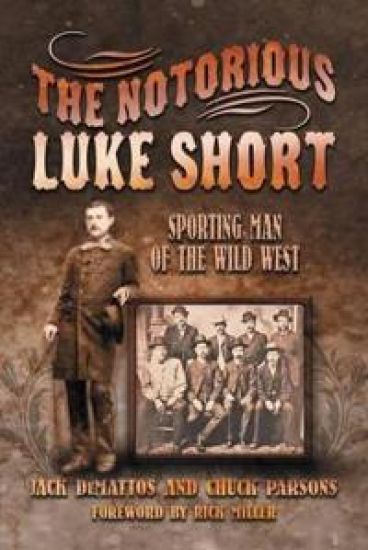
The Notorious Luke Short

The Notorious Luke Short

Jack DeMattos; Chuck Parsons; Rick Miller

University of North Texas Press,U.S.
2015
sidottu
Luke Short perfected his skills as a gambler in locations that included Leadville, Tombstone, Dodge City, and Fort Worth. In 1883, in what became known as the “Dodge City War,” he banded together with Wyatt Earp, Bat Masterson, and others to protect his ownership interests in the Long Branch Saloon - an event commemorated by the famous “Dodge City Peace Commission” photograph.During his lifetime, Luke Short became one of the best known sporting men in the United States, and one of the wealthiest. The irony is that Luke Short is best remembered for being the winning gunfighter in two of the most celebrated showdowns in Old West history: the shootout with Charlie Storms in Tombstone, Arizona, and the showdown against Jim Courtright in Fort Worth, Texas. He would have hated that.
Texas Ranger N. O. Reynolds, the Intrepid

Texas Ranger N. O. Reynolds, the Intrepid

Chuck Parsons; Donaly E. Brice

University of North Texas Press,U.S.
2014
sidottu
In this second edition, historians Chuck Parsons and Donaly E. Brice present a complete picture of N. O. Reynolds (1846–1922), a Texas Ranger who brought a greater respect for the law in Central Texas. Reynolds began as a sergeant in famed Company D, Frontier Battalion in 1874. He served honorably during the Mason County ""Hoo Doo"" War and was chosen to be part of Major John B. Jones's escort, riding the frontier line. In 1877 he arrested the Horrells, who were feuding with their neighbors, the Higgins party, thus ending their Lampasas County feud. Shortly thereafter he was given command of the newly formed Company E of Texas Rangers. Also in 1877 the notorious John Wesley Hardin was captured; N.O. Reynolds was given the responsibility to deliver Hardin to trial in Comanche, return him to a safe jail during his appeal, and then escort him safely to the Huntsville penitentiary.
The Texas Rangers

The Texas Rangers

Chuck Parsons

Arcadia Publishing (SC)
2011
nidottu
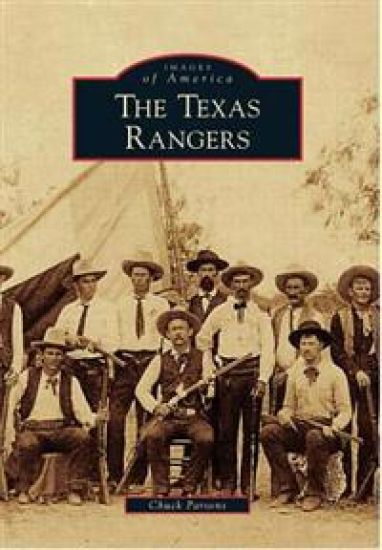
The Texas Rangers. The words evoke exciting images of daring, courage, high adventure. The Rangers began as a handful of men protecting their homes from savage raiding parties; now in their third century of existence, they are a highly sophisticated crime-fighting organization. Yet at times even today the Texas Ranger mounts his horse to track fugitives through dense chaparral, depending on his wits more than technology. The iconic image of the Texas Ranger is of a man who is tall, unflinching, and dedicated to doing a difficult job no matter what the odds. The Rangers of the 21st century are different sizes, colors, and genders, but remain as vital and real today as when they were created in the horseback days of 1823, when what is today Texas was part of Mexico, a wild and untamed land.
Legendary Watering Holes

Legendary Watering Holes

Nancy Hamilton; Richard F. Selcer; David Bowser; Chuck Parsons

Texas A M University Press
2004
sidottu
Saloons, barrooms, honky-tonks, or watering holes - by whatever name, they are part of the mythology of the American West, and their stories are cocktails of legend and fact, as Richard Selcer, David Bowser, Nancy Hamilton, and Chuck Parsons demonstrate in these accounts of four legendary Texas establishments. In most Western communities, the first saloon was built before the first church, and the drinking establishments far outnumbered the religious ones. Beyond their obvious functions, saloons served as community centers, polling places, impromptu courtrooms, and public meeting halls. Here, the spotlight is thrown on four celebrated saloons: Jack Harris's Saloon And Vaudeville Theater-San Antonio; Ben Dowell's Saloon-El Paso; The Iron Front-Austin; The White Elephant-Fort Worth; Selcer and his coauthors start with the origins of each establishment and follow their stories until the last drink was served and the places closed down for good. They discuss all aspects of the business: the owners, the liquor provided, the entertainment, the troubling issues of segregation by race and gender, and the way order was maintained - if it was at all. Along the way they consider the ornate bar construction, old floor plans, the liquor suppliers, the attire of the gentlemen gamblers, the variety of casino games that emptied men's pockets, fatal shootings that occurred, and more. Vintage photos of the establishments, along with some of their more famous customers, further take the reader back to the Old West.