Kirjojen hintavertailu. Mukana 12 390 323 kirjaa ja 12 kauppaa.

Kirjailija

Ciaran Burke

Kirjat ja teokset yhdessä paikassa: 3 kirjaa, julkaisuja vuosilta 2013-2015, suosituimpien joukossa An Equitable Framework for Humanitarian Intervention. Vertaile teosten hintoja ja tarkista saatavuus suomalaisista kirjakaupoista.

Mukana myös kirjoitusasut: Ciarán Burke

3 kirjaa

Kirjojen julkaisuhaarukka 2013-2015.

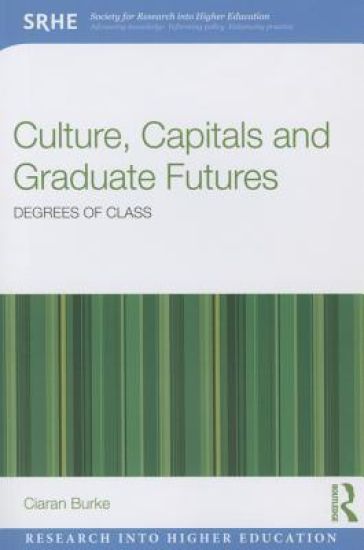
Culture, Capitals and Graduate Futures
In a time of too many graduates for too few jobs, and in a context where applicants have similar levels of educational capital, what other factors influence graduate career trajectories? Based on the life history interviews of graduates and framed through a Bourdieusian sociological lens, Culture, Capitals and Graduate Futures explores the continuing role that social class as well as cultural and social capitals have on both the aspirations and expectations towards, and the trajectories within, the graduate labour market. Framed within the current context of increasing levels of university graduates and the falling numbers of graduate positions available in the UK labour market, this book provides a critical examination of the supposedly linear and meritocratic relationship between higher education and graduate employment proposed by official discourses from government at both local and national levels. Through a critical engagement with the empirical findings, Culture, Capitals and Graduate Futures asks important questions for the effective continuation of the widening participation agenda. This timely book will be of interest to higher education professionals working within widening participation policy and higher education policy.

Culture, Capitals and Graduate Futures
In a time of too many graduates for too few jobs, and in a context where applicants have similar levels of educational capital, what other factors influence graduate career trajectories? Based on the life history interviews of graduates and framed through a Bourdieusian sociological lens, Culture, Capitals and Graduate Futures explores the continuing role that social class as well as cultural and social capitals have on both the aspirations and expectations towards, and the trajectories within, the graduate labour market. Framed within the current context of increasing levels of university graduates and the falling numbers of graduate positions available in the UK labour market, this book provides a critical examination of the supposedly linear and meritocratic relationship between higher education and graduate employment proposed by official discourses from government at both local and national levels. Through a critical engagement with the empirical findings, Culture, Capitals and Graduate Futures asks important questions for the effective continuation of the widening participation agenda. This timely book will be of interest to higher education professionals working within widening participation policy and higher education policy.
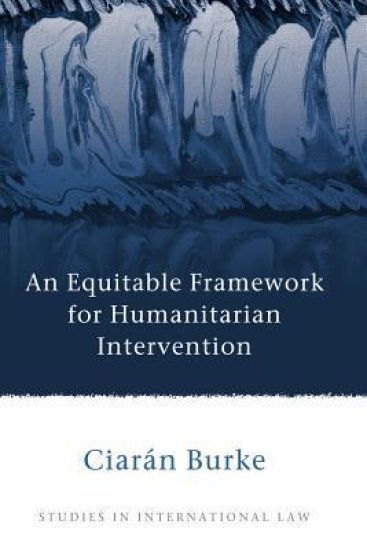
An Equitable Framework for Humanitarian Intervention
This book aims to resolve the dilemma regarding whether armed intervention as a response to gross human rights violations is ever legally justified without Security Council authorisation. Thus far, international lawyers have been caught between giving a negative answer on the basis of the UN Charter's rules ('positivists'), and a 'turn to ethics', declaring intervention legitimate on moral grounds, while eschewing legal analysis ('moralists'). In this volume, a third solution is proposed. The idea is presented that many equitable principles may qualify as 'general principles of law recognised by civilised nations' - one of the three principal sources of international law (though a category that is often overlooked) - a conclusion based upon detailed research of both national legal systems and international law. These principles, having normative force in international law, are then used to craft an equitable framework for humanitarian intervention. It is argued that the dynamics of their operation allow them to interact with the Charter and customary law in order to fill gaps in the existing legal structure and soften the rigours of strict law in certain circumstances. It is posited that many of the moralists' arguments are justified, albeit based upon firm legal principles rather than ethical theory. The equitable framework proposed is designed to provide an answer to the question of how humanitarian intervention may be integrated into the legal realm. Certainly, this will not mean an end to controversies regarding concrete cases of humanitarian intervention. However, it will enable the framing of such controversies in legal terms, rather than as a choice between the law and morality.'...has potential to become one of the most important books in public international law of the decade, or in a generation'.Martin Scheinin, Professor of Public International Law, European University Institute, Florence