Kirjojen hintavertailu. Mukana 12 595 353 kirjaa ja 12 kauppaa.

Kirjailija

Ciaran Carson

Kirjat ja teokset yhdessä paikassa: 18 kirjaa, julkaisuja vuosilta 1987-2026, suosituimpien joukossa The Pen Friend. Vertaile teosten hintoja ja tarkista saatavuus suomalaisista kirjakaupoista.

18 kirjaa

Kirjojen julkaisuhaarukka 1987-2026.

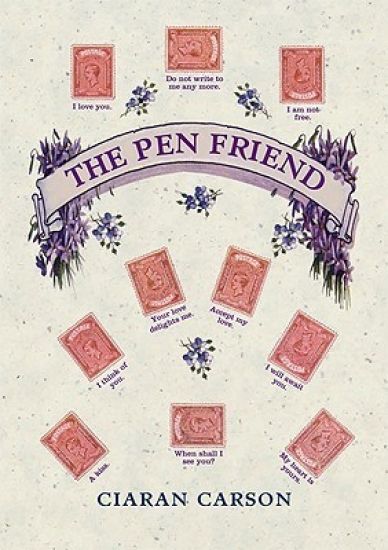
The Pen Friend

The Pen Friend

Ciaran Carson

Blackstaff Press Ltd
2009
sidottu
‘I write to try to see you as you were, or what you have become. You left no forwarding address: that was part of your intention. For when we wrote those letters to each other all those years ago, we wrote as much for ourselves as for each other.’ More than twenty years after the end of their love affair, Gabriel receives a cryptic postcard from old flame Nina. It is the first of thirteen cards from her, each one provoking a series of reveries about their life together in 1980s Belfast. The Pen Friend is, however, much more than a love story. As Gabriel teases out the significance of the cards, his reveries develop into richly textured meditations on writing, memory, spiritualism and surveillance. The result is an intricate web of fact and fiction – moving easily between such varied subjects as the Troubles, Esperanto and John Lavery – a strange and wonderful novel by one of our finest Irish writers. If you enjoyed The Pen Friend, you might also enjoy Ciaran Carson’s Exchange Place, a brilliant thriller set in Paris and Belfast.
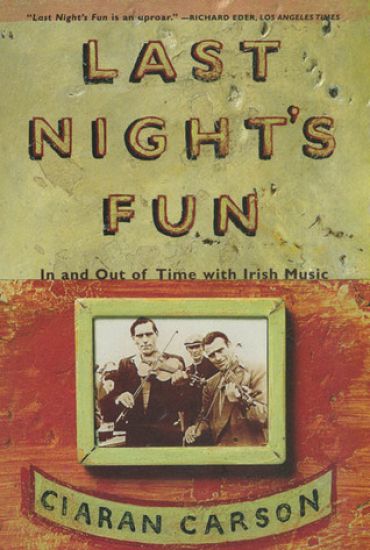
Last Night's Fun: A Book about Irish Traditional Music

Last Night's Fun: A Book about Irish Traditional Music

Ciaran Carson

Farrar, Strauss Giroux-3pl
1998
nidottu
"Last Night's Fun's" is a sparking celebration of music and life that is itself a literary performance of the highest order. Carson's inspired jumble of recording history, poetry, tall tales, and polemic captures the sound and vigor of a ruthlessly unsentimental music. "Last Night's Fun" is remarkable for its liveliness, honesty, scholarship, and spontaneous joy; certainly there has never been a book about Irish music like this one, and few books ever written anywhere about the experience of music can compare with it.
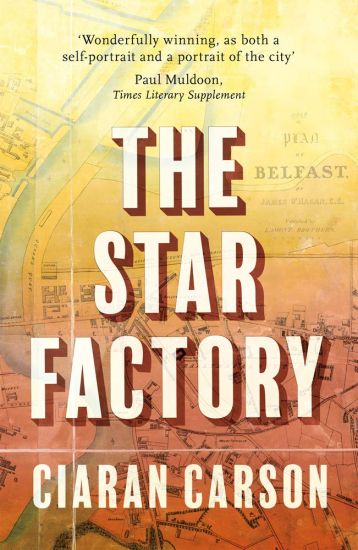
The Star Factory

The Star Factory

Ciaran Carson

Apollo
2019
nidottu
One of Ireland's most celebrated writers, musicians, and poets, Ciaran Carson was born in Belfast and has spent his life there. In The Star Factory, he makes himself the cartographer of his home city's spaces, symbolic and literal, the scribe of its byways and avenues, from Abbey Road to Zetland Street. Belfast has seen transformation: once the fifth-greatest industrial city in the world, the home of the S.S. Titanic, it has more recently been a battleground of sectarian slaughter. To conjure up the lives lived there, Carson plunges down the 'wormhole of memory' – admiring along the way the strata and roots beneath the surface. Though it has experienced more than its share of urban decay – the Star Factory of the title is an abandoned mill – Carson's Belfast teems with stories, stories that can spring from a telephone directory, a cigarette case, a postcard, a book about tramways, a stamp. For the eye that knows where to look, and the ear that can listen, gems and melodies are everywhere. The Star Factory is an elegy of magical power and enduring love, a work of passion and precision, and sure to be considered one of the finest books about Ireland ever written.
The Ballad of HMS Belfast

The Ballad of HMS Belfast

Ciaran Carson

Picador
2014
pokkari
This compendium, made from Ciaran Carson’s previous collections, reveals one of the most remarkable and sustained tours de force in contemporary poetry: the poet’s reimaginign of his native city of Belfast. Carson introduces the reader to a city as full of surreal narrative and imaginative possibility as Borges’ Buenos Aires or Calvino’s Venice; at the same time he never shirks from taking a hard look at the city in all its political and cultural complexity. In its refusal to simplify or romanticize, The Ballad of HMS Belfast is an indispensable guidebook to a city few will know exists. ‘He is the master of the long line; these poems are manic, frightening and funny, and somehow manage to catch the tone of life in modern Belfast’ John Banville, Irish Times ‘It is about Belfast past and present and is full of surprises, savage and witty, human and extravagant. His voice is truly original, both intelligent and passionate’ A. S. Byatt, Sunday Times Books of the Year
Belfast Confetti

Belfast Confetti

Ciaran Carson

Wake Forest University Press
1989
nidottu
Belfast Confetti, Ciaran Carson's third book of poetry, weaves together in a carefully sequenced volume prose pieces, long poems, lyrics, and haiku. His subjects include the permeable boundaries of Belfast neighborhoods, of memory, of public and private fear, and, indeed, of the forms of language and art. Carson finds unexpected uses--constructive and destructive--of the building rubble of Belfast history. Rich in lore of place, these innovative and vividly fresh poems draw deeply on traditions--oral, local, and literary.
X+Y=K

X+Y=K

Ciaran Carson

THE LILLIPUT PRESS LTD
2026
nidottu
X + Y = K is the final, astonishing work by the late Ciaran Carson— an electrifying fusion of memoir, ghost story, and speculative fiction that pushes his lifelong preoccupations with memory, time, and perception into audacious new territory. Moving between Belfast and London, the novel traces the fractured consciousness of Kilpatrick, a man haunted by migraine visions, childhood trauma, and the spectral machinery of history. As séances, scientific experiments, and art-historical meditations bleed into one another, the boundaries between worlds grow porous: tables levitate, cities shimmer like palimpsests, and the dead return in flickers of light. Carson’s trademark blend of forensic detail and lyrical expansiveness animates a narrative where parallel realities overlap, where surveillance and spiritualism mirror each other, and where every object—painting, watch, typewriter—carries its hidden aura. A profound meditation on vulnerability, doubleness, and the stories we invent to survive, X + Y = K is Carson’s final, radiant act of imagination.
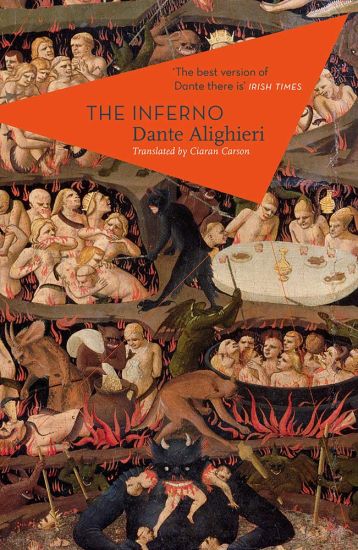
The Inferno

The Inferno

Ciaran Carson

Head of Zeus
2020
nidottu
'Quite simply the best version of Dante there is' PAUL MULDOON, Irish Times. Almost eight centuries after its first publication, Dante Alighieri's Divine Comedy remains an icon of Italian literature and of the epic genre. In Inferno, the first volume, the poet Virgil leads Dante's hero through hell, showing him the inhabitants of each of its nine circles and examples of the divine justice meted out to them. In this beautifully produced Apollo Library edition, Ciaran Carson's translation suffuses the text with wit, anger and irreverent vigour, without diminishing the pathos of the original. This is a retelling of Dante's epic journey for the twenty-first-century reader.
Still Life

Still Life

Ciaran Carson

Wake Forest University Press
2020
nidottu
In Still Life, Ciaran Carson guides us through centuries of art and around the Belfast Waterworks where he walks with his wife, Deirdre; into the chemo ward; into memory and the allusive quicksilver of his mind, always bidding us to look carefully at the details of a painter's canvas, as well as the sunlight of day. This master translator chooses here to translate the painter's brush with the poet's pen, finding resemblances, echoes, and parallels. A thorn becomes the nib of a writer's pencil and the pointed pipette of a chemo drip entering the poet's vein. Yet, Deirdre stands as much in the center of these poems as do the paintings. At times, the two seem to escape into the paintings themselves: "Standing by the high farmstead in the upper left of the picture--there --in a patch of / sunlight. ... They could be us, out for a walk." Balancing the desire to escape into the stillness and permanence of art with the insistent yearning to be fully present in each moment, Carson reminds us--"Look ... There "--that in the midst of illness, even in the face of death, there is, still, life.
In the Light of

In the Light of

Ciaran Carson

Wake Forest University Press
2013
nidottu
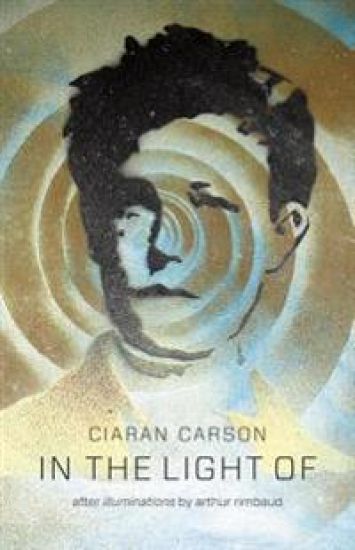
Ciaran Carson has a distinguished history of translation from the Italian (The Inferno of Dante Alighieri, 2002), the Irish (The Midnight Court, 2005; and The T in, 2007) as well as from the French (The Alexandrine Plan, 1998). He states in his "Author's Note" that "these versons are not conventional translations. . . . There are instances where I have added to or taken away from the original. I have sometimes twisted Rimbaud's words. And Rimbaud's words, of course, twisted mine . . ." Carson's idea of the translator's work is like the French poet's own visionary idea of how poetry conveys the hypnotic violence of the real: "The poet makes himself a seer through a long, prodigious and rational disordering of the senses." Carson continues: "However we gloss the title Illuminations, the poems flit within the inward eye like a brightly-coloured magic lantern slides, pictures from a marvellous book, visions of another world, scenes from an avant-garde film. Rimbaud was avant-garde before the Avant-garde; a surrealist before Surrealism; and, environmentalist avant la lettre, his critique of industrial society in some of these poems is still relevant today. In all senses he was indeed a seer." Only a poet of Carson's skills could translate the poetry of the po te maudit "in the light of" the original.
Until Before After

Until Before After

Ciaran Carson

Wake Forest University Press
2010
nidottu
Following the publication of Collected Poems, and the critically acclaimed For All We Know, Ciaran Carson has produced in just over one short but powerfully felt year two extraordinary volumes of poetry, Until Before After and On the Night Watch. Until Before After is separated into three sections (until, before, after) and each poem in each section includes a relevant preposition from the title of that section. Like its companion volume, Until Before After reflects on a period of illness in the family. With these brief philosophical excursions, Carson rivals Beckett in his efforts to show how the contemporary artist must struggle to chart the flux of experience, no matter how heartfelt are its terms.
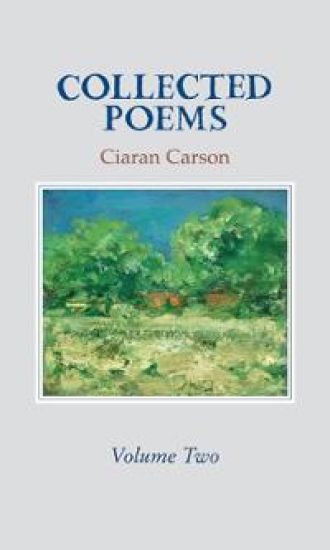
Collected Poems Ciaran Carson

Collected Poems Ciaran Carson

Ciaran Carson

Wake Forest University Press
2009
nidottu
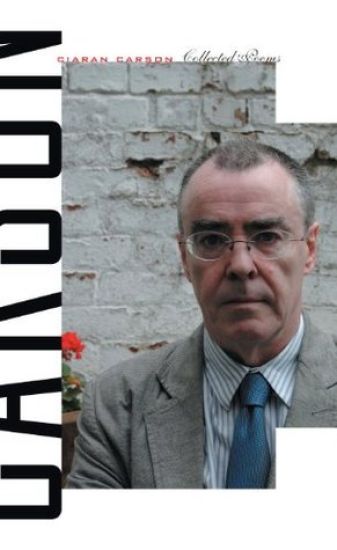
Ciaran Carson's Collected Poems gathers work from eight collections. From the formal and thematic traditions of his earlierst work, The New Estate (1976), the energetic long lines of The Irish for No (1987) and Belfast Confetti (1989), to the formal adroitness of Opera Et Cetera (1996), The Alexandrine Plan (1998) and The Twelfth of Never (1998), Carson has shown himself to be an extraordinarily adaptable poet. In Breaking News (2003), this master of the long line employs two- and three-syllable lines to alter the tempo, the time of his narrative, and the distinction between separate wars and eras. Carson's 2008 volume For All We Know is a pas de deux of personal attraction and betrayal set against the memories of the Troubles as well as against other previous historical events (the 60s in Paris, the Second World War). It seems that with each volume Carson invents anew the very ground from which his poetry springs. Collected Poems ensures the poet's place at the cutting edge of contemporary art.
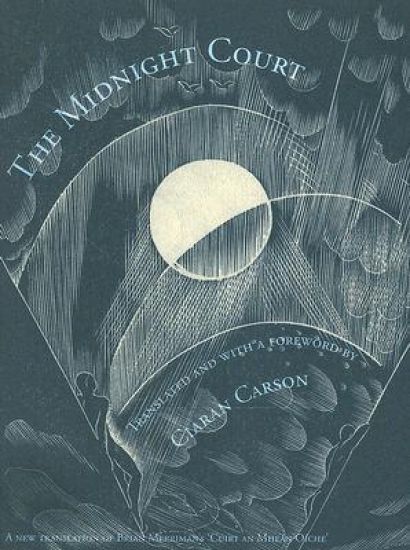
The Midnight Court

The Midnight Court

Ciaran Carson; Brian Merriman

Wake Forest University Press
2006
sidottu
Originally written in the Irish language by the 18th-century poet Brian Merriman (circa 17451805), The Midnight Court is here translated by one of Ireland s distinguished contemporary poets, Ciaran Carson. This extended satiric poem assesses the growing economic, political, and familial constraints of late 18th-century Catholic Ireland under British colonial rule, while subversively playing on the tradition of the aisling (or vision) poem in which a beautiful woman represents Ireland s threatened sovereignty. At the beginning of The Midnight Court, a dreadful female envoy from the fairies appears in a dream to the unmarried poet. She summons him before the court of Queen Aoibheall in order to answer charges of wasting his manhood while women are dying for want of love. He listens to complaints that vary from the celibacy of the clergy to marriages performed between old and young for purely economic reasons. In all their bawdy tales, the female courtiers praise fertility, as well as sexual fulfillment, and condemn the conventions of the day. At last the Queen pronounces judgment on the poet, who awakens as he is being severely chastised by all of the women of the court. While containing many insights into 18th-century social conditions, The Midnight Court is also an exuberant, even jaunty work of the comic imagination. As the translator Ciaran Carson states in his foreword: The protagonists of the Court, including Merriman himself, are ghosts, summoned into being by language; they are figments of the imagination. In the Court the language itself is continually interrogated and Merriman is the great illusionist, continually spiriting words into another dimension. "
The Midnight Court

The Midnight Court

Ciaran Carson; Brian Merriman

Wake Forest University Press
2006
nidottu
Originally written in the Irish language by the 18th-century poet Brian Merriman (circa 1745-1805), The Midnight Court is here translated by one of Ireland's distinguished contemporary poets, Ciaran Carson. This extended satiric poem assesses the growing economic, political, and familial constraints of late 18th-century Catholic Ireland under British colonial rule, while subversively playing on the tradition of the aisling (or vision) poem in which a beautiful woman represents Ireland's threatened sovereignty. At the beginning of The Midnight Court, a dreadful female envoy from the fairies appears in a dream to the unmarried poet. She summons him before the court of Queen Aoibheall in order to answer charges of wasting his manhood while women are dying for want of love. He listens to complaints that vary from the celibacy of the clergy to marriages performed between old and young for purely economic reasons. In all their bawdy tales, the female courtiers praise fertility, as well as sexual fulfillment, and condemn the conventions of the day. At last the Queen pronounces judgment on the poet, who awakens as he is being severely chastised by all of the women of the court. While containing many insights into 18th-century social conditions, The Midnight Court is also an exuberant, even jaunty work of the comic imagination. As the translator Ciaran Carson states in his foreword: "The protagonists of the 'Court, ' including 'Merriman' himself, are ghosts, summoned into being by language; they are figments of the imagination. In the 'Court' the language itself is continually interrogated and Merriman is the great illusionist, continually spiriting words into another dimension."
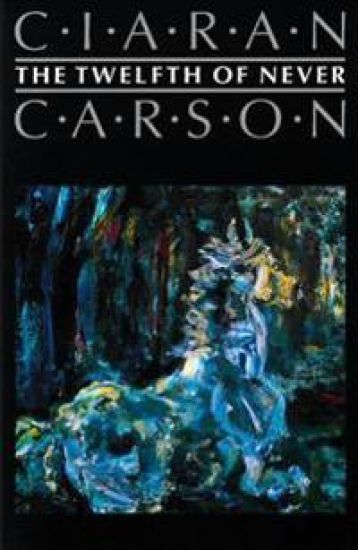
The Twelfth of Never

The Twelfth of Never

Ciaran Carson

Wake Forest University Press
1998
sidottu
The Twelfth of Never, which comprises seventy-seven sonnets written in alexandrines, floats on (or submerges in) the ideal republic or the Otherworld promised in fairy stories, aislings, the land of Cockaigne, lines of cocaine, drunkenness, "the land of the green rose," poppy-day imperialism, Loyalist and Fenian ballads, and the rhetoric of July 12th--all realms of or tickets to Utopia. The combination of pleasant, even rollicking, conveyance--iambs and anapests, disguised rhymes, lilting lines--and sinister endings evokes certain kinds of fairy stories, such as E. T. A. Hoffmann's.
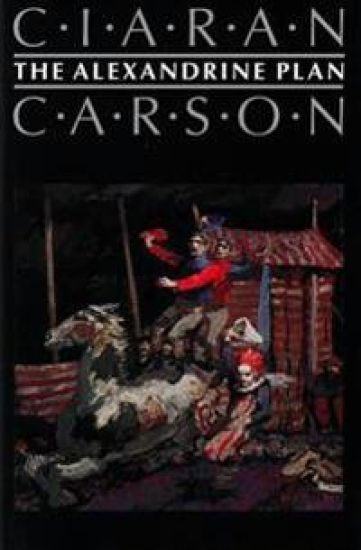
The Alexandrine Plan

The Alexandrine Plan

Ciaran Carson

Wake Forest University Press
1998
nidottu
In these translations from the sonnets of the major nineteenth-century French poets--Rimbaud, Baudelaire, and Mallarm --the relation of the poet to his world is adapted to the wild, fruitful imagination of Ciaran Carson, while formally the poems hold to their "Alexandrine plan," twelve-syllable lines in the rhyme schemes of the original. As Carson carries these poems across his own idiom and sensibility, he restores, with startling freshness, the essential joy and verve of the earlier poems. In French and English.