Kirjojen hintavertailu. Mukana 12 390 323 kirjaa ja 12 kauppaa.

Kirjailija

Clair T. Berube

Kirjat ja teokset yhdessä paikassa: 11 kirjaa, julkaisuja vuosilta 2006-2023, suosituimpien joukossa I'll See You in Court. Vertaile teosten hintoja ja tarkista saatavuus suomalaisista kirjakaupoista.

11 kirjaa

Kirjojen julkaisuhaarukka 2006-2023.

I'll See You in Court

I'll See You in Court

Sueanne E. McKinney; Clair T. Berube

Emerald Publishing Inc
2023
sidottu
Creating and managing an effective classroom management and discipline system in today’s urban classroom can be an arduous task for even the most competent teacher, let alone those who are new to the classroom. Urban teachers are faced with unique challenges, (poor working conditions, limited administrative support, and under resourced environments), that impact implementation and supervision of an effective classroom management plan, and often influences the teacher to transfer to another school or district or leave the profession all together. The basis of 'I’ll See You in Court' Supporting Social Justice, Diversity, Equity, and Critical Thinking Through Classroom Management and Discipline in Urban Schools, is to provide aspiring and veteran teachers with a classroom model that highlights an instructional and relational approach for managing the urban classroom. Authentic learning opportunities are centered, and provide the means to integrate social justice, cultural responsiveness, problem solving, and communication skills. This classroom management text is using a legal framework in order to catch the reader’s attention, and to get the reader and in turn, classroom students, to understand that just as 'societal management' has rules and consequences, it also includes the promise of due process which hopefully leads to equitable and fair outcomes. 'I’ll See You In Court' is a fun way for teachers and students to make sense of classroom management in a practical and analogous application.
Nanoscience Research Modules for Pre-Service STEM Teachers

Nanoscience Research Modules for Pre-Service STEM Teachers

Clair T. Berube; Shawn T. Dash; Cindy Thomas-Charles

Information Age Publishing
2019
nidottu
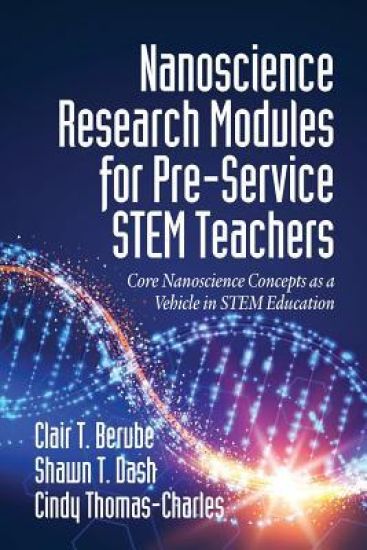
STEM (science, technology, engineering and mathematics) is a fairly new concept in American education. As separate subjects, science and math have been around for a long time but have rarely been taught as a seamless unit of skills; rather as discreet content areas. This is not how the real world outside of the classroom functions however; in actual research laboratories scientists infuse their science with math, and their math with science, and along with technology and engineering they solve real life problems. In practice you cannot separate the various fields, as you need all of them in order to discover the underpinnings of the natural world, cure a disease, or solve a problem with the space rover. The American future depends on a scientifically literate workforce, armed with knowledge about the laws and theories of science, based on empirical facts instead of beliefs. In addition, there is a shortage of graduates in STEM related disciplines. Economic data show that 1 million additional STEM graduates will be needed over the next decade to fill America’s economic demand. STEM based jobs are expected to grow 17% in the next 10 years, outpacing the overall job growth of 10%. If teachers across America were trained with fundamental and impending scientific concepts in their science-methods courses at the university level, scientific literacy can only dramatically improve. Nanoscience is one such concept; as it is multidisciplinary in nature and is regarded as the basis for innovated technologies in many fields. The authors of this book seek to provide pre-service and in-service science teachers with high-quality STEM modules, with which to create lesson plans and problem-based lessons to use in their future classrooms, both at the elementary and secondary level. Nanoscience was chosen since its applications reaches across virtually every scientific field; from biology to physics and for that matter all STEM domains.
Nanoscience Research Modules for Pre-Service STEM Teachers

Nanoscience Research Modules for Pre-Service STEM Teachers

Clair T. Berube; Shawn T. Dash; Cindy Thomas-Charles

Information Age Publishing
2019
sidottu
STEM (science, technology, engineering and mathematics) is a fairly new concept in American education. As separate subjects, science and math have been around for a long time but have rarely been taught as a seamless unit of skills; rather as discreet content areas. This is not how the real world outside of the classroom functions however; in actual research laboratories scientists infuse their science with math, and their math with science, and along with technology and engineering they solve real life problems. In practice you cannot separate the various fields, as you need all of them in order to discover the underpinnings of the natural world, cure a disease, or solve a problem with the space rover. The American future depends on a scientifically literate workforce, armed with knowledge about the laws and theories of science, based on empirical facts instead of beliefs. In addition, there is a shortage of graduates in STEM related disciplines. Economic data show that 1 million additional STEM graduates will be needed over the next decade to fill America’s economic demand. STEM based jobs are expected to grow 17% in the next 10 years, outpacing the overall job growth of 10%. If teachers across America were trained with fundamental and impending scientific concepts in their science-methods courses at the university level, scientific literacy can only dramatically improve. Nanoscience is one such concept; as it is multidisciplinary in nature and is regarded as the basis for innovated technologies in many fields. The authors of this book seek to provide pre-service and in-service science teachers with high-quality STEM modules, with which to create lesson plans and problem-based lessons to use in their future classrooms, both at the elementary and secondary level. Nanoscience was chosen since its applications reaches across virtually every scientific field; from biology to physics and for that matter all STEM domains.
Stem and the City

Stem and the City

Clair T. Berube

Information Age Publishing
2014
sidottu
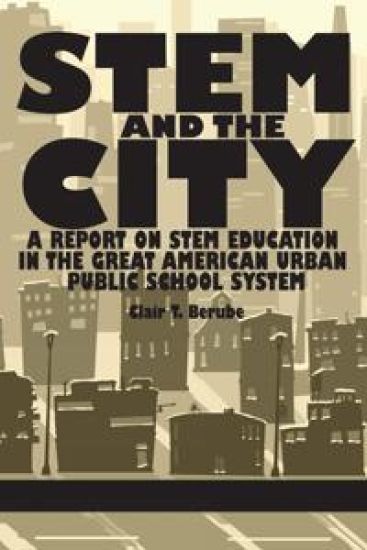
The future of American STEM education is here...in every state, there are thousands students that would benefit from science education, if only they had the resources, support systems and psychological ownership. There are brilliant young minds that could be called on to solve a myriad of world problems, earning money and respect in the process. But these students don’t see science as a viable option for a life. Or they do but there are no textbooks in the classroom, or the teacher is the fifth one this semester...and he is on the verge of leaving too.If STEM (science, technology, engineering and mathematics) careers are the future driving force of the American economy; and if only an anointed few American students choose STEM as a career path, where will that leave us as a nation as we strive to compete on the global stage? Will America maintain its position as leader of the free world? Can a country that shuns the word “elite” ever maintain its elite status? Everything we value depends on this; our national security, reputation, and quality of life all depend on our ability to meet the needs of future generations of American workers as they compete for jobs. Jobs that will require problem solving skills, innovation, creativity, scientific literacy, and mathematical knowledge. Jobs that will require Americans who are tops in their fields with expertise, intellectual curiosity, ambition and vision. This book seeks to address these problems, as well as providing an historical backdrop for the discussion of STEM in American schools, race and gender issues, the effects of the standards movement on STEM, and what good teaching looks like in urban public schools. The future is here. Will we rise to the occasion?
Stem and the City

Stem and the City

Clair T. Berube

Information Age Publishing
2014
nidottu
The future of American STEM education is here...in every state, there are thousands students that would benefit from science education, if only they had the resources, support systems and psychological ownership. There are brilliant young minds that could be called on to solve a myriad of world problems, earning money and respect in the process. But these students don’t see science as a viable option for a life. Or they do but there are no textbooks in the classroom, or the teacher is the fifth one this semester...and he is on the verge of leaving too.If STEM (science, technology, engineering and mathematics) careers are the future driving force of the American economy; and if only an anointed few American students choose STEM as a career path, where will that leave us as a nation as we strive to compete on the global stage? Will America maintain its position as leader of the free world? Can a country that shuns the word “elite” ever maintain its elite status? Everything we value depends on this; our national security, reputation, and quality of life all depend on our ability to meet the needs of future generations of American workers as they compete for jobs. Jobs that will require problem solving skills, innovation, creativity, scientific literacy, and mathematical knowledge. Jobs that will require Americans who are tops in their fields with expertise, intellectual curiosity, ambition and vision. This book seeks to address these problems, as well as providing an historical backdrop for the discussion of STEM in American schools, race and gender issues, the effects of the standards movement on STEM, and what good teaching looks like in urban public schools. The future is here. Will we rise to the occasion?
The Moral University

The Moral University

Maurice R. Berube; Clair T. Berube

Rowman Littlefield Publishers
2010
sidottu
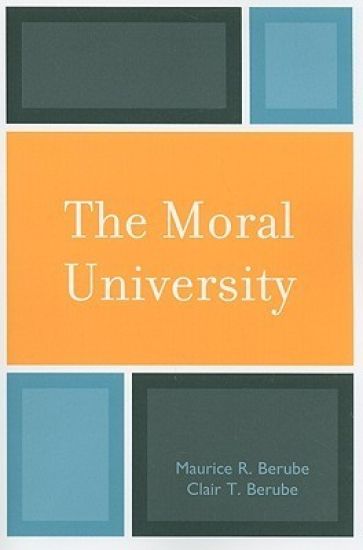
The Moral University examines the ways that universities act morally toward students, faculty, their communities and the nation. It considers the effectiveness of moral reasoning courses in the curriculum and the growth of leadership courses. The book deals with the myriad ways in which universities act positively toward their communities. It also examines the involvement of universities in national projects. Moreover, the Berubes examine how students and faculty are treated, especially in terms of gender bias. The book concludes on a positive note with a model moral university.
The Moral University

The Moral University

Maurice R. Berube; Clair T. Berube

Rowman Littlefield Publishers
2010
nidottu
The Moral University examines the ways that universities act morally toward students, faculty, their communities and the nation. It considers the effectiveness of moral reasoning courses in the curriculum and the growth of leadership courses. The book deals with the myriad ways in which universities act positively toward their communities. It also examines the involvement of universities in national projects. Moreover, the Berubes examine how students and faculty are treated, especially in terms of gender bias. The book concludes on a positive note with a model moral university.
The Unfinished Quest

The Unfinished Quest

Clair T. Berube

Information Age Publishing
2008
sidottu
Modern educators are currently ideologically in one of two camps: those who see American education as heading in the right direction, and those who fear that it has gone tragically astray. For over 100 years the American educational system has been the hope of those who want to level the playing field of opportunity, yet today we continue to lag behind several industrialized countries when comparing standardized science test scores.Is this acceptable in the most advanced, affluent country on earth? Why are we not the reigning educational system on the planet? And are standardized test scores even the best way to assess the type of learning it takes to lead the world in science achievement? The nature of science does not lend itself well to bubble tests, yet these assessments are all we have to “prove” that our students are good scientists.This book was born of a science teacher’s frustration brought on by the standardized testing movement’s reliance on high-stakes tests as the sole measurement tool with which to measure achievement. Science by it’s very nature relies on original thinking for discovery and innovation. How can this be measured by a bubble test? And how do these high stakes tests affect minorities, girls, those with disabilities and at risk students? September 11, 2001 alerted us that we Americans can be less creative than our enemies, an unprecedented event in American history. What if changing the way we teach and assess science learning better prepares our citizens for creative preventions and solutions to world problems, instead of creating citizens who have to react to world problems? The nature of science begs a better way.
The Unfinished Quest

The Unfinished Quest

Clair T. Berube

Information Age Publishing
2008
nidottu
Modern educators are currently ideologically in one of two camps: those who see American education as heading in the right direction, and those who fear that it has gone tragically astray. For over 100 years the American educational system has been the hope of those who want to level the playing field of opportunity, yet today we continue to lag behind several industrialized countries when comparing standardized science test scores.Is this acceptable in the most advanced, affluent country on earth? Why are we not the reigning educational system on the planet? And are standardized test scores even the best way to assess the type of learning it takes to lead the world in science achievement? The nature of science does not lend itself well to bubble tests, yet these assessments are all we have to “prove” that our students are good scientists.This book was born of a science teacher’s frustration brought on by the standardized testing movement’s reliance on high-stakes tests as the sole measurement tool with which to measure achievement. Science by it’s very nature relies on original thinking for discovery and innovation. How can this be measured by a bubble test? And how do these high stakes tests affect minorities, girls, those with disabilities and at risk students? September 11, 2001 alerted us that we Americans can be less creative than our enemies, an unprecedented event in American history. What if changing the way we teach and assess science learning better prepares our citizens for creative preventions and solutions to world problems, instead of creating citizens who have to react to world problems? The nature of science begs a better way.
The End of School Reform

The End of School Reform

Maurice R. Berube; Clair T. Berube

Rowman Littlefield Publishers
2006
nidottu
Education as a major social movement is coming to an end. The End of School Reform derives its theoretical framework from the ideas of Hegel, who perceived an end to history, and Thomas Kuhn, who theorized that history does not follow a linear path but that the scientific landscape changes through large-scale movements called 'paradigm shifts'. This book examines the partial successes of history's three major educational reform movements (the Progressive Education movement at the beginning of the 20th century, the Equity Reform movement of the 1960's-1970's, and the Excellence Reform movement from 1983 to the present) and contends that such major movements in education will never be seen again. Blending Arthur Danto's 'end of art', John Horgan's 'end of science', and Francis Fukuyama's 'end of history' theses_all of which argue that only minor reforms will occur in the future_and drawing on interviews of education historians and policy professors, the 'end of school reform' thesis maintains that educational innovation may still continue, but only on a piecemeal basis.
The End of School Reform

The End of School Reform

Maurice R. Berube; Clair T. Berube

Rowman Littlefield Publishers
2006
sidottu
Education as a major social movement is coming to an end. The End of School Reform derives its theoretical framework from the ideas of Hegel, who perceived an end to history, and Thomas Kuhn, who theorized that history does not follow a linear path but that the scientific landscape changes through large-scale movements called "paradigm shifts". This book examines the partial successes of history's three major educational reform movements (the Progressive Education movement at the beginning of the 20th century, the Equity Reform movement of the 1960's-1970's, and the Excellence Reform movement from 1983 to the present) and contends that such major movements in education will never be seen again. Blending Arthur Danto's "end of art", John Horgan's "end of science", and Francis Fukuyama's "end of history" theses—all of which argue that only minor reforms will occur in the future—and drawing on interviews of education historians and policy professors, the "end of school reform" thesis maintains that educational innovation may still continue, but only on a piecemeal basis.