Kirjojen hintavertailu. Mukana 12 390 323 kirjaa ja 12 kauppaa.

Kirjailija

Claire Craig

Kirjat ja teokset yhdessä paikassa: 9 kirjaa, julkaisuja vuosilta 2006-2021, suosituimpien joukossa Fototherapie. Vertaile teosten hintoja ja tarkista saatavuus suomalaisista kirjakaupoista.

9 kirjaa

Kirjojen julkaisuhaarukka 2006-2021.

Storylistening

Storylistening

Sarah Dillon; Claire Craig

Routledge
2021
sidottu
Storylistening makes the case for the urgent need to take stories seriously in order to improve public reasoning. Dillon and Craig provide a theory and practice for gathering narrative evidence that will complement and strengthen, not distort, other forms of evidence, including that from science. Focusing on the cognitive and the collective, Dillon and Craig show how stories offer alternative points of view, create and cohere collective identities, function as narrative models, and play a crucial role in anticipation. They explore these four functions in areas of public reasoning where decisions are strongly influenced by contentious knowledge and powerful imaginings: climate change, artificial intelligence, the economy, and nuclear weapons and power. Vivid performative readings of stories from The Ballad of Tam-Lin to The Terminator demonstrate the insights that storylistening can bring and the ways it might be practised. The book provokes a reimagining of what a public humanities might look like, and shows how the structures and practices of public reasoning can evolve to better incorporate narrative evidence. Storylistening aims to create the conditions in which the important task of listening to stories is possible, expected, and becomes endemic.Taking the reader through complex ideas from different disciplines in ways that do not require any prior knowledge, this book is an essential read for policymakers, political scientists, students of literary studies, and anyone interested in the public humanities and the value, importance, and operation of narratives.
Storylistening

Storylistening

Sarah Dillon; Claire Craig

Routledge
2021
nidottu
Storylistening makes the case for the urgent need to take stories seriously in order to improve public reasoning. Dillon and Craig provide a theory and practice for gathering narrative evidence that will complement and strengthen, not distort, other forms of evidence, including that from science. Focusing on the cognitive and the collective, Dillon and Craig show how stories offer alternative points of view, create and cohere collective identities, function as narrative models, and play a crucial role in anticipation. They explore these four functions in areas of public reasoning where decisions are strongly influenced by contentious knowledge and powerful imaginings: climate change, artificial intelligence, the economy, and nuclear weapons and power. Vivid performative readings of stories from The Ballad of Tam-Lin to The Terminator demonstrate the insights that storylistening can bring and the ways it might be practised. The book provokes a reimagining of what a public humanities might look like, and shows how the structures and practices of public reasoning can evolve to better incorporate narrative evidence. Storylistening aims to create the conditions in which the important task of listening to stories is possible, expected, and becomes endemic.Taking the reader through complex ideas from different disciplines in ways that do not require any prior knowledge, this book is an essential read for policymakers, political scientists, students of literary studies, and anyone interested in the public humanities and the value, importance, and operation of narratives.
How Does Government Listen to Scientists?

How Does Government Listen to Scientists?

Claire Craig

Springer International Publishing AG
2018
nidottu
This Palgrave Policy Essential draws together recent developments in the field of science in government, policy and public debate. Practice and academic insights from a wide variety of fields have both moved on in the last decade and this book provides a consolidated survey of the relatively well established but highly scattered set of insights about the provision of deeply technical expertise in policy making (models of climate or disease, risk, Artificial Intelligence and ethics, and so on). It goes on to link this to emerging ideas about futures thinking, public engagement, narrative, and the role of values and sentiment alongside the place of scientific and scholarly insights in public decision-making and debate. The book offers an accessible overview aimed at practitioners; policy-makers looking to understand how to work with researchers, researchers looking to work with policy-makers, and the increasing numbers and types of “brokers” - people working at the interface,in science advice, public engagement and communication of science, and in expert support to decision-making in the public and private sectors. In addition to outlining recent insights and placing them in the established frameworks of authors such as Pielke and Jasanoff, the book also brings in relevant areas less traditionally associated with the subject but of increasing importance, such as modelling, futures and narrative.
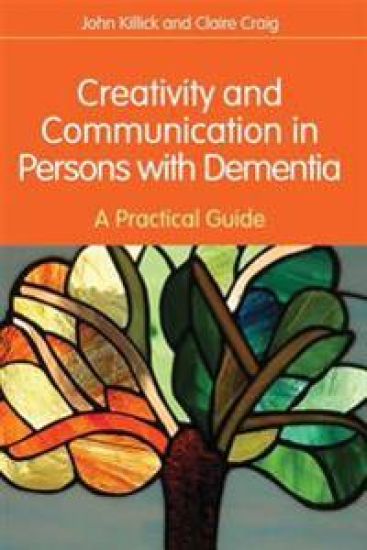
Creativity and Communication in Persons with Dementia

Creativity and Communication in Persons with Dementia

Claire Craig; Mr John Killick

Jessica Kingsley Publishers
2011
pokkari
Providing people with dementia with opportunities to engage in creative activity can play a crucial role in maintaining and enhancing communication, and in reinforcing personhood and identity. This thoughtful book describes how people with dementia, and the people who work with and care for them, can foster and develop a creative approach, and provides rich and varied ideas for creative activities. The authors explore the concept of creativity - what exactly it is, its particular relevance for people with dementia and how to get into the creative 'flow'. They introduce a range of creative art forms, including poetry and story-telling, collage, drama, music-making, photography, textiles and working with wood and metal, and suggest possibilities for employing them in a range of settings, and with people of all abilities. Consideration is given to the practicalities of facilitating such creative work, including how to organise and run sessions, how to involve people with dementia and their carers, and how to reflect upon the experience. Practice examples are included throughout the book, as well as the comments and observations of people with dementia, and many examples of the artwork and poetry the authors have created with people with dementia over the years. Brimming with ideas, suggestions and helpful guidance, this is an essential resource for all those who work with people with dementia, and an inspiring read for people with dementia and their families.
Study Skills for Health and Social Care Students

Study Skills for Health and Social Care Students

Claire Craig

SAGE Publications Ltd
2009
sidottu
Study Skills for Health and Social Care Students will help students to build up their confidence through developing the key skills required for both academic study and clinical practice. Claire Craig introduces all the skills necessary to bridge the gap between study and practice, with a strong focus on the contextualisation of skills and their transferability to the clinical setting. Fundamental skills and principles for researching, processing information and for communicating and expressing findings are all covered, along with practical advice on: Organising your learningAccessing supportRecording ideas and informationExpressing ideas in writingWorking with others. The guidance provided here will be invaluable for students and professionals in the health sciences, including social care, social work, physiotherapy, occupational therapy and nursing. SAGE Study Skills are essential study guides for students of all levels. From how to write great essays and succeeding at university, to writing your undergraduate dissertation and doing postgraduate research, SAGE Study Skills help you get the best from your time at university. Visit the SAGE Study Skills hub for tips, quizzes and videos on study success!
Study Skills for Health and Social Care Students

Study Skills for Health and Social Care Students

Claire Craig

SAGE Publications Ltd
2009
nidottu
Study Skills for Health and Social Care Students will help students to build up their confidence through developing the key skills required for both academic study and clinical practice. Claire Craig introduces all the skills necessary to bridge the gap between study and practice, with a strong focus on the contextualisation of skills and their transferability to the clinical setting. Fundamental skills and principles for researching, processing information and for communicating and expressing findings are all covered, along with practical advice on: Organising your learningAccessing supportRecording ideas and informationExpressing ideas in writingWorking with others. The guidance provided here will be invaluable for students and professionals in the health sciences, including social care, social work, physiotherapy, occupational therapy and nursing. SAGE Study Skills are essential study guides for students of all levels. From how to write great essays and succeeding at university, to writing your undergraduate dissertation and doing postgraduate research, SAGE Study Skills help you get the best from your time at university. Visit the SAGE Study Skills hub for tips, quizzes and videos on study success!
Exploring the Self through Photography

Exploring the Self through Photography

Claire Craig

Jessica Kingsley Publishers
2009
pokkari
Photography shows us how to look at things from different perspectives, to reflect, to communicate and to express ourselves in a way that goes beyond words. The creative and introspective qualities of this accessible arts medium make it an ideal tool for use in therapeutic contexts.In this book, Claire Craig explores how professionals working with groups can use photography to promote self-exploration and positive change. She explains how the technique works, who it can help, and how to set up and run a group. Each chapter revolves around a key self-development theme, such as communication, reflection, relationship-building and self-esteem, and contains activities which are suitable for all ages and abilities. For each activity, requirements are clearly specified, and both a warm-up and extension activity offered. Along the way, examples of photographs taken by participants in response to particular themes, and the explanations which accompany them, are provided as inspiration. This practical guide can be used in group work across a broad range of contexts, including in schools, colleges, youth groups, community settings, residential care, in-patient and day hospitals. It will be of interest to occupational therapists, arts therapists, social workers, teachers and any other practitioners interested in ways of promoting personal development through creative means.
Lifestyle Matters

Lifestyle Matters

Gail Mountain; Claire Craig

Speechmark Publishing Ltd
2006
nidottu
"Lifestyle Matters" is a practical resource that contains a wealth of ideas and activities for occupational therapists, support workers, students and other professionals working with older people in the community. Taking a holistic approach, the Lifestyle Matters programme challenges participants to examine their lifestyle and to make positive changes which promote good physical and emotional health. Themes include: "'The relationship between activity and health " Maintaining mental well-being'; 'Maintaining physical well-being'; Safety in the home and community'; and, Personal circumstances. Each theme is divided into a number of sessions with ideas for introductory activities, group discussion topics and group activity ideas. There are also 64 photocopiable handouts in the book and on the downloadable resources that can be used within the group sessions. The book is divided into four parts: 'The Lifestyle Matters programme and the principles behind it'; 'How to implement the programme - including who can benefit from it, how long it should last and the resources required'; 'Delivering the programme - looking at session structure, selecting a session and keeping a record of group and individual sessions'; and, 'The Lifestyle Matters manual - each section containing a combination of group sessions, individual sessions and visits or outings'. Inspired by research by Florence Clark and her colleagues at the University of Southern California, this Lifestyle Matters programme has been developed through consultation with older people at every stage, making it a welcome and invaluable resource. As one member of a group exclaimed, 'You didn't give me a new lease of life, you gave me back my life!'. "Lifestyle Matters" is now referred to in the NICE guidelines (2009) where it is identified as the intervention of choice for therapists and professionals responding to the guidance by this professional body.