Kirjojen hintavertailu. Mukana 12 184 482 kirjaa ja 12 kauppaa.
Kirjailija
Claire Davis
Kirjat ja teokset yhdessä paikassa: 8 kirjaa, julkaisuja vuosilta 1998-2025, suosituimpien joukossa Winter Range. Vertaile teosten hintoja ja tarkista saatavuus suomalaisista kirjakaupoista.
Winner of the Pacific Northwest Booksellers Award for Best First Novel and the Mountains and Plains Booksellers Award for Best Novel In Winter Range, the intimate details of ranching and small-town life are woven into the suspenseful story of three people struggling to survive, to belong, and to love in the chillingly bleak landscape of eastern Montana. Ike Parsons is a small-town sheriff whose life is stable and content; his wife Pattiann is a rancher's daughter with a secret past. But when Ike tries to help a hard-luck cattleman named Chas Stubblefield, he triggers Chas's resentment and finds his home and his wife targeted by a plot for revenge.
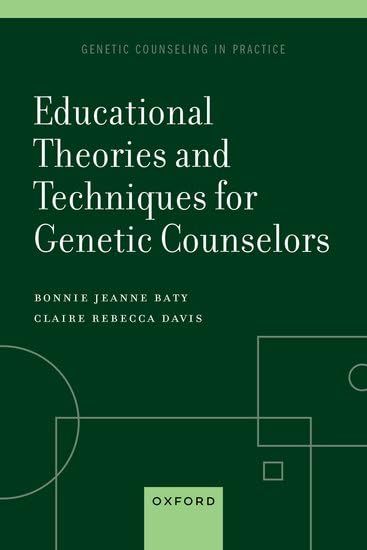
Educational Theories and Techniques for Genetic Counselors provides an overview of central aspects of effective education by and for genetic counselors, beginning with insights from the general and genetic counseling education literature and moving through a survey of the structure and function of genetic counselor education in North America. In the opening two sections, Bonnie Baty and Claire Davis take a critical look at genetic counseling graduate programs, the contextual factors that shape the way education is offered, recruitment, admissions, and student support practices, the instructional framework and its components and teaching techniques, as well as intentional efforts to integrate these, the evaluative procedures for student learning, and processes of ongoing program evolution. The third section covers the continuous and increasingly self-directed learning that genetic counselors employ throughout their careers to sustain and expand their competence. The book concludes by considering genetic counselors' roles as educators of others, including their colleagues, clients, and communities, because education is an essential competency in all genetic counseling settings. Throughout the book, educational theories are coupled with practical techniques for designing and delivering education programs, and readers are invited to apply the book's content to their own educational experiences through a series of thought-provoking reflective questions and 76 practice-based examples from contributors across North America.
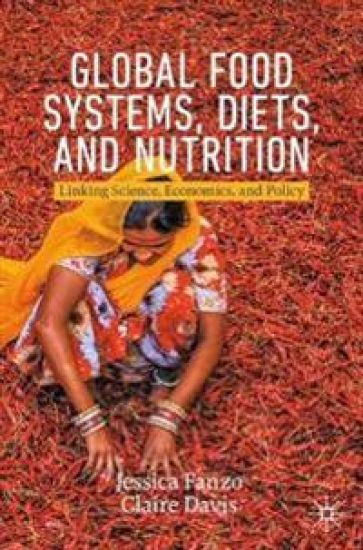
Ensuring optimal diets and nutrition for the global population is a grand challenge fraught with many contentious issues. To achieve food security for all and protect health, we need functional, equitable, and sustainable food systems. Food systems are highly complex networks of individuals and institutions that depend on governance and policy leadership. This book explains how interconnected food systems and policies affect diets and nutrition in high-, middle-, and low-income countries. In tandem with food policy, food systems determine the availability, affordability, and nutritional quality of the food supply, which influences the diets that people are willing and able to consume. Readers will become familiar with both domestic and international food policy processes and actors, and they will be able to critically analyze and debate how policy and science affect diet and nutrition outcomes.
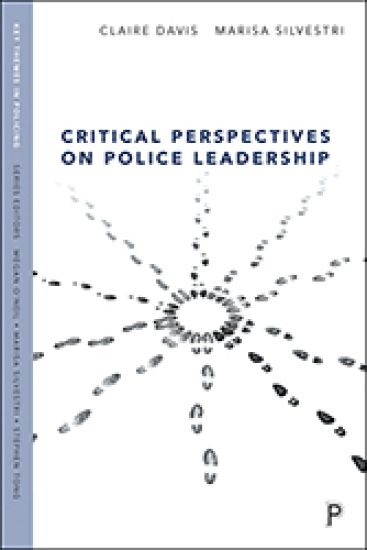
Conventional understanding of power and authority are challenged in this bold new conceptualisation of police leadership. Drawing on empirical research in criminology, sociology and leadership studies, leading authors Claire Davis and Marisa Silvestri critically explore how leadership is constructed and experienced within wider organisational structures and processes. They provide an alternative and fresh interpretation of leadership as not simply the result of individual experiences and attitudes, but of social, institutional and historical processes. It is an essential text for policing students, academics interested in policing and valuable reading for current police leaders.
Conventional understanding of power and authority are challenged in this bold new conceptualisation of police leadership. Drawing on empirical research in criminology, sociology and leadership studies, leading authors Claire Davis and Marisa Silvestri critically explore how leadership is constructed and experienced within wider organisational structures and processes. They provide an alternative and fresh interpretation of leadership as not simply the result of individual experiences and attitudes, but of social, institutional and historical processes. It is an essential text for policing students, academics interested in policing and valuable reading for current police leaders.