Kirjojen hintavertailu. Mukana 12 595 353 kirjaa ja 12 kauppaa.

Kirjailija

Claire Farago

Kirjat ja teokset yhdessä paikassa: 6 kirjaa, julkaisuja vuosilta 2003-2025, suosituimpien joukossa Art Is Not What You Think It Is. Vertaile teosten hintoja ja tarkista saatavuus suomalaisista kirjakaupoista.

6 kirjaa

Kirjojen julkaisuhaarukka 2003-2025.

Writing Borderless Histories of Art

Writing Borderless Histories of Art

Claire Farago

TAYLOR FRANCIS LTD
2025
sidottu
Writing Borderless Histories of Art is an aspirational, historical, and critical project that offers a fundamental rethinking of the relationship of humans to the rest of nature.Social justice, Indigeneity, abuses of power, and the environmental crisis are the burning issues of today. A transcultural approach calls for abandoning structures of domination that are built into the academic disciplines, regardless of the scale or extent of interpretation. Drawing upon writings from a wide range of fields, Claire Farago argues that Art History can play a role in advancing the public's interconnectedness with the planetary life-support system that so urgently needs to be restored. Studying the discourse on art at the intersection of global capitalism, environmental degradation, and human subjection over four centuries, Writing Borderless Histories of Art advocates ontologies that do not distinguish between the sentience of humans and other animals and go beyond the dualistic metaphysics of the nature/culture divide.While this book is addressed to a wide audience, its multilayered approach also reaches out to art historians for whom chronology, canons, and style are structures fundamental to the organization and operation of the discipline. The book is neither a history of ideas nor a search for the origins of art history, but a recognition of the structures that drive its narratives.
Writing Borderless Histories of Art

Writing Borderless Histories of Art

Claire Farago

TAYLOR FRANCIS LTD
2025
nidottu
Writing Borderless Histories of Art is an aspirational, historical, and critical project that offers a fundamental rethinking of the relationship of humans to the rest of nature.Social justice, Indigeneity, abuses of power, and the environmental crisis are the burning issues of today. A transcultural approach calls for abandoning structures of domination that are built into the academic disciplines, regardless of the scale or extent of interpretation. Drawing upon writings from a wide range of fields, Claire Farago argues that Art History can play a role in advancing the public's interconnectedness with the planetary life-support system that so urgently needs to be restored. Studying the discourse on art at the intersection of global capitalism, environmental degradation, and human subjection over four centuries, Writing Borderless Histories of Art advocates ontologies that do not distinguish between the sentience of humans and other animals and go beyond the dualistic metaphysics of the nature/culture divide.While this book is addressed to a wide audience, its multilayered approach also reaches out to art historians for whom chronology, canons, and style are structures fundamental to the organization and operation of the discipline. The book is neither a history of ideas nor a search for the origins of art history, but a recognition of the structures that drive its narratives.

Art Is Not What You Think It Is

Art Is Not What You Think It Is

Donald Preziosi; Claire Farago

Wiley-Blackwell (an imprint of John Wiley Sons Ltd)
2012
nidottu
Art Is Not What You Think It Is utilizes original research to present a series of critical incursions into the current state of debate on the idea of art, making manifest what has been largely missing or unsaid in those discussions. Links museology, history, theory, and criticism to the realities of contemporary social conditions and shows how they have structurally functioned in a variety of contextsDeals with divisive and controversial problems such as blasphemy and idolatry, and the problem of artistic truthAddresses relations between European notions about art and artifice and those developed in other and especially indigenous cultural traditions
Art Is Not What You Think It Is

Art Is Not What You Think It Is

Donald Preziosi; Claire Farago

Wiley-Blackwell (an imprint of John Wiley Sons Ltd)
2012
sidottu
Art Is Not What You Think It Is utilizes original research to present a series of critical incursions into the current state of debate on the idea of art, making manifest what has been largely missing or unsaid in those discussions. Links museology, history, theory, and criticism to the realities of contemporary social conditions and shows how they have structurally functioned in a variety of contextsDeals with divisive and controversial problems such as blasphemy and idolatry, and the problem of artistic truthAddresses relations between European notions about art and artifice and those developed in other and especially indigenous cultural traditions
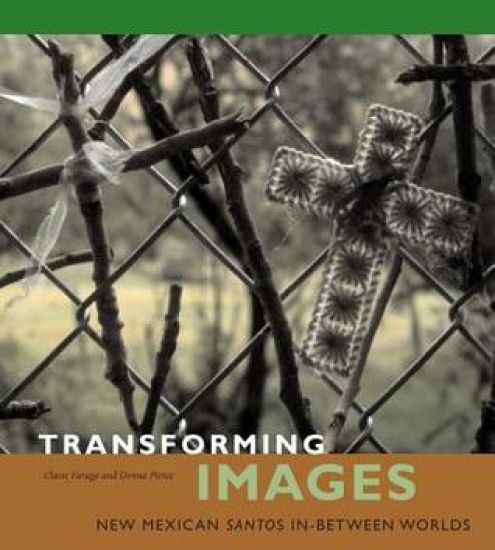
Transforming Images

Transforming Images

Claire Farago; Donna Pierce

Pennsylvania State University Press
2006
sidottu
“Style” has been one of the cornerstones not only of the modern discipline of art history but also of social and cultural history. In this volume, the writers consider the inadequacy of the concept of style as essential to a person, people, place, or period. While the subject matter of this book is specific to religious practices and artifacts from New Mexico between the eighteenth and twentieth centuries, the implications of these investigations are far reaching historically, methodologically, and theoretically.The essays collected here explore the Catholic instruments of religious devotion produced in New Mexico from around 1760 until the radical transformation of the tradition in the twentieth century. The writers in this volume make three key arguments. First, they make a case for bringing new theoretical perspectives and research strategies to bear on the New Mexican materials and other colonial contexts. Second, they demonstrate that the New Mexican materials provide an excellent case study for rethinking many of the most fundamental questions in art-historical and anthropological study. Third, the authors collectively argue that the New Mexican images had, and still have, importance to diverse audiences and makers. The distinctiveness of New Mexican santos consists not only in their subjects (which conformed to Catholic Reformation tastes) but also in elements that may appear to have been “merely decorative”: graphically striking and frequently elaborate abstract design motifs and landscape references. Despite their anonymity, the images are, as a group, readily distinguished from local products anywhere else in the Spanish colonial world. This distinctiveness suggests that we should inquire not so much about the individual identities of their makers as about the collective identity of the society and place that produced and used them.
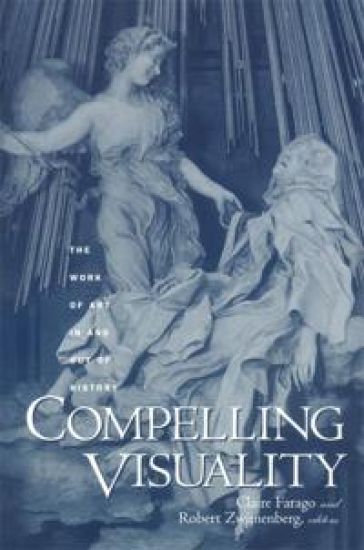
Compelling Visuality

Compelling Visuality

Claire Farago

University of Minnesota Press
2003
nidottu
Explores what we actually see, touch, and experience when looking at artTypically, art history is an enterprise of recovery-of searching out the provenance, the original intentions, the physical setting, and historical conditions behind a work of art. The essays in Compelling Visuality address some of the other questions that are less frequently asked-and, in doing so, show how much is to be learned and gained by going beyond the traditional approaches of art history. In particular, the contributors take up the commonly unexplored question of what is actually present in a work of art-what we see, touch, and experience when confronted with Renaissance or Baroque works that have survived the vicissitudes of time. International and interdisciplinary, this volume conducts readers into an ongoing discussion of the value and significance of personal response to works of art. Contributors: F. R. Ankersmit, U of Groningen; Mieke Bal, U of Amsterdam and Cornell U; Oskar BÄtschmann, U of Bern; Georges Didi-Huberman, École des Hautes Études en Sciences Sociales, Paris; Michael Ann Holly, Clark Art Institute; Donald Preziosi, UCLA and Oxford U; RenÉe van de Vall, U of Maastricht.