

Kirjailija
Clarence Taylor
Kirjat ja teokset yhdessä paikassa: 14 kirjaa, julkaisuja vuosilta 1994-2026, suosituimpien joukossa Bottles & Illusions. Vertaile teosten hintoja ja tarkista saatavuus suomalaisista kirjakaupoista.
14 kirjaa
Kirjojen julkaisuhaarukka 1994-2026.

Silent Giants (How Real Builders Create Wealth Behind the Scenes)
Clarence Taylor
Dierre Brands Beverage Company
2026
pokkari
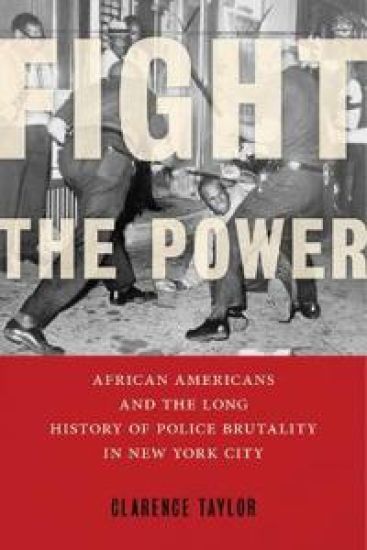
A story of resistance, power and politics as revealed through New York City's complex history of police brutality The 2014 killing of Michael Brown in Ferguson, Missouri was the catalyst for a national conversation about race, policing, and injustice. The subsequent killings of other black (often unarmed) citizens led to a surge of media coverage which in turn led to protests and clashes between the police and local residents that were reminiscent of the unrest of the 1960s. Fight the Power examines the explosive history of police brutality in New York City and the black community's long struggle to resist it. Taylor brings this story to life by exploring the institutions and the people that waged campaigns to end the mistreatment of people of color at the hands of the police, including the black church, the black press, black communists and civil rights activists. Ranging from the 1940s to the mayoralty of Bill de Blasio, Taylor describes the significant strides made in curbing police power in New York City, describing the grassroots street campaigns as well as the accomplishments achieved in the political arena and in the city's courtrooms. Taylor challenges the belief that police reform is born out of improved relations between communities and the authorities arguing that the only real solution is radically reducing the police domination of New York's black citizens.
A story of resistance, power and politics as revealed through New York City's complex history of police brutality The 2014 killing of Michael Brown in Ferguson, Missouri was the catalyst for a national conversation about race, policing, and injustice. The subsequent killings of other black (often unarmed) citizens led to a surge of media coverage which in turn led to protests and clashes between the police and local residents that were reminiscent of the unrest of the 1960s. Fight the Power examines the explosive history of police brutality in New York City and the black community's long struggle to resist it. Taylor brings this story to life by exploring the institutions and the people that waged campaigns to end the mistreatment of people of color at the hands of the police, including the black church, the black press, black communists and civil rights activists. Ranging from the 1940s to the mayoralty of Bill de Blasio, Taylor describes the significant strides made in curbing police power in New York City, describing the grassroots street campaigns as well as the accomplishments achieved in the political arena and in the city's courtrooms. Taylor challenges the belief that police reform is born out of improved relations between communities and the authorities arguing that the only real solution is radically reducing the police domination of New York's black citizens.
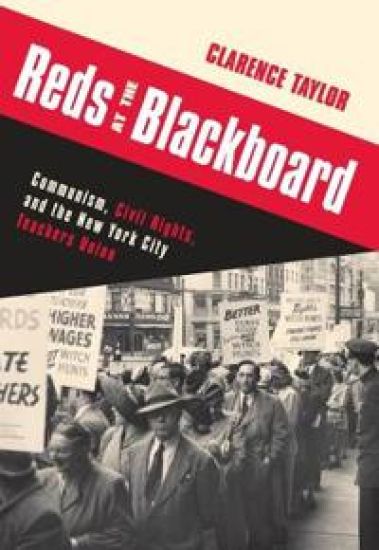
The New York City Teachers Union shares a deep history with the American left, having participated in some of its most explosive battles. Established in 1916, the union maintained an early, unofficial partnership with the American Communist Party, winning key union positions and advocating a number of Party goals. Clarence Taylor recounts this pivotal relationship and the backlash it created, as the union threw its support behind controversial policies and rights movements. Taylor's research reaffirms the party's close ties with the union--yet it also makes clear that the organization was anything but a puppet of Communist power. Reds at the Blackboard showcases the rise of a unique type of unionism that would later dominate the organizational efforts behind civil rights, academic freedom, and the empowerment of blacks and Latinos. Through its affiliation with the Communist Party, the union pioneered what would later become social movement unionism, solidifying ties with labor groups, black and Latino parents, and civil rights organizations to acquire greater school and community resources. It also militantly fought to improve working conditions for teachers while championing broader social concerns. For the first time, Taylor reveals the union's early growth and the somewhat illegal attempts by the Board of Education to eradicate the group. He describes how the infamous Red Squad and other undercover agents worked with the board to bring down the union and how the union and its opponents wrestled with charges of anti-Semitism.
Since the 1960s, most U.S. History has been written as if the civil rights movement were primarily or entirely a Southern history. This book joins a growing body of scholarship that demonstrates the importance of the Northern history of the movement. The contributors make clear that civil rights in New York City were contested in many ways, beginning long before the 1960s, and across many groups with a surprisingly wide range of political perspectives. Civil Rights in New York City provides a sample of the rich historical record of the fight for racial justice in the city that was home to the nation's largest population of African-Americans in mid-twentiethcentury America. The ten contributions brought together here address varying aspects of New York's civil rights struggle, including the role of labor, community organizing campaigns, the pivotal actions of prominent national leaders, the movement for integrated housing, the fight for racial equality in public higher education, and the part played by a revolutionary group that challenged structural, societal inequality. Long before the Montgomery Bus Boycott, the Reverend Adam Clayton Powell Jr. helped launch the Harlem Bus Boycott of 1941. The New York City's Teachers' Union had been fighting for racial equality since 1935. Ella Baker worked with the NAACP and the city's grassroots movement to force the city to integrate its public school system. In 1962, a direct action campaign by Brooklyn CORE, a racially integrated membership organization, forced the city to provide better sanitation services to Bedford-Stuyvesant, Brooklyn's largest black community. Integrating Rochdale Village in South Jamaica, the largest middle-class housing cooperative in New York, brought together an unusual coalition of leftists, liberal Democrats, moderate Republicans, pragmatic government officials, and business executives. In reexamining these and other key events, Civil Rights in New York City reaffirms their importance to the larger national fight for equality for Americans across racial lines.
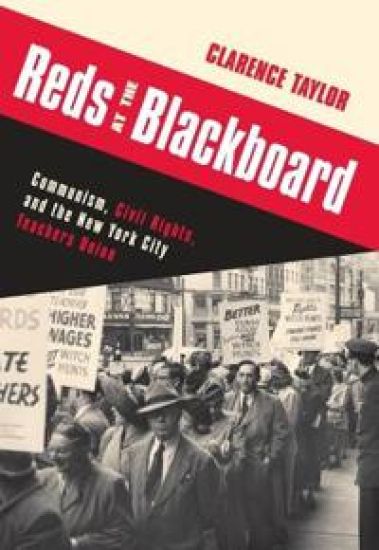
The New York City Teachers Union shares a deep history with the American left, having participated in some of its most explosive battles. Established in 1916, the union maintained an early, unofficial partnership with the American Communist Party, winning key union positions and advocating a number of Party goals. Clarence Taylor recounts this pivotal relationship and the backlash it created, as the union threw its support behind controversial policies and rights movements. Taylor's research reaffirms the party's close ties with the union--yet it also makes clear that the organization was anything but a puppet of Communist power. Reds at the Blackboard showcases the rise of a unique type of unionism that would later dominate the organizational efforts behind civil rights, academic freedom, and the empowerment of blacks and Latinos. Through its affiliation with the Communist Party, the union pioneered what would later become social movement unionism, solidifying ties with labor groups, black and Latino parents, and civil rights organizations to acquire greater school and community resources. It also militantly fought to improve working conditions for teachers while championing broader social concerns. For the first time, Taylor reveals the union's early growth and the somewhat illegal attempts by the Board of Education to eradicate the group. He describes how the infamous Red Squad and other undercover agents worked with the board to bring down the union and how the union and its opponents wrestled with charges of anti-Semitism.
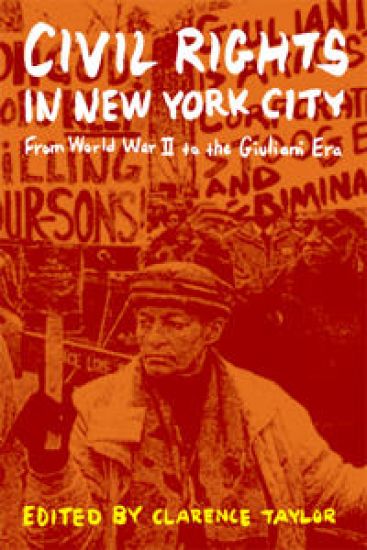
Since the 1960s, most U.S. History has been written as if the civil rights movement were primarily or entirely a Southern history. This book joins a growing body of scholarship that demonstrates the importance of the Northern history of the movement. The contributors make clear that civil rights in New York City were contested in many ways, beginning long before the 1960s, and across many groups with a surprisingly wide range of political perspectives. Civil Rights in New York City provides a sample of the rich historical record of the fight for racial justice in the city that was home to the nation's largest population of African-Americans in mid-twentiethcentury America. The ten contributions brought together here address varying aspects of New York's civil rights struggle, including the role of labor, community organizing campaigns, the pivotal actions of prominent national leaders, the movement for integrated housing, the fight for racial equality in public higher education, and the part played by a revolutionary group that challenged structural, societal inequality. Long before the Montgomery Bus Boycott, the Reverend Adam Clayton Powell Jr. helped launch the Harlem Bus Boycott of 1941. The New York City's Teachers' Union had been fighting for racial equality since 1935. Ella Baker worked with the NAACP and the city's grassroots movement to force the city to integrate its public school system. In 1962, a direct action campaign by Brooklyn CORE, a racially integrated membership organization, forced the city to provide better sanitation services to Bedford-Stuyvesant, Brooklyn's largest black community. Integrating Rochdale Village in South Jamaica, the largest middle-class housing cooperative in New York, brought together an unusual coalition of leftists, liberal Democrats, moderate Republicans, pragmatic government officials, and business executives. In reexamining these and other key events, Civil Rights in New York City reaffirms their importance to the larger national fight for equality for Americans across racial lines.

Professor Clarence Taylor sheds some much-needed light on the rich intellectual and political tradition that lies in the black religious community. From the Pentecostalism of Bishop Smallwood Williams and the flamboyant leadership of the Reverend Al Sharpton, to the radical Presbyterianism of Milton Arthur Galamison and the controversial and mass-mobilization by Minister Louis Farrakhan, black religious leaders have figured prominently in the struggle for social equality in America.

Professor Clarence Taylor sheds some much-needed light on the rich intellectual and political tradition that lies in the black religious community. From the Pentecostalism of Bishop Smallwood Williams and the flamboyant leadership of the Reverend Al Sharpton, to the radical Presbyterianism of Milton Arthur Galamison and the controversial and mass-mobilization by Minister Louis Farrakhan, black religious leaders have figured prominently in the struggle for social equality in America.
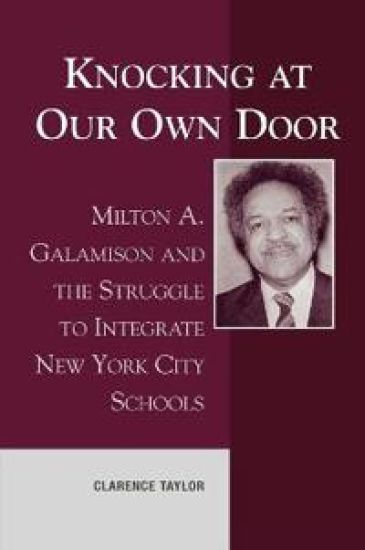
What caused one of America's most promising civil rights movements to implode on the eve of change? Knocking at Our Own Door chronicles the life of New York's preeminent but little-studied integrationist, Milton A. Galamison, and his controversial struggle to improve the lives of the city's most underprivileged children. This detailed account brings insight into the complexities of urban politics, race relations, and school reform.
What caused one of America's most promising civil rights movements to implode on the eve of change? Knocking at Our Own Door chronicles the life of New York's preeminent but little-studied integrationist, Milton A. Galamison, and his controversial struggle to improve the lives of the city's most underprivileged children. This detailed account brings insight into the complexities of urban politics, race relations, and school reform.
-- The New York Times Book Review
-- The New York Times Book Review