Kirjojen hintavertailu. Mukana 12 595 353 kirjaa ja 12 kauppaa.

Kirjailija

Clark McCauley

Kirjat ja teokset yhdessä paikassa: 7 kirjaa, julkaisuja vuosilta 1991-2019, suosituimpien joukossa Varför inte döda dem allihop? : politiska massmords logik och prevention. Vertaile teosten hintoja ja tarkista saatavuus suomalaisista kirjakaupoista.

7 kirjaa

Kirjojen julkaisuhaarukka 1991-2019.

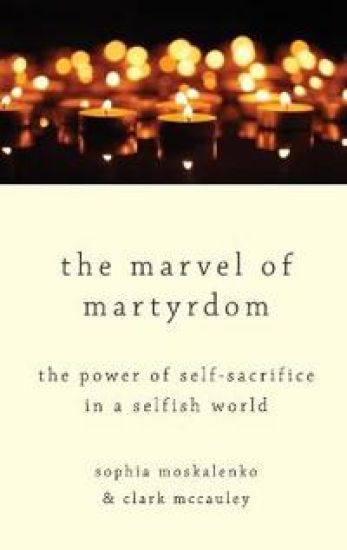
The Marvel of Martyrdom

The Marvel of Martyrdom

Sophia Moskalenko; Clark McCauley

Oxford University Press Inc
2019
sidottu
The Marvel of Martyrdom is about how self-sacrifice can change lives and how martyrs can change the world. The book starts large -- with famous and influential martyrs such as Jesus and Gandhi -- and ends small -- with ordinary people whose own experiences of self-sacrifice give martyrdom its political power. Seeking the developmental origins of self-sacrifice, the book explores children's folklore and the success of mega-hits such as The Matrix and Harry Potter. Seeking the everyday rewards of self-sacrifice, the book shows the potential for finding meaning and happiness in helping others. The Marvel of Martyrdom takes a broad perspective on self-sacrifice and martyrdom, bringing together religion, popular culture, history, psychology and mythology. Stories of individuals both famous (Gandhi) and obscure (Rodrigo Rosenberg) intertwine with research on altruism, happiness, and radicalization to terrorism. The changing landscape of the book's setting -- from The Roman Empire to 19th century Russia to Nazi Germany to post-War II India, to present day Ukraine -- makes the power of self-sacrifice and martyrdom come alive and shows their potential to change people and cultures.
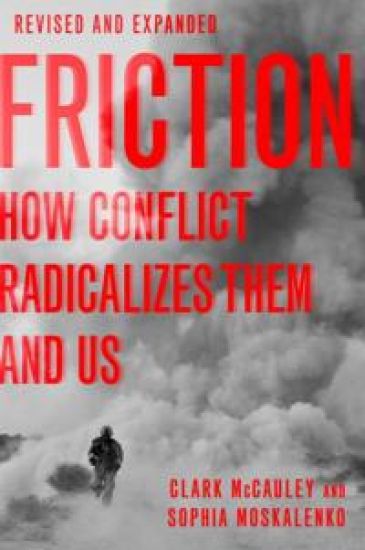
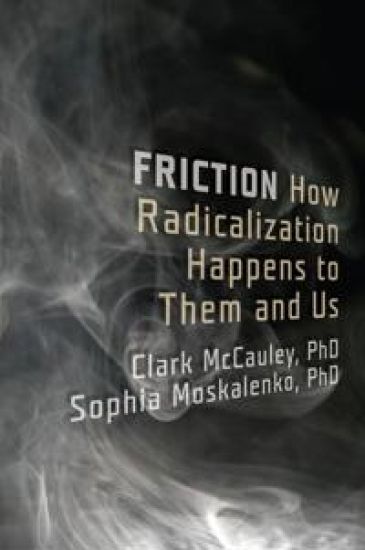
Friction

Friction

Clark McCauley; Sophia Moskalenko

Oxford University Press Inc
2017
nidottu
Terrorism is an extreme form of radicalization. In this ground-breaking and important book, Clark McCauley and Sophia Moskalenko identify and outline twelve mechanisms of political radicalization that can move individuals, groups, and the masses to increased sympathy and support for political violence. Co-authored by two psychologists both acknowledged in their field as experts in radicalization and consultants to the Department of Homeland Security and other government agencies, Friction draws on wide-ranging case histories to show striking parallels between 1800s anti-czarist terrorism, 1970s anti-war terrorism, and 21st century jihadist terrorism. Altogether, the twelve mechanisms of political radicalization demonstrate how unexceptional people are moved to exceptional violence in the conflict between states and non-state challengers. In this revised and expanded edition, McCauley and Moskalenko use the twelve mechanisms to analyze recent cases of lone-wolf terrorists and illustrate how individuals can become radicalized to jihadist violence with group influence or organizational support. Additionally, in the context of the Islamic State's worldwide efforts to radicalize moderate Muslims for jihad, they advance a model that differentiates radicalization in opinion from radicalization in action, and suggest different strategies for countering these diverse forms of radicalization. As a result, the authors conclude that the same mechanisms are at work in radicalizing both terrorists and states targeted by terrorists, implying that these conclusions are as relevant for policy-makers and security officers as they are for citizens facing the threat of terror today.
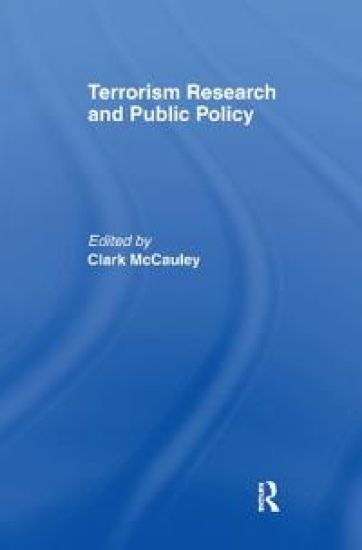
Terrorism Research and Public Policy
First Published in 1991. This book includes several contributions to the new look in terrorism research, including a history of terrorism that reaches back two thousand years, an examination of the life-cycle of terrorist groups that have come and gone since World War II, and a new theory of the stages by which political protest becomes political violence and terrorism.
Friction

Friction

Clark McCauley; Sophia Moskalenko

Oxford University Press Inc
2011
sidottu
This accessible book identifies twelve mechanisms of political radicalization that can move individuals, groups, and the masses to increased sympathy and support for political violence. Terrorism is an extreme form of radicalization, and the book describes pathways to terrorism to demonstrate the twelve mechanisms at work. Written by two psychologists who are acknowledged radicalization experts and consultants to the Department of Homeland Security, Friction draws heavily on case histories. The case material is wide-ranging - drawn from Russia in the late 1800s, the US in the 1970s, and the radical Islam encouraged by the fall of the Soviet Union in the 1990s. Taken together, the twelve mechanisms show how unexceptional people are moved to exceptional violence in the conflict between states and non-state challengers. Captivating, and with psychological overtones, this timely book covers one of the most pressing issues of our time.
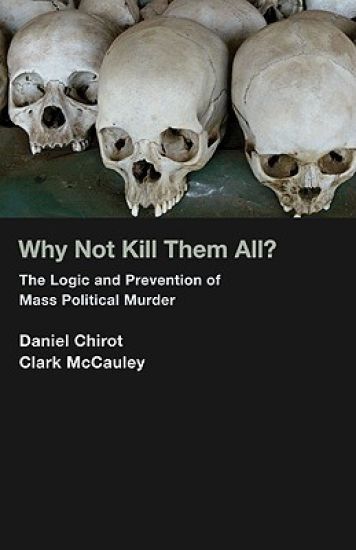
Why Not Kill Them All?

Why Not Kill Them All?

Daniel Chirot; Clark McCauley

Princeton University Press
2010
pokkari
Genocide, mass murder, massacres. The words themselves are chilling, evoking images of the slaughter of countless innocents. What dark impulses lurk in our minds that even today can justify the eradication of thousands and even millions of unarmed human beings caught in the crossfire of political, cultural, or ethnic hostilities? This question lies at the heart of Why Not Kill Them All? Cowritten by historical sociologist Daniel Chirot and psychologist Clark McCauley, the book goes beyond exploring the motives that have provided the psychological underpinnings for genocidal killings. It offers a historical and comparative context that adds up to a causal taxonomy of genocidal events. Rather than suggesting that such horrors are the product of abnormal or criminal minds, the authors emphasize the normality of these horrors: killing by category has occurred on every continent and in every century. But genocide is much less common than the imbalance of power that makes it possible. Throughout history human societies have developed techniques aimed at limiting intergroup violence. Incorporating ethnographic, historical, and current political evidence, this book examines the mechanisms of constraint that human societies have employed to temper partisan passions and reduce carnage. Might an understanding of these mechanisms lead the world of the twenty-first century away from mass murder? Why Not Kill Them All? makes clear that there are no simple solutions, but that progress is most likely to be made through a combination of international pressures, new institutions and laws, and education. If genocide is to become a grisly relic of the past, we must fully comprehend the complex history of violent conflict and the struggle between hatred and tolerance that is waged in the human heart. In a new preface, the authors discuss recent mass violence and reaffirm the importance of education and understanding in the prevention of future genocides.
Varför inte döda dem allihop? : politiska massmords logik och prevention

Varför inte döda dem allihop? : politiska massmords logik och prevention

Daniel Chirot; Clark McCauley

Bokförlaget Daidalos
2008
sidottu
Varför och under vilka omständigheter kan rivalitet och konflikter mellan olika grupper utvecklas till ett mer eller mindre dödligt våld? Hur går det till när sådana konflikter eskalerar till folkmord? Och vilka mekanismer och metoder kan dämpa konflikter så att risken för så drastiska konsekvenser minimeras? Det är mot bakgrund av dessa frågor som Daniel Chirot och Clark McCauley har skrivit denna bok. Genom att studera och analysera både moderna och historiska politiska massmord lyckas de urskilja en bakomliggande logik och skissera upp strategier som kan minimera riskerna för att spänningar och konflikter utvecklas till extremt våld.
Terrorism Research and Public Policy
First Published in 1991. This book includes several contributions to the new look in terrorism research, including a history of terrorism that reaches back two thousand years, an examination of the life-cycle of terrorist groups that have come and gone since World War II, and a new theory of the stages by which political protest becomes political violence and terrorism.