Kirjailija
Claude Lecouteux
Kirjat ja teokset yhdessä paikassa: 25 kirjaa, julkaisuja vuosilta 2000-2026, suosituimpien joukossa Eine Welt Im Abseits: Zur Niederen Mythologie Und Glaubenswelt Des Mittelalters. Vertaile teosten hintoja ja tarkista saatavuus suomalaisista kirjakaupoista.
25 kirjaa
Kirjojen julkaisuhaarukka 2000-2026.
Europe’s most enduring supernatural procession and its meaning for ancestral, spiritual, and cultural traditions • Describes the origins and evolution of the Wild Hunt across pagan, Christian, and folk traditions, revealing its role in death and fertility rituals • Reveals how spectral armies, female spirits, and supernatural processions shaped European beliefs about the afterlife and the soul’s journey • Provides practical approaches for understanding the Wild Hunt’s significance in seasonal festivals, ancestor veneration, and communal rites For centuries, tales of ghostly riders and nocturnal armies have haunted the European imagination. Claude Lecouteux investigates the phenomenon of the Wild Hunt, tracing its origins in ancient rituals and its evolution through medieval Christian reinterpretations and folk traditions. Drawing on chronicles, legends, and ecclesiastical texts, Lecouteux shows how the Wild Hunt was a focal point for beliefs about death, the afterlife, and the relationship between the living and the dead. He presents the complex figures who led these spectral hosts—including Diana, Holda, Odin, and King Herla—and describes how their stories reflect the blending of myth, religion, and local custom. Lecouteux provides examples of how communities responded to the Hunt’s passage, from setting tables for invisible guests to performing noisy processions and observing taboos during liminal times. He addresses the practical implications of these traditions for understanding the cycles of nature, the importance of ritual in negotiating the supernatural, and the ways folklore adapts to changing cultures. The Wild Hunt provides a foundation for understanding how this ghostly tradition continues to influence cultural imagination, spiritual practice, and the relationship between the mortal and the otherworldly while revealing the enduring power of ancestral memory and ritual.
A deluxe boxed set of three scholarly works on magic by professor Claude Lecouteux • Contains hardcover editions of Dictionary of Ancient Magic Words and Spells, Traditional Magic Spells for Protection and Healing, and The High Magic of Talismans and Amulets in a collector’s slipcase • Analyzes more than 7,000 spells from the magical traditions of Europe and provides a comprehensive history of the use of talismans and amulets from the Middle Ages to today Through meticulous study of his private collection of medieval manuscripts as well as his privileged access to the rare book archives of major European universities, Claude Lecouteux has become renowned in esoteric academic circles for his in-depth examinations of the myths and magical practices of the Middle Ages. In this deluxe boxed set are three outstanding examples of Lecouteux’s masterful scholarship, each in a deluxe hardcover edition housed in a collector’s slipcase. In Dictionary of Ancient Magic Words and Spells, Lecouteux analyzes more than 7,000 spells from the magical traditions and grimoires of Europe, presenting a comprehensive dictionary of magic words, phrases, and alphabets. In Traditional Magic Spells for Protection and Healing, he shares more than 600 magical prescriptions from both pagan and Christian sources from the last 2,000 years. He provides an in-depth look at protection magic, including healing spells from rare texts and from the heavily guarded gypsy (Rom) tradition. In The High Magic of Talismans and Amulets, he provides a comprehensive history of the use of talismans and amulets for protection, healing, and divine influence. He reviews many different kinds of amulets and talismans used throughout the ages, such as a rabbit’s foot, horseshoe, gris-gris bag, and inscribed parchment charged through ritual, detailing the magical principles behind each object and showing that their use is still as widespread today as any time in the past.
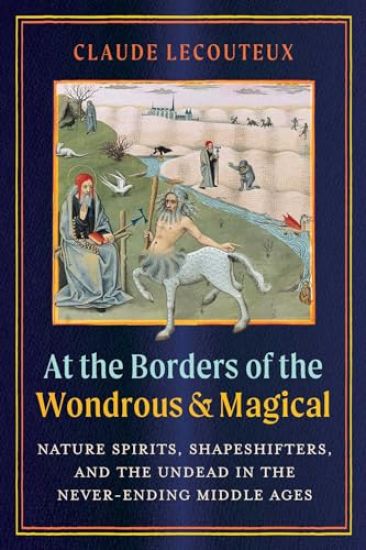
At the Borders of the Wondrous and Magical
Claude Lecouteux; Florence Bayard; Astrid Guillaume
INNER TRADITIONS BEAR AND COMPANY
2025
sidottu
Explores how the haunted, magical world of medieval times still surrounds us• Examines the esoteric side of texts and tales from the Middle Ages, including the enduring presence of haunted areas and power places and the roles of witches, house spirits, rune priests, shapeshifters, and the undead• Discusses the dividing line between magic and deviltry, as well as the significance of grimoires, bells, blacksmiths, storm callers, and more• Serves as a guide to a still-present magical and imaginal realm, pointing readers to the borderlands and liminal thresholds that enable access to the other worldIn this new collection of his writings, scholar and Sorbonne professor Claude Lecouteux reveals that the magical world of the distant past is real and still very present—if you know where to look. Explaining how he makes the texts he studies reveal their hidden teachings, Lecouteux directly explores the esoteric side of medieval myths and tales, peeling back the Christian veneer to show the enduring presence of haunted areas and power places, witches, house spirits, rune carvers, vampires, shapeshifters, and the undead.In tales originating from Greenland and Iceland to Saxony, Romania, and beyond, the author discusses the dividing line between magic and diablerie as well as the significance of grimoires, bells, blacksmiths, and other magical objects and characters. He explores magic in the elements of nature and as illustrated by the art of witches and magicians specializing in weather magic—storm callers and storm dispellers. He examines the medieval mythology surrounding clouds and the mythic significance of mountains in the haunted world of our ancestors, which is still as close to us today as it was to them in the past. Looking at borderlands and liminal thresholds that can serve as gateways to other worlds, the author also discusses land spirits and the rituals needed to engage with them, recognizing how their ownership of the land can never fully be usurped.Through these writings Lecouteux acts as a ferryman, transporting readers into the realms of the wondrous and magical. He enables us to see how the haunted magic of the Middle Ages never ended and how the imaginal realm, standing just beyond the borders of our own, is as vividly real as the material world.
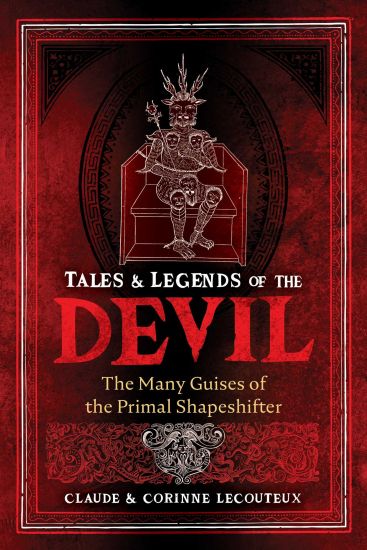
Tales and Legends of the Devil
Claude Lecouteux; Corinne Lecouteux
INNER TRADITIONS BEAR AND COMPANY
2023
sidottu
Explores the many forms and abilities of the devil in stories from around the world. The devil has many more guises than the cliché red boogeyman named Lucifer or Satan who haunts Christianity. In some traditions the devil is sinister and cunning, while others portray him as an oaf who can easily be conned and evaded by anyone with an ounce of cleverness. In other tales and legends, he is the primal shapeshifter, and the Roma, also known as the gypsies, claimed his talents of metamorphosis were so strong he could even assume the appearance of a priest. Drawing on folk traditions from all over Europe, including Transylvanian Romania, Bulgaria, Albania, Switzerland, Italy, France, Scandinavia, Moravia, Bohemia, Lapland, and the Baltic countries, Claude and Corinne Lecouteux explore the many forms and abilities of the devil in stories, tales, and legends throughout the ages. They trace the devil’s shapeshifting powers back to their Vedic origins in ancient India and look at his connections with witches, storm magic, and other magical events. They examine the symbolic implications of the appearance of the devil in these tales, such as how he is often either limping or disfigured with the legs or feet of a goat or other animal traditionally linked to the lower powers or passions. They explain how the devil’s limp or his goat-like feet reflect the prevalence in world mythology of the sacred nature of crippling injuries. Peeling back the Christian veneer embedded in many tales and legends about the so-called Evil One, the authors ultimately reveal how many of the qualities and magical powers attributed to the devil were once those belonging to pagan gods, like the Lithuanian thunder god Perkunas or the Titan Chronos, as well as to playful woodland spirits and the sometimes helpful, sometimes fearful fauns and satyrs of Greco-Roman mythology.
Mysteries of the Far North
Jacques Privat; Claude Lecouteux
INNER TRADITIONS BEAR AND COMPANY
2023
pokkari
Sharing his extensive and meticulous research, Jacques Privat reveals that the Vikings were in Greenland, its neighbouring islands, and the eastern shores of Canada long before Columbus. He examines in depth how Greenland and its surroundings were inhabited for nearly 5 centuries by two Nordic colonies, Vestri-bygd and Eystri-bygd, which disappeared mysteriously: one in 1342 and the other in the 16th century. Drawing on the still-living indigenous oral tradition of the Far North, as well as surviving sculptural art such as carvings, he shows how, far from being constantly at odds with the native population, the Norsemen and the Inuit formed a harmonious community. He reveals how this friendly Inuit-Viking relationship encouraged the Scandinavian settlers to forsake Christianity and return to their pagan roots. Working with ancient European maps and other cartography, such as the 15th-century Martin Behaim globe, as well as explorers’ records of their voyages, the author examines the English, Irish, German, Danish, Flemish, and Portuguese presence in the Far North. He explores how Portugal dominated many seas and produced the first correct cartography of Greenland as an island. He also reveals how Portugal may have been behind the disappearance of the Vikings in Greenland by enslaving them for their European plantations. Dispelling once and for all the theories that the Inuit were responsible for the failure of the Scandinavian colonies of the Far North, the author reveals how, ultimately, the Church opted to cut all ties with the settlements--rather than publicise that a formerly Christian people had become pagan again. When the lands of the Far North were officially “discovered” after the Middle Ages, the Norse colonies had vanished, leaving behind only legends and mysterious ruins.
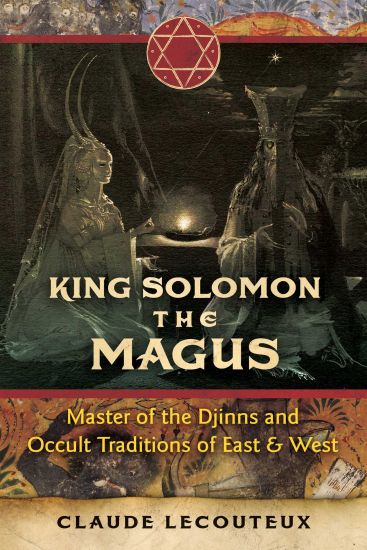
• Explores the schools of Solomonic magic around the world and works such as The Greater and Lesser Keys of Solomon the King and The Hygromancy of Solomon • Examines Solomon’s magical possessions, including his famous ring that gave him command over animals, weather, demons, genies, and djinns, as well as his amulets, remedies, exorcisms, and charms • Looks at the extensive presence of Solomon in folklore around the world, including in Armenia, Malaysia, Russia, Bulgaria, Morocco, India, and Egypt Looking at the Solomonic magical tradition and Solomon’s profound influence on esoteric traditions around the world, Claude Lecouteux reveals King Solomon not only as one of the great kings of prehistory but also as the ancient world’s foremost magician and magus. Examining the primary sources on Solomon, such as the Bible, the Koran, and the writings of Flavius Josephus, the author explores Solomon’s judgments, his explorations, his literary and scientific works (including an herbal), and his constructions beyond the eponymous temple, such as the copper city in Andalus built by the djinns and the baths of Sulayman. He also looks at Solomon’s magical possessions, such as his famous ring and the Philosopher’s Stone. The author examines the supernatural powers granted to Solomon by his ring, which he received from the angel Gabriel, including command over animals, weather, and demons, and explores in detail Solomon’s power over genies and djinns.Following the esoteric threads hidden within the primary sources on Solomon, Lecouteux reveals the work of Solomon the Magician, exploring his amulets, remedies, exorcisms, charms, and his influence on Arab and Western magic. Providing illustrations of sigils, talismans, and other magic symbols related to Solomon, the author examines the schools of Solomonic Folkloremagic and works such as The Greater and Lesser Keys of Solomon the King and The Hygromancy of Solomon. He then looks at the extensive presence of Solomon in folklore worldwide, including in Armenia, Israel, Malaysia, Eastern Europe, Russia, Morocco, India, Mongolia, and among the Abyssinians of Ethiopia and the Copts in Egypt. He also looks at Solomon’s role within the Bulgarian tradition from which the Cathars derived. Painting an in-depth portrait of Solomon the Magician-King, Lecouteux reveals how this legendary magus left a deep impression upon the occult, magical traditions, and philosophies of the ancient world that can still be felt to this day.
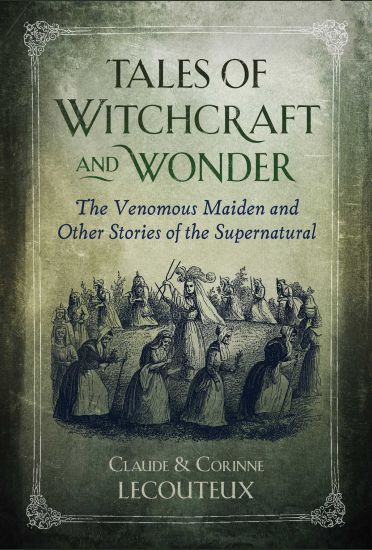
Tales of Witchcraft and Wonder
Claude Lecouteux; Corinne Lecouteux
Inner Traditions Bear and Company
2021
sidottu
A collection of tales from the Middle Ages focused on otherworldly powers, magical animals, miracles, demonic apparitions, and supernatural events • Offers commentary for each story, revealing its historical context, cultural and esoteric associations, and hidden pagan beliefs • Explores how the tales transformed over the ages and their origins in Classical Antiquity, the Middle East, and India • Includes stories never-before-translated from their original Latin and many purposely left in obscurity due to scandalous depictions of popes and other notables The Middle Ages witnessed the blossoming of oral traditions whose echoes can still be found in many legends, fables, and tales today.In this collection of medieval tales of witchcraft, wonder, and the supernatural, Claude and Corinne Lecouteux explain how many of these stories arose in Classical Antiquity while some made their way into Dark Ages Europe from the Middle East and India. Offering commentary for each tale, the authors place them in historical context and analyze their cultural and esoteric associations. They include stories never- before-translated from their original Latin or demotic versions and show how, unlike the well-known fairy tales made popular by the Brothers Grimm, many stories were purposely left in obscurity because they presented scandalous depictions of popes and other notables. Additionally, for many of the tales, the authors scrupulously peel back the Christian veneer to show how the stories were instrumental in assuring the survival of age-old pagan beliefs across the centuries. These beliefs are explored through tales of animals with magical powers and the ability to converse with humans, including the tale of the Grateful Lion made famous through Aesop’s fables; stories of individuals with supernatural or otherworldly powers, like the Venomous Maiden who poisons all men who have relations with her; legends of miracles and wondrous things that violate the laws of nature, such as people returning from the dead to help a descendant; and stories of witchcraft, magic, and demonic apparitions, including the pope who was a disguised demon. The authors also explore tales of supernatural spouses and illicit love affairs, wisdom teachings and parables of fools, and heroic legends.
An extensive look at the cartography and folklore of the afterlife worlds as seen by our ancestors • Examines how ancient European cultures viewed the beyond, including the Blessed Isles of early Greek and Celtic faith, the Hebrew Sheol, Hades from Homer’s Odyssey, Hel and Valhalla of the Norse, and the Aralu of Babylon • Shows how medieval accounts of journeys into the Other World represent the first recorded near-death experiences • Connects medieval afterlife beliefs and NDE narratives with shamanism, looking in particular at psychopomps, power animals, the double, the fetch, and what people bring back from their journeys to the spirit realms Charting the evolution of afterlife beliefs in both pagan and medieval Christian times, Claude Lecouteux offers an extensive look at the cartography and folklore of the afterlife worlds as seen by our ancestors. Exploring the locations and topographies of the various forms taken by Hell, Purgatory, and Heaven, he examines how ancient European cultures viewed the beyond, including the Blessed Isles of early Greek and Celtic faith, the Hebrew Sheol, the pale world of Hades from Homer’s Odyssey, Hel and Valhalla of the Norse, and the Aralu of Babylon, the land where nothing can be seen. The author also explores beliefs in Other Worlds, lands different from our own that are not the afterlife but places where time flows differently and which are inhabited by fantastic or supernatural beings such as fairies or dwarfs. Sharing medieval tales of journeys into the beyond, Lecouteux shows how these accounts represent the first recorded near-death experiences (NDEs) and examines how they compare with modern NDE narratives as well as the work of NDE researchers like Raymond Moody. In addition, he also explores tales of out-of-body experiences, dream journeys, and travels made by a double or fetch and connects these narratives with shamanism, looking in particular at psychopomps, power animals, and what people bring back from their journeys to the spirit realms. Analyzing the afterlife beliefs of the Middle Ages as a whole, Lecouteux concludes with a collection of medieval afterlife-related traditions, such as placing polished stones in the coffin so the departed soul can find its way back to friends and family at those times of the year when the veil between the worlds grows thin.
The Hidden History of Elves and Dwarfs
Claude Lecouteux; Régis Boyer
Inner Traditions Bear and Company
2018
sidottu
A comprehensive examination of the intertwined mythology, folklore, and literary history of the little people Most people are familiar with the popular image of elves as Santa’s helpers and dwarfs as little bearded men wearing red caps, who are mischievous and playful, helpful and sly, industrious and dexterous. But their roots go far deeper than their appearance in fairy tales and popular stories. Elves and dwarfs are survivors of a much older belief system that predates Christianity and was widespread throughout Western Europe. Sharing his extensive analysis of Germanic and Norse legends, as well as Roman, Celtic, and medieval literature, Claude Lecouteux explores the ancient, intertwined history of dwarfs and elves. He reveals how both were once peoples who lived in wild regions as keepers of the secrets of nature. They were able to change their size at will and had superhuman strength and healing powers. They were excellent smiths, crafting swords that nothing could dull as well as magical jewelry, and often entered into the service of lords or heroes. They were a part of the everyday life of our ancestors before they were transformed by fairy tales and church texts into the mythical creatures we know today. Lecouteux shows how, in earlier folklore, elves and dwarfs were interchangeable, gradually evolving over time to express very different kinds of beings. Revealing the true roots of these helpful and powerful beings, including an in-depth exploration of one of the most famous dwarf/elf/fairy beings of the Middle Ages, Auberon or Oberon, also known as Alberich, Lecouteux shows how the magic of dwarfs and elves can be rekindled if we recognize their signs and invite them back into our world.
A comprehensive A-to-Z reconstruction of the oral tradition of the Rom--gypsies--based on sources never before available in English • Presents the origin myths and magical traditions of the gypsies, including their legendary ties to Egypt, animal ancestors, and tree spirits • Examines the three major settings of gypsy folktales--the forest, the waters, and the mountain--and shows how their world is full of spirits • Shows how the religious concepts of the Rom testify to a profound syncretism of the pagan traditions and Christianity Although their own myths and their common name point to Egyptian origins for the gypsies, the Rom, as they call themselves, originated in India, as evidenced by studies of their language. They arrived in Europe in the ninth century and spread across the continent from East to West, reaching England in the 15th century and Scandinavia by the end of the 16th century. A nomadic people, these wanderers were reviled by local populaces wherever they went and regarded as misfits, intruders, foreigners, and thieves. Drawing on a number of sources never before available outside of Eastern Europe, Claude Lecouteux reconstructs the gypsy oral tradition to provide a comprehensive A-to-Z look at gypsy mythology, including their folktales, rites, songs, nursery rhymes, jokes, and magical traditions. Complete with rare illustrations and information from obscure sources appearing for the first time in English, this detailed reference work represents an excellent resource for scholars and those seeking to reconnect to their forgotten gypsy heritage.
Traditional Magic Spells for Protection and Healing
Claude Lecouteux
Inner Traditions Bear and Company
2017
sidottu
Presents more than 600 magical prescriptions for healing and protection from both pagan and Christian sources • Examines the practice of diagnosing illness through magic and explores ancient beliefs about curses and other evil spells and about devils, demons, and ghosts • Includes spells from the heavily guarded gypsy tradition of magic and healing, drawn from newly discovered materials Since the beginning of history, people have sought remedies for the many ills that have beset them, from illnesses afflicting the body to threats posed by evil and hostile individuals. In many folk healing and pagan traditions, it was believed that one must gain the assistance of the guardian spirit of a healing plant or substance through prayers or offerings before its chemical properties would be effective. Drawing on his extensive knowledge of ancient texts, Claude Lecouteux presents more than 600 magical prescriptions from both pagan and Christian sources from the last 2,000 years, covering everything from abscesses and shingles to curses and healing animals. He explores ancient beliefs about curses and about devils, demons, and ghosts and provides an in-depth look at protection magic, including protection of health, animals, and cultivated land, protection against curses, witchcraft, bad weather, and beasts, protection of a home, and protection while traveling. He includes spells from the heavily guarded gypsy tradition of magic and healing, drawn from newly discovered materials collected by two Romanian ethnologists who lived and traveled with gypsies in Transylvania in the mid-19th century. The author also reproduces rare texts on magic healing from the 14th and 15th centuries. Revealing the vitality of these practices in the remoter areas of Eastern Europe, Lecouteux shows how the influence of this pagan worldview is still detectable in the work of modern folk healers in France and Scandinavia.
Encyclopedia of Norse and Germanic Folklore, Mythology, and Magic
Claude Lecouteux
Inner Traditions Bear and Company
2016
sidottu
The legends of the Norse and Germanic regions of Europe--spanning from Germany and Austria across Scandinavia to Iceland and England--include a broad range of mythical characters and places, from Odin and Thor, to berserkers and Valhalla, to the Valkyries and Krampus. In this encyclopedia, Claude Lecouteux explores the origins, connections, and tales behind many gods, goddesses, magical beings, rituals, folk customs, and mythical places of Norse and Germanic tradition. More than a reference to the Aesir and the Vanir pantheons, this encyclopedia draws upon a wealth of well-known and rare sources, such as the Poetic Edda, the Saga of Ynglingar by Snorri Sturluson, and The Deeds of the Danes by Saxo Grammaticus. The author describes the worship of the elements and trees, details many magical rituals, and shares wild folktales from ancient Europe, such as the strange adventure of Peter Schlemihl and the tale of the Cursed Huntsman. He also dispels the false beliefs that have arisen from the Nazi hijacking of Germanic mythology and from its longtime suppression by Christianity. Complete with rare illustrations and information from obscure sources appearing for the first time in English, this detailed reference work represents an excellent resource for scholars and those seeking to reconnect to their pagan pasts and restore the old religion.
Dictionary of Ancient Magic Words and Spells
Claude Lecouteux
Inner Traditions Bear and Company
2015
sidottu
From Abracadabra to the now famous spells of the Harry Potter series, magic words are no longer confined to the practices of pagans, alchemists, witches, and occultists. They have become part of the popular imagination of the Western world. Passed down from ancient Babylon, Egypt, and Greece, these words and the rituals surrounding them have survived through the millennia because they work. And as scholar Claude Lecouteux reveals, often the more impenetrable they seem, the more effective they are. Presenting a wealth of material on magical words, signs, and charms, both common and obscure, Lecouteux also explores the magical words and spells of ancient Scandinavia, the Hispano-Arabic magic of Spain before the Reconquista, the traditions passed down from ancient Egypt, and those that have stayed in use until the present day.
Our pagan ancestors knew that every forest has brownies and fairies, every spring its lady, and every river malevolent beings in its depths. They told tales of giants in the hills, dragons in the lakes, marshes swarming with will-o'-the-wisps, and demons and wild folk in the mountains who enjoyed causing landslides, avalanches, and floods. They both feared and respected these entities, knowing the importance of appeasing them for safe travel and a prosperous homestead. Exploring medieval stories, folk traditions, spiritual place names, and pagan rituals of home building and site selection, Claude Lecouteux reveals the multitude of spirits and entities that once inhabited the land before modern civilization repressed them into desert solitude, impenetrable forests, and inaccessible mountains. He explains how, to our ancestors, enclosing a space was a sacred act. Specific rites had to be performed to negotiate with the local spirits and ensure proper placement and protection of a new building. These land spirits often became the household spirit, taking up residence in a new building in exchange for permission to build on their territory. Lecouteux explores Arthurian legends, folk tales, and mythology for evidence of the untamed spirits of the wilderness, such as giants, dragons, and demons, and examines the rites and ceremonies used to gain their good will. Lecouteux reveals how, despite outright Church suppression, belief in these spirits carried through to modern times and was a primary influence on architecture, an influence still visible in today's buildings. The author also shows how our ancestors' concern for respecting nature is increasingly relevant in today's world.
Christian Mythology
Philippe Walter; Claude Lecouteux
Inner Traditions Bear and Company
2014
pokkari
In this extensive study of the Christian mythology that animated Europe in the Middle Ages, author Philippe Walter reveals how these stories and the holiday traditions connected with them are based on long-standing pagan rituals and myths and have very little connection to the Bible. The author explains how the church fathers knowingly incorporated pagan elements into the Christian faith to ease the transition to the new religion. Rather than tear down the pagan temples in Britain, Pope Gregory the Great advised Saint Augustine of Canterbury to add the pagan rituals into the mix of Christian practices and transform the pagan temples into churches. Instead of religious conversion, it was simply a matter of convincing the populace to include Jesus in their current religious practices. Providing extensive documentation, Walter shows which major calendar days of the Christian year are founded on pagan rituals and myths, including the high holidays of Easter and Christmas. Examining hagiographic accounts of the saints, he reveals the origin of these symbolic figures in the deities worshipped in pagan Europe for centuries. He also explores how the identities of saints and pagan figures became so intermingled that some saints were transformed into pagan incarnations, such as Mary Magdalene's conversion into one of the Celtic Ladies of the Lake. In revealing the pagan roots of many Christian figures, stories, and rituals, Walter provides a new understanding of the evolution of religious belief.
The High Magic of Talismans and Amulets
Claude Lecouteux
Inner Traditions Bear and Company
2014
sidottu
The use of talismans and amulets stretches back nearly to the dawn of man, from everyday items magically prepared, such as horns or coins, to intricate and beautiful jewelry imbued with protective powers. Drawing on his private collection of medieval manuscripts as well as his privileged access to the rare book archives of major European universities, Claude Lecouteux provides a comprehensive history of the use of talismans and amulets for protection, healing, and divine influence. He explores their use in the Western Mystery Tradition as well as Eastern and Middle Eastern beliefs about these magical objects and their incorporation--despite Church anathema--into the Christian tradition of Medieval Europe. Reviewing many different kinds of amulets and talismans used throughout the ages, such as a rabbit's foot, horseshoe, gris-gris bag, or an inscribed parchment charged through ritual, he details the principles and symbology behind each object and shows that their use is still as widespread today as any time in the past. Lecouteux explains the high magic behind the hermetic art of crafting amulets and talismans: the chains of sympathy, astrological geography, and the invocations required to activate their powers. He explores the work of adepts such as Agrippa, Albertus Magnus, and Athanasius Kircher, including an in-depth look at Kircher's work on planetary seals in his Oedipus Aegyptiacus. Illustrated throughout with period art depicting magical symbols, seals, and a wide array of talismans and amulets, this comprehensive study provides a practical guide to the historical development and step-by-step creation of magical objects.
Grimoires began simply as quick-reference "grammar books" for sorcerers, magicians, and priests before evolving into comprehensive guides to magic, complete with spell-casting rituals, magical alphabets, and instructions to create amulets and talismans. With the advent of the printing press, some grimoires were mass produced, but many of the abbreviations were misinterpreted and magical words misspelled, rendering them ineffective. The most powerful grimoires remained not only secret but also heavily encoded, making them accessible only to the highest initiates of the magical traditions. Drawing on his own private collection of grimoires and magical manuscripts as well as his privileged access to the rare book archives of major European universities, Claude Lecouteux offers an extensive study of ancient books of magic and the ways the knowledge within them was kept secret for centuries through symbols, codes, secret alphabets, and Kabbalistic words. Touching on both white and black magical practices, he explains the basic principles of medieval magic, including the doctrine of names and signatures, mastery of the power of images, and the laws of sympathy and contagion. He gives an overview of magic in the Western Mystery tradition, emphasizing both lesser-known magicians such as Trithemus and Peter of Apono and famous ones like Albertus Magnus and Hermes Trismegistus. Creating a universal grimoire, Lecouteux provides exact reproductions of secret magical alphabets, symbols, and glyphs with instructions for their use as well as an illustrated collection of annotated spells, rituals, and talismans for numerous applications including amorous magic, healing magic, and protection rites. The author also examines the folk magic that resulted when the high magic of the medieval grimoires melded with the preexisting pagan magic of ancient Europe.
Why do we hang horseshoes for good luck or place wreaths on our doors? Why does the groom carry his new bride over the threshold? These customs represent the last vestiges from a long, rich history of honouring the spirits of our homes. They show that a house is more than a building: it is a living being with a body and soul. Examining the extensive traditions surrounding houses from mediaeval times to the present, Claude Lecouteux reveals that humanity had an extremely sacred relationship with their homes and all the spirits who lived there alongside them - from the spirit of the house itself to the mischievous elves, fairies and imps who visited, invited or not. He shows how every aspect of constructing and keeping a house involved rites, ceremony, customs and taboos to appease the spirits, including the choice of a building lot and the very materials with which it was built. Revealing our ancestors' charms, prayers and practices to bestow happiness and prosperity upon their homes, Lecouteux shows that we can invite the spirits back into our houses, old or new, and restore the sacred bond between home and inhabitant. Uncovering the lost meaning behind door and window placement, the hearth and the threshold, Lecouteux shares many tales of house spirits, from the offerings used to cajole the local land spirit into becoming the domestic house spirit to the good and bad luck bestowed upon those who seek the help of the "Little Money Man." He draws on studies and classic literature from old Europe - from Celtic lands and Scandinavia to France and Germany to the far eastern borders of Europe and into Russia - to explain the pagan roots behind many of these traditions. · Shares many tales of house spirits, from cajoling the local land spirit into becoming one's house spirit to the good and bad luck bestowed by mischievous house elves · Explains the meaning behind door and window placement, house orientation, horsehead gables, the fireplace or hearth and the threshold · Reveals the charms, chants, prayers and building practices used by our ancestors to bestow happiness and prosperity upon their homes and their occupants
A comprehensive dictionary of sacred and magical gem lore that draws on the rarest source texts of Antiquity and the Middle Ages • Reveals the healing and magical virtues of familiar gemstones, such as amethyst, emerald, and diamond, as well as the lore surrounding exotic stones such as astrios, a stone celebrated by ancient magicians • Examines bezoars (stones formed in animals’ bodies) and “magnets” that attract materials other than metal • Based on ancient Arabic, Greek, Jewish, and European sources, ranging from the observations of Pliny the Elder to extremely rare texts such as the Picatrix and Damigeron’s Virtue of Stones Our ancestors believed stones were home to sacred beings of power, entities that if properly understood and cultivated could provide people protection from ill fortune, envy, and witchcraft; grant invisibility and other magical powers; improve memory; and heal the sick from a wide variety of diseases. These benefits could be obtained by wearing the stone on a ring, bracelet, or pendant; through massage treatments with the stone; or by reducing the gem into a powder and drinking it mixed with water or wine. Drawing from a wealth of ancient Arabic, Greek, Jewish, and European sources--from the observations of Pliny the Elder to extremely rare texts such as the Picatrix and Damigeron’s Virtue of Stones--Claude Lecouteux provides a synthesis of all known lore for more than 800 stones. He includes such common examples as the emerald, which when engraved with the figure of a harpy holding a lamprey in its claws will banish panic and nightmares, and beryl, which when appropriately carved can summon water spirits or win its owner high renown, as well as more exotic stones such as astrios, a stone celebrated by ancient magicians and whose center glows like a star. Lecouteux also examines bezoars--stones formed in animals’ bodies--as well as “magnets” that attract materials other than iron, such as gold, flesh, cotton, or scorpions. This comprehensive dictionary of sacred and magical gem lore, drawn from the rarest sources of Antiquity and the Middle Ages, represents a one-of-a-kind resource for gem enthusiasts and magical practitioners alike.
The Secret History of Poltergeists and Haunted Houses
Claude Lecouteux
Inner Traditions Bear and Company
2012
pokkari
. Provides a wide array of case studies from ancient Greece and Rome to mediaeval Europe to the modern world . Explores the relationship between poltergeists and troubled adolescence . Looks beneath the Christian adulteration of pagan practices to reveal the hidden ancestral beliefs tied to poltergeists and haunted houses Stories of poltergeists and their mischievous and sometimes violent actions are a constant through the ages. What changes is how we interpret this activity. For our pagan ancestors this phenomenon was caused by helper spirits whose manifestations revealed their unhappiness with a household. The mediaeval Christian church demonised these once helpful spirits and held exorcisms to expel them from the houses they haunted. The Age of Enlightenment cast these incidents as clever hoaxes and many still believe this today. But poltergeist manifestations continue to appear and often defy attempts to debunk them as pranks. What, then, is behind this phenomenon? Exploring accounts of poltergeists from ancient Greece and Rome, mediaeval Europe and the modern world, Claude Lecouteux finds that, while our interpretations of poltergeists may change, the manifestations always follow a similar course and evolution. Looking beneath the Christian adulteration of pagan practices to reveal the hidden ancestral beliefs tied to poltergeists and haunted houses, the author shows how these unhappy spirits serve as confirmation of the supernatural beings that share the earth with us and of our relationship with the natural and unseen world, a relationship we must take care to keep in balance.