Kirjojen hintavertailu. Mukana 12 390 323 kirjaa ja 12 kauppaa.

Kirjailija

Claudio Lomnitz

Kirjat ja teokset yhdessä paikassa: 10 kirjaa, julkaisuja vuosilta 2001-2025, suosituimpien joukossa Reconocimientos. Vertaile teosten hintoja ja tarkista saatavuus suomalaisista kirjakaupoista.

10 kirjaa

Kirjojen julkaisuhaarukka 2001-2025.

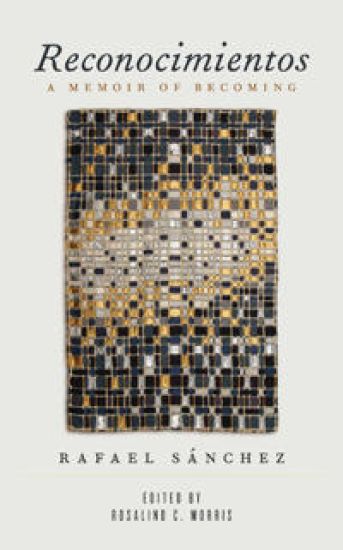
Reconocimientos

Reconocimientos

Rafael Sánchez; Igor Barreto; Luis Pérez-Oramas; Claudio Lomnitz

FORDHAM UNIVERSITY PRESS
2025
sidottu
What is the relationship between a writer's life, milieu, and thought? In this daring and intellectually expansive text, part memoir and part political philosophy, the anthropologist Rafael Sánchez explores the forces and events that shaped him and the nations through which he moved. Reconocimientos is a book of both personal and political reckoning, from the thrillingly emancipatory possibilities of Venezuela's plazas to the political promise and disappointments of revolution. Written in the final year of his life, Reconocimientos moves from scenes of Sánchez's youth in Cuba to fieldwork on the cult of Maria Lionza in Venezuela to confront the terrifying and alluring forces of patriarchal privilege at the base of monumentalist authoritarianism. Sánchez's intimate prose speaks with the urgency both of his own mortality and of the political crises of our moment. Amid the resurgence of patriarchy, hierarchy, and the valorization of inequality that have become pillars of populist movements in Latin America and beyond, Sánchez finds a residual radical possibility in 'horizontal' spaces, where the forces of mimesis permit manifold transformations.
Reconocimientos

Reconocimientos

Rafael Sánchez; Igor Barreto; Luis Pérez-Oramas; Claudio Lomnitz

FORDHAM UNIVERSITY PRESS
2025
pokkari
What is the relationship between a writer's life, milieu, and thought? In this daring and intellectually expansive text, part memoir and part political philosophy, the anthropologist Rafael Sánchez explores the forces and events that shaped him and the nations through which he moved. Reconocimientos is a book of both personal and political reckoning, from the thrillingly emancipatory possibilities of Venezuela's plazas to the political promise and disappointments of revolution. Written in the final year of his life, Reconocimientos moves from scenes of Sánchez's youth in Cuba to fieldwork on the cult of Maria Lionza in Venezuela to confront the terrifying and alluring forces of patriarchal privilege at the base of monumentalist authoritarianism. Sánchez's intimate prose speaks with the urgency both of his own mortality and of the political crises of our moment. Amid the resurgence of patriarchy, hierarchy, and the valorization of inequality that have become pillars of populist movements in Latin America and beyond, Sánchez finds a residual radical possibility in 'horizontal' spaces, where the forces of mimesis permit manifold transformations.
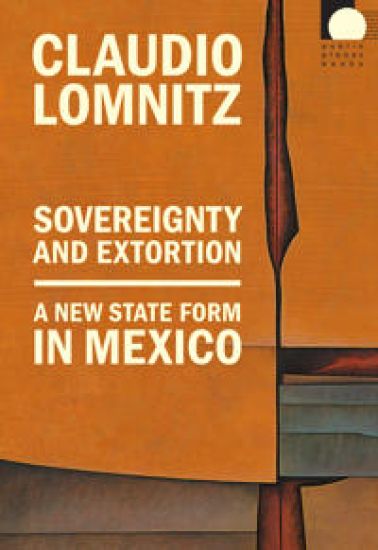
Sovereignty and Extortion

Sovereignty and Extortion

Claudio Lomnitz

DUKE UNIVERSITY PRESS
2024
pokkari
Over the past fifteen years in Mexico, more than 450,000 people have been murdered and 110,000 more have been disappeared. In Sovereignty and Extortion, Claudio Lomnitz examines the Mexican state in relation to this extreme violence, uncovering a reality that challenges the familiar narratives of “a war on drugs” or a “failed state.” Tracing how neoliberal reforms, free trade agreements, and a burgeoning drug economy have shaped Mexico’s sociopolitical landscape, Lomnitz shows that the current crisis does not represent a tear in the social fabric. Rather, it reveals a fundamental shift in the relationship between the state and the economy in which traditional systems of policing, governance, and the rule of law have eroded. Lomnitz finds that power is now concentrated in the presidency and enforced through militarization, which has left the state estranged from itself and incapable of administering justice or regaining control over violence. Through this critical examination, Lomnitz offers a new theory of the state, its forms of sovereignty, and its shifting relation to capital and militarization.
Sovereignty and Extortion

Sovereignty and Extortion

Claudio Lomnitz

DUKE UNIVERSITY PRESS
2024
sidottu
Over the past fifteen years in Mexico, more than 450,000 people have been murdered and 110,000 more have been disappeared. In Sovereignty and Extortion, Claudio Lomnitz examines the Mexican state in relation to this extreme violence, uncovering a reality that challenges the familiar narratives of “a war on drugs” or a “failed state.” Tracing how neoliberal reforms, free trade agreements, and a burgeoning drug economy have shaped Mexico’s sociopolitical landscape, Lomnitz shows that the current crisis does not represent a tear in the social fabric. Rather, it reveals a fundamental shift in the relationship between the state and the economy in which traditional systems of policing, governance, and the rule of law have eroded. Lomnitz finds that power is now concentrated in the presidency and enforced through militarization, which has left the state estranged from itself and incapable of administering justice or regaining control over violence. Through this critical examination, Lomnitz offers a new theory of the state, its forms of sovereignty, and its shifting relation to capital and militarization.
Nuestra America

Nuestra America

Claudio Lomnitz

IT Revolution Press
2021
sidottu
In Nuestra Am©rica, eminent anthropologist and historian Claudio Lomnitz traces his grandparents' exile from Eastern Europe to South America. At the same time, the book is a pretext to explain and analyze the worldview, culture, and spirit of countries such as Peru, Colombia, and Chile, from the perspective of educated Jewish emigrants imbued with the hope and determination typical of those who escaped Europe in 1920s.
The Return of Comrade Ricardo Flores Magón
A tale, never before told, of anarchy, cooperation, and betrayal at the margins of the Mexican revolution.In this long-awaited book, Claudio Lomnitz tells a groundbreaking story about the experiences and ideology of American and Mexican revolutionary collaborators of the Mexican anarchist Ricardo Flores Magon. Drawing on extensive research in Mexico and the United States, Lomnitz explores the rich, complicated, and virtually unknown lives of Flores Magon and his comrades devoted to the "Mexican Cause." This anthropological history of anarchy, cooperation, and betrayal seeks to capture the experience of dedicated militants who themselves struggled to understand their role and place at the margins of the Mexican Revolution. For them, the revolution was untranslatable, a pure but deaf subversion: La revolucion es la revolucion-"The Revolution is the Revolution." For Lomnitz, the experiences of Flores Magon and his comrades reveal the meaning of this phrase. The Return of Comrade Ricardo Flores Magon tracks the lives of John Kenneth Turner, Ethel Duffy, Elizabeth Trowbridge, Ricardo Flores Magon, Lazaro Gutierrez de Lara, and others, to illuminate the reciprocal relationship between personal and collective ideology and action. It is an epic and tragic tale, never before told, about camaraderie and disillusionment in the first transnational grassroots political movement to span the U.S.-Mexican border. The Return of Comrade Ricardo Flores Magon will change not only how we think about the Mexican Revolution but also how we understand revolutionary action and passion.
Death and the Idea of Mexico

Death and the Idea of Mexico

Claudio Lomnitz

Zone Books
2008
pokkari
The history of Mexico's fearless intimacy with death-the elevation of death to the center of national identity.Death and the Idea of Mexico is the first social, cultural, and political history of death in a nation that has made death its tutelary sign. Examining the history of death and of the death sign from sixteenth-century holocaust to contemporary Mexican-American identity politics, anthropologist Claudio Lomnitz's innovative study marks a turning point in understanding Mexico's rich and unique use of death imagery. Unlike contemporary Europeans and Americans, whose denial of death permeates their cultures, the Mexican people display and cultivate a jovial familiarity with death. This intimacy with death has become the cornerstone of Mexico's national identity. Death and Idea of Mexico focuses on the dialectical relationship between dying, killing, and the administration of death, and the very formation of the colonial state, of a rich and variegated popular culture, and of the Mexican nation itself. The elevation of Mexican intimacy with death to the center of national identity is but a moment within that history-within a history in which the key institutions of society are built around the claims of the fallen. Based on a stunning range of sources-from missionary testimonies to newspaper cartoons, from masterpieces of artistic vanguards to accounts of public executions and political assassinations-Death and the Idea of Mexico moves beyond the limited methodology of traditional historiographies of death to probe the depths of a people and a country whose fearless acquaintance with death shapes the very terms of its social compact.
Deep Mexico, Silent Mexico

Deep Mexico, Silent Mexico

Claudio Lomnitz

University of Minnesota Press
2001
nidottu
In Mexico, as elsewhere, the national space, that network of places where the people interact with state institutions, is constantly changing. How it does so, how it develops, is a historical process-a process that Claudio Lomnitz exposes and investigates in this book, which develops a distinct view of the cultural politics of nation building in Mexico. Lomnitz highlights the varied, evolving, and often conflicting efforts that have been made by Mexicans over the past two centuries to imagine, organize, represent, and know their country, its relations with the wider world, and its internal differences and inequalities. Firmly based on particulars and committed to the specificity of such thinking, this book also has broad implications for how a theoretically informed history can and should be done. An exploration of Mexican national space by way of an analysis of nationalism, the public sphere, and knowledge production, Deep Mexico, Silent Mexico brings an original perspective to the dynamics of national cultural production on the periphery. Its blending of theoretical innovation, historical inquiry, and critical engagement provides a new model for the writing of history and anthropology in contemporary Mexico and beyond.Public Worlds Series, volume 9