Kirjojen hintavertailu. Mukana 12 203 467 kirjaa ja 12 kauppaa.

Kirjailija

Clay S. Jenkinson

Kirjat ja teokset yhdessä paikassa: 6 kirjaa, julkaisuja vuosilta 2020-2022, suosituimpien joukossa Repairing Jefferson's America. Vertaile teosten hintoja ja tarkista saatavuus suomalaisista kirjakaupoista.

Mukana myös kirjoitusasut: Clay S Jenkinson

6 kirjaa

Kirjojen julkaisuhaarukka 2020-2022.

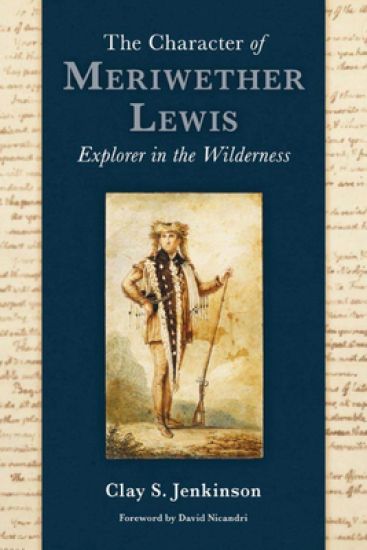
The Character of Meriwether Lewis

The Character of Meriwether Lewis

Clay S. Jenkinson; David Nicandri

Washington State University Press
2022
sidottu
Meriwether Lewis commanded the most important exploration mission in the early history of the United States. Clay S. Jenkinson takes a fresh look at Lewis, not to offer a paper cutout hero but to describe and explain a hyperserious young man of great complexity who found the wilderness of Upper Louisiana as exacting as it was exhilarating.Jenkinson sees Lewis as a troubled soul before he left St. Charles, Missouri, in May 1804. His experiences in lands "upon which the foot of civilized man had never trodden" further fractured his sense of himself. His hiring William Clark as his "partner in discovery" was, Jenkinson shows, the most intelligent decision he ever made. When Clark was nearby, Lewis's leadership was stable and productive. When Clark was absent and thus unable to provide a calming influence on his mercurial friend, Lewis tended to get into trouble. Jenkinson argues that if Clark had been with Lewis on the Natchez Trace, the governor of Upper Louisiana would not have killed himself. Jenkinson sees Lewis's 1809 suicide not as an inexplicable mystery, but the culmination of a series of pressures that extend back to the expedition and perhaps even earlier.The Character of Meriwether Lewis: Explorer in the Wilderness is a revision of an earlier book, greatly expanded with new scholarship and insights gained through Jenkinson's extensive participation in the Lewis and Clark Expedition Bicentennial. Jenkinson discusses Lewis's sense of humor, his oft-stated fear that the expedition he was leading might collapse, his self-conscious learnedness, and his inability to re-enter "polite society" after his return. The book attempts to reconstruct from Lewis's journal entries and letters his rich, troubled personality and his aspirations to heroism. When the American mythology surrounding him is removed and Lewis is allowed to reveal himself, he emerges as a fuller, more human, and endlessly fascinating explorer.
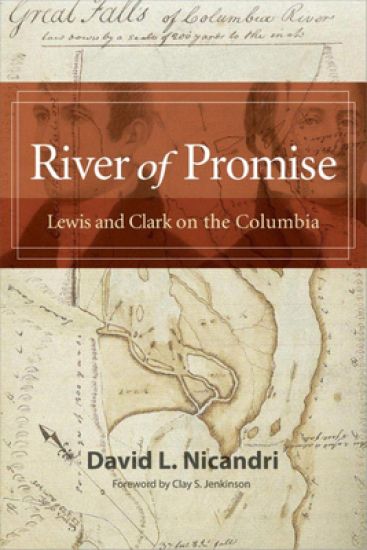
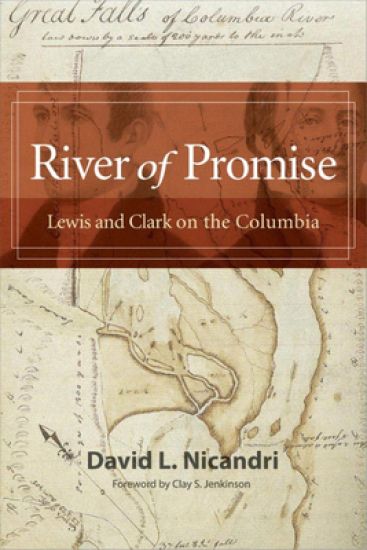
River of Promise

River of Promise

David L. Nicandri; Clay S. Jenkinson

Washington State University Press
2022
pokkari
In the many published accounts of the Lewis and Clark expedition, historians have tended to undervalue the explorers' encounter with Columbia River country. Most narratives emphasize Lewis and Clark's adventures through their journey to the Bitterroot Mountains but have said little about the rest of their travels west of there. River of Promise fills a significant gap in our understanding of Lewis and Clark's legendary expedition.Historian David L. Nicandri shifts the focus to an essential goal of the explorers: to discover the headwaters of the Columbia and a water route to the Pacific Ocean. He also restores William Clark in his role as the primary geographic problem-solver of the partnership. Most historians assume that Meriwether Lewis was a more distinguished scientist than Clark because of his formal training in Philadelphia and superior writing skills. Here we see Clark as Lewis's equal as scientific geographer, not merely the practical manager of boats and personnel.Nicandri places the legend of Sacagawea in clearer perspective by focusing instead on the contributions of often-overlooked Indian leaders in Columbia River country. He also offers many points of comparison to other explorers and a provocative analysis of Lewis's suicide in 1809, arguing that it was not a sudden event but fruit of a seed planted much earlier, quite possibly in Columbia country. Originally published by The Dakota Institute.
River of Promise

River of Promise

David L. Nicandri; Clay S. Jenkinson

Washington State University Press
2022
sidottu
In the many published accounts of the Lewis and Clark expedition, historians have tended to undervalue the explorers' encounter with Columbia River country. Most narratives emphasize Lewis and Clark's adventures through their journey to the Bitterroot Mountains but have said little about the rest of their travels west of there. River of Promise fills a significant gap in our understanding of Lewis and Clark's legendary expedition.Historian David L. Nicandri shifts the focus to an essential goal of the explorers: to discover the headwaters of the Columbia and a water route to the Pacific Ocean. He also restores William Clark in his role as the primary geographic problem-solver of the partnership. Most historians assume that Meriwether Lewis was a more distinguished scientist than Clark because of his formal training in Philadelphia and superior writing skills. Here we see Clark as Lewis's equal as scientific geographer, not merely the practical manager of boats and personnel.Nicandri places the legend of Sacagawea in clearer perspective by focusing instead on the contributions of often-overlooked Indian leaders in Columbia River country. He also offers many points of comparison to other explorers and a provocative analysis of Lewis's suicide in 1809, arguing that it was not a sudden event but fruit of a seed planted much earlier, quite possibly in Columbia country. Originally published by The Dakota Institute.
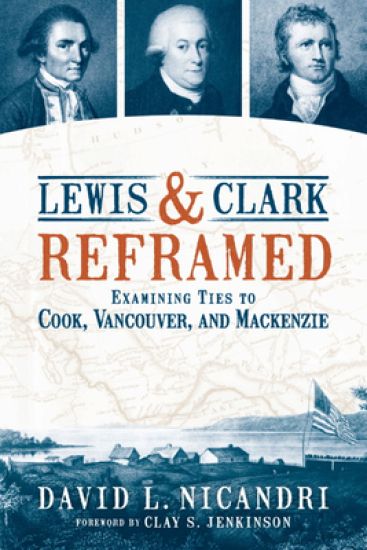
Lewis & Clark Reframed

Lewis & Clark Reframed

David L. Nicandri; Clay S. Jenkinson

Washington State University Press
2020
pokkari
Spanish, British, and French explorers reached the Pacific Northwest before Meriwether Lewis and William Clark. The American captains benefited from those predecessors, even carrying with them copies of their published accounts. James Cook, George Vancouver, and Alexander Mackenzie--and to a lesser extent fur traders John Meares and Robert Gray--directly and indirectly influenced the expedition. Based on new material as well as revised essays from popular history journals, Lewis and Clark Reframed examines several curious and seemingly inexplicable aspects of the journey after the Corps of Discovery crossed the Rocky Mountains.The captains' journals demonstrate that they relied on Mackenzie's 1801 Voyages from Montreal as a trail guide. They borrowed field techniques and favorite literary expressions--at times plagiarizing entire paragraphs. Cook's literature also informed the pair, and his naming conventions evoke fresh ideas about an enduring expedition mystery--the identity of the two or three journalists whose records are now missing. Additional journal text analysis dispels the notion that the captains were equals, despite expedition lore. Lewis claimed all the epochal discoveries for himself, and in one of his more memorable passages, drew on Mackenzie for inspiration. Parallels between Cook's and other exploratory accounts offer evidence that like many long-distance voyagers, Lewis grappled with homesickness. His friendship with Mahlon Dickerson lends insights into Lewis's shortcomings and eventual undoing. As secretary of the navy, Dickerson drew from Lewis's troubled past to impede the 1840s ocean expedition set to emulate Cook and solidify America's claim, through Lewis and Clark, to the region.
Repairing Jefferson's America

Repairing Jefferson's America

Clay S Jenkinson

Koehler Books
2020
sidottu
Thomas Jefferson (1743-1826) was the greatest idealist of the Founding Fathers of America. He believed that average citizens are up to the challenge of governing themselves. He envisioned a republic of well-educated, well-informed, engaged, and vigilant citizens. Jefferson's dream of a semi-utopian American republic has nearly been swallowed up by cynical partisanship, government gridlock, consumer materialism, and the corrosive power of money in American politics. Jefferson believed in civility, majority rule, the primacy of science and reason, and harmony in all of our public and private relations. Public humanities scholar Clay S. Jenkinson believes we can return to Jeffersonian principles both in our private lives and the public sphere. Repairing Jefferson's America is a clear and concise guide for those who wish to live more rational, purposeful, and enlightened lives.
Repairing Jefferson's America

Repairing Jefferson's America

Clay S Jenkinson

Koehler Books
2020
pokkari
Thomas Jefferson (1743-1826) was the greatest idealist of the Founding Fathers of America. He believed that average citizens are up to the challenge of governing themselves. He envisioned a republic of well-educated, well-informed, engaged, and vigilant citizens. Jefferson's dream of a semi-utopian American republic has nearly been swallowed up by cynical partisanship, government gridlock, consumer materialism, and the corrosive power of money in American politics. Jefferson believed in civility, majority rule, the primacy of science and reason, and harmony in all of our public and private relations. Public humanities scholar Clay S. Jenkinson believes we can return to Jeffersonian principles both in our private lives and the public sphere. Repairing Jefferson's America is a clear and concise guide for those who wish to live more rational, purposeful, and enlightened lives.