Kirjojen hintavertailu. Mukana 12 390 323 kirjaa ja 12 kauppaa.
Kirjailija
Clemens Sedmak
Kirjat ja teokset yhdessä paikassa: 21 kirjaa, julkaisuja vuosilta 1995-2026, suosituimpien joukossa Die Verletzung der Menschenwürde. Vertaile teosten hintoja ja tarkista saatavuus suomalaisista kirjakaupoista.
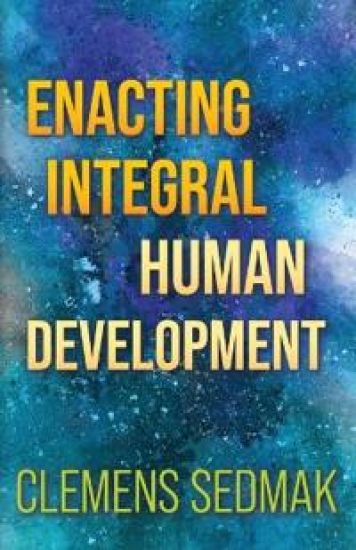
Institutions shape the lives of individuals and coordinate existence, influencing the structures of everyday life. Institutions are morally relevant because they influence people's life worlds and moral aspects of human existence and coexistence in substantial ways. As such, institutions are morally vulnerable--they can destroy the environment and can damage and hurt persons. Institutional structures and rules, and especially humans within institutions, can undermine human dignity. This book directly addresses this moral vulnerability, the risks of disruptions of integrity, and the opportunities that mercy-centered institutions can offer for dignity affirmation and integral human development.
"Integral Human Development" (IHD) is a term coined by Louis-Joseph Lebret OP and then used by Paul VI in his encyclical Populorum Progressio in 1967. It is, in a way, the Catholic approach to human development and has been adopted by Catholic Relief Services. Pope Francis has emphasized the idea with the creation of a special dicastery of which Cardinal Czerny is the new Prefect. Similar to Enacting Catholic Social Teaching, the book emphasizes practice and examples without being a simple "how-to" book.
Das Wort Stress ist allgegenwärtig und ist ein Modewort geworden. Jeder ist gestresst, so scheint es, und das fortwährend. Dieses Buch befasst sich mit der Bedeutung von Stress in den Natur- und Geisteswissenschaften und untersucht zellulären Stress als Ursache für Stress und im Zusammenhang mit dem, was Menschen als Stress erleben. Wann empfinden wir in psychologischem Sinn Stress und wann zeigen wir physiologische Anzeichen von Stress in unserem Gehirn?Stress ist eine Abweichung von dem, was sich „normal“ und gesund anfühlt. Er kann durch soziale oder ökonomische Faktoren ausgelöst werden und kann chronisch werden, was erhebliche Auswirkungen auf den einzelnen Menschen und auf die Gesellschaft als Ganzes hat. Dieses Buch konzentriert sich auf Armut als eine chronische Ursache von Stress und untersucht, wie der Mangel an druckfreier Zeit, die Entbehrungen und die Unvorhersehbarkeit des Alltags sowie ein allgemeiner Mangel an Schutz zu destruktivem toxischem Stress führen. Dieser permanente Druck beeinträchtigt die kognitiven und sozialen Funktionen, die Gehirnentwicklung in der Kindheit und kann auch zu vorzeitiger Alterung führen. Was können die Wissenschaften für unser Verständnis von und unsere Reaktion auf Stress leisten? Was kann gegen toxischen Stress getan werden, sowohl auf persönlicher Ebene als auch in Bezug auf Strukturen und politische Maßnahmen?Das Buch richtet sich an alle, die sich für Stress, seine Ursachen und Folgen sowie für den Zusammenhang von Stress und Armut interessieren.
What difference would Catholic Social Tradition make if it guided our personal and communal financial decision-making? The Sermon on the Mount reminds us of this fundamental decision-making when it comes to questions of faith and money: “No one can serve two masters; for a slave will either hate the one and love the other or be devoted to the one and despise the other. You cannot serve God and wealth” (Matthew 6:24). In Counting the Cost, Clemens Sedmak and Kelli Reagan Hickey suggest a theological and spiritual discernment process for the everyday reality of budgeting and financial planning that explores the status of money and monetary values by reflecting on this gospel call. Counting the Cost explains how Catholic Social Teaching provides a framework for our thinking around finances by answering questions such as: What does this fundamental decision look like in times of financial scarcity and stewardship responsibilities? How do the attitudes that Jesus invites us into shape the ways we make financial decisions? And how can budgeting be and become a way of discipleship for individuals, parishes, and dioceses? The book includes a range of financial decision-making examples and reconstructs them as decisions about priorities, values, and commitments to respond to the world and its material realities in a gospel-inspired way.
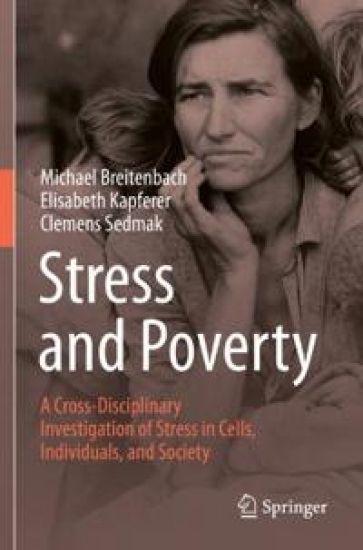
The word stress is everywhere and highly overused. Everyone is stressed, it seems, all the time. Looking into the meaning of stress in the natural science and the humanities, this book explores cellular stress as cause of and in correlation with what humans experience as stress. When do we psychologically feel stress and when do we show physiological evidence of stress in our brain? Stress is a deviation from what feels normal and healthy. It can be created by social or economic factors and become chronic, which has substantial impacts on the individual and society as a whole. Focusing on poverty as one chronic inducer of stress, this book explores how the lack of pressure-free time, the hardships and unpredictability of everyday life and a general lack of protection lead to destructive toxic stress. This pressure affects cognitive and social functioning, brain development during childhood and may also result in premature aging. How can the sciences informour understanding of and our response to stress? What can be done about toxic stress both on a personal level and in terms of structures and policies? The book is written for anyone interested in stress, its causes and consequences, and its relationship to poverty.
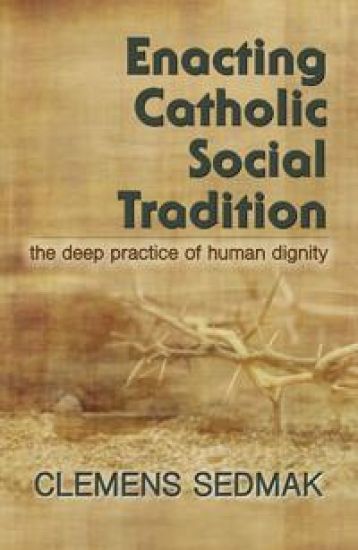
Provides a needed emphasis on the fact that CST stems not from arbitrary laws laid down by Church leaders, but rather from moral guidance directly inspired by Scripture, especially the command to love Christ and the neighbor, even if doing so is extremely difficult in real-life situations. Through the use of multiple examples encountered both in parishes and in the secular world (e.g., racism, vegetarianism, taxation), the book gives helpful counsel on being mindful of particularity and contextual concerns.
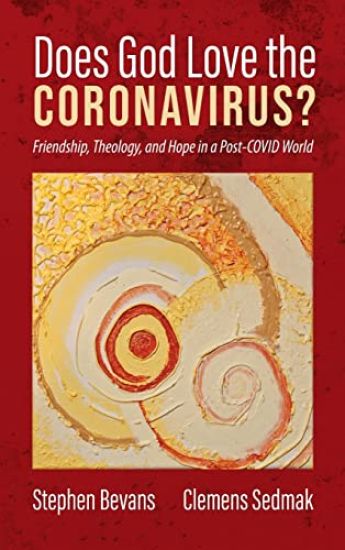
This book is a correspondence between two theologians and friends during the COVID-19 pandemic in 2020-21. In it the authors reflect on the nature of God, the efficacy of prayer, the value of experience, the nature of theology itself, the importance of Christian hope, and many other topics. The style is familiar and light, rich, and full of wisdom.
This book is a correspondence between two theologians and friends during the COVID-19 pandemic in 2020-21. In it the authors reflect on the nature of God, the efficacy of prayer, the value of experience, the nature of theology itself, the importance of Christian hope, and many other topics. The style is familiar and light, rich, and full of wisdom.
The word stress is everywhere and highly overused. Everyone is stressed, it seems, all the time. Looking into the meaning of stress in the natural science and the humanities, this book explores cellular stress as cause of and in correlation with what humans experience as stress. When do we psychologically feel stress and when do we show physiological evidence of stress in our brain? Stress is a deviation from what feels normal and healthy. It can be created by social or economic factors and become chronic, which has substantial impacts on the individual and society as a whole. Focusing on poverty as one chronic inducer of stress, this book explores how the lack of pressure-free time, the hardships and unpredictability of everyday life and a general lack of protection lead to destructive toxic stress. This pressure affects cognitive and social functioning, brain development during childhood and may also result in premature aging. How can the sciences informour understanding of and our response to stress? What can be done about toxic stress both on a personal level and in terms of structures and policies? The book is written for anyone interested in stress, its causes and consequences, and its relationship to poverty.
The experience of displacement is shared by people who work internationally. The capacity to be displaced is a necessary strength and skill for people working across cultures, particularly for missionaries. In order to deal with the stressful nature of displacement people need to be resilient, resilience makes people flourish in adverse circumstances. This volume presents a specific type of resilience, namely "resilience nourished by inner sources." Cultivating inner resilience draws on all the facets of a person's interior life: thoughts and memories, hopes and desires, beliefs and convictions, concerns and emotions. The notion of inner strength and resilience from within is developed using many examples from missionaries and development workers as well as case studies from all over the world.
Thomas Boehler - Otto Neumaier - Gottfried Schweiger - Clemens Sedmak Das vorliegende Werk ist das Ergebnis einer Zusammenarbeit, die anlasslich der vom Zentrum fur Ethik und Armutsforschung der Universitat Salzburg und der Sa- burg Ethik Initiative veranstalteten Konferenz Perspectives on Work im Mai begonnen wurde. Es stellt den Versuch dar, sich aus unterschiedlichen themati schen aber auch disziplinaren Perspektiven dem Phanomen der Arbeit zu nahern und damit auch einen Beitrag zur Entwicklung von Loesungsvorschlagen zu leis ten. Auch wenn sich spatestens seit dem Ende des Vollbeschaftigungstraums in den er Jah ren eine weitreichende Debatte um den Begri und die Zukunft der Ar beit, um neue und alternative Arbeitsformen, um die Aufgaben des Staates und der OEko nomie sowie um den Umgang mit Arbeitslosigkeit entwickelt hat, sind namlich die damit verbundenen Probleme noch lange nicht geloest. Der herausragende Status von (Erwerbs-)Arbeit in den Arbeitsgesellschaften des . Jahrhunderts, seien sie nun fordistisch oder po- fordistisch, Wissens- oder Informationsgesellschaften genannt, stellt vielmehr noch immer eine Herausforderung dar, der sich der Einzelne, die Gesell schaft, die Politik und auch die Wissenschaft nicht entziehen kann. Dabei stellen sich die Fragen und Probleme auf unterschiedlicher E bene, weshalb wir uns auch entschlos sen haben, uns ei ner gewissen Systematik folgend aber in Einzelbeitragen dem Thema zu nahern. Arbeit, so lasst sich sagen, ist Teil der conditio humana, gerade auch uber die Umbruche ihr es Verstandnisses und ihrer Organisation hinweg.
This book is the fruit of a close collaboration between three leading scholars with a background in systematics, philosophical theology and ethics. It sets out a new account of how incarnation is mediated in the world of space and time, leading to a new orientation of theology within the world. The doctrinal ("from above") and philosophical ("from below") sections lead to a new exposition of Christian life in confrontation with deepseated problems of ethics and justice. The three pieces closely interweave with each other in the elaboration of a new kind of practical, doctrinal theology of full philosophical integrity.
Clemens Sedmak's Doing Local Theology, presents the construction of "local theologies" as an enterprise that is not just for Latin Americans, Asians, or Africans. Nor just for theologians. Instead, it is the art of thinking theologically about any local church and implementing a process that grounds people intentionally and aesthetically in the deepest Christian dimensions of their daily lives. This book is beautifully written and will become a standard in courses on method in theology, foundations of ministry, and adult discussion groups. Theologizing, in Sedmak's terms, is reflection on people's everyday world, on everyday occurrences, and on local realities. Most of all, he shows how the everyday is where people encounter God in their relationships with one another, their larger communities, and the very physical environment we live in. If Robert Schreiter's monumental Constructing Local Theologies provides theoretical underpinning on the nature of local theologies, Clemens Sedmak shows that it is an art in which people learn to understand themselves and find full freedom as God's daughters and sons.