Kirjailija
Clemens Tesch-Romer
Kirjat ja teokset yhdessä paikassa: 6 kirjaa, julkaisuja vuosilta 2006-2026, suosituimpien joukossa Is Ageism Universal?. Vertaile teosten hintoja ja tarkista saatavuus suomalaisista kirjakaupoista.
Mukana myös kirjoitusasut: Clemens Tesch-Römer
6 kirjaa
Kirjojen julkaisuhaarukka 2006-2026.
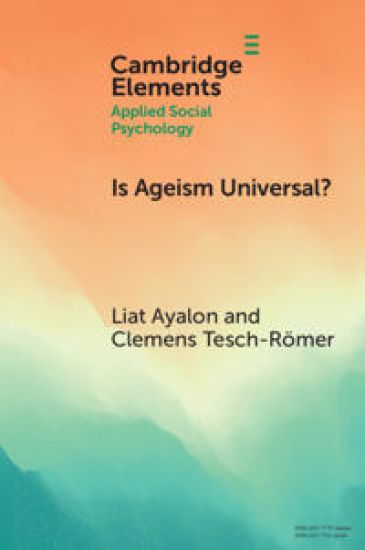
Ageism, defined as stereotypes, prejudices, and discrimination based on age, is a pervasive phenomenon across individuals, settings, historical periods, and cultures. To address the universality of ageism, we explore three main questions: (a) Does ageism happen throughout the course of a person's life? (b) Does ageism permeate all spheres of life? (c) Does ageism exist all around the world? We conclude that although ageism is universal, there are substantial variations in its definition, manifestations, and impact over time and in different sociocultural contexts. The variability identified suggests that we cannot use a one-size-fits-all approach to conceptualize or target ageism, but instead we should adopt a personalized approach, which considers the sociocultural context, the personal attributes of the targets and agents of ageism, and the normative framework concerning ageism at the global and local levels. This title is also available as Open Access on Cambridge Core.
Successful Ageing
Clemens Tesch-Romer; Hans-Werner Wahl; Suresh Rattan; Liat Ayalon
Oxford University Press
2021
nidottu
The ambition of ageing science to discover the golden fleece of longevity and health is closely connected to the concept of 'successful ageing'. Still, for a large portion of the population, frailty and cognitive impairment is the reality of ageing, and it is by no means certain if health promotion, prevention and other interventions will reduce the probability of its occurrence. This book argues that a narrow understanding of 'successful ageing' as good health, full functioning, and active participation in society excludes a large portion of ageing individuals from the quest for a good life in old age. The challenge is that the term 'successful ageing' comes with ambitions but also with ambivalence. On the one hand, it counteracts the deficit view of ageing and facilitates visionary thinking on what might be possible in the future. On the other hand, its implicitly ageist and derogative features have negative consequences to older people and society at large. So, what is successful ageing? We provide answers at three levels: First, we synthesise the various models used to define successful ageing into a heuristic scheme able to unravel the normative complexity and differences inherent in existing models. Second, we anchor successful ageing models in a tripartite way at micro (individual), meso, and macro analytic levels of human development. Third, we argue that the usefulness of successful ageing in guiding policy will only profit from the concept, if it follows a pluralistic and holistic view without hastily deciding for one model only.
Länderbericht zum Deutschen Freiwilligensurvey 2014
Corinna Kausmann; Julia Simonson; Jochen P. Ziegelmann; Claudia Vogel; Clemens Tesch-Römer
Springer vs
2017
nidottu
Der Länderbericht bringt erstmals Daten des Deutschen Freiwilligensurveys für einen Vergleich der vierzehn Bundesländer zusammen. Der Freiwilligensurvey wurde 2014 zum vierten Mal im Auftrag des Bundesministeriums für Familie, Senioren, Frauen und Jugend (BMFSFJ) durchgeführt. Die Ziele der vorliegenden Auswertung sind eine aktuelle Bestandsaufnahme des freiwilligen Engagements in den einzelnen Bundesländern sowie eine Darstellung zentraler Entwicklungen im zeitlichen Vergleich.
New Dynamics in Old Age
Hans-Werner Wahl; Clemens Tesch-Romer; . Andreas Hoff; Jon Hendricks
Routledge
2017
nidottu
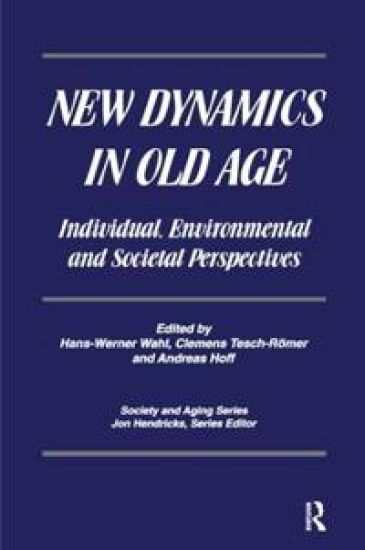
This book was nurtured by the belief that the new dynamics of today's and tomorrow's aging has not yet been treated well in the gerontology literature. Several questions drove the choice of substance for the book: What kind of new dynamics of aging deserves consideration? What kinds of theories and fields are at the core of treating such a new dynamics? And what kind of empirical evidence should be considered? The master hypothesis on which the book is based maintains that the new dynamics of old age is best observed in a range of everyday aging contexts that have been undergoing major change since the second half of the 20th century. In particular, five areas of new and persistent dynamics are treated in depth: the social environment, with a focus on cohort effects in social relations and the consideration of family relations and elders as care redelivers; the home environment, with emphasis on housing and quality of life, relocation and urban aging issues; the outdoor environment, with consideration of out-of-home activity patterns, car-driving behaviour and the leisure world of aging; the technological environment, with treatments of the role of the Internet and the potential of technology for aging outcomes and; and the societal environment with a focus on global aging, the new politics of old age and older persons as market consumers. The book's main purpose is to provide the scholarly gerontology community with a comprehensive and critical discussion of these new trends related to old age. The book will be of interest for the scholarly community of gerontology in a variety of disciplines; sociology, psychology, demography, epidemiology, humanities, social policy and geriatrics; students in gerontology education and in the disciplines named above who have an interest in aging issues (graduate level); professionals in practical and applied fields related to aging such as community and urban planners, health and care providers and policymakers; people involved in senior citizens' organizations and those in industry who wish to serve older people with new products.
New Dynamics in Old Age
Hans-Werner Wahl; Clemens Tesch-Romer; . Andreas Hoff; Jon Hendricks
Baywood Publishing Company Inc
2006
sidottu
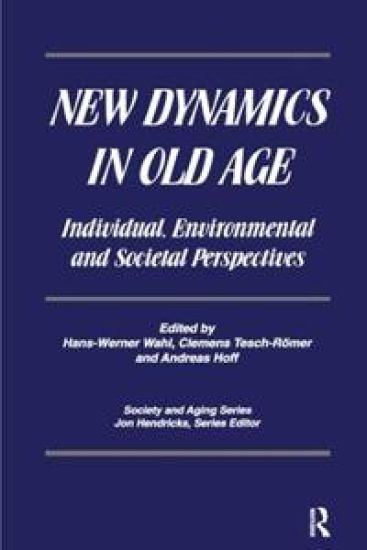
This book was nurtured by the belief that the new dynamics of today's and tomorrow's aging has not yet been treated well in the gerontology literature. Several questions drove the choice of substance for the book: What kind of new dynamics of aging deserves consideration? What kinds of theories and fields are at the core of treating such a new dynamics? And what kind of empirical evidence should be considered? The master hypothesis on which the book is based maintains that the new dynamics of old age is best observed in a range of everyday aging contexts that have been undergoing major change since the second half of the 20th century. In particular, five areas of new and persistent dynamics are treated in depth: the social environment, with a focus on cohort effects in social relations and the consideration of family relations and elders as care redelivers; the home environment, with emphasis on housing and quality of life, relocation and urban aging issues; the outdoor environment, with consideration of out-of-home activity patterns, car-driving behaviour and the leisure world of aging; the technological environment, with treatments of the role of the Internet and the potential of technology for aging outcomes and; and the societal environment with a focus on global aging, the new politics of old age and older persons as market consumers. The book's main purpose is to provide the scholarly gerontology community with a comprehensive and critical discussion of these new trends related to old age. The book will be of interest for the scholarly community of gerontology in a variety of disciplines; sociology, psychology, demography, epidemiology, humanities, social policy and geriatrics; students in gerontology education and in the disciplines named above who have an interest in aging issues (graduate level); professionals in practical and applied fields related to aging such as community and urban planners, health and care providers and policymakers; people involved in senior citizens' organizations and those in industry who wish to serve older people with new products.