Kirjojen hintavertailu. Mukana 12 595 353 kirjaa ja 12 kauppaa.

Kirjailija

Clement Guitton

Kirjat ja teokset yhdessä paikassa: 4 kirjaa, julkaisuja vuosilta 2017-2025, suosituimpien joukossa Inside the Enemy's Computer. Vertaile teosten hintoja ja tarkista saatavuus suomalaisista kirjakaupoista.

4 kirjaa

Kirjojen julkaisuhaarukka 2017-2025.

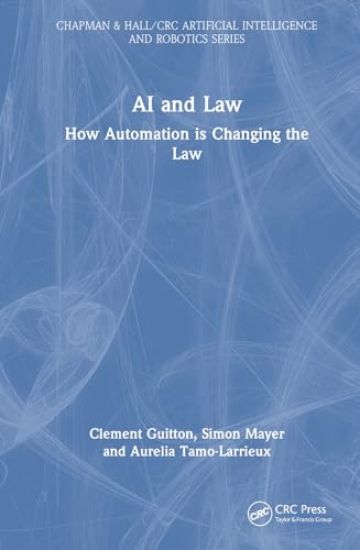
AI and Law

AI and Law

Aurelia Tamo-Larrieux; Clement Guitton; Simon Mayer

TAYLOR FRANCIS LTD
2025
sidottu
This book provides insights into how AI is changing legal practice, government processes, and individuals’ access to those processes, encouraging each of us to consider how technological advances are changing the legal system. Particularly, and distinct from current debates on how to regulate AI, this books focuses on how the progressive merger between computational methods and legal rules changes the very structure and application of the law itself.We investigate how automation is changing the legal analysis, legal rulemaking, legal rule extraction, and application of legal rules and how this impacts individuals, policymakers, civil servants, and society at large. We show through many examples that a debate on how automation is changing the law is needed, which must revolve around the democratic legitimacy of the automation of legal processes, and be informed by the technical feasibility and tradeoffs of specific endeavors.
AI and Law

AI and Law

Aurelia Tamo-Larrieux; Clement Guitton; Simon Mayer

TAYLOR FRANCIS LTD
2025
nidottu
This book provides insights into how AI is changing legal practice, government processes, and individuals’ access to those processes, encouraging each of us to consider how technological advances are changing the legal system. Particularly, and distinct from current debates on how to regulate AI, this books focuses on how the progressive merger between computational methods and legal rules changes the very structure and application of the law itself.We investigate how automation is changing the legal analysis, legal rulemaking, legal rule extraction, and application of legal rules and how this impacts individuals, policymakers, civil servants, and society at large. We show through many examples that a debate on how automation is changing the law is needed, which must revolve around the democratic legitimacy of the automation of legal processes, and be informed by the technical feasibility and tradeoffs of specific endeavors.
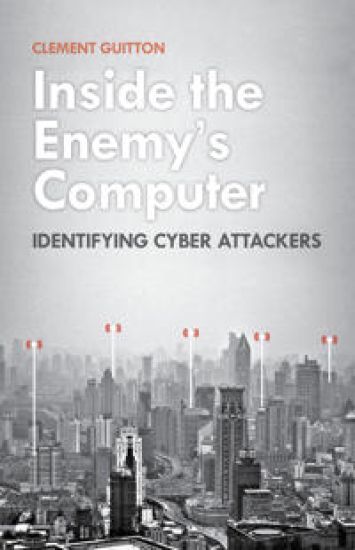
Inside the Enemy's Computer: Identifying Cyber Attackers

Inside the Enemy's Computer: Identifying Cyber Attackers

Clement Guitton

Oxford University Press, USA
2017
sidottu
Attribution - tracing those responsible for a cyber attack - is of primary importance when classifying it as a criminal act, an act of war, or an act of terrorism. Three assumptions dominate current thinking: attribution is a technical problem; it is unsolvable; and it is unique. Approaching attribution as a problem forces us to consider it either as solved or unsolved. Yet attribution is far more nuanced, and is best approached as a process in constant flux, driven by judicial and political pressures. In the criminal context, courts must assess the guilt of criminals, mainly based on technical evidence. In the national security context, decision-makers must analyse unreliable and mainly non-technical information in order to identify an enemy of the state. Attribution in both contexts is political: in criminal cases, laws reflect society's prevailing norms and powers; in national security cases, attribution reflects a state's will to maintain, increase or assert its power. However, both processes differ on many levels. The constraints, which reflect common aspects of many other political issues, constitute the structure of the book: the need for judgement calls, the role of private companies, the standards of evidence, the role of time, and the plausible deniability of attacks.
Inside the Enemy's Computer

Inside the Enemy's Computer

Clement Guitton

C Hurst Co Publishers Ltd
2017
sidottu
Attribution - tracing those responsible for a cyber attack - is of primary importance when classifying it as a criminal act, an act of war, or an act of terrorism. Three assumptions dominate current thinking: attribution is a technical problem; it is unsolvable; and it is unique. Approaching attribution as a problem forces us to consider it either as solved or unsolved. Yet attribution is far more nuanced, and is best approached as a process in constant flux, driven by judicial and political pressures. In the criminal context, courts must assess the guilt of criminals, mainly based on technical evidence. In the national security context, decision-makers must analyse unreliable and mainly non-technical information in order to identify an enemy of the state. Attribution in both contexts is political: in criminal cases, laws reflect society's prevailing norms and power; in national security cases, attribution reflects a state's will to maintain, increase or assert its power. However, both processes differ on many levels. The constraints, which reflect common aspects of many other political issues, constitute the structure of the book: the need for judgement calls, the role of private companies, the standards of evidence, the role of time, and the plausible deniability of attacks.