Kirjojen hintavertailu. Mukana 12 390 323 kirjaa ja 12 kauppaa.

Kirjailija

Clifford G. Christians

Kirjat ja teokset yhdessä paikassa: 10 kirjaa, julkaisuja vuosilta 1994-2024, suosituimpien joukossa Media Ethics. Vertaile teosten hintoja ja tarkista saatavuus suomalaisista kirjakaupoista.

Mukana myös kirjoitusasut: Clifford G Christians

10 kirjaa

Kirjojen julkaisuhaarukka 1994-2024.

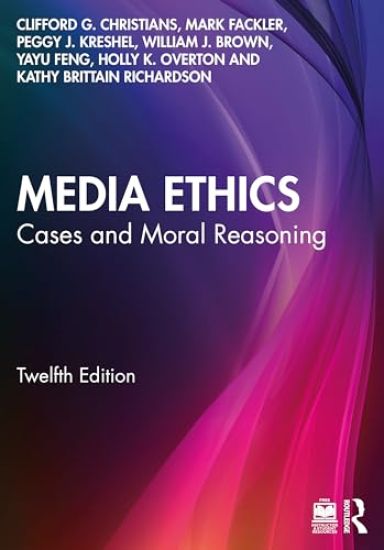
Media Ethics

Media Ethics

Clifford G. Christians; Mark Fackler; Peggy J. Kreshel; William J. Brown; Yayu Feng; Holly K. Overton; Kathy Brittain Richardson

TAYLOR FRANCIS LTD
2024
sidottu
Through original case studies and analyses of real-life media experiences, Media Ethics challenges readers to think analytically and critically about ethical situations in mediated communication.This textbook provides a comprehensive introduction to the theoretical principles of ethical philosophies, facilitating awareness and critical reflection of ethical issues. In each chapter, the authors examine case studies spanning several continents and geopolitical and cultural contexts. To provide a framework for analyzing the cases and exploring the steps in moral reasoning, the book introduces the Potter Box, a powerful tool for moral analysis. Focusing on a wide range of ethical issues faced by media practitioners and news organizations, the cases in this new twelfth edition include the most prominent concerns in journalism, broadcasting, advertising, public relations, and entertainment today. It explores new topics such as the use of ChatGPT in newsrooms, the privacy implications of biometric technologies, the role of public relations in political campaigns, and advertisers’ approach to sustainability and climate change.This core textbook is ideal for classes in media and communication ethics, journalism, public relations, advertising, entertainment media, and popular culture.Online instructor and student resources, including video introductions to each chapter, PowerPoint slides, sample discussion and exam questions, and links to further resources, are available at www.routledgelearning.com/mediaethics.
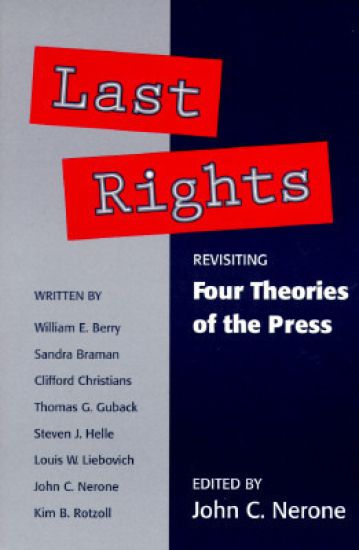
Last Rights

Last Rights

William E Berry; Sandra Braman; Clifford G. Christians; Thomas Guback; Steve J Helle; Louis W Liebovich; John C. Nerone; Kim B Rotzoll

University of Illinois Press
1995
nidottu
Though subjected to years of criticism, Four Theories of the Press remains a core text in communications. Its influence on the field, impact on generations of journalists, and ability to spark debate on why the press acts as it does continue to make it an oft-quoted source and classroom staple. In Last Rights, eight communications scholars critique and expand on the classic text. The authors argue that Four Theories spoke to and for a world beset by a cold war ended long ago. At the same time, they praise the book for offering an alternative view of the press and society and as a useful tool for helping scholars and citizens alike grapple with contradictions in classical liberalism. They also raise important questions about the Internet and other major changes in communications systems and society since the original publication of Four Theories. Contributors: William E. Berry, Sandra Braman, Clifford Christians, Thomas G. Guback, Steven J. Helle, Louis W. Liebovich, John C. Nerone, and Kim B. Rotzoll
Silence, Civility, and Sanity

Silence, Civility, and Sanity

Stephanie Bennett; Clifford G. Christians

BLOOMSBURY PUBLISHING PLC
2024
nidottu
Silence, Civility, and Sanity addresses the reclamation of civil communication and healthy public conversation at a time when people are very divided. Throughout this book, Stephanie Bennett focuses on the importance of silence to temper speech and embrace the art of listening to foster a more positive dialogue and civil society. Throughout this book, the author addresses the place of silence as a communicational good, intrapersonal silence in the history of contemplative prayer, the importance of attentive silence, the reflective use of silence, the ethical dimensions of silence, and the abuses of silence. This book also delves into the layers of technological advancement that obscure perception and act as noise that poses as silence, phantom silence. Bennett offers readers an alternative to the false binaries of culture-warring that plague our relationships, institutions, and public sphere. Scholars of communication, rhetoric, and media studies will find this book of particular interest.
Silence, Civility, and Sanity

Silence, Civility, and Sanity

Stephanie Bennett; Clifford G. Christians

BLOOMSBURY PUBLISHING PLC
2022
sidottu
Silence, Civility, and Sanity addresses the reclamation of civil communication and healthy public conversation at a time when people are very divided. Throughout this book, Stephanie Bennett focuses on the importance of silence to temper speech and embrace the art of listening to foster a more positive dialogue and civil society. Throughout this book, the author addresses the place of silence as a communicational good, intrapersonal silence in the history of contemplative prayer, the importance of attentive silence, the reflective use of silence, the ethnical dimensions of silence, and the abuses of silence. This book also delves into the layers of technological advancement that obscure perception and act as noise that poses as silence, phantom silence. Bennett offers readers an alternative to the false binaries of culture-warring that plague our relationships, institutions, and public sphere. Scholars of communication, rhetoric, and media studies will find this book of particular interest.
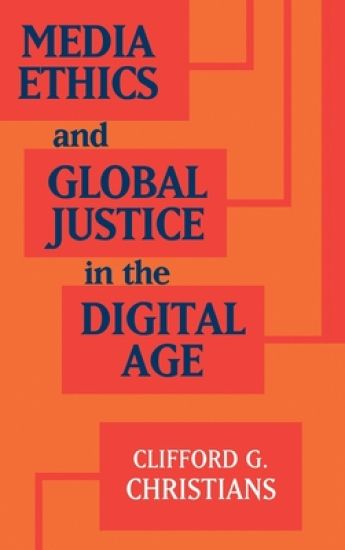
Media Ethics and Global Justice in the Digital Age

Media Ethics and Global Justice in the Digital Age

Clifford G. Christians

Cambridge University Press
2019
sidottu
Today's digital revolution is a worldwide phenomenon, with profound and often differential implications for communities around the world and their relationships to one another. This book presents a new, explicitly international theory of media ethics, incorporating non-Western perspectives and drawing deeply on both moral philosophy and the philosophy of technology. Clifford Christians develops an ethics grounded in three principles - truth, human dignity, and non-violence - and shows how these principles can be applied across a wide range of cases and domains. The book is a guide for media professionals, scholars, and educators who are concerned with the global ramifications of new technologies and with creating a more just world.
Media Ethics and Global Justice in the Digital Age

Media Ethics and Global Justice in the Digital Age

Clifford G. Christians

Cambridge University Press
2019
pokkari
Today's digital revolution is a worldwide phenomenon, with profound and often differential implications for communities around the world and their relationships to one another. This book presents a new, explicitly international theory of media ethics, incorporating non-Western perspectives and drawing deeply on both moral philosophy and the philosophy of technology. Clifford Christians develops an ethics grounded in three principles - truth, human dignity, and non-violence - and shows how these principles can be applied across a wide range of cases and domains. The book is a guide for media professionals, scholars, and educators who are concerned with the global ramifications of new technologies and with creating a more just world.
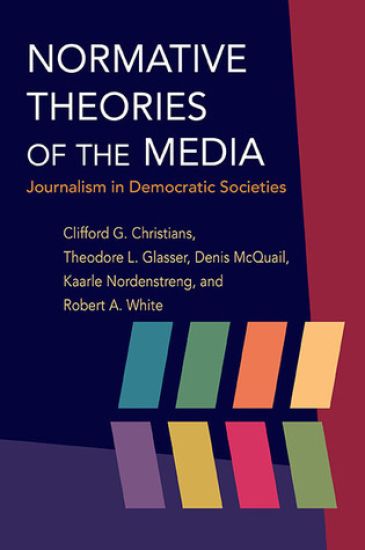
Normative Theories of the Media

Normative Theories of the Media

Clifford G Christians; Theodore Glasser; Denis McQuail; Kaarle Nordenstreng; Robert A. White

University of Illinois Press
2009
sidottu
In this book, five leading scholars of media and communication take on the difficult but important task of explicating the role of journalism in democratic societies. Using Fred S. Siebert, Theodore Peterson, and Wilbur Schramm's classic Four Theories of the Press as their point of departure, the authors explore the philosophical underpinnings and the political realities that inform a normative approach to questions about the relationship between journalism and democracy, investigating not just what journalism is but what it ought to be.The authors identify four distinct yet overlapping roles for the media: the monitorial role of a vigilant informer collecting and publishing information of potential interest to the public; the facilitative role that not only reports on but also seeks to support and strengthen civil society; the radical role that challenges authority and voices support for reform; and the collaborative role that creates partnerships between journalists and centers of power in society, notably the state, to advance mutually acceptable interests. Demonstrating the value of a reconsideration of media roles, Normative Theories of the Media provides a sturdy foundation for subsequent discussions of the changing media landscape and what it portends for democratic ideals.
Normative Theories of the Media

Normative Theories of the Media

Clifford G Christians; Theodore Glasser; Denis McQuail; Kaarle Nordenstreng; Robert A. White

University of Illinois Press
2009
nidottu
In this book, five leading scholars of media and communication take on the difficult but important task of explicating the role of journalism in democratic societies. Using Fred S. Siebert, Theodore Peterson, and Wilbur Schramm's classic Four Theories of the Press as their point of departure, the authors explore the philosophical underpinnings and the political realities that inform a normative approach to questions about the relationship between journalism and democracy, investigating not just what journalism is but what it ought to be.The authors identify four distinct yet overlapping roles for the media: the monitorial role of a vigilant informer collecting and publishing information of potential interest to the public; the facilitative role that not only reports on but also seeks to support and strengthen civil society; the radical role that challenges authority and voices support for reform; and the collaborative role that creates partnerships between journalists and centers of power in society, notably the state, to advance mutually acceptable interests. Demonstrating the value of a reconsideration of media roles, Normative Theories of the Media provides a sturdy foundation for subsequent discussions of the changing media landscape and what it portends for democratic ideals.
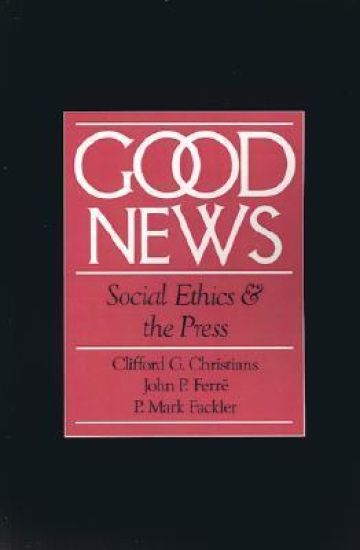
Good News

Good News

Clifford G. Christians; John P. Ferré; P. Mark Fackler

Oxford University Press Inc
1994
nidottu
Mass media ethics and the classical liberal ideal of the autonomous individual are historically linked and professionally dominant--yet the authors of this work feel this is intrisically flawed. They show how recent research in philosophy and social science--together with a longer tradition in theological inquiry--insist that community, mutuality, and relationship are fundamental to a full concept of personhood. The authors argue that "persons-in-community" provides a more defensible grounding for journalists' professional moral decison-making in crucial areas such as truthtelling, privacy, organizational culture, and balanced coverage. With numerous examples drawn from life as well as from theory, this book will interest journalists, editors, and professionals in media management as well as students and scholars of media ethics, reporting, and media law.