Kirjojen hintavertailu. Mukana 12 390 323 kirjaa ja 12 kauppaa.

Kirjailija

Clifton Conrad

Kirjat ja teokset yhdessä paikassa: 4 kirjaa, julkaisuja vuosilta 2012-2022, suosituimpien joukossa Learning with Others. Vertaile teosten hintoja ja tarkista saatavuus suomalaisista kirjakaupoista.

4 kirjaa

Kirjojen julkaisuhaarukka 2012-2022.

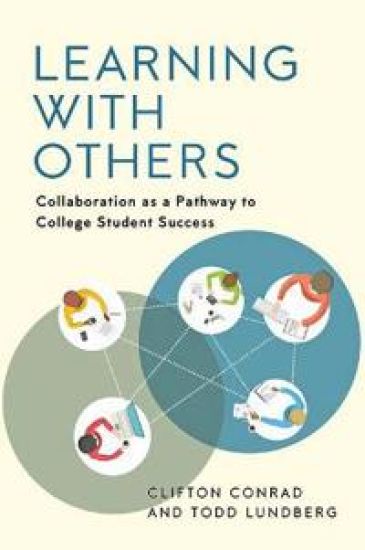
Learning with Others

Learning with Others

Clifton Conrad; Todd Lundberg

Johns Hopkins University Press
2022
sidottu
How can colleges and universities engage students in ways that prepare them to solve problems in our rapidly changing world?Most American colleges and universities assimilate students into highly competitive undergraduate experiences. By placing achievement for personal and material gain as the bedrock of a college education, these institutions fail to educate students to become collaborative learners: people who are committed and prepared to join with others in developing promising solutions to problems that they share with others. Drawing on a three-year study of student persistence and learning at Minority-Serving Institutions, Clifton Conrad and Todd Lundberg argue that student success in college should be redefined by focusing on the importance of collaborative learning over individual achievement. Engaging students in shared, real-world problem-solving, Conrad and Lundberg assert, will encourage them to embrace interdependence and to value and draw on diverse perspectives. Learning with Others presents a set of core practices to empower students to enter, nourish, and sustain collaborative learning and outlines how to blend the roles and responsibilities of faculty, staff, and students; how to adopt best practices for receiving and giving feedback on problem-solving; and how to anchor a curriculum in shared problem-solving.Bringing together lessons learned from more than 300 interviews, along with notes from 14 campus visits, 3 national convenings, and examples from across our nation's colleges and universities, Conrad and Lundberg explore ways in which successful antiracist networks of problem-solvers are learning to contribute to the flourishing of their communities on campus and far beyond. Outlining strategies for identifying and dismantling barriers to participation, Learning with Others will pique interest among faculty, students, and administrators in higher education and a wide range of external stakeholders—from families and communities to policymakers and funders.
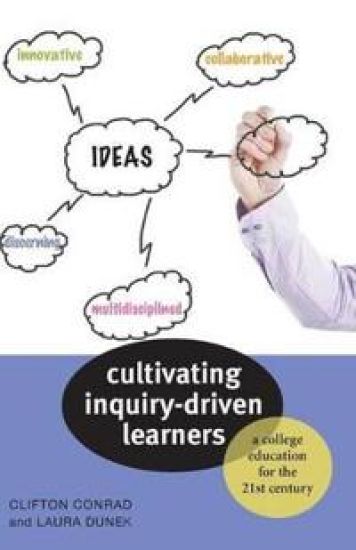
Cultivating Inquiry-Driven Learners

Cultivating Inquiry-Driven Learners

Clifton Conrad; Laura Dunek

Johns Hopkins University Press
2020
pokkari
How can colleges develop learners who pursue innovative ideas that enable them to flourish and contribute in a rapidly changing world?Two decades into the twenty-first century, our nation's colleges and universities no longer embrace a clear and convincing definition of the purpose of a college education. Instead, most institutions have fallen prey to a default purpose in which college is essentially workforce preparation for jobs that already exist, while students are viewed as commodities instead of being educated to flourish throughout their lives. But rather than bemoan the diminishing legacy of liberal education, this new edition of Cultivating Inquiry-Driven Learners argues that the time has come to advance a pioneering purpose of college that guides the undergraduate experience from program requirements to teaching and learning.This purpose, Clifton Conrad and Laura Dunek write, is anchored in the premise that the world in which we live is one in which change—environmental, cultural, economic, political—is a constant driving force. The authors envision a college-educated person in the twenty-first century as an "inquiry-driven learner": a person equipped with the capabilities to explore and cultivate ideas that will prepare them to successfully navigate constant change, capitalize on career opportunities, enrich their personal life, and contribute to the public good. They describe four signature capabilities that students must develop in order to innovate and adapt: core qualities of mind, critical thinking skills, expertise in divergent modes of inquiry, and the capacity to express and communicate ideas.Guided by this trailblazing vision, Conrad and Dunek have thoroughly revised every chapter of the book to reflect current scholarship and emerging trends. In an expanded conclusion, they provide a cornucopia of ideas for replenishing undergraduate education accompanied by real-world examples of innovative programs and practices from colleges and universities across the United States. Throughout, Cultivating Inquiry-Driven Learners challenges stakeholders from across higher learning—faculty, students, staff, administrators, and policymakers—to reflect on the purpose of college, embrace innovation, and ensure that students are educated to thrive in and contribute to our constantly changing world.
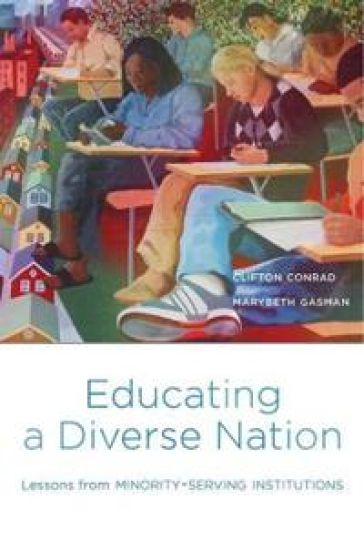
Educating a Diverse Nation

Educating a Diverse Nation

Clifton Conrad; Marybeth Gasman

Harvard University Press
2017
nidottu
In an increasingly diverse United States, minority and low-income students of all ages struggle to fit into mainstream colleges and universities that cater predominantly to middle-income and affluent white students fresh out of high school. Anchored in a study conducted at twelve minority-serving institutions (MSIs), Educating a Diverse Nation turns a spotlight on the challenges facing nontraditional college students and highlights innovative programs and practices that are advancing students’ persistence and learning.Clifton Conrad and Marybeth Gasman offer an on-the-ground perspective of life at MSIs. Speaking for themselves, some students describe the stress of balancing tuition with the need to support families. Others express their concerns about not being adequately prepared for college-level work. And more than a few reveal doubts about the relevance of college for their future. The authors visited the four main types of MSIs—historically black colleges and universities, tribal colleges and universities, Hispanic-serving institutions, and Asian American and Native American Pacific Islander–serving institutions—to identify strategies for empowering nontraditional students to succeed in college despite these obstacles.Educating a Diverse Nation illuminates such initiatives as collaborative learning, culturally relevant educational programs, blurring the roles of faculty, staff, and students, peer-led team learning, and real-world problem solving. It shows how these innovations engage students and foster the knowledge, skills, and habits they need to become self-sustaining in college and beyond, as well as valuable contributors to society.
Cultivating Inquiry-Driven Learners

Cultivating Inquiry-Driven Learners

Clifton Conrad; Dunek Laura

Johns Hopkins University Press
2012
sidottu
Inquiry-driven learners anticipate, embrace, and adapt to disruptive change. Clifton Conrad and Laura Dunek advance a transformative purpose of a college education. They invite stakeholders from across higher education to engage in vigorous dialogue about the aims of a college education - and how to realize those aims. Increasingly influenced by market forces, many universities employ a default purpose of a college education: preparing students for entry into the workforce. As a result, students remain unprepared for a world in which much of the knowledge they acquire will have a shelf life of only a few years. "Cultivating Inquiry-Driven Learners" charts a new way forward. It proposes that a college education prepare students to be innovative and adaptable by developing four signature capabilities: core qualities of mind, critical thinking skills, expertise in divergent modes of inquiry, and the capacity to express and communicate ideas. In concert, these capabilities empower students to explore and foster ideas that will prepare them to successfully navigate constant change, capitalize on career opportunities, enrich their personal lives, and thoughtfully engage in public life. This innovative book also explores a wide range of initiatives and practices for educating inquiry-driven learners. Examples illustrate possibilities for developing inquiry-driven learners across the curriculum and are drawn from institutions with remarkably different missions and identities - from research universities to liberal arts colleges.