Kirjojen hintavertailu. Mukana 12 152 606 kirjaa ja 12 kauppaa.

Kirjailija

Clinton V. Oster

Kirjat ja teokset yhdessä paikassa: 3 kirjaa, julkaisuja vuosilta 1992-2016, suosituimpien joukossa Managing the Skies. Vertaile teosten hintoja ja tarkista saatavuus suomalaisista kirjakaupoista.

3 kirjaa

Kirjojen julkaisuhaarukka 1992-2016.

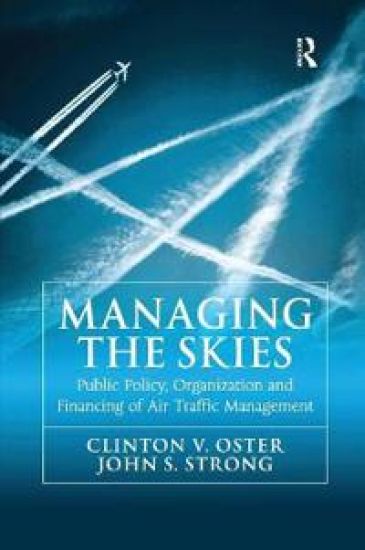
Managing the Skies

Managing the Skies

Clinton V. Oster; John S. Strong

Routledge
2016
nidottu
Over the past two decades, the organization and provision of air traffic control (ATC) services has been dramatically transformed. Privatization and commercialization of air navigation has become commonplace. Far-reaching reforms, under a variety of organizational structures and aviation settings, have occurred across the world, most notably in Canada, Britain, Australia, New Zealand, and South Africa. In contrast, innovations have lagged behind in other countries - including the United States. In addition, much recent attention has been given to aviation infrastructure and safety in Africa, in some parts of Asia and Latin America, and in rapidly growing air markets including India and China. In response, the International Civil Aviation Organization (ICAO), the International Air Transport Association (IATA), and multilateral banks and institutions have launched a major effort to improve the performance and safety of civil aviation in developing economies. Managing the Skies has been written to provide a guide to what has been tried in air traffic management, what has worked, and what lessons might be learned. The book starts with an introduction to air navigation, its development and current state, as well as trends in aviation activity. It examines in detail the experiences of ATC in both mature and emerging markets across the world, considering many alternative models, efforts to restructure and comparisons of performance. The book contains several in-depth case studies to provide a truly global perspective of ATC practices. Particular attention is given to the FAA and its efforts and challenges in reforming ATC in the US, both historically and in the current climate. It addresses the issues of finance, organization, investment, and safety restructuring and reform options that are at the core of current debates involving air traffic control in the United States. Further to this, the authors discuss the alternatives available for future change. The book concludes by examining the cross-cutting issues of labor relations and organizational structures, presenting the lessons learned and considering what the future may hold. As the world experiences a resurgence in air travel and civil aviation, the issues discussed in Managing the Skies are particularly timely not only for industry and government leaders, but for the world's air travelers.
Managing the Skies

Managing the Skies

Clinton V. Oster; John S. Strong

Ashgate Publishing Limited
2007
sidottu
Over the past two decades, the organization and provision of air traffic control (ATC) services has been dramatically transformed. Privatization and commercialization of air navigation has become commonplace. Far-reaching reforms, under a variety of organizational structures and aviation settings, have occurred across the world, most notably in Canada, Britain, Australia, New Zealand, and South Africa. In contrast, innovations have lagged behind in other countries - including the United States. In addition, much recent attention has been given to aviation infrastructure and safety in Africa, in some parts of Asia and Latin America, and in rapidly growing air markets including India and China. In response, the International Civil Aviation Organization (ICAO), the International Air Transport Association (IATA), and multilateral banks and institutions have launched a major effort to improve the performance and safety of civil aviation in developing economies. Managing the Skies has been written to provide a guide to what has been tried in air traffic management, what has worked, and what lessons might be learned. The book starts with an introduction to air navigation, its development and current state, as well as trends in aviation activity. It examines in detail the experiences of ATC in both mature and emerging markets across the world, considering many alternative models, efforts to restructure and comparisons of performance. The book contains several in-depth case studies to provide a truly global perspective of ATC practices. Particular attention is given to the FAA and its efforts and challenges in reforming ATC in the US, both historically and in the current climate. It addresses the issues of finance, organization, investment, and safety restructuring and reform options that are at the core of current debates involving air traffic control in the United States. Further to this, the authors discuss the alternatives available for future change. The book concludes by examining the cross-cutting issues of labor relations and organizational structures, presenting the lessons learned and considering what the future may hold. As the world experiences a resurgence in air travel and civil aviation, the issues discussed in Managing the Skies are particularly timely not only for industry and government leaders, but for the world's air travelers.
Why Airplanes Crash

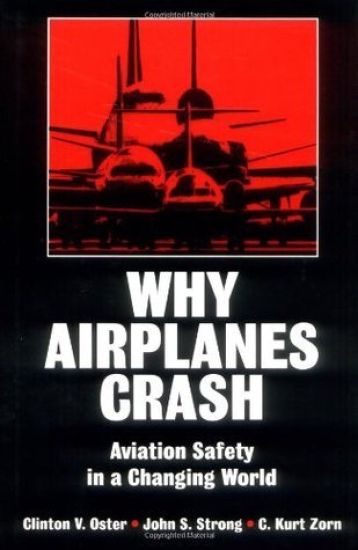
Why Airplanes Crash

Clinton V. Oster; John S. Strong; C. Kurt Zorn

Oxford University Press Inc
1992
sidottu
The authors discuss what private and public policies can do to increase airline safety in an age of the deregulation of commercial airlines. The book compares the US experience with aviation in other countries, especially Canada. Then it examines the three safety issues: the safety margin that allows for human error and equipment failure; the worldwide ageing of all airline fleets; and terrorism and sabotage.