Kirjojen hintavertailu. Mukana 12 579 407 kirjaa ja 12 kauppaa.
Kirjailija
Clive Emsley
Kirjat ja teokset yhdessä paikassa: 30 kirjaa, julkaisuja vuosilta 1991-2021, suosituimpien joukossa Crime, Police, and Penal Policy. Vertaile teosten hintoja ja tarkista saatavuus suomalaisista kirjakaupoista.
The impact of Napoleon on France and on Europe was immediate and enduring. He dominated his age as his armies dominated the continent; and no European country was untouched, or unchanged, by the events of these turbulent years. Keeping one's bearings geographically, militarily, politically and chronologically in the prevailing turmoil is no easy matter, even for the specialist, and Clive Emsley's concise but authoritative guide to the Napoleonic age will be a boon to students, scholars and general readers alike.
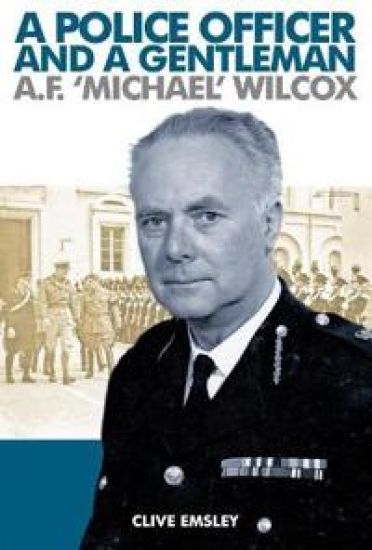
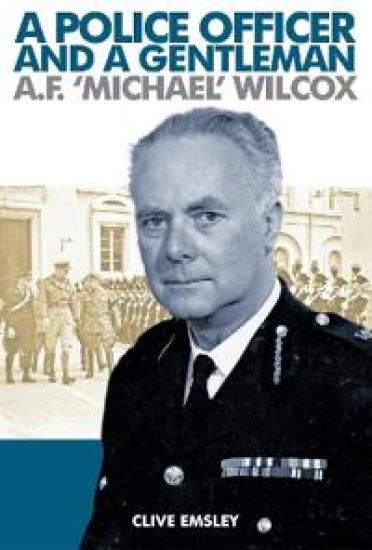
'MICHAEL' WILCOX is not well-known but he had a very distinguished career in the police service, starting as a constable in the City of Bristol Police and ending as the Chief Constable of Hertfordshire. The death of his father meant that he left school early, but his shortened education did not stop him applying to Lord Trenchard's new Police College established in Hendon in 1934. His success in the entrance exam required him to transfer to the Metropolitan Police. In 1943, by then an Inspector, he volunteered for the Civil Affairs unit of the Allied Armies. He landed at Salerno and set about 'liberating' towns in southern Italy. He was rapidly promoted to Lieutenant Colonel and found himself doing the lion's share of the work in attempting to reorganise the Italian Police. In the immediate aftermath of the war, he played a key role in the policing of occupied Vienna. On demobilisation he became the deputy Chief Constable of Buckinghamshire and then, after six months, the Chief Constable of Hertfordshire. He served in Herts for the next 22 years. Several of his friends and fellow graduates from Hendon moved on to senior posts in the Metropolitan Police and the Inspectorate of Constabulary. Wilcox had written to his wife during his Army service saying that being a Chief Constable was his ambition as it would allow him to look after her and their children. On retirement he enjoyed a link with the new Criminology Institute at Cambridge publishing a small book on prosecution which is still well regarded. He also took on a variety of temporary posts for the Home Office. This is the story of a man who never pushed himself forward; family was as important to him as the job. Nevertheless, he rose through the ranks by demonstrating his ability and a strong commitment to his role. As Chief Constable he appears to have been popular and respected by those who served under him; while he, in turn, made their welfare a key consideration.
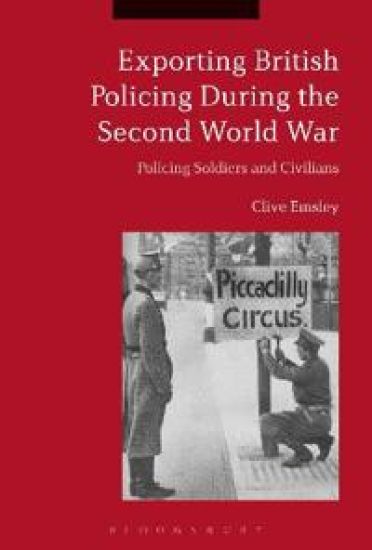
Exporting British Policing is a comprehensive study of British military policing in liberated Europe during the Second World War. Preventing and detecting thefts, receiving and profiteering together with the maintenance of order in its broadest sense are, in the peacetime world, generally confided to the police. However, the Second World War witnessed the use of civilian police to create a detective division of the British Army’s Military Police (SIB), and the use of British civilian police, alongside American police, as Civil Affairs Officers to restore order and civil administration. Part One follows the men of the SIB from their pre-war careers to confrontations with mafiosi and their investigations into widespread organised crime and war crimes during which they were constantly hampered by being seen as a Cinderella service commanded by ‘temporary gentlemen’. Part Two focuses on the police officers who served in Civil Affairs who tended to come from higher ranks in the civilian police than those who served in SIB. During the war they occupied towns with the assault troops, and then sought to reorganise local administration; at the end of the war in the British Zones of Germany and Austria they sought to turn both new Schutzmänner and police veterans of the Third Reich into British Bobbies. Using memoirs and anecdotes, Emsley critically draws on the subjective experiences of these police personnel, assessing the successes of these wartime efforts for preventing and investigating crimes such as theft and profiteering and highlighting the importance of historical precedent, given current difficulties faced by international policing organizations in enforcing democratic police reform in post-conflict societies.
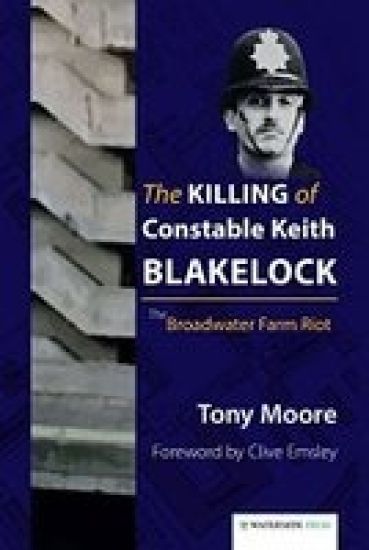
After becoming detached from Serial 502 Keith Blakelock was kicked and hacked to death by a mob using clubs, iron bars and machete-like weapons. His killers have never been brought to justice.'A rounded, mature assessment of the murder of Keith Blakelock, the events that led to the deployment of his serial during the disorder and the messy, and in many respects still unresolved aftermath'Professor Clive Emsley (from the Foreword). Published to mark the 30th anniversary of one of the most disturbing events in British policing, this masterly account by ex-Metropolitan Police commander Tony Moore is based on unrivalled research and sources. It describes rioting on the Broadwater Farm Estate, Tottenham in 1985 against a backdrop of unrest in major UK cities and a nadir in relations between police and black communities. Based on new materials, private communications and matchless sources. A closely observed account by someone working at senior level in the Met at the time. Deals with the biggest breakdown in community relations and law and order in modern English social and policing history.Looks at both sides of the story of unrest at this symbolic location, its history, background, influences, causes, legacy and who was most to blame.
Crime and Society in Twentieth-Century England traces the broad pattern of criminal offending over a hundred year period that experienced unprecedented levels of upheaval and change. This period included two world wars, the end of the British Empire, significant shifts in both gender relations and ethnic mix and a decline in the power of the economy. In this new textbook, Professor Clive Emsley provides an up-to-date assessment of changes in attitudes to crime as well as of the developments in policing, in the courts and in penal sanctions over the course of the century. He explores the impact of growing gender equality and ethnic diversity on crime and criminal justice, and looks at the way in which crime became increasingly central to political agendas in the last third of the century. Written in a clear and accessible manner, the book examines: Perceptions of crime and criminality across the century Varieties of offending from murder to benefit fraud The role of the media in constructing and reinforcing the understanding of crime and the criminal The decline and demise of corporal and capital punishment The shift from largely progressive to more punitive penal practice The first serious attempt to explore the history of crime and criminal justice in twentieth-century England, this book will be an invaluable introduction to the student and interested general reader alike.
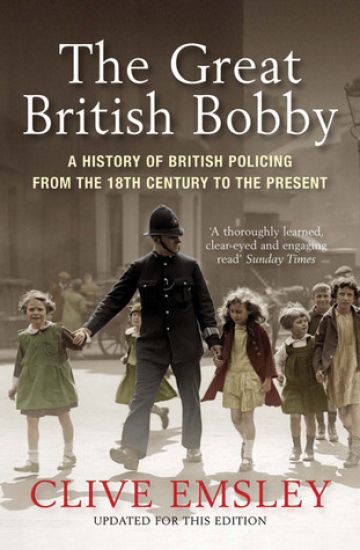
In The Great British Bobby, Clive Emsley traces the development of Britain's forces of law and order from the earliest watchmen and constables of the pre-modern period to the police service of today.
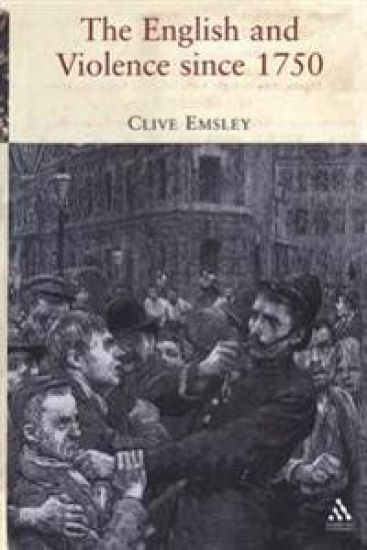
The garrotters who terrified London in 1862, the Irish Fenians who carried our terrorist bombings in London and the gangs who dominated parts of the East End in the early years of the twentieth century all used violence to achieve their ends. "Hard Men" is a survey of the changing pattern of violent behaviour, public and private, in England over two hundred and fifty years. People in the eighteenth and nineteenth centuries were certainly more tolerant of domestic violence and rough communal sports and celebrations than their grandchildren. Contentious public meetings, notably elections, could end in serious injuries; the state and the police exercised control by violent means where they deemed it necessary; and there were of course violent crimes committed by men, women and children. While the exercise of violence reflected changes in society and attitudes, it is difficult to point to a golden age in the past without it.
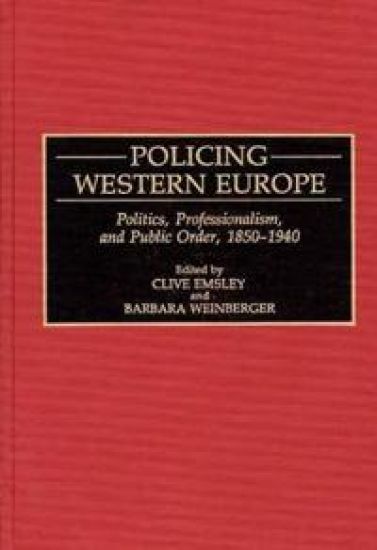
This collection of essays examines the growth of professionalization in national police forces in England, France, Germany, Ireland, and the Netherlands. The period covered begins at the point where police forces had been established on some sort of a national scale. The essays are concerned with perceptions of both rulers and ruled, and perceptions of the role and function of the police in established industrial and urbanized societies. They also deal with the ways in which different police forces expanded and developed over time, and with the effect of this expansion and development on police organization and strategy.During the period covered in the book, all the countries of Western Europe were confronted with similar, essentially political challenges. Industrialization and urbanization created new and alarming environments and appeared to foster new and menacing social groups, from the dangerous classes lurking within the unskilled urban working class, to the more tangible organizations created by labor. Socialism and fascism provided the European states with new ideologies and ideologues to confront or to support--and world war, involving mass mobilization on the home as well as the battle fronts, was seen to require a further extension of the role of the state. In a crisis, central government must ensure its command over its forces of coercion and its sources of information--it was then that the police became most openly the executive area of government. As the trend toward central control intensified, so did the trend toward professionalization. By examining the evolution of the police in five societies, the authors provide valuable analyses of the ways police forces differed from one another, the ways in which they approached their tasks, and how they developed their respective self-images. This collection will be of considerable use to scholars and students involved in research on modern European history and criminology.