

Kirjailija
Clive Harber
Kirjat ja teokset yhdessä paikassa: 16 kirjaa, julkaisuja vuosilta 1989-2023, suosituimpien joukossa Small Schools And Democratic Practic. Vertaile teosten hintoja ja tarkista saatavuus suomalaisista kirjakaupoista.
16 kirjaa
Kirjojen julkaisuhaarukka 1989-2023.
School Management and Effectiveness in Developing Countries
Clive Harber; Lynn Davies
Continuum International Publishing Group Ltd.
2005
nidottu
This book is quite different from existing 'Western' books on school effectiveness. It describes and analyses the way in which schools operate in developing countries and also tries to explain why they are as they are. Examining them at three levels - the macro, the meso and the micro - the authors use a theoretical framework that they have termed 'post-bureaucracy.' The book has four interlinked sections. First the authors examine the existing economic and theoretical contexts around school effectiveness, including an analysis of the causes of economic crisis and its impact on school management. In the second section the analysis of schools as bureaucratic facades is proposed. The reality of school life, from which any theory of school effectiveness must derive, is illustrated by an ethnographic account of the job of the headteacher in developing countries. The third section explores different ways to understand this reality, operating on three levels: global relationships, national and community cultures, and individual agency. In the final section Haber and Davies draw these levels and realities together.They argue for the democratization of schools as the only way forward for effective education fordevelopment.
Asking fundamental and often uncomfortable questions about the nature and purposes of formal education, this book explores the three main ways of looking at the relationship between formal education, individuals and society:* that education improves society* that education reproduces society exactly as it is* that education makes society worse and harms individuals.Whilst educational policy documents and much academic writing and research stresses the first function and occasionally make reference to the second, the third is largely played down or ignored.In this unique and thought-provoking book, Clive Harber argues that while schooling can play a positive role, violence towards children originating in the schools system itself is common, systematic and widespread internationally and that schools play a significant role in encouraging violence in wider society. Topics covered include physical punishment, learning to hate others, sexual abuse, stress and anxiety, and the militarization of school. The book both provides detailed evidence of such forms of violence and sets out an analysis of schooling that explains why they occur. In contrast, the final chapter explores existing alternative forms of education which are aimed at the development of democracy and peace.This book should be read by anyone involved in education - from students and academics to policy-makers and practitioners around the world.
Asking fundamental and often uncomfortable questions about the nature and purposes of formal education, this book explores the three main ways of looking at the relationship between formal education, individuals and society:* that education improves society* that education reproduces society exactly as it is* that education makes society worse and harms individuals.Whilst educational policy documents and much academic writing and research stresses the first function and occasionally make reference to the second, the third is largely played down or ignored.In this unique and thought-provoking book, Clive Harber argues that while schooling can play a positive role, violence towards children originating in the schools system itself is common, systematic and widespread internationally and that schools play a significant role in encouraging violence in wider society. Topics covered include physical punishment, learning to hate others, sexual abuse, stress and anxiety, and the militarization of school. The book both provides detailed evidence of such forms of violence and sets out an analysis of schooling that explains why they occur. In contrast, the final chapter explores existing alternative forms of education which are aimed at the development of democracy and peace.This book should be read by anyone involved in education - from students and academics to policy-makers and practitioners around the world.

This is a study of the political dimensions of education in Africa south of the Sahara, focusing especially on politics in primary and secondary schools and on the political knowledge and values both of the pupils attending them and of other young people of a similar age. Harber considers the comprehensive nature of the relationship between politics and education, the role of schools in nation-building, colonial education as a form of political domination, the role of political education in liberation struggles, the "modernizing" role of formal education, the problematic nature of political education courses in schools, the contradictions between government educational policy and the actual operation of schools, the conflict between authoritarian and democratic forms of school organization and the need to consider the political views of young people.
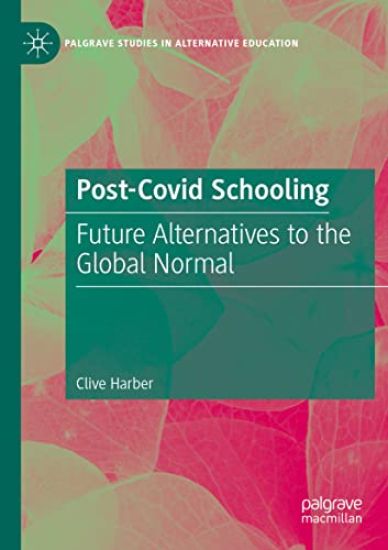
This book questions the consensus that contemporary formal schooling is of clear cut and undoubted benefit to pupils. During lockdowns caused by the global COVID-19 pandemic, governments and various other actors have been trying to get children and young people back into school as quickly as possible. While there are any numerous beneficial aspects of schooling, the book asks whether accepted models and practices of schools should change in a post-COVID world. By critically examining the everyday nature of 'normal' schooling, the book demonstrates that many aspects of schooling are not necessarily beneficial to pupils, and can be directly harmful: in doing so, the author imagines a future of schooling that could better support and benefit its students.

This book questions the consensus that contemporary formal schooling is of clear cut and undoubted benefit to pupils. During lockdowns caused by the global COVID-19 pandemic, governments and various other actors have been trying to get children and young people back into school as quickly as possible. While there are any numerous beneficial aspects of schooling, the book asks whether accepted models and practices of schools should change in a post-COVID world. By critically examining the everyday nature of 'normal' schooling, the book demonstrates that many aspects of schooling are not necessarily beneficial to pupils, and can be directly harmful: in doing so, the author imagines a future of schooling that could better support and benefit its students.
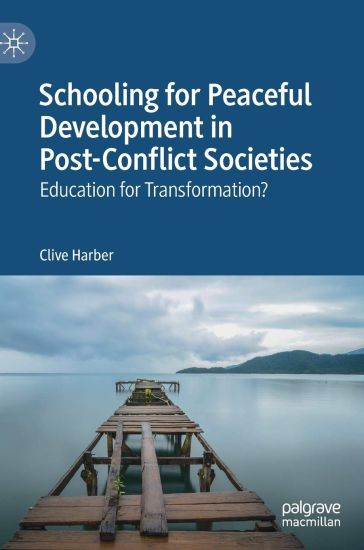
Schooling for Peaceful Development in Post-Conflict Societies
Clive Harber
Springer Nature Switzerland AG
2019
sidottu
This book explores how, and if, formal education affects peacebuilding in post-conflict societies. As schooling is often negatively implicated in violent conflict, the author highlights the widely expressed need to ‘build back better’ and ‘transform’ schooling by changing both its structures and processes, and its curriculum. Drawing upon research from a wide range of post-conflict developing societies including Cambodia, Colombia and Kenya, the author examines whether there is any empirical support for the idea that schooling can be transformed so it can contribute to more peaceful and democratic societies. In doing so, the author reveals how the ‘myth’ of building back better is perpetuated by academics and international organisations, and explains why formal education in post-conflict developing societies is so impervious to radical change. This important volume will appeal to students and scholars of education in post-conflict societies.

Implementing Cloud Design Patterns for AWS
Sean Keery; Clive Harber; Marcus Young
Packt Publishing Limited
2019
nidottu
Create highly efficient design patterns for scalability, redundancy, and high availability in the AWS CloudKey FeaturesBuild highly robust systems using the cloud infrastructureMake web applications resilient against scheduled and accidental downtimeExplore and apply Amazon-provided services in unique ways to solve common design problemsBook DescriptionWhether you're just getting your feet wet in cloud infrastructure or already creating complex systems, this book will guide you through using the patterns to fit your system needs.Starting with patterns that cover basic processes such as source control and infrastructure-as-code, the book goes on to introduce cloud security practices. You'll then cover patterns of availability and scalability and get acquainted with the ephemeral nature of cloud environments. You'll also explore advanced DevOps patterns in operations and maintenance, before focusing on virtualization patterns such as containerization and serverless computing. In the final leg of your journey, this book will delve into data persistence and visualization patterns. You'll get to grips with architectures for processing static and dynamic data, as well as practices for managing streaming data.By the end of this book, you will be able to design applications that are tolerant of underlying hardware failures, resilient against an unexpected influx of data, and easy to manage and replicate.What you will learnImplement scaling policies on schedules, influxes in traffic, and deep health checksMake complete use of highly available and redundant storageDesign content delivery networks to improve user experienceOptimize databases through caching and shardingApply patterns to solve common problemsImplement repeatable processes for deploying systemsWho this book is forIf you’re an architect, solution provider, or DevOps community member looking to implement repeatable patterns for deploying and maintaining services in the Amazon cloud infrastructure, this book is for you.You’ll need prior experience of using AWS understand key concepts covered in the book, as it focuses on the patterns rather than the basics of using AWS.
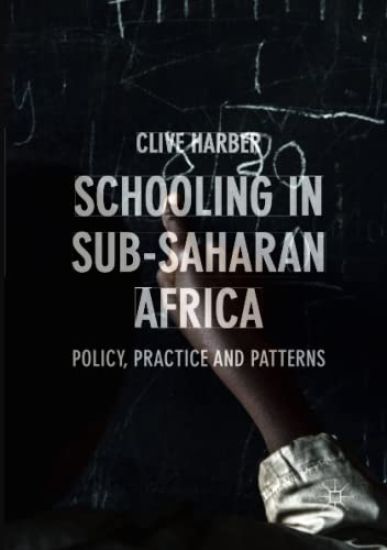
This book is a comprehensive text for those interested in formal education in sub-Saharan Africa. It provides a thought-provoking overview of the key educational ideas, themes and issues facing schooling in Africa today, by drawing on a wide literature to examine evidence concerning both educational policy and the working realities of primary and secondary schools in Africa. Based on the author’s forty years of experience in researching and publishing on education in Africa, it takes a balanced but critical approach to analysing education in Africa, and discusses both positive and negative patterns across the region, as well as identifying differences between and within countries. The book examines major questions of educational provision, structure, content and process but does so in a way that raises challenging questions about gender, inequality, violence, authoritarianism and democracy in education as well the fundamental question of whether education is achieving its desired outcomes. It will be of great interest to students and researchers working in the fields of comparative and international education, education and international development, African education, African studies and development studies.

Internationally, violence occurs in schools on a regular basis; and in some contexts is particularly serious and widespread. One such context is South Africa, where, on an almost daily basis, newspapers carry reports of one or other aspect of school violence.While a number of academic studies have delineated the extent and nature of such violence, and made recommendations on possible solutions to the problem, there has ? until now ? been no single book bringing together theory and research on the causes of violence, and on its reduction and prevention. Finding suitable solutions requires a clear understanding of how and where violence is generated. Uniquely, Violence in schools: South Africa in an international context covers both the social bases of school violence and the role many schools themselves play in generating violent behaviour. It goes on to argue that school-generated violence is potentially much more amenable to positive intervention: solutions can be developed at the local level, by schools themselves, and in response to the specific circumstances generated in individual schools.This study also asks why males specifically play such a large part in violence in South African society. Examining the theories and empirical evidence regarding the nature and causes of violence in schools globally, it explores them as they relate to South African schools specifically.Overtly based on the value of democratic values in seeking solutions, the book provides very useful resources for a whole range of educational endeavours. It will be of considerable interest to government educational departments, NGOs, teacher-education institutions, and staff and governing bodies in schools.
This book is a comprehensive text for those interested in formal education in sub-Saharan Africa. It provides a thought-provoking overview of the key educational ideas, themes and issues facing schooling in Africa today, by drawing on a wide literature to examine evidence concerning both educational policy and the working realities of primary and secondary schools in Africa. Based on the author’s forty years of experience in researching and publishing on education in Africa, it takes a balanced but critical approach to analysing education in Africa, and discusses both positive and negative patterns across the region, as well as identifying differences between and within countries. The book examines major questions of educational provision, structure, content and process but does so in a way that raises challenging questions about gender, inequality, violence, authoritarianism and democracy in education as well the fundamental question of whether education is achieving its desired outcomes. It will be of great interest to students and researchers working in the fields of comparative and international education, education and international development, African education, African studies and development studies.
A Sociology of Educating
Roland Meighan; Clive Harber
Continuum International Publishing Group Ltd.
2007
sidottu
Intended to stimulate sociologically informed thinking about educating, this book has become firmly established in its field, winning places on reading lists for Education Studies, Initial Teacher Training and Continuing Professional Development courses. The book begins with a light-hearted taste of sociology, and then goes on to explorefive key areas of education: - the hidden curriculum - ideologies of educating - sociological perspectives and the study of education - educational life chances, and - the next learning system. This new edition includes sections on personalized learning, progressive education, and the impact of assessment on pupils. It also comes with a new chapter The Discourses of Education. Roland Meighan is a former Special Professor of Education, University of Nottingham, UKand Senior Lecturer, University of Birmingham, UK. Clive Harber is Professor of Education and Head of the School of Education, University of Birmingham, UK. He brings with him expertise in the field of International Education and Educational Development With contributions by Len Barton and Iram Siraj-Blatchford, both of the Institute of Education, University of London; and Stephen Walker, Reader in the Sociology of Education and Visiting Professor in the Science of Education, University of Bari.
A Sociology of Educating
Roland Meighan; Clive Harber
Continuum International Publishing Group Ltd.
2007
nidottu
Intended to stimulate sociologically informed thinking about educating. This work explores five key areas of education such as: the hidden curriculum; ideologies of educating; sociological perspectives and the study of education; educational life chances; and, the next learning system.
Education, Democracy and Political Development in Africa
Clive Harber
Sussex Academic Press
1997
nidottu
For most of the post-independence period African states have been ruled by one-party and military regimes. Writers on political development theory came to see this as inevitable. Pressures both from within Africa itself and from outside, however, have rekindled debates about democracy in the African context and have led to a whole raft of multi-party elections. There is a widespread fear, nevertheless, that the democratic reform of political institutions may not last after the first round of internationally sponsored or supervised elections. The pressing issue therefore is how to make democracy sustainable on the African continent in the longer run? This book looks at the role of one key social institution in this process -- formal schooling. Schooling should enhance democratic skills, values and behaviours necessary to sustain democratic political institutions. This book argues, with supporting evidence from a wide range of African countries, that currently schools are an obstacle to education for democracy. However, there are encouraging signs and examples from certain African countries which suggest that the importance of education for democracy has been recognised. This book aims to provide a political analysis of education in Africa within the context of democratisation.