Kirjojen hintavertailu. Mukana 12 595 353 kirjaa ja 12 kauppaa.

Kirjailija

Clive Harfield

Kirjat ja teokset yhdessä paikassa: 6 kirjaa, julkaisuja vuosilta 2007-2025, suosituimpien joukossa Policing. Vertaile teosten hintoja ja tarkista saatavuus suomalaisista kirjakaupoista.

6 kirjaa

Kirjojen julkaisuhaarukka 2007-2025.

Policing Ethically

Policing Ethically

Clive Harfield; Allyson Macvean

TAYLOR FRANCIS LTD
2025
nidottu
At a time when much in UK policing is the subject of intense public and media scrutiny, there prevails a practitioner discourse about policing ethically that is ongoing formally in police ethics committee discussions, and probably informally in station offices, canteens, classrooms, and police vehicles. Since January 2024, these conversations have added emphasis with the publication of the College of Policing’s revised Code of Ethics with which policing practitioners in England and Wales are coming to grips. This book explores thinking about policing ethically for those who have to use and implement the ideas – to those who, when law and policy is silent on the matter before them, nevertheless have to make a justifiable decision and act upon it.Applicable to policing generally, not just to the UK, Part 1 of this book presents conceptual contextualization for thinking about policing ethically. Following which, Part 2 considers practical implications of policing ethically.Some of the key topics that the book covers are as follows:• Discussions of managing power and vulnerability• Implementing frontline ethics in practice• The process of making ethically informed decisions• Considerations around ethics and the use of artificial intelligence by policing practitioners• Prerequisites to ethical leadership• Considering “public interest” in relation to policing ethically• Risk management as a moral obligationDrawing upon the policing practitioner and policymaking experience of the authors, this book will be of interest and use to all those involved in delivering policing: constables of all ranks (student, probationary, and experienced), policing community support officers, professional support staff, policing ethics committee members, and policymakers. The book is also a contribution to the wider academic literature on policing and ethics, and will be of interest not only to policing ethicists and ethnographers but also to students and policymakers in the fields of criminology, sociology, and governance.
Policing Ethically

Policing Ethically

Clive Harfield; Allyson Macvean

TAYLOR FRANCIS LTD
2025
sidottu
At a time when much in UK policing is the subject of intense public and media scrutiny, there prevails a practitioner discourse about policing ethically that is ongoing formally in police ethics committee discussions, and probably informally in station offices, canteens, classrooms, and police vehicles. Since January 2024, these conversations have added emphasis with the publication of the College of Policing’s revised Code of Ethics with which policing practitioners in England and Wales are coming to grips. This book explores thinking about policing ethically for those who have to use and implement the ideas – to those who, when law and policy is silent on the matter before them, nevertheless have to make a justifiable decision and act upon it.Applicable to policing generally, not just to the UK, Part 1 of this book presents conceptual contextualization for thinking about policing ethically. Following which, Part 2 considers practical implications of policing ethically.Some of the key topics that the book covers are as follows:• Discussions of managing power and vulnerability• Implementing frontline ethics in practice• The process of making ethically informed decisions• Considerations around ethics and the use of artificial intelligence by policing practitioners• Prerequisites to ethical leadership• Considering “public interest” in relation to policing ethically• Risk management as a moral obligationDrawing upon the policing practitioner and policymaking experience of the authors, this book will be of interest and use to all those involved in delivering policing: constables of all ranks (student, probationary, and experienced), policing community support officers, professional support staff, policing ethics committee members, and policymakers. The book is also a contribution to the wider academic literature on policing and ethics, and will be of interest not only to policing ethicists and ethnographers but also to students and policymakers in the fields of criminology, sociology, and governance.
Covert Investigation 6e

Covert Investigation 6e

Clive Harfield; Karen Harfield

Oxford University Press
2023
nidottu
Examining all the key issues to consider when deploying investigative tools under the Regulation of Investigatory Powers Act 2000 (RIPA) and the Investigatory Powers Act 2016, Covert Investigation is a highly practical and detailed guide to this important, complex, and sometimes controversial area of the law. This sixth edition of Covert Investigation has been fully revised to incorporate amendments to RIPA enacted by the Covert Human Intelligence Sources (Criminal Conduct) Act 2021, setting the moral and legal context for the ethical management and implementation of covert investigations, and the statutory principles underpinning such interventions. Its first Part discusses the issues facing authorizing officers and focuses on practical management issues from both strategic and operational perspectives, including the management of risk. Part 2 concentrates on the statutory elements of covert investigations, addressing directed and intrusive surveillance, property interference and surveillance through communications and the data generated. It includes detailed discussion of the use of covert human intelligence sources, especially the significant moral issues arising from relationship manipulation and privacy intrusion. The authors present clear and concise guidance to ensure that applications for covert investigations are made only in appropriate circumstances and that such investigations are undertaken with integrity. Featuring a range of helpful tools, such as scenarios, tips, and checklists, this edition is an essential resource for police and non-police investigators alike The book forms part of the Blackstone's Practical Policing Series. The series, aimed at junior to middle ranking officers, consists of practical guides containing clear and detailed explanations of the relevant legislation and practice, accompanied by case studies, illustrative diagrams, and useful checklists.
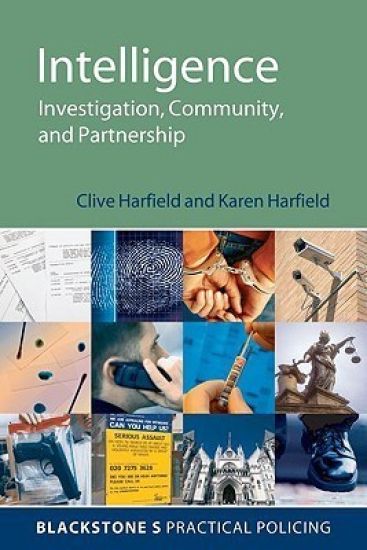
Intelligence

Intelligence

Clive Harfield; Karen Harfield

Oxford University Press
2008
nidottu
This title provides a clear introduction and practical guide to the use of intelligence in policing, offering detailed explanations of relevant legislation and establishing the theoretical and operational context and rationale within which intelligence can be used. The relationship between criminal procedural law and intelligence-gathering is outlined and different generic sources of intelligence (overt and covert) are introduced. The book offers advice on planning an intelligence operation, analysing and evaluating information, using intelligence-based evidence in court, identifying risk and protecting sensitive sources. It also summarises the role of key agencies involved in intelligence gathering, outlines the National Intelligence Model and draws together key findings from the Butler and Bichard enquiries. The book forms part of the Blackstone's Practical Policing Series. The series, aimed at junior to middle ranking officers, consists of practical guides containing clear and detailed explanations of the relevant legislation and practice, accompanied by case studies, illustrative diagrams and useful checklists. A truly practical guide to all aspects of policing intelligence, from planning and gathering to analysis
Policing

Policing

John Grieve; Clive Harfield; Allyson MacVean

SAGE Publications Inc
2007
nidottu
This is the first course guide that has been developed for students of policing. It identifies the core themes and additional source material, providing an essential overview for students and a reference point for use throughout their studies. The Policing Course Companion is designed to complement and work alongside existing literature. It provides: " Easy access to the key themes in policing " Helpful summaries of the approach taken by the main course textbooks " Guidance on the essential study skills required to pass the course " Help with developing critical thinking " Taking it Further sections that suggest how readers can extent their thinking beyond the "received wisdom" " Pointers to success in course exams and written assessment exercises The SAGE Course Companion in Policing is much more than a revision guide for undergraduates; it is an essential tool that will help readers take their course understanding to new levels and help them achieve success in their undergraduate course. John Grieve is a former Director of Intelligence for the Metropolitan Police, where he also held a number of other senior roles. He is now Chair of the John Grieve Centre for Policing and Community Safety and Emeritus Professor at London Metropolitan University. Clive Harfield is a former police Inspector and is now the Deputy Director of the John Grieve Centre for Policing and Community Safety, London Metropolitan University. Allyson MacVean is Founder and Director of the John Grieve Centre for Policing and Community Safety, London Metropolitan University.
Policing

Policing

John Grieve; Clive Harfield; Allyson MacVean

SAGE Publications Inc
2007
sidottu
This is the first course guide that has been developed for students of policing. It identifies the core themes and additional source material, providing an essential overview for students and a reference point for use throughout their studies. The Policing Course Companion is designed to complement and work alongside existing literature. It provides: " Easy access to the key themes in policing " Helpful summaries of the approach taken by the main course textbooks " Guidance on the essential study skills required to pass the course " Help with developing critical thinking " Taking it Further sections that suggest how readers can extent their thinking beyond the "received wisdom" " Pointers to success in course exams and written assessment exercises The SAGE Course Companion in Policing is much more than a revision guide for undergraduates; it is an essential tool that will help readers take their course understanding to new levels and help them achieve success in their undergraduate course. John Grieve is a former Director of Intelligence for the Metropolitan Police, where he also held a number of other senior roles. He is now Chair of the John Grieve Centre for Policing and Community Safety and Emeritus Professor at London Metropolitan University. Clive Harfield is a former police Inspector and is now the Deputy Director of the John Grieve Centre for Policing and Community Safety, London Metropolitan University. Allyson MacVean is Founder and Director of the John Grieve Centre for Policing and Community Safety, London Metropolitan University.