Kirjojen hintavertailu. Mukana 12 390 323 kirjaa ja 12 kauppaa.

Kirjailija

Clive Holes

Kirjat ja teokset yhdessä paikassa: 11 kirjaa, julkaisuja vuosilta 1987-2021, suosituimpien joukossa Poetry and Politics in Contemporary Bedouin Society. Vertaile teosten hintoja ja tarkista saatavuus suomalaisista kirjakaupoista.

11 kirjaa

Kirjojen julkaisuhaarukka 1987-2021.

Dialect, Culture, and Society in Eastern Arabia, Volume 3: Phonology, Morphology, Syntax, Style
Dialect, Culture, and Society in Eastern Arabia is a three-volume study of the Arabic dialects spoken in Bahrain by its older generation in the mid-1970s, and the socio-cultural factors that produced them. Volume 1: Glossary, published in 2001, lists all the dialectal vocabulary, with extensive contextual exemplification, and cross-referenced to other lexica, which occurred in the complete set of texts recorded during fieldwork. Volume 2: Ethnographic Texts presents a selection of these texts, transcribed, annotated and translated, and with detailed background essays, covering major aspects of the pre-oil culture of the Gulf and the initial stages of the transition to the modern era: pearl diving, agriculture, communal relations, marriage, childhood, domestic life, work. Excerpts from local dialect poems concerned with these subjects are also included. Volume 3: Phonology, Morphology, Syntax, Style is based on an extensive archive of recorded material, gathered for its ethnographic as well as its purely linguistic interest.
Dialect, Culture, and Society in Eastern Arabia, Volume 2 Ethnographic Texts
Dialect, Culture, and Society in Eastern Arabia is a three-volume study of the Arabic dialects spoken in Bahrain by its older generation in the mid-1970s, and the socio-cultural factors that produced them. Volume 1: Glossary, published in 2001, lists all the dialectal vocabulary, with extensive contextual exemplification, and cross-referenced to other lexica, which occurred in the complete set of texts recorded during fieldwork. Volume 2: Ethnographic Texts presents a selection of these texts, transcribed, annotated and translated, and with detailed background essays, covering major aspects of the pre-oil culture of the Gulf and the initial stages of the transition to the modern era: pearl diving, agriculture, communal relations, marriage, childhood, domestic life, work. Excerpts from local dialect poems concerned with these subjects are also included. Volume 3: Phonology, Morphology, Syntax, Style is based on an extensive archive of recorded material, gathered for its ethnographic as well as its purely linguistic interest.
Dialect, Culture, and Society in Eastern Arabia, Volume 1 Glossary
Dialect, Culture, and Society in Eastern Arabia is a three-volume study of the Arabic dialects spoken in Bahrain by its older generation in the mid-1970s, and the socio-cultural factors that produced them. Volume 1: Glossary, published in 2001, lists all the dialectal vocabulary, with extensive contextual exemplification, and cross-referenced to other lexica, which occurred in the complete set of texts recorded during fieldwork. Volume 2: Ethnographic Texts presents a selection of these texts, transcribed, annotated and translated, and with detailed background essays, covering major aspects of the pre-oil culture of the Gulf and the initial stages of the transition to the modern era: pearl diving, agriculture, communal relations, marriage, childhood, domestic life, work. Excerpts from local dialect poems concerned with these subjects are also included. Volume 3: Phonology, Morphology, Syntax, Style is based on an extensive archive of recorded material, gathered for its ethnographic as well as its purely linguistic interest.
Language Variation and Change in a Modernising Arab State
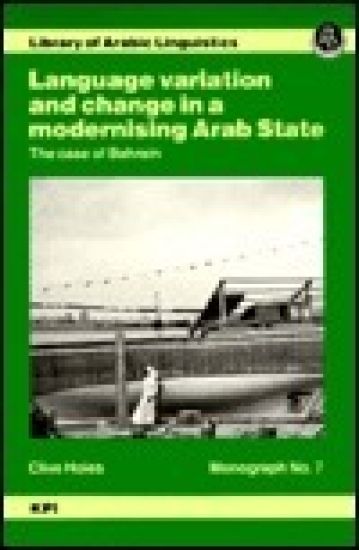
First published in 1987. This is monograph 7 in the Library of Arabic Linguistics. The author gives a prime exponent of the Labovian sociolinguistic approach in the Arabic field and this present study is the culmination of years of work on the dialects of Bahrain, following his four previous articles on the subject. He takes account of variability in the language of individual speakers both in the direction of the spoken dialects and in the direction of Classical Arabic and his approach takes into account factors of nationality, religious group affiliation, and occupational class in the selection of linguistic variables and is thereby squarely in the camp of the sociolinguists.
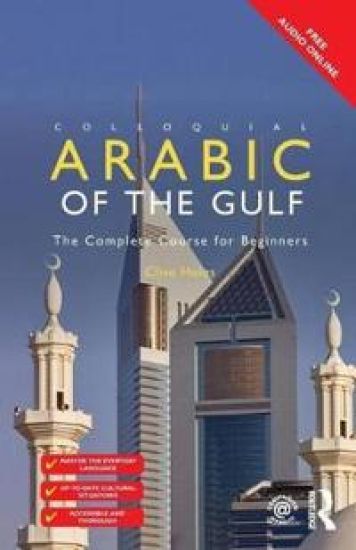
Colloquial Arabic of the Gulf

Colloquial Arabic of the Gulf

Clive Holes

Routledge
2015
nidottu
This new edition of Colloquial Arabic of the Gulf has been revised and updated to make learning this variety of Arabic easier and more enjoyable than ever before.Specially written by an expert for self-study and classroom use, the course offers you a step-by-step approach to spoken Arabic of the Gulf, together with an introduction to reading signs, business cards, advertisements and other realia. No prior knowledge of the language is required.Each unit presents numerous grammatical points that are reinforced with a wide range of exercises for regular practice. A full answer key can be found at the back as well as useful vocabulary summaries throughout.Features new to this edition include: a ‘Cultural Point’ section in each unit on important aspects of Gulf culture, society and history, with photographs and realiaa ‘Reading Arabic’ section in each unit, plus a special appendix on the Arabic script comprehensive glossaries, both English-Arabic and Arabic-English, containing all the words in the bookextra notes on the dialects of Oman.By the end of this rewarding course you will be able to communicate confidently and effectively in Arabic in a broad range of situations. Audio material to accompany the course is available to download free in MP3 format from www.routledge.com/cw/colloquials. Recorded by native speakers, the audio material features the dialogues and texts from the book and will help develop your listening and pronunciation skills. .
Gulf Arabic

Gulf Arabic

Clive Holes

Routledge
2011
nidottu
Gulf Arabic is the term used to refer to a number of related dialects which are spoken along the Gulf littoral from northern Kuwait to Oman. The people who live in this area are linked to each other by trading and seafaring traditions which go back many centuries, as well as by the complex tribal structure of Arabia. With the development of education since the second world war, and increasingly close social, political and developmental ties between Gulf states, a form of dialectal Arabic has evolved which is not closely associated with any one particular state, and which exhibits features common to them all. This is still unmistakably `Gulf' in its basic pronunciation and morphology, as well as in its basic lexical stock, but its syntax and to some extent lexicon have been influenced by standard Arabic and other Arabic dialects. Clive Holes provides a description of this educated, pan-Gulf dialect.
Poetry and Politics in Contemporary Bedouin Society

Poetry and Politics in Contemporary Bedouin Society

Clive Holes; Said Salman Abu Athera

Ithaca Press
2009
sidottu
This book shows how colloquial Bedouin poetry remains a vibrant art that has manifold modern functions: commenting on world affairs (such as the Arab-Israeli wars, the Gulf War, the American invasion of Iraq); criticising the domestic policies of Arab states; and, highlighting poverty, discrimination, the corrupt practices of officialdom, and compliant local media. Each of the forty-one poems presented within this book is transliterated and translated into English verse, with historical and contextual annotation. The tone is sometimes bitter, sometimes satirical, sometimes scurrilous, and often amusing. The poems are prefaced by an essay on the practice of modern Bedouin poetry. This book is completed by appendices containing the Arabic script versions of the poems, extensive language notes, and a glossary of the vocabulary.
Dialect, Culture, and Society in Eastern Arabia, Volume 2 Ethnographic Texts
Dialect, Culture, and Society in Eastern Arabia is a three-volume study of the Arabic dialects spoken in Bahrain by its older generation in the mid-1970s, and the socio-cultural factors that produced them. Volume 1: Glossary, published in 2001, lists all the dialectal vocabulary, with extensive contextual exemplification, and cross-referenced to other lexica, which occurred in the complete set of texts recorded during fieldwork. Volume 2: Ethnographic Texts presents a selection of these texts, transcribed, annotated and translated, and with detailed background essays, covering major aspects of the pre-oil culture of the Gulf and the initial stages of the transition to the modern era: pearl diving, agriculture, communal relations, marriage, childhood, domestic life, work. Excerpts from local dialect poems concerned with these subjects are also included. Volume 3: Phonology, Morphology, Syntax, Style is based on an extensive archive of recorded material, gathered for its ethnographic as well as its purely linguistic interest.
Modern Arabic

Modern Arabic

Clive Holes; Roger Allen

Georgetown University Press
2004
pokkari
The revised and updated edition of "Modern Arabic" takes this authoritative, concise linguistic description of the structure and use of modern Arabic to an invaluable new level. Clive Holes traces the development of the Arabic language from Classical Arabic, the written language used in the 7th century for the Qur'an and poetry, through the increasingly symbiotic use of Modern Standard Arabic or MSA (the language of writing and formal speech) and dialectal Arabic (the language of normal conversation). He shows how Arabic has been shaped over the centuries by migration, urbanization, and education - giving us "a balanced, dispassionate, and accurate picture of the structures, functions, and varieties of the contemporary Arabic language". Holes explains the structural characteristics - phonology, morphology, syntax, semantics, and lexical and stylistic developments - that the majority of the dialects share, as distinguished from Modern Standard Arabic. He also shows how native speakers use both types of Arabic for different purposes, with MSA being the language of power and control as used on television and in political speeches, and the dialects serving as the language of intimacy and domesticity. He further shows how MSA and spoken dialects are not as compartmentalized as one might be led to believe. "Modern Arabic" illustrates the use of the Arabic language in real life, whether in conversation, news bulletins and newspaper articles, serious literature, or song. This new edition takes into account research published in several areas of Arabic linguistics since the first edition was published in 1995. It includes more extensive comment on the North African Arabic vocabulary of Modern Standard Arabic, more information about "mixed" varieties of written Arabic that are not in MSA (especially in Egypt), updated references, explanations, and many new examples. All Arabic is transcribed, except for an appendix presenting the Arabic alphabet and script. Students of the Arabic language will find "Modern Arabic" without peer - as will those general linguists who are interested in discovering how Arabic compares structurally and sociolinguistically with European languages.
Gulf Arabic

Gulf Arabic

Clive Holes

Routledge
1989
sidottu
Gulf Arabic is the term used to refer to a number of related dialects which are spoken along the Gulf littoral from northern Kuwait to Oman. The people who live in this area are linked to each other by trading and seafaring traditions which go back many centuries, as well as by the complex tribal structure of Arabia. With the development of education since the second world war, and increasingly close social, political and developmental ties between Gulf states, a form of dialectal Arabic has evolved which is not closely associated with any one particular state, and which exhibits features common to them all. This is still unmistakably `Gulf' in its basic pronunciation and morphology, as well as in its basic lexical stock, but its syntax and to some extent lexicon have been influenced by standard Arabic and other Arabic dialects. Clive Holes provides a description of this educated, pan-Gulf dialect.
Language Variation and Change in a Modernising Arab State
First published in 1987. This is monograph 7 in the Library of Arabic Linguistics. The author gives a prime exponent of the Labovian sociolinguistic approach in the Arabic field and this present study is the culmination of years of work on the dialects of Bahrain, following his four previous articles on the subject. He takes account of variability in the language of individual speakers both in the direction of the spoken dialects and in the direction of Classical Arabic and his approach takes into account factors of nationality, religious group affiliation, and occupational class in the selection of linguistic variables and is thereby squarely in the camp of the sociolinguists.