
Kirjailija
Clive James
Kirjat ja teokset yhdessä paikassa: 44 kirjaa, julkaisuja vuosilta 2004-2026, suosituimpien joukossa Poetry Notebook: Reflections on the Intensity of Language. Vertaile teosten hintoja ja tarkista saatavuus suomalaisista kirjakaupoista.
44 kirjaa
Kirjojen julkaisuhaarukka 2004-2026.
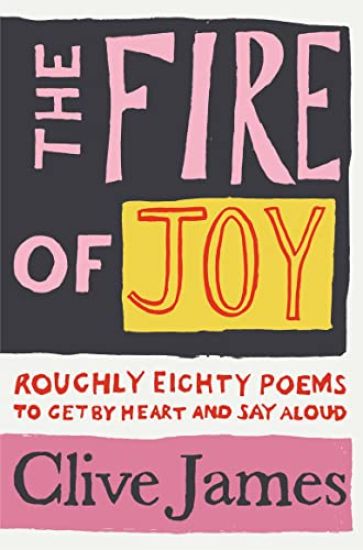
Clive James read, learned and recited poetry aloud for most of his life. In this, the last book he completed before his death, the much-loved poet, broadcaster and author offers a selection of his favourite poems and a personal commentary on each.In the last months of his life, his vision impaired by surgery and unable to read, Clive James explored the treasure-house of his mind: the poems he knew best, so good that he didn't just remember them, he found them impossible to forget. The Fire of Joy is the record of this final journey of recollection and celebration.Enthralled by poetry all his life, James knew hundreds of poems by heart. In offering this selection of his favourites, a succession of poems from the sixteenth century to the present, his aim is to inspire you to discover and to learn, and perhaps even to speak poetry aloud.In his highly personal anthology, James offers a commentary on each of the eighty or so poems: sometimes a historical or critical note on the poem or its author, sometimes a technical point about the poem's construction from someone who was himself a poet, sometimes a personal anecdote about the role the poem played in his own life.Whether you're familiar with a poem or not – whether you're familiar with poetry in general or not – these chatty, unpretentious, often tender mini-essays convey the joy of James's enthusiasm and the benefit of his knowledge. His urgent wish was to share with a new generation what he himself had loved. This is a book to be read cover to cover or dipped into: either way it generously opens up a world for our delight.'Clive James's joyous farewell . . . from Thomas Wyatt to Carol Ann Duffy' – Guardian, Best Poetry of 2020Clive James (1939–2019) was a broadcaster, critic, poet, memoirist and novelist. His acclaimed poetry includes the collection Sentenced to Life and a translation of Dante's The Divine Comedy, both Sunday Times bestsellers.
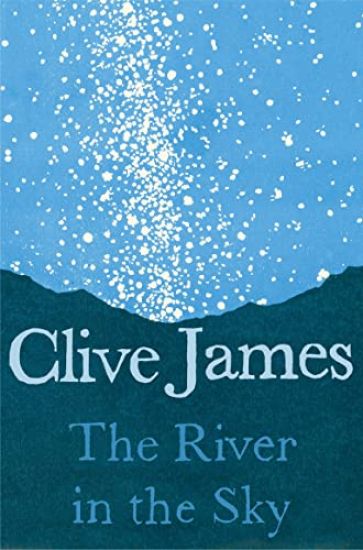
A single book-length poem, The River in the Sky sees Clive James face up to his final moments of life with all the wisdom, lightly-worn erudition and good humour that defined his extraordinary career.Close to death for a number of years, Clive James wrote about the experience in a series of deeply moving poems. In this volume, we find him in ill health but high spirits. Though his body found him bound to his Cambridge home, his mind was free to roam. On a grand tour of 'the fragile treasures of his life', James is animated by powerful recollections. He presents a flowing stream of vivid images, moving from emotionally resonant personal moments, such as listening to jazz records with his future wife, to unforgettable encounters with all kinds of culture: Beethoven's Ninth Symphony sits alongside 'YouTube's vast cosmopolis'. James shares his passions with enormous generosity, making brilliant, original connections and fearlessly tackling the biggest questions: the meaning of life and how to live it. In the end, what emerges from this autobiographical epic is a soaring work of exceptional depth and feeling.'The River in the Sky is superb, an epic lament, written in late life, filled with exact and moving observations about life and culture' – New York TimesClive James (1939–2019) was a broadcaster, critic, poet, memoirist and novelist. His acclaimed poetry includes the collection Sentenced to Life and a translation of Dante's The Divine Comedy, both Sunday Times bestsellers. His passion for and knowledge of poetry are distilled in his book of criticism on the subject, Poetry Notebook, and, written in the last year of his life, his personal annotated anthology of favourite poems, The Fire Of Joy. Praise for Clive James:'He will be seen, I think, as one of the most important and influential writers of our time' – Bryan Appleyard, Sunday Times'Wise, witty, terrifying, unflinching and extraordinarily alive' – A.S. Byatt, critic and author of Possession: A Romance'Clive James is a true poet' – Peter Porter, London Review of Books
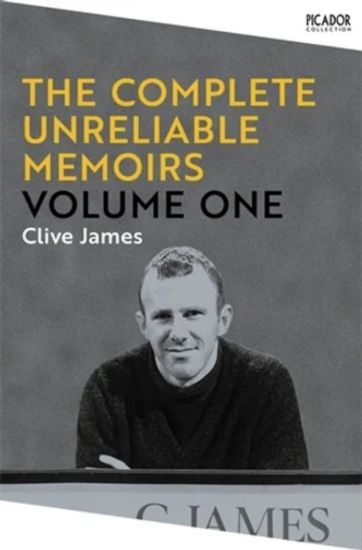
The first three volumes of the critically-acclaimed, million copy bestselling memoir series from the inimitable author, poet and broadcaster Clive James - a hilarious and poignant account of a truly extraordinary life.
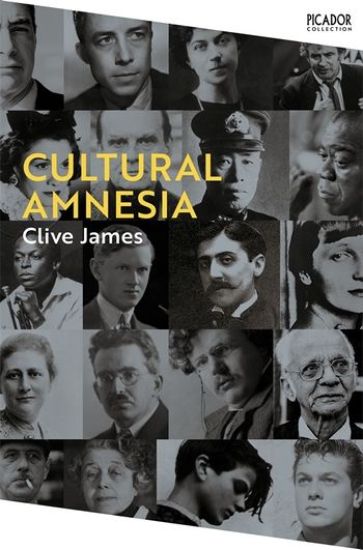
Cultural Amnesia: A Masterful Collection of Essays on Twentieth-Century Luminaries, from Louis Armstrong to Franz KafkaIn Cultural Amnesia, acclaimed critic Clive James presents a series of captivating essays on the artists, thinkers, and cultural figures who shaped the twentieth century. From jazz legend Louis Armstrong to philosopher Walter Benjamin, psychoanalyst Sigmund Freud to writer Franz Kafka, and beloved children's author Beatrix Potter to literary giant Marcel Proust, James delves into the minds and works of these extraordinary individuals with wit, erudition, and insight.Organised alphabetically by surname, this encyclopaedic volume invites readers to explore the connections James draws between these cultural icons, while also forging their own paths through the book's rich tapestry of ideas. James's essays are complemented by illuminating excursions into the minds of historical figures such as Sir Thomas Browne and Montesquieu, who paved the way for the twentieth century's intellectual and artistic achievements.At once a deeply personal memoir and a sweeping intellectual history, Cultural Amnesia is a testament to James's lifetime of engagement with the humanities. This is a book that will inspire readers to follow their curiosity and to make their own connections across the fields of art, literature, music, philosophy, and beyond.Hailed as 'one stupendous starburst of wild brilliance' by historian Simon Schama and 'a crash course in civilization' by novelist J. M. Coetzee, Cultural Amnesia is an indispensable guide to the figures and forces that have shaped our cultural landscape. Part of the Picador Collection, this is a book that deserves a place on the shelf of every reader who cares about the power of ideas and the legacy of human creativity.
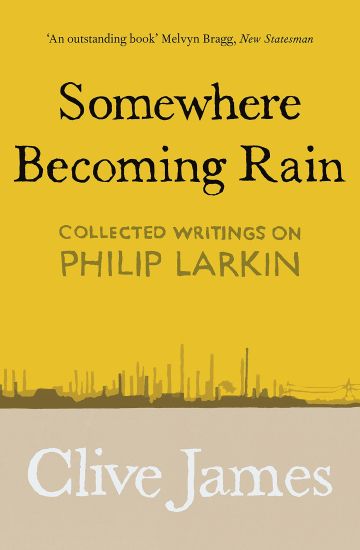
Erudite and entertaining in equal measure, Somewhere Becoming Rain is a love letter from the much-loved writer Clive James to one of the world’s most cherished poets: Philip Larkin.'This is the finest critic of his generation on the best poet of his lifetime' – The TimesClive James was a life-long admirer of the work of Philip Larkin. Somewhere Becoming Rain gathers all of James's writing on this towering literary figure of the twentieth century, together with extra material now published for the first time.The greatness of Larkin's poetry continues to be obscured by the opprobrium attaching to his personal life and his private opinions. James writes about Larkin's poems, his novels, his jazz and literary criticism; he also considers the two major biographies, Larkin's letters and even his portrayal on stage in order to chart the extreme and, he argues, largely misguided equivocations about Larkin's reputation in the years since his death.Through this joyous and perceptive book, Larkin's genius is delineated and celebrated. James argues that Larkin's poems, adored by discriminating readers for over half a century, could only have been the product of his reticent, diffident, flawed, and all-too-human personality.'A collection to savour two-fold – for the genius of Larkin and the playful erudition of James' – Financial Times
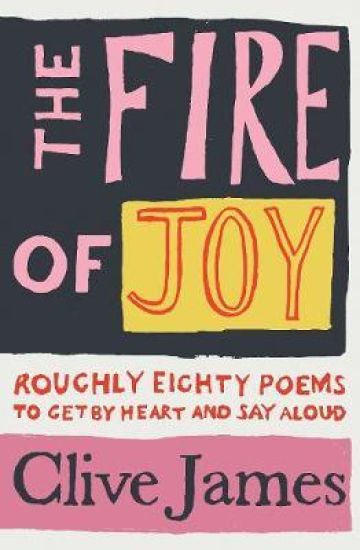
Clive James read, learned and recited poetry aloud for most of his life. In this, the last book he completed before his death, the much-loved poet, broadcaster and author offers a selection of his favourite poems and a personal commentary on each.In the last months of his life, his vision impaired by surgery and unable to read, Clive James explored the treasure-house of his mind: the poems he knew best, so good that he didn't just remember them, he found them impossible to forget. The Fire of Joy is the record of this final journey of recollection and celebration.Enthralled by poetry all his life, James knew hundreds of poems by heart. In offering this selection of his favourites, a succession of poems from the sixteenth century to the present, his aim is to inspire you to discover and to learn, and perhaps even to speak poetry aloud.In his highly personal anthology, James offers a commentary on each of the eighty or so poems: sometimes a historical or critical note on the poem or its author, sometimes a technical point about the poem's construction from someone who was himself a poet, sometimes a personal anecdote about the role the poem played in his own life.Whether you're familiar with a poem or not – whether you're familiar with poetry in general or not – these chatty, unpretentious, often tender mini-essays convey the joy of James's enthusiasm and the benefit of his knowledge. His urgent wish was to share with a new generation what he himself had loved. This is a book to be read cover to cover or dipped into: either way it generously opens up a world for our delight.'Clive James's joyous farewell . . . from Thomas Wyatt to Carol Ann Duffy' – Guardian, Best Poetry of 2020Clive James (1939–2019) was a broadcaster, critic, poet, memoirist and novelist. His acclaimed poetry includes the collection Sentenced to Life and a translation of Dante's The Divine Comedy, both Sunday Times bestsellers.
Erudite and entertaining in equal measure, Somewhere Becoming Rain is a love letter from the much-loved writer Clive James to one of the world’s most cherished poets: Philip Larkin.'This is the finest critic of his generation on the best poet of his lifetime' – The TimesClive James was a life-long admirer of the work of Philip Larkin. Somewhere Becoming Rain gathers all of James's writing on this towering literary figure of the twentieth century, together with extra material now published for the first time.The greatness of Larkin's poetry continues to be obscured by the opprobrium attaching to his personal life and his private opinions. James writes about Larkin's poems, his novels, his jazz and literary criticism; he also considers the two major biographies, Larkin's letters and even his portrayal on stage in order to chart the extreme and, he argues, largely misguided equivocations about Larkin's reputation in the years since his death.Through this joyous and perceptive book, Larkin's genius is delineated and celebrated. James argues that Larkin's poems, adored by discriminating readers for over half a century, could only have been the product of his reticent, diffident, flawed, and all-too-human personality.'A collection to savour two-fold – for the genius of Larkin and the playful erudition of James' – Financial Times
"Few people read Poetry any more, but I still wish to write its seedlings down, if only for the lull of gathering: no less a harvest season for being the last time," writes Clive James in his epic poem, The River in the Sky. What emerges from this lamentation is a soaring epic of exceptional depth and overwhelming feeling, all the more extraordinary given its appearance in an age when the heroic poem seems to have disappeared from contemporary literature.Among James's many talents is his uncanny ability to juxtapose references to early twentieth-century poets with "offbeat humor and flyaway cultural observations" (Dwight Garner, New York Times), or allusions to the adagio of Beethoven's Ninth Symphony contrasted with references to "YouTube's vast cosmopolis." Whether recalling his Australian childhood or his father's "clean white headstone" in a Hong Kong cemetery, James's autobiographical epic ultimately helps us define the meaning of life.
The publication of Clive James's Sentenced to Life was a major literary event. Facing the end, James looked back over his life with a clear-eyed and unflinching honesty to produce his finest work: poems of extraordinary power that spoke to our most elemental emotions. Injury Time is its outstanding successor.'James's confrontation with his approaching death is nothing short of inspirational' – Joan Bakewell, IndependentWith more time on the clock than he had anticipated, Clive James was all the more determined to use it wisely – to capture the treasurable moment, and think about how best to live his remaining days – while the sense of his own impending absence grew all the more powerfully acute. In a series of intimate poems – from childhood memories of his mother, to a vision of his granddaughter in graceful acrobatic flight – James declares 'family' to be our greatest blessing. He also writes beautifully of the Australia where he began his life, and where he hopes to 'reach the end'. Throughout Injury Time, James weaves poems which reflect on the consolation and wisdom to be found in the art, music and books which have become ever more precious to him in his last years.Moving, inspirational and unsentimental, Injury Time is as accomplished as any of his works; even at the end, he was in the form of his life.Clive James (1939–2019) was a broadcaster, critic, poet, memoirist and novelist. His acclaimed poetry includes the collection Sentenced to Life and a translation of Dante's The Divine Comedy, both Sunday Times bestsellers. His passion for and knowledge of poetry are distilled in his book of criticism on the subject, Poetry Notebook, and, written in the last year of his life, his personal annotated anthology of favourite poems, The Fire Of Joy. Praise for Clive James:'He will be seen, I think, as one of the most important and influential writers of our time' – Bryan Appleyard, Sunday Times'Wise, witty, terrifying, unflinching and extraordinarily alive' – A.S. Byatt, critic and author of Possession: A Romance'Clive James is a true poet' – Peter Porter, London Review of Books
A world-renowned media and cultural critic offers an insightful analysis of serial TV drama and the modern art of the small screen Television and TV viewing are not what they once were—and that’s a good thing, according to award-winning author and critic Clive James. Since serving as television columnist for the London Observer from 1972 to 1982, James has witnessed a radical change in content, format, and programming, and in the very manner in which TV is watched. Here he examines this unique cultural revolution, providing a brilliant, eminently entertaining analysis of many of the medium’s most notable twenty-first-century accomplishments and their not always subtle impact on modern society—including such acclaimed serial dramas as Breaking Bad, The West Wing, Mad Men, and The Sopranos, as well as the comedy 30 Rock. With intelligence and wit, James explores a television landscape expanded by cable and broadband and profoundly altered by the advent of Netflix, Amazon, and other “cord-cutting” platforms that have helped to usher in a golden age of unabashed binge-watching.

Clive James was one of our finest critics and best-loved cultural voices. He was also a prize-winning poet. With his customary wit, delightfully lucid prose style and wide-ranging knowledge, Poetry Notebook draws together his best writing on the art form that mattered to him most.'Marvellously entertaining' – Observer'He reminds us that poetry is, or can be, "the most exciting thing in the world"' – Martin AmisSince he was first enthralled by the mysterious power of poetry, Clive James was a dedicated student. For him, poetry was nothing less than the occupation of a lifetime; this book is a distillation of everything he learned.From Shakespeare to Larkin, Keats to Pound, James explains the difference between the innocuous stuff that often passes for poetry and a real poem: the latter being a work of unity that insists on being heard entire and threatens never to leave the memory. A committed formalist and an astute commentator, he offers close and careful readings of individual poems and poets, and in some case second readings or re-readings late in life – just to be sure he wasn't wrong the first time. Whether discussing technical details of creativity or simply praising his five favourite collections of all time, he is never less than captivating.'I read Clive James's Poetry Notebook standing by my poetry wall to save getting up and down, and my wall turned out to be just railings' – Tom Stoppard
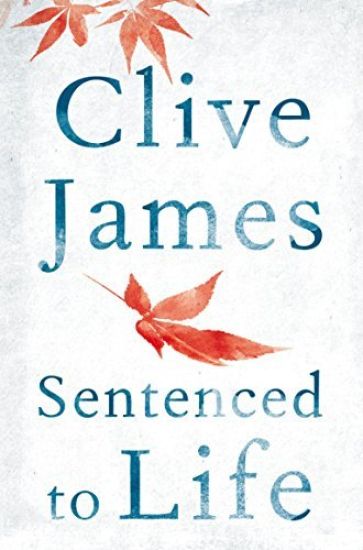
Collecting poetry written in the years 2011–2014, Sentenced to Life sees Clive James look back over his extraordinarily rich life with a clear-eyed and unflinching honesty.After falling dangerously ill in 2010, Clive James did not expect to live to see this volume published. But live he did, and these poems see James writing with his insight and energy not only undiminished but positively charged by his situation.There is no sense of self-pity in this collection, which includes the internet sensation ‘Japanese Maple’ and which deals openly with regret, death and his own illness,. With a great breadth of subject matter – taking in Hollywood, travel, art and politics – it is his fascination with humanity that shines through. It is, above all, a celebration of life – all that is treasurable and memorable in our time here.Rich in wisdom and sharp of thought, Sentenced to Life represents a career high point from one of the great literary intelligences of the age.Clive James (1939–2019) was a broadcaster, critic, poet, memoirist and novelist. His acclaimed poetry includes the collection Sentenced to Life and a translation of Dante's The Divine Comedy, both Sunday Times bestsellers. His passion for and knowledge of poetry are distilled in his book of criticism on the subject, Poetry Notebook, and, written in the last year of his life, his personal annotated anthology of favourite poems, The Fire Of Joy. Praise for Clive James:'He will be seen, I think, as one of the most important and influential writers of our time' – Bryan Appleyard, Sunday Times'Wise, witty, terrifying, unflinching and extraordinarily alive' – A.S. Byatt, critic and author of Possession: A Romance'Clive James is a true poet' – Peter Porter, London Review of Books

The poetry of Clive James has been delighting readers and winning awards for decades. His recent poems looking back over his extraordinarily rich life have brought him an even wider readership; some, such as "Japanese Maple" (first published in The New Yorker), became global news events upon their publication. In this first collected volume of poetry, James makes his own selection from over fifty years' work in verse: from his early satires to his late poems of valediction, he proves himself to be as well-suited to the intense demands of the short lyric as to those of the comic excursion. Collected Poems places James's effortless fluency, his breath-taking thematic range, and his emotional power on full display--and will burnish his reputation as one of the most accomplished of our contemporary poets.
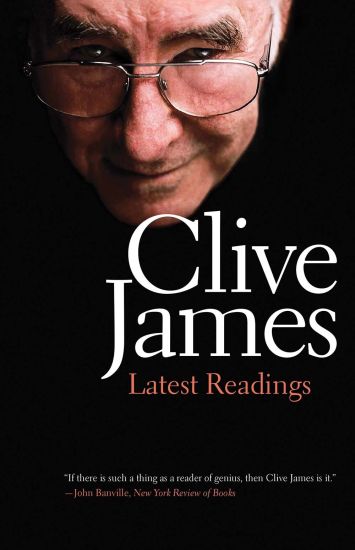
An esteemed literary critic shares his final musings on books, his children, and his own impending death In 2010, Clive James was diagnosed with terminal leukemia. Deciding that "if you don't know the exact moment when the lights will go out, you might as well read until they do," James moved his library to his house in Cambridge, where he would "live, read, and perhaps even write." James is the award-winning author of dozens of works of literary criticism, poetry, and history, and this volume contains his reflections on what may well be his last reading list. A look at some of James's old favorites as well as some of his recent discoveries, this book also offers a revealing look at the author himself, sharing his evocative musings on literature and family, and on living and dying. As thoughtful and erudite as the works of Alberto Manguel, and as moving and inspiring as Randy Pausch's The Last Lecture and Will Schwalbe's The End of Your Life Book Club, this valediction to James's lifelong engagement with the written word is a captivating valentine from one of the great literary minds of our time.
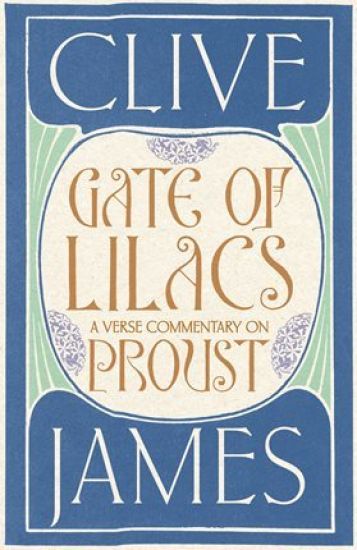
Blending the critical essay with poetry, Gate of Lilacs is a collection of verse written by Clive James in response to – and profoundly inspired by – the work of Marcel Proust.'James picks out the characters, the motifs and the moments that set his memory ablaze, just as Marcel was able to conjure such visions from a tisane-infused madeleine' – Literary ReviewOver a period of fifteen years Clive James learned French by almost no other method than reading À la recherche du temps perdu – commonly translated as In Search of Lost Time, or Remembrance of Things Past. Then he spent half a century trying to get up to speed with Proust's great novel in two different languages. Gate of Lilacs is the unique product of James's love of and engagement with Proust's masterpiece. With À la recherche du temps perdu, Proust, in James's words, 'followed his creative instinct all the way until his breath gave out', and now James has done the same. In Gate of Lilacs, James, a brilliant critical essayist and poet, has blended the two forms into one.I had always thought the critical essay and the poem were closely related forms . . . If I wanted to talk about Proust's poetry beyond the basic level of talking about his language – if I wanted to talk about the poetry of his thought – then the best way to do it might be to write a poem.In the end, if À la recherche du temps perdu is a book devoted almost entirely to its author's gratitude for life, for love, and for art, this much smaller book is devoted to its author's gratitude for Proust.Clive James (1939–2019) was a broadcaster, critic, poet, memoirist and novelist. His acclaimed poetry includes the collection Sentenced to Life and a translation of Dante's The Divine Comedy, both Sunday Times bestsellers. His passion for and knowledge of poetry are distilled in his book of criticism on the subject, Poetry Notebook, and, written in the last year of his life, his personal annotated anthology of favourite poems, The Fire Of Joy. Praise for Clive James:'He will be seen, I think, as one of the most important and influential writers of our time' – Bryan Appleyard, Sunday Times'Wise, witty, terrifying, unflinching and extraordinarily alive' – A.S. Byatt, critic and author of Possession: A Romance'Clive James is a true poet' – Peter Porter, London Review of Books
Spanning fifty years of work, Collected Poems sees Clive James make his own rich selection from across his exceptional career in poetry.From his debut collection in 1986 to his dazzling achievements in the 2010s, Clive James steadily built his reputation as one of the nation's best-loved and most highly-acclaimed poets. In this selection, made by the author himself, the very best of his talents are on show.From his early satires to heart-stopping valedictory poems, Clive James proves himself to be as well suited to the intense demands of the tight lyric as he is to the longer mock-epic. Included is perhaps amongst his finest works, 'Japanese Maple', a poem which became a global sensation upon its publication in the New Yorker.Collected Poems displays James's fluency and apparently effortless style, his technical skill and thematic scope, his lightly worn erudition and his emotional power; it undoubtedly cements his reputation as one of our most versatile and accomplished writers.'He will be seen, I think, as one of the most important and influential writers of our time' – Bryan Appleyard, Sunday TimesClive James (1939–2019) was a broadcaster, critic, poet, memoirist and novelist. His acclaimed poetry includes the collections Sentenced To Life and Injury Time and a translation of Dante's The Divine Comedy, a Sunday Times bestseller. His passion for and knowledge of poetry are distilled in his book of criticism on the subject, Poetry Notebook, and, written in the last year of his life, his personal annotated anthology of favourite poems, The Fire Of Joy.
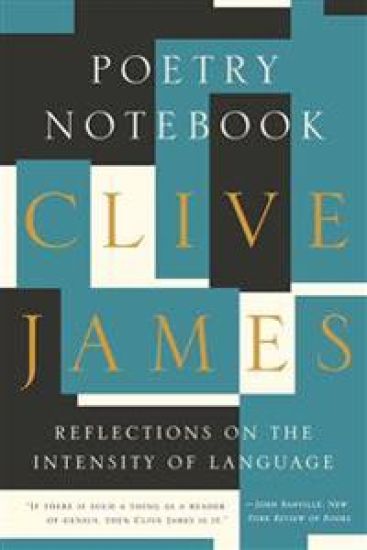
Poetry Notebook: Reflections on the Intensity of Language
Clive James
Liveright Publishing Corporation
2016
nidottu
Since its initial publication, Poetry Notebook has become a must-read for any lover of poetry. Somewhat of an iconoclast, Clive James gets to the heart of truths about poetry not always addressed, "some hard" but always "firmly committed to celebration" (Martin Amis). He presents a distillation of all he's learned about the art form that matters to him most. James examines the poems and legacies of a panorama of twentieth-century poets, from Hart Crane to Ezra Pound (a "mad old amateur fascist with a panscopic grab bag"), from Ted Hughes to Anne Sexton. Whether demanding that poetry be heard beyond the world of letters or opining on his five favorite poets (Yeats, Frost, Auden, Wilbur, and Larkin), his "generosity of attention, his willingness to trawl through pages of verse in search of the hair-raising line, is his most appealing quality as a critic" (Adam Kirsch, Wall Street Journal).
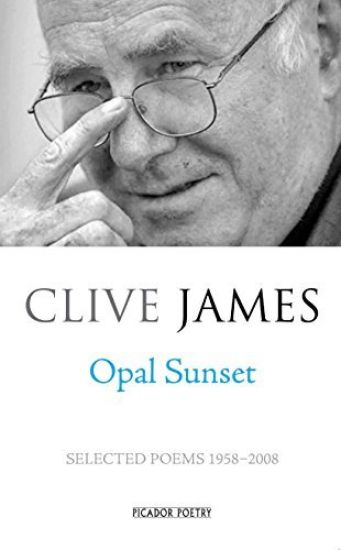
Selecting the very best of his work from over fifty years, Opal Sunset demonstrates Clive James as one of the most versatile and accomplished poets of the past half-century.Whether dealing in the comic set-piece or surreal excursion, or managing serious subject matter with fluency and apparently effortless style, the poetry of Clive James dazzles with its technical skill and thematic scope. As a TV critic on Fleet Street and later a broadcaster in his own right, he achieved such fame for writing the way he spoke that his poetry was regarded as an idiosyncratic sideline, as if no celebrity could write worthy verse. In his later years, however, his accumulated poetic output became impossible to ignore. His later poems about the tragedy that struck his mother and father deal honestly with regret and mark his maturity as a poet – and evoke touching nostalgia for his homeland, Australia.A treasure to return to, Opal Sunset collects verse written 1958–2008 and presents Clive James, poet, at his very best.Clive James (1939–2019) was a broadcaster, critic, poet, memoirist and novelist. His acclaimed poetry includes the collection Sentenced to Life and a translation of Dante's The Divine Comedy, both Sunday Times bestsellers. His passion for and knowledge of poetry are distilled in his book of criticism on the subject, Poetry Notebook, and, written in the last year of his life, his personal annotated anthology of favourite poems, The Fire Of Joy. Praise for Clive James:'He will be seen, I think, as one of the most important and influential writers of our time' – Bryan Appleyard, Sunday Times'Wise, witty, terrifying, unflinching and extraordinarily alive' – A.S. Byatt, critic and author of Possession: A Romance'Clive James is a true poet' – Peter Porter, London Review of Books