Kirjojen hintavertailu. Mukana 12 595 353 kirjaa ja 12 kauppaa.

Kirjailija

Clive Webb

Kirjat ja teokset yhdessä paikassa: 11 kirjaa, julkaisuja vuosilta 2003-2025, suosituimpien joukossa Vietdamned. Vertaile teosten hintoja ja tarkista saatavuus suomalaisista kirjakaupoista.

11 kirjaa

Kirjojen julkaisuhaarukka 2003-2025.

Forgotten Dead

Forgotten Dead

William D. Carrigan; Clive Webb

Oxford University Press Inc
2017
nidottu
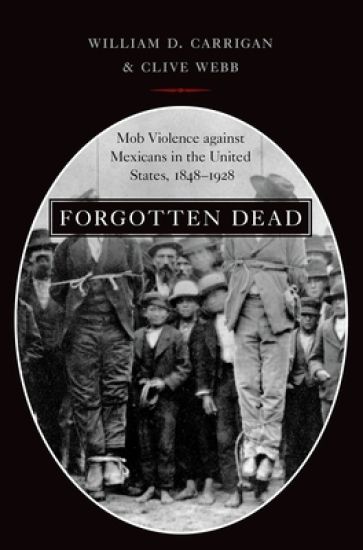
Mob violence in the United States is usually associated with the southern lynch mobs who terrorized African Americans during the Jim Crow era. In Forgotten Dead, William D. Carrigan and Clive Webb uncover a comparatively neglected chapter in the story of American racial violence, the lynching of persons of Mexican origin or descent. Over eight decades lynch mobs murdered hundreds of Mexicans, mostly in the American Southwest. Racial prejudice, a lack of respect for local courts, and economic competition all fueled the actions of the mob. Sometimes ordinary citizens committed these acts because of the alleged failure of the criminal justice system; other times the culprits were law enforcement officers themselves. Violence also occurred against the backdrop of continuing tensions along the border between the United States and Mexico aggravated by criminal raids, military escalation, and political revolution. Based on Spanish and English archival documents from both sides of the border, Forgotten Dead explores through detailed case studies the characteristics and causes of mob violence against Mexicans across time and place. It also relates the numerous acts of resistance by Mexicans, including armed self-defense, crusading journalism, and lobbying by diplomats who pressured the United States to honor its rhetorical commitment to democracy. Finally, it contains the first-ever inventory of Mexican victims of mob violence in the United States. Carrigan and Webb assess how Mexican lynching victims came in the minds of many Americans to be the "forgotten dead" and provide a timely account of Latinos' historical struggle for recognition of civil and human rights.
Forgotten Dead

Forgotten Dead

William D. Carrigan; Clive Webb

Oxford University Press Inc
2013
sidottu
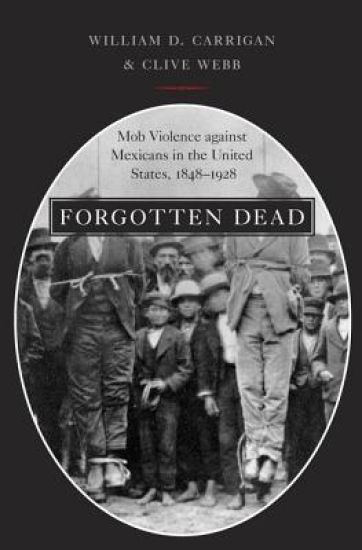
Mob violence in the United States is usually associated with the southern lynch mobs who terrorized African Americans during the Jim Crow era. This book uncovers what is by contrast a neglected chapter in the story of American racial violence, the lynching of persons of Mexican origin or descent. Over eight decades lynch mobs murdered hundreds of Mexicans, mostly in the American Southwest. Racial prejudice, a lack of respect for local courts, and economic competition all fueled the actions of the mob. Sometimes it was ordinary citizens who committed these acts because of the alleged failure of the criminal justice system; other times the culprits were law enforcement officers themselves. Violence also occurred against the backdrop of continuing tensions along the border between the United States and Mexico aggravated by criminal raids, military escalation, and political revolution. Based on exhaustive research on both sides of the border, the first half of Forgotten Dead explores the characteristics and causes of mob violence against Mexicans across time and place. The second half of the book relates the numerous acts of resistance by Mexicans including armed self-defense, crusading journalism, and lobbying by diplomats who pressured the United States to honor its rhetorical commitment to democracy. In reconstructing these stories, the authors provide detailed case studies and assess how Mexican lynching victims came in the minds of many Americans to be the "forgotten dead." The conclusion of the book also contains the first-ever inventory of Mexican victims of mob violence in the United States. With Latinos having an increasingly powerful influence on American public life, this book provides a timely account of their historical struggle for recognition of civil and human rights.
Rabble Rousers

Rabble Rousers

Clive Webb

University of Georgia Press
2010
pokkari
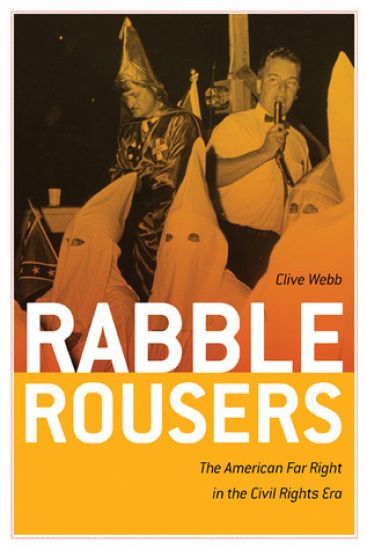
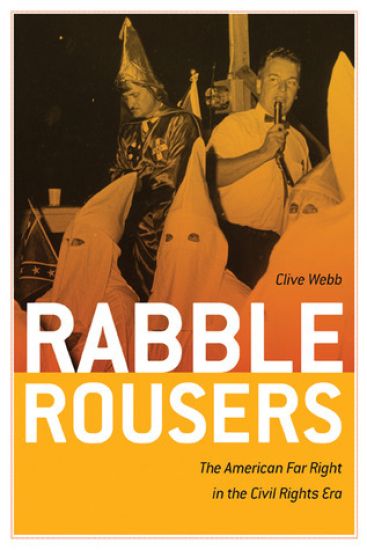
The decade following the 1954 Brown v. Board of Education decision saw white southerners mobilize in massive resistance to racial integration. Most segregationists conceded that ultimately they could only postpone the demise of Jim Crow. Some militant whites, however, believed it possible to win the civil rights struggle. Histories of the black freedom struggle, when they mention these racist zealots at all, confine them to the margin of the story.These extremist whites are caricatured as ineffectual members of the lunatic fringe. Civil rights activists, however, saw them for what they really were: calculating, dangerous opponents prepared to use terrorism in their stand against reform. To dismiss white militants is to underestimate the challenge they posed to the movement and, in turn, the magnitude of civil rights activists’ accomplishments. The extremists helped turn massive resistance into a powerful political phenomenon. While white southern elites struggled to mobilize mass opposition to racial reform, the militants led entire communities in revolt.Rabble Rousers turns traditional top-down models of massive resistance on their head by telling the story of five far-right activists—Bryant Bowles, John Kasper, Rear Admiral John Crommelin, Major General Edwin Walker, and J. B. Stoner—who led grassroots rebellions. It casts new light on such contentious issues as the role of white churches in defending segregation, the influence of anti-Semitism in southern racial politics, and the divisive impact of class on white unity. The flame of the far right burned brilliantly but briefly. In the final analysis, violent extremism weakened the cause of white southerners. Tactical and ideological tensions among massive resisters, as well as the strength and unity of civil rights activists, accelerated the destruction of Jim Crow.
Rabble Rousers

Rabble Rousers

Clive Webb

University of Georgia Press
2010
sidottu
The decade following the 1954 Brown v. Board of Education decision saw white southerners mobilize in massive resistance to racial integration. Most segregationists conceded that ultimately they could only postpone the demise of Jim Crow. Some militant whites, however, believed it possible to win the civil rights struggle. Histories of the black freedom struggle, when they mention these racist zealots at all, confine them to the margin of the story.These extremist whites are caricatured as ineffectual members of the lunatic fringe. Civil rights activists, however, saw them for what they really were: calculating, dangerous opponents prepared to use terrorism in their stand against reform. To dismiss white militants is to underestimate the challenge they posed to the movement and, in turn, the magnitude of civil rights activists’ accomplishments. The extremists helped turn massive resistance into a powerful political phenomenon. While white southern elites struggled to mobilize mass opposition to racial reform, the militants led entire communities in revolt.Rabble Rousers turns traditional top-down models of massive resistance on their head by telling the story of five far-right activists—Bryant Bowles, John Kasper, Rear Admiral John Crommelin, Major General Edwin Walker, and J. B. Stoner—who led grassroots rebellions. It casts new light on such contentious issues as the role of white churches in defending segregation, the influence of anti-Semitism in southern racial politics, and the divisive impact of class on white unity. The flame of the far right burned brilliantly but briefly. In the final analysis, violent extremism weakened the cause of white southerners. Tactical and ideological tensions among massive resisters, as well as the strength and unity of civil rights activists, accelerated the destruction of Jim Crow.
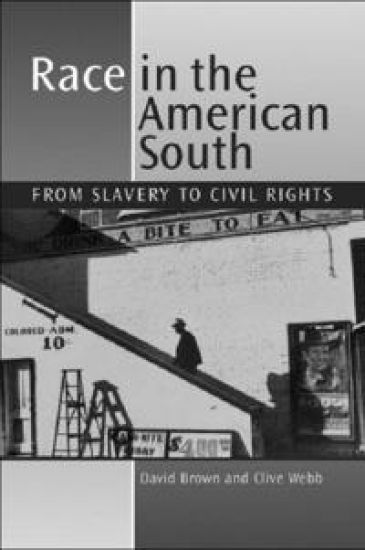
Race in the American South

Race in the American South

David Brown; Clive Webb

University Press of Florida
2007
nidottu
This is the first book to offer an over-arching view of the ways race has indelibly shaped the history of the United States. David Brown and Clive Webb trace the turbulent course of southern race relations from the colonial origins of the plantation system to the maturation of slavery in the nineteenth century, through the rise of a new racial order during the Civil War and Reconstruction, to the civil rights movement of the twentieth century. While the authors recognize the very different racial balances in different parts of the region, the divisions among southern whites, and the nonracial basis of many aspects of southern distinctiveness, they convincingly put forward the case that the driving engine of Southern history is the attempt to resolve the dilemmas posed by the racial issue. They focus on the omnipresent racial basis of the changes over time in the region's politics, economy, and social structure, as well as other main areas of study in American history, including culture, class, and gender.
Race in the American South

Race in the American South

David Brown; Clive Webb

University Press of Florida
2007
sidottu
This is the first book to offer an over-arching view of the ways race has indelibly shaped the history of the United States. David Brown and Clive Webb trace the turbulent course of southern race relations from the colonial origins of the plantation system to the maturation of slavery in the nineteenth century, through the rise of a new racial order during the Civil War and Reconstruction, to the civil rights movement of the twentieth century. While the authors recognize the very different racial balances in different parts of the region, the divisions among southern whites, and the nonracial basis of many aspects of southern distinctiveness, they convincingly put forward the case that the driving engine of Southern history is the attempt to resolve the dilemmas posed by the racial issue. They focus on the omnipresent racial basis of the changes over time in the region's politics, economy, and social structure, as well as other main areas of study in American history, including culture, class, and gender.
Race in the American South

Race in the American South

David Brown; Clive Webb

Edinburgh University Press
2007
sidottu
The issue of race has indelibly shaped the history of the United States. Nowhere has the drama of race relations been more powerfully staged than in the American South. This book charts the turbulent course of southern race relations from the colonial origins of the plantation system to the maturation of slavery in the nineteenth century, through the rise of a new racial order during the Civil War and Reconstruction, to the civil rights revolution of the twentieth century. While the history of race in the southern states has been shaped by a basic struggle between black and white, the authors show how other forces such as class and gender have complicated the colour line. They distinguish clearly between ideas about race, mostly written and disseminated by intellectuals and politicians, and their reception by ordinary southerners, both black and white. As a result, readers are presented with a broad, over-arching view of race in the American South throughout its chequered history. Key Features: *racial issues are the key area of interest for those who study the American South *race is the driving engine of Southern history *unique in its focus on race *broad coverage -- origins of the plantation system to the situation in the South today
Race in the American South

Race in the American South

David Brown; Clive Webb

Edinburgh University Press
2007
nidottu
The issue of race has indelibly shaped the history of the United States. Nowhere has the drama of race relations been more powerfully staged than in the American South. This book charts the turbulent course of southern race relations from the colonial origins of the plantation system to the maturation of slavery in the nineteenth century, through the rise of a new racial order during the Civil War and Reconstruction, to the civil rights revolution of the twentieth century. While the history of race in the southern states has been shaped by a basic struggle between black and white, the authors show how other forces such as class and gender have complicated the colour line. They distinguish clearly between ideas about race, mostly written and disseminated by intellectuals and politicians, and their reception by ordinary southerners, both black and white. As a result, readers are presented with a broad, over-arching view of race in the American South throughout its chequered history. Key Features: *racial issues are the key area of interest for those who study the American South *race is the driving engine of Southern history *unique in its focus on race *broad coverage -- origins of the plantation system to the situation in the South today
Fight against Fear

Fight against Fear

Clive Webb

University of Georgia Press
2003
pokkari
In the uneasily shared history of Jews and blacks in America, the struggle for civil rights in the South may be the least understood episode. Fight against Fear is the first book to focus on Jews and African Americans in that remarkable place and time. Mindful of both communities' precarious and contradictory standings in the South, Clive Webb tells a complex story of resistance and complicity, conviction and apathy.Webb begins by ranging over the experiences of southern Jews up to the eve of the civil rights movement—from antebellum slaveowners to refugees who fled Hitler's Europe only to arrive in the Jim Crow South. He then shows how the historical burden of ambivalence between Jews and blacks weighed on such issues as school desegregation, the white massive resistance movement, and business boycotts and sit-ins.As many Jews grappled as never before with the ways they had become—and yet never could become—southerners, their empathy with African Americans translated into scattered, individual actions rather than any large-scale, organized alliance between the two groups. The reasons for this are clear, Webb says, once we get past the notion that the choices of the much larger, less conservative, and urban-centered Jewish populations of the North define those of all American Jews. To understand Jews in the South we must look at their particular circumstances: their small numbers and wide distribution, denominational rifts, and well-founded anxiety over defying racial and class customs set by the region's white Protestant majority.For better or worse, we continue to define the history of Jews and blacks in America by its flash points. By setting aside emotions and shallow perceptions, Fight against Fear takes a substantial step toward giving these two communities the more open and evenhanded consideration their shared experiences demand.