Kirjojen hintavertailu. Mukana 12 203 320 kirjaa ja 12 kauppaa.

Kirjailija

Coco Fusco

Kirjat ja teokset yhdessä paikassa: 6 kirjaa, julkaisuja vuosilta 1995-2018, suosituimpien joukossa Dangerous Moves. Vertaile teosten hintoja ja tarkista saatavuus suomalaisista kirjakaupoista.

6 kirjaa

Kirjojen julkaisuhaarukka 1995-2018.

Walead Beshty

Walead Beshty

Giorgio Agamben; Ariella Azoulay; Roland Barthes; Georges Didi-Huberman; Harun Farocki; Morgan Fisher; Coco Fusco; Rosalind Krauss; Allan Sekula; Hito Steyerl

JRP Ringier
2018
sidottu
Proposing an alternative history of the optical image, Picture Industry explores the materiality of images and the technologies that govern their reception.Spanning from the late 19th century to the present with images produced for scientific and artistic contexts, Picture Industry includes the work of more than 70 artists and practitioners. But this is not a typical exhibition catalog; it goes beyond the exhibition, presenting an anthology of texts that reveal the range of methodological approaches to the world of images. Picture Industry brings together essays by, among others, Giorgio Agamben, Cory Arcangel, Ariella Azoulay, Roland Barthes, Georges Bataille, Jean Baudrillard, Ericka Beckman, Walter Benjamin, Georges Didi-Huberman, Thomas A. Edison, Harun Farocki, Morgan Fisher, Vilem Flusser, Coco Fusco, Tristan Garcia, Octavio Getino and Fernando Solanas, Sigfried Giedion, Mark Godfrey, Kenneth Goldsmith, Dan Graham, Friedrich A. Kittler, Boris Mikhailov, Craig Owens, Erwin Panofsky, Seth Price, Siegfried Kracauer, Rosalind Krauss, Bruno Latour, Etienne-Jules Marey, Martha Rosler, Allan Sekula, Hito Steyerl, William Henry Fox Talbot, Gilles de la Tourette and Alan Turing.
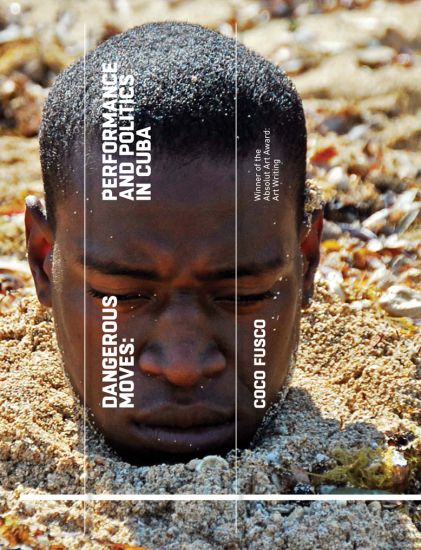
Dangerous Moves

Dangerous Moves

Coco Fusco

Tate Publishing
2015
sidottu
The society, politics and future of Cuba are high on the world's agenda in the twenty-first century. Exploring performance and politics in the post-revolutionary state, Dangerous Moves presents a fascinating survey of contemporary culture in Cuba through some of its most daring and experimental artists. Coco Fusco analyses the ways in which the regime has wielded influence over artists in recent times, showing how the language of performance has emerged as the favoured means of social commentary. Focusing on a range of performative practices in visual art, music, poetry and political activism, Fusco examines the relationship between the expressive body in performance and the greater body politic of a state officially defined as revolutionary, yet seeking to limit and constrain dissent.
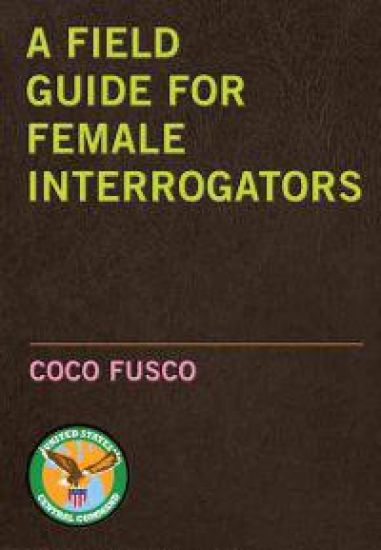
A Field Guide For Female Interrogators

A Field Guide For Female Interrogators

Coco Fusco

Seven Stories Press,U.S.
2008
nidottu
The world was shocked by the images that emerged from the Abu Ghraib scandal. Lynndie England, the young female army officer shown smiling devilishly as she humiliated male prisoners, became first a scapegoat and then a victim who was "just following orders." Ignored were the more elemental questions of how women are functioning within conservative power structures of government and the military. Why do the military and the CIA use female sexuality as an interrogation tactic, and why is this tactic downplayed and even ignored in internal investigations of prisoner abuse?Combining an art project with critical commentary, Coco Fusco imaginatively addresses the role of women in the war on terror and explores how female sexuality is being used as a weapon against suspected Islamic terrorists. Using details drawn from actual accounts of detainee treatment in US military prisons, Fusco conceives a field guide of instructional drawings that prompts urgent questions regarding the moral dilemma of torture in general and more specifically about how female sexuality is used. Finally, Fusco assesses what these matters suggest about how the military and the state make use of sex, sexuality, and originally feminist notions of sexual freedom.Coco Fusco is a New York-based interdisciplinary artist and writer. She is the author of "English is Broken Here: Notes on Cultural Fusion in the Americas," and editor of "Corpus Delecti: Performance Art of the Americas" and "Only Skin Deep: Changing Visions of the American Self" (with Brian Wallis). A recipient of a 2003 Herb Alpert Award in the Arts, she is an associate professor at Columbia University.
The Bodies That Were Not Ours

The Bodies That Were Not Ours

Coco Fusco

Routledge
2001
sidottu
Interdisciplinary artist and writer Coco Fusco is one of North America's leading interpreters of intercultural theory and practice. This volume gathers together her finest writings since 1995 and includes critical essays by Jean Fisher and Caroline Vercoe that interpret her work.Engaging and provocative, these essays, interviews, performance scripts and fotonovelas take readers on a tour of our current multicultural landscape. Fusco explores such issues as sex tourism in Cuba as a barometer of the island's entry into the global economy, Frantz Fanon's theorization of metropolitan blackness, and artistic and net activist responses to the effects of free trade on the Mexican populace. She interviews such postcolonial personnae as Isaac Julien, Hilton Als and Tracey Moffatt. Approaching the dynamics of cultural fusion from many angles, Fusco's satires, commentaries, and sociological inquiries collapse boundaries, and form a sustained meditation on how the forces of globalization impact upon the making of art.
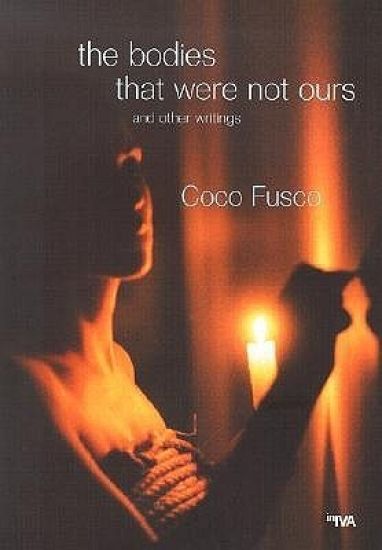
The Bodies That Were Not Ours

The Bodies That Were Not Ours

Coco Fusco

Routledge
2001
nidottu
Interdisciplinary artist and writer Coco Fusco is one of North America's leading interpreters of intercultural theory and practice. This volume gathers together her finest writings since 1995 and includes critical essays by Jean Fisher and Caroline Vercoe that interpret her work.Engaging and provocative, these essays, interviews, performance scripts and fotonovelas take readers on a tour of our current multicultural landscape. Fusco explores such issues as sex tourism in Cuba as a barometer of the island's entry into the global economy, Frantz Fanon's theorization of metropolitan blackness, and artistic and net activist responses to the effects of free trade on the Mexican populace. She interviews such postcolonial personnae as Isaac Julien, Hilton Als and Tracey Moffatt. Approaching the dynamics of cultural fusion from many angles, Fusco's satires, commentaries, and sociological inquiries collapse boundaries, and form a sustained meditation on how the forces of globalization impact upon the making of art.