Kirjojen hintavertailu. Mukana 12 390 323 kirjaa ja 12 kauppaa.

Kirjailija

Cody T. Havard

Kirjat ja teokset yhdessä paikassa: 5 kirjaa, julkaisuja vuosilta 2020-2025, suosituimpien joukossa Sport Fans. Vertaile teosten hintoja ja tarkista saatavuus suomalaisista kirjakaupoista.

5 kirjaa

Kirjojen julkaisuhaarukka 2020-2025.

Sport Fans

Sport Fans

Daniel L. Wann; Jeffrey D. James; Cody T. Havard; Elizabeth B. Delia

TAYLOR FRANCIS LTD
2025
nidottu
Sports, and the fans that follow them, are everywhere. The third edition of Sport Fans: The Psychology and Social Impact of Fandom examines the affective, behavioral, and cognitive reactions of fans to better comprehend how sport impacts individual fans and society as a whole.Using up-to-date research and theory from multiple disciplines including psychology, sociology, marketing, history, and religious studies, this textbook provides a deeper understanding of topics such as the pervasiveness of sport fandom in society; common demographic and personality characteristics of fans; how fandom can provide a sense of belonging, of uniqueness, and of meaning in life; the process of becoming a sport fan; sport fan consumption; and the future of sport and the fan experience. Thoroughly updated throughout, this new edition includes:New chapters on rivalry between fandoms, and needs met by fandomIncreased coverage of fandom for women’s sports and fansAdditional sections on how fans react to the emotions of athletes, sport fandom as a platform for social change, attachments to specific sports, spectators at youth sporting events, and local versus nonlocal sports Expanded coverage of research on other targets of identification and what we can learn from this about sport fandomExpertly combining a rigorous level of empirical research and theory in an engaging, accessible format, Sport Fans remains the essential text on sport fan behavior.
Sport Fans

Sport Fans

Daniel L. Wann; Jeffrey D. James; Cody T. Havard; Elizabeth B. Delia

TAYLOR FRANCIS LTD
2025
sidottu
Sports, and the fans that follow them, are everywhere. The third edition of Sport Fans: The Psychology and Social Impact of Fandom examines the affective, behavioral, and cognitive reactions of fans to better comprehend how sport impacts individual fans and society as a whole.Using up-to-date research and theory from multiple disciplines including psychology, sociology, marketing, history, and religious studies, this textbook provides a deeper understanding of topics such as the pervasiveness of sport fandom in society; common demographic and personality characteristics of fans; how fandom can provide a sense of belonging, of uniqueness, and of meaning in life; the process of becoming a sport fan; sport fan consumption; and the future of sport and the fan experience. Thoroughly updated throughout, this new edition includes:New chapters on rivalry between fandoms, and needs met by fandomIncreased coverage of fandom for women’s sports and fansAdditional sections on how fans react to the emotions of athletes, sport fandom as a platform for social change, attachments to specific sports, spectators at youth sporting events, and local versus nonlocal sports Expanded coverage of research on other targets of identification and what we can learn from this about sport fandomExpertly combining a rigorous level of empirical research and theory in an engaging, accessible format, Sport Fans remains the essential text on sport fan behavior.
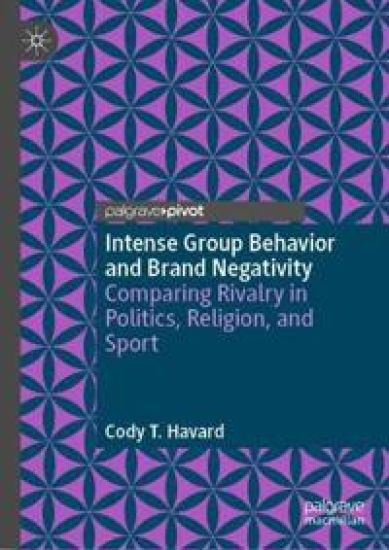
Intense Group Behavior and Brand Negativity

Intense Group Behavior and Brand Negativity

Cody T. Havard

Springer International Publishing AG
2023
sidottu
In previous books, the author has investigated rivalry in the context of sport and non-sport settings. This book investigates how rivalry and group member behavior manifests in the setting of politics, religion, and sport, three settings of intense group member bias. Building on the author’s Hierarchy of Out-group Derogation (HOD) and Out-group Derogation Spectrum (ODS), it discusses the potential of common interests to drive out-group cooperation. The work ends with a call for future research to better understand how to decrease out-group derogation and negativity. Incorporating research from marketing, psychology, political science, and sociology, this book offers researchers in several fields a new understanding of how setting and group membership influences the ways people view and behave toward out-groups.
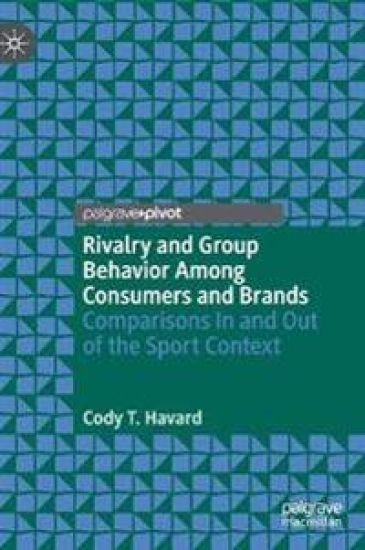
Rivalry and Group Behavior Among Consumers and Brands

Rivalry and Group Behavior Among Consumers and Brands

Cody T. Havard

Springer Nature Switzerland AG
2021
sidottu
This interdisciplinary book extends knowledge by comparing rivalry and rival group behavior in sport within areas outside of sport, such as consumer brands, political discourse, and product/service preferences. It examines how out-group behavior differs among relevant groups. Readers are introduced to the phenomenon of rivalry, using the sport setting as an example. Then, the author offers separate quantitative and qualitative investigations to compare how rivalry and group behavior differ among sport and non-sport settings. Incorporating research from marketing, psychology, political science, and sociology, this book offers researchers in several fields a new understanding of individual and group behavior.
Rivalry in Sport

Rivalry in Sport

Cody T. Havard

Springer Nature Switzerland AG
2020
sidottu
This book focuses on how rivalry influences fan perceptions and behaviors, the role of organizations to responsibly promote rivalries, and discusses how to decrease negative and group-member deviance surrounding sport rivalry. Rivalry is a phenomenon that helps organizations and participants increase their output while also engaging fans. The author argues that the goal of rivalry should be to increase engagement and interest in the product without stepping over a sometimes invisible line resulting in fan or group member negativity, deviance, and violence. Through the introduction of two scales that specifically measure how group members react to out-groups in the sport setting, this book offers scholars deeper insights into what rivalry means and how it can be used to responsibly promote the sport product.