
Kirjailija
Colin Brown
Kirjat ja teokset yhdessä paikassa: 25 kirjaa, julkaisuja vuosilta 1969-2025, suosituimpien joukossa Operation Big. Vertaile teosten hintoja ja tarkista saatavuus suomalaisista kirjakaupoista.
25 kirjaa
Kirjojen julkaisuhaarukka 1969-2025.

Introduction to Comparative Politics
Mark Kesselman; Joel Krieger; William Joseph; Colin Brown; Kelly Bauer
CENGAGE LEARNING, INC
2024
nidottu
Get ready to unravel the complexities of world politics with Kesselman/Krieger/Joseph/Brown/Bauer's INTRODUCTION TO COMPARATIVE POLITICS: POLITICAL CHALLENGES AND CHANGING AGENDAS, 9th EDITION. Dive into the captivating events that have shaped the world, from the dramatic Brexit vote to the impeachment of Brazil's president, and from the impact of COVID-19 to Russia's invasion of Ukraine. You'll explore a diverse range of political regimes, economic development levels, and geographic regions through case studies on nine countries, examining similarities and differences not only among countries but also within and between political systems.
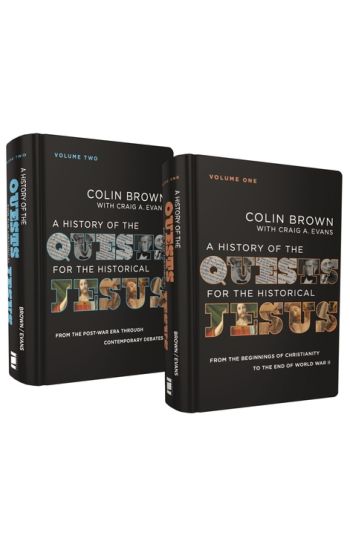
A History of the Quests for the Historical Jesus: Two-Volume Set
Colin Brown; Craig A. Evans
ZONDERVAN
2022
sidottu
A comprehensive, two-volume reassessment of the quests for the historical Jesus that details their origins and underlying presuppositions as well as their ongoing influence on today's biblical and theological scholarship.Jesus' life and teaching is important to every question we ask about what we believe and why we believe it. And yet there has never been common agreement about his identity, intentions, or teachings—even among first-century historians and scholars. Throughout history, different religious and philosophical traditions have attempted to claim Jesus and paint him in the cultural narratives of their heritage, creating a labyrinth of conflicting ideas.From the evolution of orthodoxy and quests before Albert Schweitzer's famous "Old Quest," to today's ongoing questions about criteria, methods, and sources, A History of the Quests for the Historical Jesus not only chronicles the developments but lays the groundwork for the way forward.The late Colin Brown brings his scholarly prowess in both theology and biblical studies to bear on the subject, assessing not only the historical and exegetical nuts and bolts of the debate about Jesus of Nazareth but also its philosophical, sociological, and theological underpinnings. Instead of seeking a bedrock of "facts," Brown stresses the role of hermeneutics in formulating questions and seeking answers.Colin Brown was almost finished with the manuscript at the time of his passing in 2019. Brought to its final form by Craig A. Evans, this book promises to become the definitive history and assessment of the quests for the historical Jesus.Volume One covers the period from the beginnings of Christianity to the end of World War II.Volume Two covers the period from the post-War era through contemporary debates.
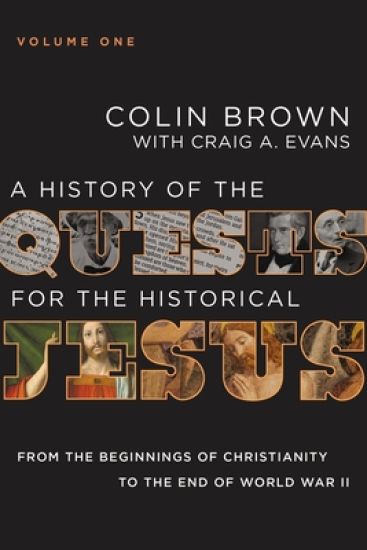
A History of the Quests for the Historical Jesus, Volume 1
Colin Brown; Craig A. Evans
ZONDERVAN
2022
sidottu
A comprehensive, two-volume reassessment of the quests for the historical Jesus that details their origins and underlying presuppositions as well as their ongoing influence on today's biblical and theological scholarship.Jesus' life and teaching is important to every question we ask about what we believe and why we believe it. And yet there has never been common agreement about his identity, intentions, or teachings—even among first-century historians and scholars. Throughout history, different religious and philosophical traditions have attempted to claim Jesus and paint him in the cultural narratives of their heritage, creating a labyrinth of conflicting ideas.From the evolution of orthodoxy and quests before Albert Schweitzer's famous "Old Quest," to today's ongoing questions about criteria, methods, and sources, A History of the Quests for the Historical Jesus not only chronicles the developments but lays the groundwork for the way forward.The late Colin Brown brings his scholarly prowess in both theology and biblical studies to bear on the subject, assessing not only the historical and exegetical nuts and bolts of the debate about Jesus of Nazareth but also its philosophical, sociological, and theological underpinnings. Instead of seeking a bedrock of "facts," Brown stresses the role of hermeneutics in formulating questions and seeking answers.Colin Brown was almost finished with the manuscript at the time of his passing in 2019. Brought to its final form by Craig A. Evans, this book promises to become the definitive history and assessment of the quests for the historical Jesus.Volume One covers the period from the beginnings of Christianity to the end of World War II.Volume Two (sold separately) covers the period from the post-War era through contemporary debates.
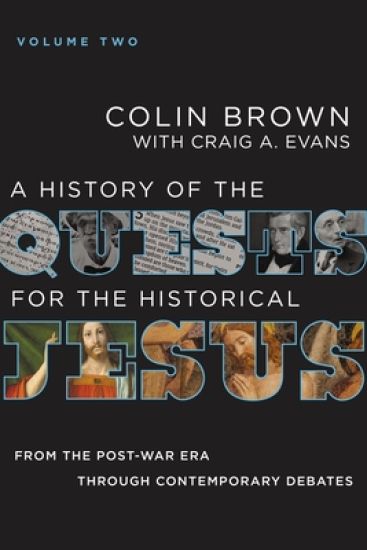
A History of the Quests for the Historical Jesus, Volume 2
Colin Brown; Craig A. Evans
ZONDERVAN
2022
sidottu
A comprehensive, two-volume reassessment of the quests for the historical Jesus that details their origins and underlying presuppositions as well as their ongoing influence on today's biblical and theological scholarship.Jesus' life and teaching is important to every question we ask about what we believe and why we believe it. And yet there has never been common agreement about his identity, intentions, or teachings—even among first-century historians and scholars. Throughout history, different religious and philosophical traditions have attempted to claim Jesus and paint him in the cultural narratives of their heritage, creating a labyrinth of conflicting ideas.From the evolution of orthodoxy and quests before Albert Schweitzer's famous "Old Quest," to today's ongoing questions about criteria, methods, and sources, A History of the Quests for the Historical Jesus not only chronicles the developments but lays the groundwork for the way forward.The late Colin Brown brings his scholarly prowess in both theology and biblical studies to bear on the subject, assessing not only the historical and exegetical nuts and bolts of the debate about Jesus of Nazareth but also its philosophical, sociological, and theological underpinnings. Instead of seeking a bedrock of "facts," Brown stresses the role of hermeneutics in formulating questions and seeking answers.Colin Brown was almost finished with the manuscript at the time of his passing in 2019. Brought to its final form by Craig A. Evans, this book promises to become the definitive history and assessment of the quests for the historical Jesus.Volume One (sold separately) covers the period from the beginnings of Christianity to the end of World War II.Volume Two covers the period from the post-War era through contemporary debates.

This is the dramatic story of the death of the only English professional footballer deemed by law to have been murdered. A key member of Aston Villa's 1923 all-star team, Tommy Ball rose from the obscurity of Durham pit village football to play a starring role in the world's most famous team and was considered a likely future England international. His killer, Somerset man George Stagg, was a former soldier and policeman who became his landlord and neighbour. A difficult relationship culminated in their fateful meeting on the evening of Armistice Day in 1923. Sentenced to death in controversial circumstances, Stagg escaped the noose by the intervention of the country's first Labour Home Secretary. The exact circumstances of the shooting were never legally established and, for almost a century, have been the subject of considerable speculation. After diligent research, Colin Brown believes he may have the answers.
Regionalisation and Integration in China
Colin Brown; John Longworth; Scott Waldron
Routledge
2019
nidottu
This title was first published in 2002: Changing economic, institutional and market environments have turned the spatial inter-relationships thought to exist in China upside-down. Through an investigation of the beef industry, this text builds a picture of where regionalization and integration are heading in China. It examines the impacts of market forces, industry characteristics, relative factor endowments and government influence on the spatial organization of activities. It reveals the influence of government as priorities are re-assessed and as markets and industries develop, as well as exploring the extent of regional co-ordination and co-operation and how central and local government policies and strategies reconcile. The volume also contains regional assessments of the beef industry in 12 key producing provinces and the key consumption areas of Beijing, Shanghai and Hong Kong.

At a time of emerging women leaders, the life of Elizabeth Milbanke, Viscountess Melbourne, the shrewdest political hostess of the Georgian period, is particularly intriguing. It was Byron who called her ‘Lady M’ and it was Byron’s tempestuous and very public affair with Elizabeth’s daughter-in-law Lady Caroline Lamb that was the scandal of the age. Lady M rose above all adversity, using sex and her husband’s wealth to hold court among such glittering figures as Georgiana, Duchess of Devonshire, the Whig leader and wit Charles James Fox and the playwright Sheridan. Her many lovers included Lord Egremont, Turner’s wealthy patron, and the future George IV. Elizabeth schemed on behalf of her children and her ambitions were realised when her son William Lamb (‘Lord M’) became the young Queen Victoria’s confidant and Prime Minister. Based upon primary research - diaries, archives and extensive correspondence between Lady M and Lord Byron - Colin Brown examines the Regency period and its pre-Victorian code of morals from the perspective of a powerful and influential woman on the 200th anniversary of her death.
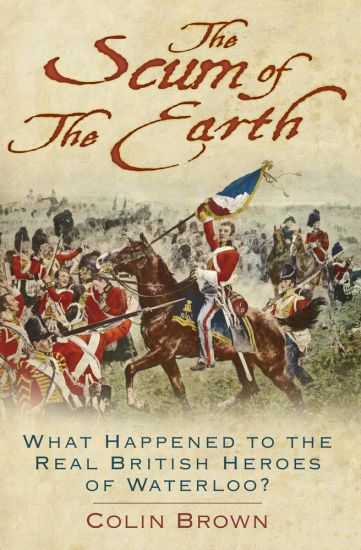
The Scum of the Earth explores the common soldiers the Duke of Wellington angrily condemned as ‘scum’ for their looting at Vitoria, from their great victory over Napoleon at the Battle of Waterloo in 1815 to their return home to a Regency Britain at war with itself. It follows men like James Graham, the Irishman hailed as the bravest man in the British Army for his heroic action in closing the north gate at Hougoumont, and fresh documentary evidence that he was forced to plead for charity because he was so poor; Francis Styles, who went to his grave claiming that he had captured the eagle that was credited to his superior officer; and John Lees, a spinner from Oldham who joined up at 15, braved shell and shot to deliver ammunition to the guns at Waterloo and was cut down four years later at the Peterloo Massacre by some of the cavalry with whom he served. All this is set against a backdrop of civil unrest on a scale unprecedented in British history.The Regency age is famous for its elegance, its exuberance, the industrial revolution that made Britain the powerhouse of Europe and the naval might that made it a global superpower. But it was also an age of riots and the fear that the mob would win control just as it had done in Paris. Britain came closer to bloody revolution than ever before or since, as ordinary men – including some of the men whom Wellington called the scum of the earth – took to the streets to fight for their voices to be heard in Parliament. The riots were put down by a series of repressive measures while Wellington stood like a bastion against the tide of history. He was defeated with the passage of the Great Reform Act in 1832.There is no one better placed to take a cold, hard look at the battle and its aftermath in order to save us from a bicentenary of misty-eyed backslapping than a former political editor with a reputation for myth busting. Colin Brown provides original research into the heroes of Waterloo and the myths that have clouded the real story.
A professor of architecture at Cambridge University, Marcial Echenique, recently became curious when he found wiring concealed under the floorboards of his country mansion, Farm Hall in Godmanchester, Cambridgeshire. The mansion had an astonishing past as an MI6 staging post for some of the most daring secret operations of the Second World War. But in April 1945, Farm Hall was to play an even more astounding role, as a ‘country club’ for ten of Germany’s top nuclear physicists after they had been captured in Germany and secretly flown back to England in a daring raid code-named Operation Big. Every word they uttered was bugged by MI6 eavesdroppers using the wires found by the professor. After the dropping of the bomb these men would claim they could have developed it for the Third Reich but did not ‘for the greater good of mankind’. Most believe this to be a deception. But was there an even greater deception? Were they captured not to stop Hitler, but to stop Stalin? Did the US drop the bomb not as a show of power to the Japanese, but to the Soviets? Colin Brown guides us through a world of espionage, scientific discovery and questions of morality as he reveals the extraordinary truth surrounding Hitler’s atomic bomb.
Regionalisation and Integration in China
Colin Brown; John Longworth; Scott Waldron
Routledge
2018
sidottu
This title was first published in 2002: Changing economic, institutional and market environments have turned the spatial inter-relationships thought to exist in China upside-down. Through an investigation of the beef industry, this text builds a picture of where regionalization and integration are heading in China. It examines the impacts of market forces, industry characteristics, relative factor endowments and government influence on the spatial organization of activities. It reveals the influence of government as priorities are re-assessed and as markets and industries develop, as well as exploring the extent of regional co-ordination and co-operation and how central and local government policies and strategies reconcile. The volume also contains regional assessments of the beef industry in 12 key producing provinces and the key consumption areas of Beijing, Shanghai and Hong Kong.
At a time of emerging women leaders, the life of Elizabeth Milbanke, Viscountess Melbourne, the shrewdest political hostess of the Georgian period, is particularly intriguing. It was Byron who called her ‘Lady M’ and it was Byron’s tempestuous and very public affair with Elizabeth’s daughter-in-law Lady Caroline Lamb that was the scandal of the age. Lady M rose above all adversity, using sex and her husband’s wealth to hold court among such glittering figures as Georgiana, Duchess of Devonshire, the Whig leader and wit Charles James Fox and the playwright Sheridan. Her many lovers included Lord Egremont, Turner’s wealthy patron, and the future George IV. Elizabeth schemed on behalf of her children and her ambitions were realised when her son William Lamb (‘Lord M’) became the young Queen Victoria’s confidant and Prime Minister. Based upon primary research – diaries, archives and extensive correspondence between Lady M and Lord Byron – Colin Brown examines the Regency period and its pre-Victorian code of morals from the perspective of a powerful and influential woman on the 200th anniversary of her death.
‘We ourselves were almost awestruck, not so much at the power of the Bomb, for this we had expected, but because the Americans had used it with so little notice.’ R. V. Jones, head of wartime British Scientific Intelligence Marcial Echenique, a Cambridge professor, recently became curious when he found wiring concealed under the floorboards of his country mansion, Farm Hall. The manor had an astonishing past as an MI6 staging post for some of the most secret operations of the Second World War. But in April 1945, Farm Hall was to play an even more astounding role, housing ten of Germany’s top nuclear physicists captured in daring raids. Amid the chaos of the disintegrating Third Reich they were flown to England covertly in a mission code-named Operation Big. Every word they uttered was bugged by MI6 eavesdroppers using the wires found by the professor. After the dropping of the atom bombs on Japan, these men would claim they could have developed A-bombs for the Third Reich, but did not ‘for the greater good of mankind’. Most believe this to have been a lie. But was there an even greater deception? Were they captured not to stop Hitler, but to stop Stalin? Did the US drop the Bomb as a show of power not to the Japanese, but to the Soviets? Colin Brown guides us through a world of espionage, scientific discovery and questions of morality as he reveals the extraordinary truth surrounding Hitler’s atomic bomb.
Did the longbow secure victory at Agincourt or are the English just better in mud? Did Queen Elizabeth I know the Armada had capitulated when she delivered one of the most inspiring speeches in all history? Where did Wellington meet his Waterloo? Was the vote to leave the European Union Britain’s modern Peasants’ Revolt? Colin Brown travels to the sites of some of the most significant events in British history to skewer inaccuracies embedded in popular parlance and reveal the truth behind the stories that make Britain great.
In one asy-to-read volume Colin Brown provides a sweeping survey of Christianity and Western thought from the ancient world to the Age of Enlightenment. Students, pastors and thoughtful Christians should benefit from this rich source that sketches the history of philosophers, ideas and movements that have influences and been influenced by Christian thought. From Socrates and the Sophists to Kant, from Augustine to Aquinas and the Reformers, Brown tells the often tension-filled story of the people and ideas that have shaped our intellectual landscape. Is philosophy the "handmaiden of faith" or "the doctrine of demons"? Does it clarify the fiath or undermine the very heart of what Christians believe? This volume is the first of a projected two-volume work that in its breadth and readability will make it a standard reference and text for years to come.
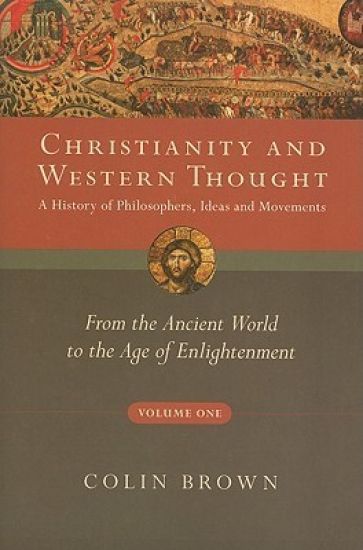
From Socrates and the Sophists to Kant, from Augustine to Aquinas and the Reformers, Colin Brown traces the turbulent, often tension-filled, always fascinating story of the thinkers, ideas and movements that have shaped our intellectual landscape. Is philosophy the "handmaiden of faith" or "the doctrine of demons"? Does it clarify the faith or undermine the very heart of Christian belief?Brown writes, "This book is about the changes in preconceptions, world views and paradigms that have affected the ways in which people have thought about religion in general and Christianity in particular in the Western world. . . . It is a historical sketch, written to help students--and anyone else who might be interested--to get a better grasp of the love-hate relationship between philosophy and faith that has gone on for close to two thousand years."Students, pastors and thoughtful Christians will benefit from this rich resource. The first in a three-volume work, Brown's easy-to-read, hard-to-put-down introduction to Christianity and Western thought focuses on developments from the ancient world to the Age of Enlightenment.