Kirjojen hintavertailu. Mukana 12 238 234 kirjaa ja 12 kauppaa.
Kirjailija
Colin Burgess
Kirjat ja teokset yhdessä paikassa: 21 kirjaa, julkaisuja vuosilta 2006-2022, suosituimpien joukossa The First Soviet Cosmonaut Team. Vertaile teosten hintoja ja tarkista saatavuus suomalaisista kirjakaupoista.
The First Soviet Cosmonaut Team will relate who these men were and offer far more extensive background stories, in addition to those of the more familiar names of early Soviet space explorers from that group. Many previously-unpublished photographs of these “missing” candidates will also be included for the first time in this book. It will be a detailed, but highly readable and balanced account of the history, training and experiences of the first group of twenty cosmonauts of the USSR. A covert recruitment and selection process was set in motion throughout the Soviet military in August 1959, just prior to the naming of America’s Mercury astronauts. Those selected were ordered to report for training at a special camp outside of Moscow in the spring of 1960. Just a year later, Senior Lieutenant Yuri Gagarin of the Soviet Air Force (promoted in flight to the rank of major) was launched aboard a Vostok spacecraft and became the first person ever to achieve space flight and orbit the Earth.
In this deeply researched chronology, Colin Burgess describes the Soviet Union’s extraordinary success in the pioneering years of space exploration. Within a decade the Soviets not only launched the world’s first satellite, but were the first to send an animal and a human being into Earth orbit. More than that, their ground-breaking missions sent a woman into space, launched a three-man spacecraft and included the first person to walk in space.Six decades on from the historic spaceflight of cosmonaut Yuri Gagarin, Burgess guides us through the amazing achievements of Russia’s spaceflight programme through to the present day, introducing the men and women who have flown the missions as we seek to delve ever deeper into the wonders and complexities of the cosmos.
The space race was perhaps the greatest technological contest of the 20th century. It was a thrilling era of innovation, discovery and exploration, as astronauts and cosmonauts were launched on space missions of increasing length, complexity and danger.The Greatest Adventure traces the events of this extraordinary period, describing the initial string of Soviet achievements: the first satellite in orbit; the first animal, man and woman in space; the first spacewalk; as well as the ultimate US victory in the race to land on the moon.The book then takes the reader on a journey through the following decades of space exploration to the present time, detailing the many successes, tragedies, risks and rewards of space exploration.
Unofficially they called themselves the TFNG, or the Thirty-Five New Guys. Officially, they were NASA’s Group 8 astronauts, selected in January 1978 to train for orbital missions aboard the Space Shuttle. Prior to this time only pilots or scientists trained as pilots had been assigned to fly on America’s spacecraft, but with the advent of the innovative winged spacecraft the door was finally opened to non-pilots, including women and minorities. In all, 15 of those selected were categorised as Pilot Astronauts, while the other 20 would train under the new designation of Mission Specialist. Altogether, the Group 8 astronauts would be launched on a total of 103 space missions; some flying only once, while others flew into orbit as many as five times. Sadly, four of their number would perish in the Challenger tragedy in January 1986. In their latest collaborative effort, the authors bring to life the amazing story behind the selection of the first group of Space Shuttle astronauts, examining their varied backgrounds and many accomplishments in a fresh and accessible way through deep research and revealing interviews. Throughout its remarkable 30-year history as the workhorse of NASA’s human spaceflight exploration, twice halted through tragedy, the Shuttle fleet performed with magnificence. So too did these 35 men and women, swept up in the dynamic thrust and ongoing development of America’s Space Shuttle program. "This book on the Group 8 Astronauts, the TFNGs, is an excellent summation of the individuals first selected for the new Space Shuttle Program. It provides insight into what it took to first get the Space Shuttle flying. For any space enthusiast it is a must read." - Robert L. Crippen PLT on STS-1 “As a reader, I had many moments where long, lost memories of the triumph and tragedy of the space shuttle program were brilliantly reawakened at the turn of a page. Loved it! This is a must-have book for every space enthusiast’s library.” - TFNG Mission Specialist Astronaut Richard ‘Mike’ Mullane, author of Riding Rockets: The Outrageous Tales of a Space Shuttle Astronaut “Many of the anecdotes in the book brought back memories of challenges, opportunities, and a team of men and women who were committed not just to the space program, but to one another...I've gone back to it several times as a reference source.” - TFNG Steve Hawley, 5-time Space Shuttle Mission Specialist Astronaut "The TFNG book is incredible and amazingly thorough! The detail in the book is awesome! It is my go-to book for any of the details I’ve forgotten." - TFNG Dr. Rhea Seddon, 3-time Space Shuttle Mission Specialist Astronaut. "I can't believe how detailed and complete it is!!! FANTASTIC work!!!" - TFNG Robert L."Hoot" Gibson, 5-time Space Shuttle Pilot & Commander and former Chief of the NASA Astronaut Office
This newly revised edition of Teacher in Space tells the story of how McAuliffe graduated from her role as a much-loved high school teacher to occupying a seat on the veteran orbiter’s tenth and last flight into space.On January 28, 1986, NASA space shuttle orbiter Challenger lifted off into the clear blue skies over Florida on mission STS-51L, carrying a crew of seven, including teacher Christa McAuliffe. Just seventy-three seconds into the launch, a massive explosion tore Challenger apart. McAuliffe’s dream was to carry out science projects while in orbit around the earth that were to be telecast live to school students across the United States. Her dream came to a sudden and tragic end that terrible day. Nevertheless, that ambition to educate from space remained an inspiration to many and, in her name and those of the Challenger crew, manifested itself in the establishment of hundreds of youth education programs and institutes of learning across America and around the world. Teacher in Space is a remarkable story of renewed faith, cooperation, and hope for the future and of a dedicated and much-loved teacher who came to symbolize the best of human achievement.
Shattered Dreams delves into the personal stories and recollections of several men and women who were in line to fly a specific or future space mission but lost that opportunity due to personal reasons, mission cancellations, or even tragedies. While some of the subjects are familiar names in spaceflight history, the accounts of others are told here for the first time. Colin Burgess features spaceflight candidates from the United States, Russia, Indonesia, Australia, and Great Britain.Shattered Dreams brings to new life such episodes and upheavals in spaceflight history as the saga of the three Apollo missions that were cancelled due to budgetary constraints and never flew; NASA astronaut Patricia Hilliard Robertson, who died of burn injuries after her airplane crashed before she had a chance to fly into space; and a female cosmonaut who might have become the first journalist to fly in space. Another NASA astronaut was preparing to fly an Apollo mission before he was diagnosed with a disqualifying illness. There is also the amazing story of the pilot who could have bailed out of his damaged aircraft but held off while heroically avoiding a populated area and later applied to NASA to fulfill his cherished dream of becoming an astronaut despite having lost both legs in the accident. These are the incredibly human stories of competitive realists fired with an unquenchable passion. Their accounts reveal in their own words-and those of others close to them-how their shared ambition would go awry through personal accidents, illness, the Challenger disaster, death, or other circumstances.
Resulting from the authors’ deep research into these two pre-Shuttle astronaut groups, many intriguing and untold stories behind the selection process are revealed in the book. The often extraordinary backgrounds and personal ambitions of these skilled pilots, chosen to continue NASA’s exploration and knowledge of the space frontier, are also examined.In April 1966 NASA selected 19 pilot astronauts whose training was specifically targeted to the Apollo lunar landing missions and the Earth-orbiting Skylab space station. Three years later, following the sudden cancellation of the USAF’s highly classified Manned Orbiting Laboratory (MOL) project, seven military astronauts were also co-opted into NASA’s space program.This book represents the final chapter by the authors in the story of American astronaut selections prior to the era of the Space Shuttle. Through personal interviews and original NASA documentation, readers will also gain a true insight into a remarkable age of space travel as it unfolded in the late 1960s, and the men who flew those historic missions.
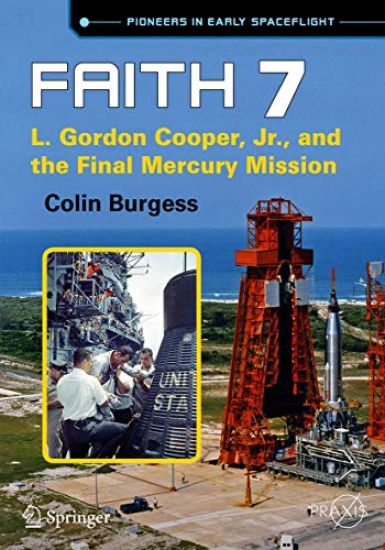
This book celebrates the final spaceflight in the Mercury series, flown by NASA astronaut Gordon Cooper, who led an adventurous life in the cockpit of airplanes and spacecraft alike, and on his Mercury mission he became the last American ever to rocket into space alone. He flew in the Mercury and Gemini programs and served as head of flight crew operations in both the Apollo and Skylab programs. Based on extensive research and first-person interviews, this is a complete history of the Faith 7 flight and its astronaut. Cooper later gained notoriety following the release of the movie, The Right Stuff, in which he was depicted by Dennis Quaid, but Burgess discovers there was even more drama to his story. It completes the "Pioneers in Early Spaceflight" subseries in fitting fashion.
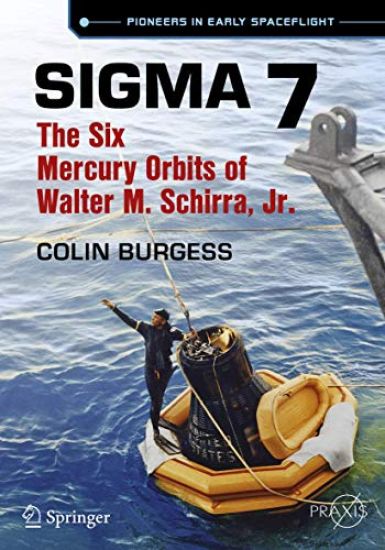
Colin Burgess offers a comprehensive yet personal look at the 1962 orbital mission of Wally Schirra aboard the spacecraft Sigma 7, the first book about this popular pioneering astronaut which explores his entire life and accomplishments. This continues the Pioneers in Early Spaceflight series, the volumes of which form an excellent record of Project Mercury's pioneering early phase of the Space Age. Schirra’s pre-NASA life is examined, as well as his training as a NASA astronaut and for his Mercury MA-8 flight. The 6-orbit flight of Sigma 7 is fully covered from its origins through to the spacecraft’s safe recovery from the ocean after a highly successful Mercury mission. Schirra’s participation on the Gemini 6 and Apollo 7 missions is also told, but in brief, and the book also relates his post-NASA life and activities through to his passing in 2007. The Mercury Seven occupy a unique spot in the history of human spaceflight, and Schirra is atlast given his due as one of the contributing astronauts in this painstakingly researched book.
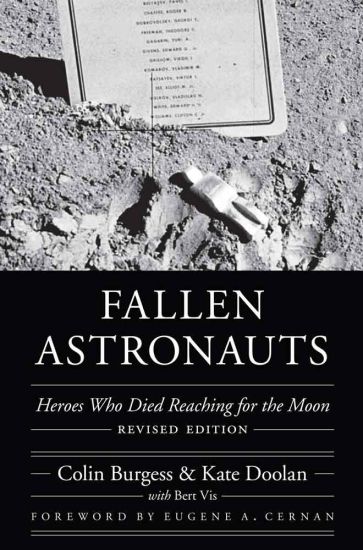
Near the end of the Apollo 15 mission, David Scott and fellow moonwalker James Irwin conducted a secret ceremony unsanctioned by NASA: they placed on the lunar soil a small tin figurine called The Fallen Astronaut, along with a plaque bearing a list of names. By telling the stories of those sixteen astronauts and cosmonauts who died in the quest to reach the moon between 1962 and 1972, this book enriches the saga of humankind’s greatest scientific undertaking, Project Apollo, and conveys the human cost of the space race. Many people are aware of the first manned Apollo mission, in which Gus Grissom, Ed White, and Roger Chaffee lost their lives in a fire during a ground test, but few know of the other five fallen astronauts whose stories this book tells as well, including Ted Freeman and C.C. Williams, who died in the crashes of their T-38 jets; the “Gemini Twins,” Charlie Bassett and Elliot See, killed when their jet slammed into the building where their Gemini capsule was undergoing final construction; and Ed Givens, whose fatal car crash has until now been obscured by rumors. Supported by extensive interviews and archival material, the extraordinary lives and accomplishments of these and other fallen astronauts-including eight Russian cosmonauts who lost their lives during training-unfold here in intimate and compelling detail. Their stories return us to a stirring time in the history of our nation and remind us of the cost of fulfilling our dreams. This revised edition includes expanded and revised biographies and additional photographs.
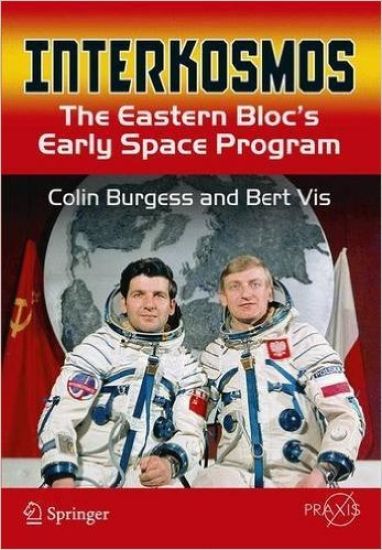
This book focuses on the Interkosmos program, which was formed in 1967, marking a fundamentally new era of cooperation by socialist countries, led by the Soviet Union, in the study and exploration of space. The chapters shed light on the space program that was at that time a prime outlet for the Soviet Union's aims at becoming a world power. Interkosmos was a highly publicized Russian space program that rapidly became a significant propaganda tool for the Soviet Union in the waning years of communism. Billed as an international “research-cosmonaut” imperative, it was also a high-profile means of displaying solidarity with the nine participating Eastern bloc countries. Those countries contributed pilots who were trained in Moscow for week-long “guest” missions on orbiting Salyut stations. They did a little subsidiary science and were permitted only the most basic mechanical maneuvers.In this enthralling new book, and following extensive international research, the authors fully explore the background, accomplishments and political legacy of the Interkosmos program. Through personal and often highly revealing interviews with many of the participants they relate the very human story behind this extraordinary but controversial space venture..
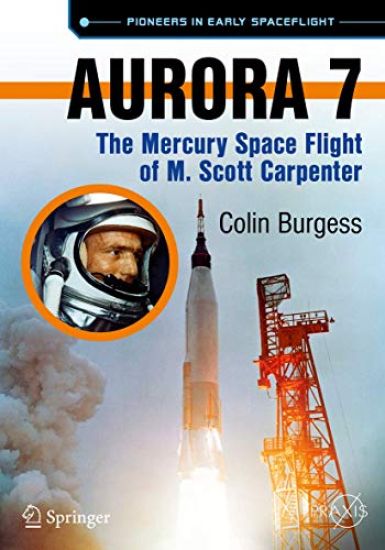
TO A NATION enthralled by the heroic exploits of the Mercury astronauts, the launch of Lt. Cmdr. Scott Carpenter on NASA’s second orbital space flight was a renewed cause for pride, jubilation and celebration. Within hours, that excitement had given way to stunned disbelief and anxiety as shaken broadcasters began preparing the American public for the very real possibility that an American astronaut and his spacecraft may have been lost at sea.In fact, it had been a very close call. Completely out of fuel and forced to manually guide Aurora 7 through the frightening inferno of re-entry, Carpenter brought the Mercury spacecraft down to a safe splashdown in the ocean. In doing so, he controversially overshot the intended landing zone. Despite his efforts, Carpenter’s performance on the MA-7 mission was later derided by powerful figures within NASA. He would never fly into space again. Taking temporary leave of NASA, Carpenter participated in the U.S. Navy’s pioneering Sealab program. For a record 30 days he lived and worked aboard a pressurized habitat resting on the floor of the ocean, becoming the nation’s first astronaut/aquanaut explorer.Following extensive research conducted by noted spaceflight historian Colin Burgess, the drama-filled flight of Aurora 7 is faithfully recounted in this engrossing book, along with the personal recollections of Scott Carpenter and those closest to the actual events.
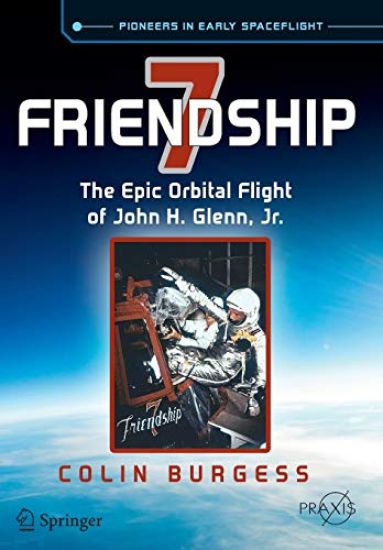
In this spellbinding account of an historic but troubled orbital mission, noted space historian Colin Burgess takes us back to an electrifying time in American history, when intrepid pioneers were launched atop notoriously unreliable rockets at the very dawn of human space exploration.A nation proudly and collectively came to a standstill on the day this mission flew; a day that will be forever enshrined in American spaceflight history. On the morning of February 20, 1962, following months of frustrating delays, a Marine Corps war hero and test pilot named John Glenn finally blazed a path into orbit aboard a compact capsule named Friendship 7.The book’s tension-filled narrative faithfully unfolds through contemporary reports and the personal recollections of astronaut John Glenn, along with those closest to the Friendship 7 story, revealing previously unknown facts behind one of America’s most ambitious and memorable pioneering space missions.Friendship 7.The book’s tension-filled narrative faithfully unfolds through contemporary reports and the personal recollections of astronaut John Glenn, along with those closest to the Friendship 7 story, revealing previously unknown facts behind one of America’s most ambitious and memorable pioneering space missions.Friendship 7 story, revealing previously unknown facts behind one of America’s most ambitious and memorable pioneering space missions.
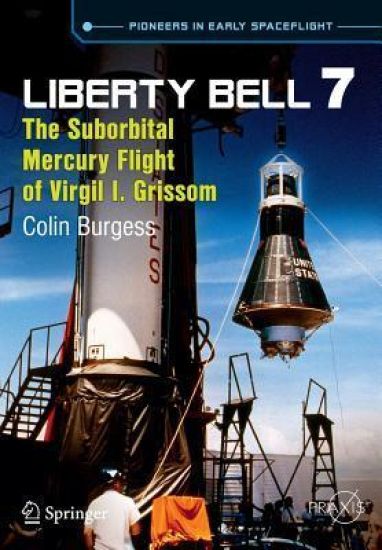
NASA’s Mercury astronauts were seven highly skilled professional test pilots. Each of them seemed to possess the strength of character and commitment necessary to overcome apparently insurmountable obstacles as the United States entered into a Cold War space race with the Soviet Union. This was never more evident than on the epic suborbital MR-4 flight of Liberty Bell 7 with astronaut Virgil (‘Gus’) Grissom piloting the spacecraft to a successful splashdown, followed by the premature blowing of the craft’s explosive hatch. After a hurried exit and struggling to stay afloat, he could only watch helplessly as the recovery helicopter pilot valiantly fought a losing battle to save the sinking capsule. That day NASA not only lost a spacecraft but came perilously close to losing one of its Mercury astronauts, a decorated Korean fighter pilot from Indiana who might one day have soared to the highest goal of them all, as the first person to set foot on the Moon. For the first time, many of those closest to the flight of Liberty Bell 7 and astronaut Gus Grissom offer their stories and opinions on the dramatic events of July 21, 1961, and his later pioneering Gemini mission. They also tell of an often controversial life cut tragically and horrifically short in a launch pad fire that shocked the nation.
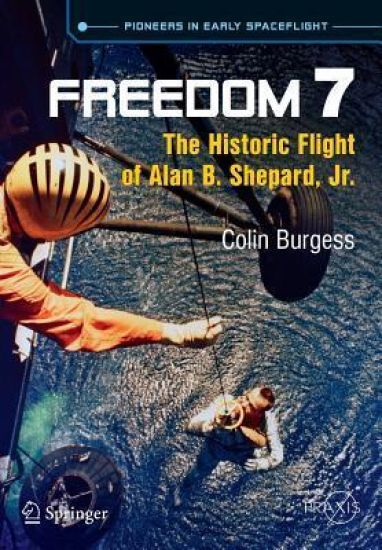
Inevitably, there are times in a nation’s history when its hopes, fears and con?dence in its own destiny appear to hinge on the fate of a single person. One of these pivotal moments occurred on the early morning of May 5, 1961, when a 37-year-old test pilot squeezed himself into the con?nes of the tiny Mercury spacecraft that he had named Freedom 7. On that historic day, U.S. Navy Commander Alan Shepard carried with him the hopes, prayers, and anxieties of a nation as his Redstone rocket blasted free of the launch pad at Cape Canaveral, hurling him upwards on a 15-minute suborbital ?ight that also propelled the United States into the bold new frontier of human space exploration.This book tells the enthralling story of that pioeering ?ight as recalled by many of the participants in the Freedom 7 story, including Shepard himself, with anecdotal details and tales never before revealed in print.Although beaten into space just three weeks earlier by the Soviet cosmonaut Yuri Gagarin, Alan Shepard’s history-making mission aboard Freedom 7 nevertheless provided America’s ?rst tentative step into space that would one day see its Apollo astronauts – including Alan Shepard – walk on the Moon.
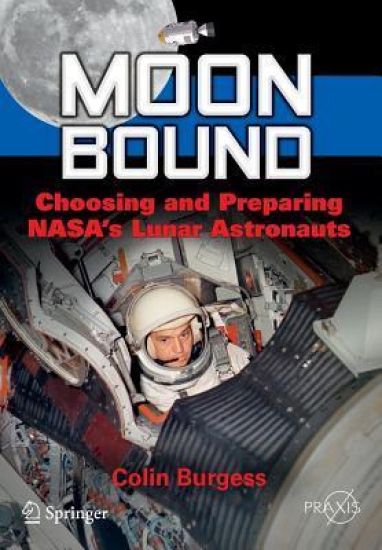
Often lost in the shadow of the first group of astronauts for the Mercury missions, the second and third groups included the leading figures for NASA's activities for the following two decades. “Moon Bound” complements the author’s recently published work, “Selecting the Mercury Seven” (2011), extending the story of the men who helped to launch human spaceflight and broaden the American space program. Although the initial 1959 group became known as the legendary pioneering Mercury astronauts, the astronauts of Groups 2 and 3 gave us many household names. Sixteen astronauts from both groups traveled to the Moon in Project Apollo, with several actually walking on the Moon, one of them being Neil Armstrong. This book draws on interviews to tell the astronauts' personal stories and recreate the drama of that time. It describes the process by which they were selected as astronauts and explains how the criteria had changed since the first group. “Moon Bound” is divided into two parts, recounting the biographies relating to the nine astronauts from NASA’s Group 2 in the first part, and the fourteen finalists in Group 3 in the second part. The stories of both selection groups are narrated through the experiences of four finalists with interesting backgrounds. One of these men is Al Rupp of the USAF who, as a West Point cadet, cheekily helped to steal the Navy mascot goat prior to the annual Army versus Navy game in 1953, thus achieving legendary status in the game’s history. Rupp was killed in a plane crash just two years after being named as a finalist for Group 3. The service career of naval aviator John Yamnicky was also very much the equal of other finalists, but he was killed on September 11, 2001, as he was a passenger on hijacked Flight 77, which was flown into the Pentagon. At the end of the work there are several chapters on how these candidates were prepped for their missions.
The names of the seven Mercury astronauts were announced in April 1959 amid a flurry of publicity and patriotism. This work provides biographical details of all thirty-two finalists for the seven coveted places as America's pioneering astronauts. All of the candidates were among the nation's elite pilots involved in testing new supersonic aircraft capabilities. Most had served as wartime fighter and bomber pilots; some were test pilots on top secret and sophisticated aviation projects, while others were fleet admirals, prisoners of war, and proposed pilots for spaceflight programs such as the Dyna-Soar (X-20). The names of all 32 finalists have been kept secret until very recently. "Selecting the Mercury Seven" also relates the history and difficulties behind the initial choice of candidates. The lives, motivations, military careers, and achievements of the unsuccessful twenty-five finalists are explored first in fully authorized biographies. Test pilots for the U.S. Navy, Air Force, and Marine Corps, each man has a fascinating and very different story to tell. All thirty-two men had to endure meticulous, demeaning, and brutal week-long medical examinations at the Lovelace Clinic in New Mexico. This was followed by another torturous week at the Wright Aeromedical Laboratory in Ohio, where they were subjected to extreme fitness and physiological testing, the sole purpose of which was to sort out the Supermen from the near-supermen. The final part of the book examines the accomplishments and spaceflights of the seven successful candidates, bringing their amazing stories right up to date.
In the Shadow of the Moon tells the story of the most exciting and challenging years in spaceflight, with two superpowers engaged in a titanic struggle to land one of their own people on the moon. Drawing on interviews with astronauts, cosmonauts, their families, technicians, and scientists, as well as rarely seen Soviet and American government documents, the authors craft a remarkable story of the golden age of spaceflight as both an intimate human experience and a rollicking global adventure. From the Gemini flights to the Soyuz space program to the earliest Apollo missions, including the legendary first moon landing, their book draws a richly detailed picture of the space race as an endeavor equally endowed with personal meaning and political significance.
It was a time of bold new technology, historic moments, and international jousting on the final frontier. But it was also a time of human drama, of moments less public but no less dramatic in the lives of those who made the golden age of space flight happen. These are the moments and the lives that Into That Silent Sea captures, a book that tells the intimate stories of the men and women, American and Russian, who made the space race their own and gave the era its compelling character. These pages chronicle a varied and riveting cavalcade of human stories, including a look at Yuri Gagarin’s harrowing childhood in war-ravaged Russia and Alan Shepard’s firm purchase on the American dream. It also examines the controversial career of cosmonaut Valentina Tereshkova, the first woman in space, and the remarkable struggle and ultimate disappointment of her American counterparts. It tries to uncover the truth behind the allegations that shadowed Gus Grissom and Scott Carpenter and then allows the reader to share the heart-stopping suspense of Alexei Leonov’s near-fatal first space walk. Through dozens of interviews and access to Russian and American official documents and family records, the authors bring to life the experiences that shaped the lives of the first astronauts and cosmonauts and forever changed their world and ours.
Many readers will doubtless be astonished to learn that animals were being fired aloft in U.S. and Soviet research rockets in the late 1940s. In fact most people not only believe that the Russian space dog Laika was the first canine to be launched into space, but also that the high-profile, precursory Mercury flights of chimps Ham and Enos were the only primate flights conducted by the United States. In fact, both countries had sent literally dozens of animals aloft for many years prior to these events and continued to do so for many years after. Other latter-day space nations, such as France and China, would also begin to use animals in their own space research. Animals in Space will explain why dogs, primates, mice and other rodents were chosen and tested, at a time when dedicated scientists from both space nations were determined to establish the survivability of human subjects on both ballistic and orbital space flights. It will also recount the way this happened; the secrecy involved and the methods employed, and offer an objective analysis of how the role of animals as spaceflight test subjects not only evolved, but subsequently changed over the years in response to a public outcry led by animal activists. It will explore the ways in which animal high-altitude and space flight research impacted on space flight biomedicine and technology, and how the results - both successful and disappointing - allowed human beings to then undertake that same hazardous journey with far greater understanding and confidence. This book is intended as a detailed yet highly readable and balanced account of the history of animal space flights, and the resultant application of hard-won research to space technology and astrobiology. It will undoubtedly become the ultimate authority on animal space flights.