Kirjojen hintavertailu. Mukana 12 657 676 kirjaa ja 12 kauppaa.

Kirjailija

Colin C. Williams

Kirjat ja teokset yhdessä paikassa: 22 kirjaa, julkaisuja vuosilta 1997-2024, suosituimpien joukossa Unemployment and the Informal Economy. Vertaile teosten hintoja ja tarkista saatavuus suomalaisista kirjakaupoista.

22 kirjaa

Kirjojen julkaisuhaarukka 1997-2024.

A Modern Guide to the Informal Economy

A Modern Guide to the Informal Economy

Colin C. Williams

EDWARD ELGAR PUBLISHING LTD
2024
nidottu
This Modern Guide presents a comprehensive synthesis of contemporary thought on the informal economy, which, as the author demonstrates – far from being a peripheral feature of the global economy – is a system in which the majority of the global workforce are employed and which has pervasive detrimental effects. Formalising it is therefore a priority for most governments. Employing theoretical and empirical methodologies, Colin C. Williams explores the latest research on methods of understanding and measuring the informal economy in its various forms, and discusses the rationale behind its participants. Its rigorous discussion of the need to shift away from solely using tools that punish the practice and towards aligning social norms with the regulations of formal institutions is complemented by a rich analysis of how jobs and enterprises across the world can be encouraged to make the transition towards formalism. Incentives, education and reform are among the strategies advocated in this Modern Guide’s compelling and lucid roadmap for the transition to formality.An invaluable resource for policymakers involved in tax, social security and labour policies, belonging to both governments and supra-national institutions, the book will also be valuable for academics and researchers in sociology, economics and business studies, especially those with an interest in taxation, industrial relations, entrepreneurship and labour economics.
Formalization of the Informal Economy

Formalization of the Informal Economy

Colin C. Williams

Springer International Publishing AG
2023
nidottu
This Brief provides a cutting-edge evaluation of the application of digital technologies to tackle the informal economy. Employing institutional theory to explain the informal economy, this book reveals that the informal economy arises when formal institutional failings trigger a gap between the formal rules of the game and social norms. Chapters outline how use of digital technologies by public authorities, such as tax, social security and labor authorities, can alter social norms so that they accord with the formal rules of the game and generate a formalization of the informal economy. Setting out the e-government tools that can improve the relationship between businesses, employers, workers and citizens, and government, this book will be essential reading for academics and advanced students studying development economics, labor economics, public economics, behavioral economics, economic sociology and institutional economics as well as for government policymakers working in related fields.
Formalization of the Informal Economy

Formalization of the Informal Economy

Colin C. Williams

Springer International Publishing AG
2023
sidottu
This Brief provides a cutting-edge evaluation of the application of digital technologies to tackle the informal economy. Employing institutional theory to explain the informal economy, this book reveals that the informal economy arises when formal institutional failings trigger a gap between the formal rules of the game and social norms. Chapters outline how use of digital technologies by public authorities, such as tax, social security and labor authorities, can alter social norms so that they accord with the formal rules of the game and generate a formalization of the informal economy. Setting out the e-government tools that can improve the relationship between businesses, employers, workers and citizens, and government, this book will be essential reading for academics and advanced students studying development economics, labor economics, public economics, behavioral economics, economic sociology and institutional economics as well as for government policymakers working in related fields.
Unemployment and the Informal Economy

Unemployment and the Informal Economy

Ligita Gaspareniene; Rita Remeikiene; Colin C. Williams

Springer Nature Switzerland AG
2022
nidottu
This Brief examines the dynamics between the informal economy and unemployment rates, the causes of informality, its consequences and potential reduction measures at both the theoretical and empirical level. Using Lithuania as a case study, this book tests the assumption that participation in the informal economy is largely by the unemployed in emerging economies. Chapters present a systematic and comparative literature analysis, a quantitative survey of participation in the Lithuanian informal economy, especially among the unemployed, an expert evaluation involving representatives of municipalities in charge of the issues of employment, and a statistical analysis of the results. Challenging traditional narratives around the informal economy, this Brief is targeted at academic and postgraduate researchers studying labor economics, public economics, human resource management, industrial relations, and economic sociology.
Dependent Self-Employment

Dependent Self-Employment

Colin C. Williams; Ioana A. Horodnic

Edward Elgar Publishing Ltd
2019
sidottu
Dependent self-employment is widely perceived as a rapidly growing form of precarious work conducted by marginalised lower-skilled workers subcontracted by large corporations. Unpacking a comprehensive survey of 35 European countries, Colin C. Williams and Ioana Alexandra Horodnic map the lived realities of the distribution and characteristics of dependent self-employment to challenge this broad and erroneous perception. Featuring rigorous empirical research, Dependent Self-Employment moves beyond the reliance on anecdotal evidence to fill in gaping lacunae in our understanding of employment. Reporting on the European Working Conditions Survey of 2015, this impressive book provides a crucial contribution to our understanding of dependent self-employment in the 21st century, challenging not only academic perceptions, but also depictions of work in the media and political discourse. The authors expertly navigate the 'grey zone' of defining dependent self-employment, embracing the spectrum of employment relationships and outlining the limits to the rights and authority of the dependently self-employed. Bold and comprehensive, this timely book offers critical insight for researchers at all levels exploring the nature and distribution of employment in Europe. Given the current public debates on the platform economy, this book will also prove useful for practitioners and policy-makers in labour inspectorates, tax administrations and social security institutions worldwide.
The Informal Economy

The Informal Economy

Colin C. Williams

Agenda Publishing
2019
sidottu
The “informal” economy ? economic activity and income outside government regulation, taxation and observation ? is, by its very nature, difficult to quantify. Recent estimates suggest it accounts, in OECD countries, for around 13% of national income (in the UK, the equivalent of £150 billion) and in developing nations it can make up as much as three-quarters of all non-agricultural employment. Whatever the exact figures, it is clear that the informal economy plays a significant role in national incomes (eventhough excluded from calculations of GDP or GNP) and affects a large share of the global workforce. Colin C. Williams provides an authoritative introduction to the topic, explaining what the informal economy is (and what it isn’t) and how it can best be measured. Taking a global perspective, he examines its characteristics in developed, developing and transitional economies, and looks at its role as a driver of economic growth. The theoretical underpinnings are explored, from conceptual origins in the development models of the 1950s, through to present-day discussions, which question whether a formalised economy is always the ideal. The book considers the economic motivations of the informal economy workforce, which may include tax evasion, circumventing regulations and maintaining state benefits, and assesses the different policy options available to governments to combat them, whether a punitive policy of deterrence, or one of accommodation that recognises the value of the sector in generating income and in meeting the needs of poor consumers. The book provides a masterly summation of the published research on the informal economy and an expert assessment of the key areas for research going forward. It will be welcomed by students taking courses in development economics, economic growth, labour economics, welfare economics and public policy.
The Informal Economy

The Informal Economy

Colin C. Williams

Agenda Publishing
2019
nidottu
The “informal” economy ? economic activity and income outside government regulation, taxation and observation ? is, by its very nature, difficult to quantify. Recent estimates suggest it accounts, in OECD countries, for around 13% of national income (in the UK, the equivalent of £150 billion) and in developing nations it can make up as much as three-quarters of all non-agricultural employment. Whatever the exact figures, it is clear that the informal economy plays a significant role in national incomes (eventhough excluded from calculations of GDP or GNP) and affects a large share of the global workforce. Colin C. Williams provides an authoritative introduction to the topic, explaining what the informal economy is (and what it isn’t) and how it can best be measured. Taking a global perspective, he examines its characteristics in developed, developing and transitional economies, and looks at its role as a driver of economic growth. The theoretical underpinnings are explored, from conceptual origins in the development models of the 1950s, through to present-day discussions, which question whether a formalised economy is always the ideal. The book considers the economic motivations of the informal economy workforce, which may include tax evasion, circumventing regulations and maintaining state benefits, and assesses the different policy options available to governments to combat them, whether a punitive policy of deterrence, or one of accommodation that recognises the value of the sector in generating income and in meeting the needs of poor consumers. The book provides a masterly summation of the published research on the informal economy and an expert assessment of the key areas for research going forward. It will be welcomed by students taking courses in development economics, economic growth, labour economics, welfare economics and public policy.
Revitalising Deprived Urban Neighbourhoods

Revitalising Deprived Urban Neighbourhoods

Colin C. Williams; Jan Windebank

Routledge
2016
nidottu
Governments in Western Europe and North America have placed job creation initiatives at the heart of their policy for revitalizing deprived neighbourhoods. However, relying on this alone is problematic and these governments are becoming increasingly interested in finding ways of enabling communities to help themselves. Drawing upon original, in-depth studies of self-help activities in both deprived and affluent neighbourhoods in UK cities, this book examines why the populations of deprived neighbourhoods are more likely to be excluded not only from the labour market but also from adopting self-help practices in response to their situation. It also identifies the barriers which discourage participation in self-help projects. A combination of policies are advocated, bringing together innovative bottom-up initiatives such as LETS, time currencies and Employee Mutuals, with top-down policies such as Active Citizens’ Credits. This book instead suggests a fresh and positive approach towards revitalizing deprived neighbourhoods based on seeking the full-engagement, rather than merely the full-employment, of deprived populations.
Measuring the Global Shadow Economy

Measuring the Global Shadow Economy

Colin C. Williams; Friedrich Schneider

Edward Elgar Publishing Ltd
2016
sidottu
This book brings together two leading researchers in the field to provide a comprehensive overview of the shadow economy from a global perspective. Reviewing the advantages and disadvantages of different ways of measuring the informal sector, the authors evaluate its size and key determinants across the world. Williams and Schneider clearly establish the persistence and prevalence of the shadow economy, analysing the narrowness of existing policy approaches and explaining how these fail to address the key factors for its existence and may even exacerbate the problem.Proposing an alternative way forward, the authors argue that little headway will ever be made in reducing the shadow economy until there are changes not only to the character of formal institutions but also informal institutions (the values, beliefs and norms of citizens) through the introduction of macro-level structural changes.This timely, cutting-edge review of the global shadow economy and how it can be measured and tackled is an invaluable resource for postgraduate students, researchers and policy-makers, particularly those with a interest in tax evasion and informal labour.
The Role of Informal Economies in the Post-Soviet World

The Role of Informal Economies in the Post-Soviet World

Colin C. Williams; John Round; Peter Rodgers

Routledge
2015
nidottu
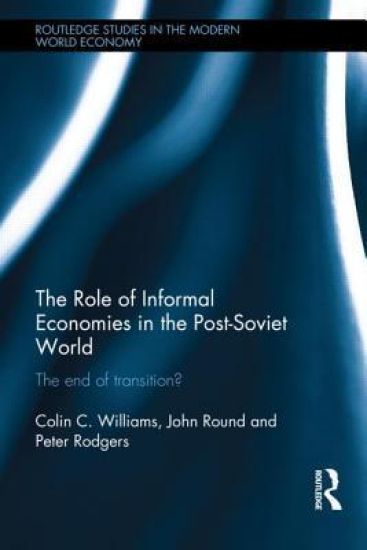
Based on extensive ethnographic and quantitative research, conducted in Ukraine and Russia between 2004 and 2012, this book’s central argument is that for many people the informal economy, such as cash in hand work, subsistence production and the use of social networks, is of great importance to everyday life. Formal work is both a facilitator of such processes and is often supported by them, as people can only afford to undertake low paid formal work as a result of their informal incomes. By looking at the informal nature of formal work and practices, informal practices, gift giving, volunteer work and the economies of the household the book is one of the first to give an overview of the nature of the informal economy in all spheres of everyday practice.
Confronting the Shadow Economy

Confronting the Shadow Economy

Colin C. Williams

Edward Elgar Publishing Ltd
2014
sidottu
This authoritative monograph explores the effectiveness and transferability of the rapidly expanding range of policy approaches and measures available as weaponry in the fight against the shadow economy.Beginning with a review of the extent of undeclared work, the author discusses the discrepancies between regions and the potential impacts of the economic crisis, comparing the nature of the potential solutions available with those actually adopted. The way forward, the book concludes, is to move away from increasing the costs of engaging in hidden work using repressive measures, and concentrate more on developing initiatives that enhance the benefits of engaging in declared work and increase the likelihood of compliance by engendering a commitment to tax morality.This insightful and unique exposition will have considerable appeal to academics, practitioners and policy-makers across the globe involved in the fight against undeclared work.
The Role of Informal Economies in the Post-Soviet World

The Role of Informal Economies in the Post-Soviet World

Colin C. Williams; John Round; Peter Rodgers

Routledge
2013
sidottu
Based on extensive ethnographic and quantitative research, conducted in Ukraine and Russia between 2004 and 2012, this book’s central argument is that for many people the informal economy, such as cash in hand work, subsistence production and the use of social networks, is of great importance to everyday life. Formal work is both a facilitator of such processes and is often supported by them, as people can only afford to undertake low paid formal work as a result of their informal incomes. By looking at the informal nature of formal work and practices, informal practices, gift giving, volunteer work and the economies of the household the book is one of the first to give an overview of the nature of the informal economy in all spheres of everyday practice.
Shadow Economy

Shadow Economy

Friedrich Schneider; Colin C. Williams

Institute of Economic Affairs
2013
nidottu
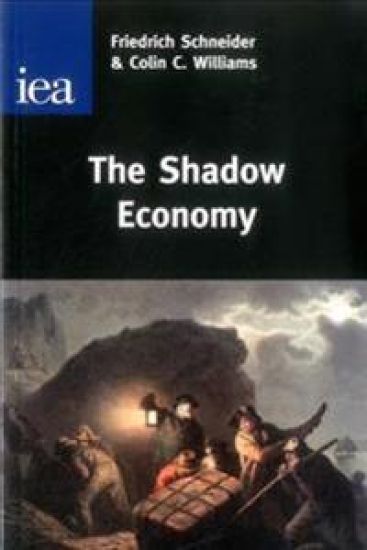
Measurement of the shadow economy is notoriously difficult as it requires estimation of economic activity that is deliberately hidden from official transactions. Surveys typically understate the size of the shadow economy but econometric techniques can now be used to obtain a much better understanding of its size. The shadow economy constitutes approximately 10 per cent of GDP in the UK; about 14 per cent in Nordic countries and about 20 - 30 per cent in many southern European countries. The main drivers of the shadow economy are (in order): tax and social security burdens, tax morale, the quality of state institutions and labour market regulation. A reduction in the tax burden is therefore likely to lead to a reduction in the size of the shadow economy. Indeed, a virtuous circle can be created of lower tax rates, less shadow work, higher tax morale, a higher tax take and the opportunity for lower rates. Of course, a vicious circle in the other direction can also be created.
The Hidden Enterprise Culture

The Hidden Enterprise Culture

Colin C. Williams

Edward Elgar Publishing Ltd
2008
nidottu
Portraying how entrepreneurs often start out conducting some or all of their trade on an 'off-the-books' basis and how many continue to do so once they become established, this book provides the first detailed account of the vast and ubiquitous hidden enterprise culture existing in the interstices of western economies. Until now, the role of the underground economy in enterprise creation, entrepreneurship and small business development has been largely ignored despite its widespread prevalence and importance. In contrast to much of the previous literature that views the underground economy as low-paid, exploitative sweatshop work that should be deterred, this book takes a fresh, more positive perspective that considers the underground economy as a hidden enterprise culture. Colin C. Williams prescribes the means by which western governments can best harness this hidden culture of enterprise. He outlines detailed policy initiatives that seek to assist business ventures in setting up on a formal footing, and aim to encourage underground enterprises and entrepreneurs to make the transition into the realm of legitimacy.This book provides a lucid guide as to how the hidden culture of enterprise can be brought into the open. As such, it will prove invaluable to a wide-ranging audience including scholars and students of business studies, entrepreneurship, management, economics and regional science.
Re-Thinking the Future of Work

Re-Thinking the Future of Work

Colin C. Williams

Red Globe Press
2007
nidottu
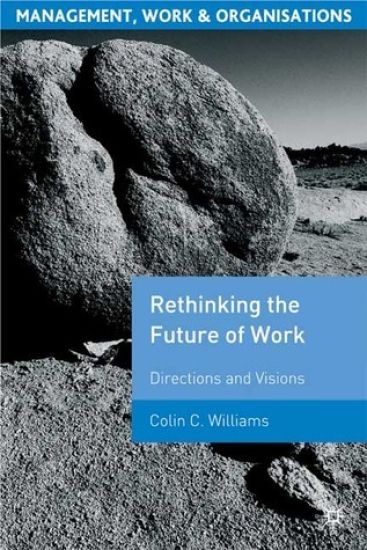
How will work be organised in the future? With its global perspective and critical approach, Re-Thinking the Future of Work provides not only an overview and examination of the array of competing visions, but also a radical rethink about the direction of change.
The Hidden Enterprise Culture

The Hidden Enterprise Culture

Colin C. Williams

Edward Elgar Publishing Ltd
2006
sidottu
Portraying how entrepreneurs often start out conducting some or all of their trade on an 'off-the-books' basis and how many continue to do so once they become established, this book provides the first detailed account of the vast and ubiquitous hidden enterprise culture existing in the interstices of western economies. Until now, the role of the underground economy in enterprise creation, entrepreneurship and small business development has been largely ignored despite its widespread prevalence and importance. In contrast to much of the previous literature that views the underground economy as low-paid, exploitative sweatshop work that should be deterred, this book takes a fresh, more positive perspective that considers the underground economy as a hidden enterprise culture. Colin C. Williams prescribes the means by which western governments can best harness this hidden culture of enterprise. He outlines detailed policy initiatives that seek to assist business ventures in setting up on a formal footing, and aim to encourage underground enterprises and entrepreneurs to make the transition into the realm of legitimacy.This book provides a lucid guide as to how the hidden culture of enterprise can be brought into the open. As such, it will prove invaluable to a wide-ranging audience including scholars and students of business studies, entrepreneurship, management, economics and regional science.
A Commodified World

A Commodified World

Colin C. Williams

Zed Books Ltd
2005
nidottu
A Commodified World critiques the notion that in Late Capitalism all economic relations become always ever more commodified, while ‘non-capitalist‘ activities disappear. It demonstrates that a combination of new 'cultures of resistance' all constrain this tendency or even threaten to reverse it. Colin Williams finds that, even in the advanced economies, a non-commodified realm persists that is as large as the commodified sphere and growing relative to it. He draws on extensive empirical evidence of trends and new patterns of economic activity – including changes in women's participation, differences between wealthy and poor urban areas, and between urban and rural sectors. He explores non-commodified practices of resistance. And he concludes that governments and communities, by de-coupling production and consumption from the commodified realm, could open up alternative development paths.
Revitalising Deprived Urban Neighbourhoods

Revitalising Deprived Urban Neighbourhoods

Colin C. Williams; Jan Windebank

Ashgate Publishing Limited
2001
sidottu
Governments in Western Europe and North America have placed job creation initiatives at the heart of their policy for revitalizing deprived neighbourhoods. However, relying on this alone is problematic and these governments are becoming increasingly interested in finding ways of enabling communities to help themselves. Drawing upon original, in-depth studies of self-help activities in both deprived and affluent neighbourhoods in UK cities, this book examines why the populations of deprived neighbourhoods are more likely to be excluded not only from the labour market but also from adopting self-help practices in response to their situation. It also identifies the barriers which discourage participation in self-help projects. A combination of policies are advocated, bringing together innovative bottom-up initiatives such as LETS, time currencies and Employee Mutuals, with top-down policies such as Active Citizens’ Credits. This book instead suggests a fresh and positive approach towards revitalizing deprived neighbourhoods based on seeking the full-engagement, rather than merely the full-employment, of deprived populations.
Informal Employment in Advanced Economies

Informal Employment in Advanced Economies

Colin C. Williams; Jan Windebank

Routledge
1998
sidottu
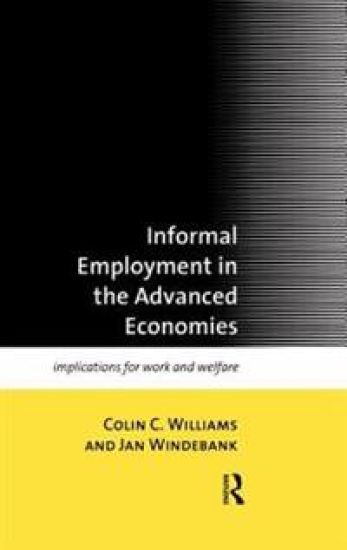
Re-Placing Informal Employment challenges many of the popular myths surrounding informal economic activities, and offers a radical reassesment of their extent, growth, location and nature. The book uses case studies from the UK, France, Italy, the Netherlands, the US and Canada to challenge: * the popular belief that informal employment is growing throughout the advanced economies * the myth that this work is undertaken mostly by marginalized groups * the dominant view that we should replace informal with formal employment through enforcement of regulations. Examining policy options and their consequences, the authors show that conventional approaches only increase inequalities and that a radical alternative solution is essential.