Kirjojen hintavertailu. Mukana 12 595 353 kirjaa ja 12 kauppaa.

Kirjailija

Colin Divall

Kirjat ja teokset yhdessä paikassa: 9 kirjaa, julkaisuja vuosilta 2001-2024, suosituimpien joukossa From Rail to Road and Back Again?. Vertaile teosten hintoja ja tarkista saatavuus suomalaisista kirjakaupoista.

9 kirjaa

Kirjojen julkaisuhaarukka 2001-2024.

Cultural Histories of Sociabilities, Spaces and Mobilities
For the majority of us the opportunity to travel has never been greater, yet differences in mobility highlight inequalities that have wider social implications. Exploring how and why attitudes towards movement have evolved across generations, the case studies in this essay collection range from medieval to modern times and cover several continents.
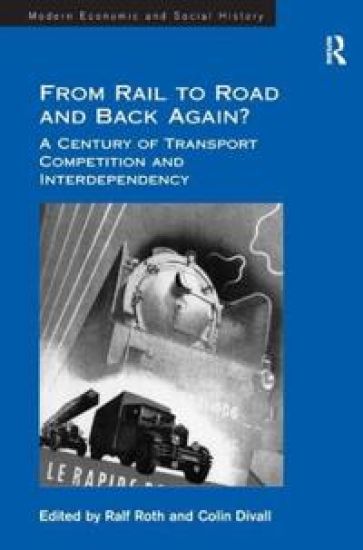
From Rail to Road and Back Again?

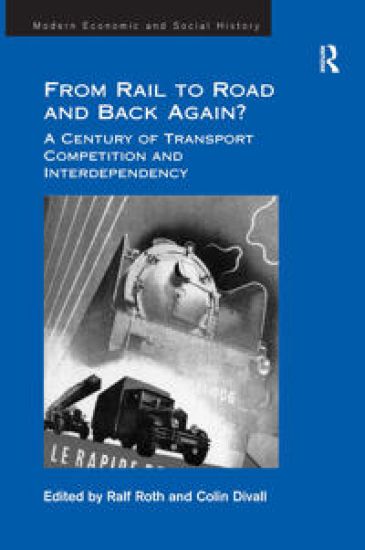
From Rail to Road and Back Again?

Colin Divall

TAYLOR FRANCIS LTD
2024
nidottu
The coming of the railways signalled the transformation of European society, allowing the quick and cheap mass transportation of people and goods on a previously unimaginable scale. By the early decades of the twentieth century, however, the domination of rail transport was threatened by increased motorised road transport which would quickly surpass and eclipse the trains, only itself to be challenged in the twenty-first century by a renewal of interest in railways. Yet, as the studies in this volume make clear, to view the relationship between road and rail as a simple competition between two rival forms of transportation, is a mistake. Rail transport did not vanish in the twentieth century any more than road transport vanished in the nineteenth with the appearance of the railways. Instead a mutual interdependence has always existed, balancing the strengths and weaknesses of each system. It is that interdependence that forms the major theme of this collection. Divided into two main sections, the first part of the book offers a series of chapters examining how railway companies reacted to increasing competition from road transport, and exploring the degree to which railways depended on road transportation at different times and places. Part two focuses on road mobility, interpreting it as the innovative success story of the twentieth century. Taken together, these essays provide a fascinating reappraisal of the complex and shifting nature of European transportation over the last one hundred years.
Transport Policy: Learning Lessons from History

Transport Policy: Learning Lessons from History

Colin Divall; Julian Hine

Routledge
2020
nidottu
The key aim of this volume is to demonstrate ways in which an understanding of history can be used to inform present-day transport and mobility policies. This is not to say that history repeats itself, or that every contemporary transport dilemma has an historical counterpart: rather, the contributors to this book argue that in many contexts of transport planning a better understanding of the context and consequences of past decisions and processes could lead to more effective policy decisions. Collectively the authors explore the ways in which the methods and approaches of historical research may be applied to contemporary transport and policy issues across a wide range of transport modes and contexts. By linking two bodies of academic research that for the most part remain separate this volume helps to inform current transport and mobility policies and to stimulate innovative new research that links studies of both past and present mobilities.
Suburbanizing the Masses

Suburbanizing the Masses

Colin Divall; Winstan Bond

Routledge
2019
nidottu
This title was first published in 2003. Suburbanizing the Masses examines how collective forms of transport have contributed to the spatial and social evolution of towns and cities in various countries since the mid nineteenth century. Divided into two sections, the volume develops first the classic tradition on transport and the city, public transport's 'impact' on urban development. The contextualisation of transport is one important factor in the historical debates surrounding urban development. As well as analysing the discourse employed by urban political and business elites in favour of public transport, these contributions show the degree to which practice often fell short of ideals. The second section tackles the professional paradigms of urban transport: the circulation of traffic in cities and the technological modes appropriate to its realization. In particular these contributions explore the paradigms held by professional planners and managers, and the political classes associated with them. From a variety of perspectives Suburbanizing the Masses demonstrates the continuing relevance of socio-historical inquiry on the relationship between public transport and urban development. By differentiating between the many roles of urban transport in the nineteenth century, it confirms that public transport was not directly linked to urban growth, and instead often had only a limited effect on the wider urban structure. Suburbanizing the Masses forces a reassessment of the received historiography that maintains cheap public transport was essential to the spectacular growth of cites in the nineteenth century.
Suburbanizing the Masses

Suburbanizing the Masses

Colin Divall; Winstan Bond

Routledge
2017
sidottu
This title was first published in 2003. Suburbanizing the Masses examines how collective forms of transport have contributed to the spatial and social evolution of towns and cities in various countries since the mid nineteenth century. Divided into two sections, the volume develops first the classic tradition on transport and the city, public transport's 'impact' on urban development. The contextualisation of transport is one important factor in the historical debates surrounding urban development. As well as analysing the discourse employed by urban political and business elites in favour of public transport, these contributions show the degree to which practice often fell short of ideals. The second section tackles the professional paradigms of urban transport: the circulation of traffic in cities and the technological modes appropriate to its realization. In particular these contributions explore the paradigms held by professional planners and managers, and the political classes associated with them. From a variety of perspectives Suburbanizing the Masses demonstrates the continuing relevance of socio-historical inquiry on the relationship between public transport and urban development. By differentiating between the many roles of urban transport in the nineteenth century, it confirms that public transport was not directly linked to urban growth, and instead often had only a limited effect on the wider urban structure. Suburbanizing the Masses forces a reassessment of the received historiography that maintains cheap public transport was essential to the spectacular growth of cites in the nineteenth century.
Transport Policy: Learning Lessons from History

Transport Policy: Learning Lessons from History

Colin Divall; Julian Hine

Routledge
2015
sidottu
The key aim of this volume is to demonstrate ways in which an understanding of history can be used to inform present-day transport and mobility policies. This is not to say that history repeats itself, or that every contemporary transport dilemma has an historical counterpart: rather, the contributors to this book argue that in many contexts of transport planning a better understanding of the context and consequences of past decisions and processes could lead to more effective policy decisions. Collectively the authors explore the ways in which the methods and approaches of historical research may be applied to contemporary transport and policy issues across a wide range of transport modes and contexts. By linking two bodies of academic research that for the most part remain separate this volume helps to inform current transport and mobility policies and to stimulate innovative new research that links studies of both past and present mobilities.
From Rail to Road and Back Again?

From Rail to Road and Back Again?

Colin Divall

Ashgate Publishing Limited
2015
sidottu
The coming of the railways signalled the transformation of European society, allowing the quick and cheap mass transportation of people and goods on a previously unimaginable scale. By the early decades of the twentieth century, however, the domination of rail transport was threatened by increased motorised road transport which would quickly surpass and eclipse the trains, only itself to be challenged in the twenty-first century by a renewal of interest in railways. Yet, as the studies in this volume make clear, to view the relationship between road and rail as a simple competition between two rival forms of transportation, is a mistake. Rail transport did not vanish in the twentieth century any more than road transport vanished in the nineteenth with the appearance of the railways. Instead a mutual interdependence has always existed, balancing the strengths and weaknesses of each system. It is that interdependence that forms the major theme of this collection. Divided into two main sections, the first part of the book offers a series of chapters examining how railway companies reacted to increasing competition from road transport, and exploring the degree to which railways depended on road transportation at different times and places. Part two focuses on road mobility, interpreting it as the innovative success story of the twentieth century. Taken together, these essays provide a fascinating reappraisal of the complex and shifting nature of European transportation over the last one hundred years.
Cultural Histories of Sociabilities, Spaces and Mobilities

Cultural Histories of Sociabilities, Spaces and Mobilities

Colin Divall

Pickering Chatto (Publishers) Ltd
2015
sidottu
For the majority of us the opportunity to travel has never been greater, yet differences in mobility highlight inequalities that have wider social implications. Exploring how and why attitudes towards movement have evolved across generations, the case studies in this essay collection range from medieval to modern times and cover several continents.
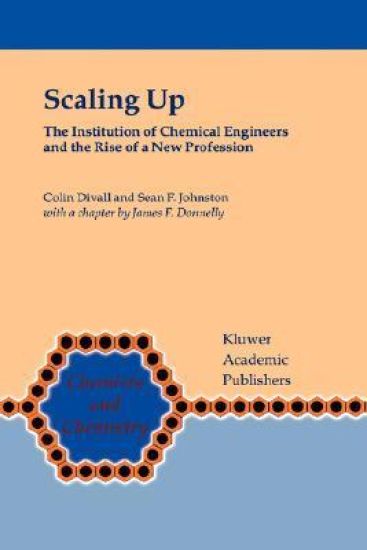
Scaling Up

Scaling Up

Colin Divall; Sean F. Johnston

Springer
2001
sidottu
Precursors of the modern chemical industry began to emerge in Northern Europe in the middle of the eighteenth century. The Industrial Revolution boosted activities such as soap-making, glassmaking and textiles production, which required increasing quantities of chemical products. The Lead Chamber process for the manufacture of sulphuric acid, required for the production of dye, was developed in the 1740s by John Roebuck then based in Birmingham. Production of this key commodity rose steadily. By the 1820s, British annual production had reached 10 000 tons of 100% acid. By 1900, Britain was producing one quarter of the world's output with an annual production approaching one million tons. Demand for alkalis for glassmaking and soap-making, for textile dyes and for bleach was also growing rapidly in the second half of the eighteenth century, and it became clear that existing sources of these materials would not be sufficient. In response to a prize established by the Academie des Sciences, Nicholas Leblanc had devised by 1791 a method for converting common salt into soda ash, which was to become the central operation of the world alkali industry for about one hundred years.