Kirjojen hintavertailu. Mukana 12 595 353 kirjaa ja 12 kauppaa.

Kirjailija

Colin Long

Kirjat ja teokset yhdessä paikassa: 2 kirjaa, julkaisuja vuosilta 2006-2010, suosituimpien joukossa Vientiane. Vertaile teosten hintoja ja tarkista saatavuus suomalaisista kirjakaupoista.

2 kirjaa

Kirjojen julkaisuhaarukka 2006-2010.

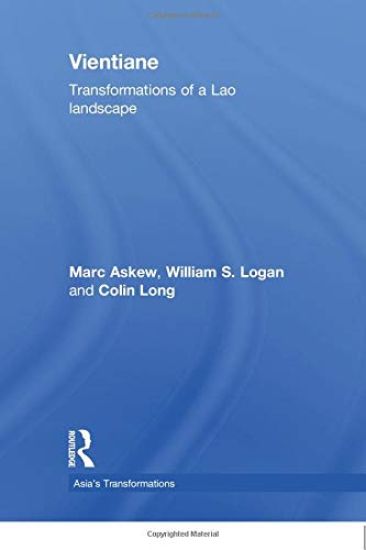
Vientiane

Vientiane

Marc Askew; Colin Long; William Logan

Routledge
2010
nidottu
Providing insights into this neglected Southeast Asian city, this interesting book interprets Vientiane’s landscape - physical as well as imagined - as a reflection of key aspects of Lao geo-political history, the nature of Lao urbanism, and its critical relation to constructions of Lao identity in the contemporary period. It is argued that the patterns of change seen through Vientiane’s past embody the key political and economic processes and transformations impacting on the people of Laos. The Lao urban past has rarely been an object of attention by scholars. Laos, in fact, is continually portrayed as a rural backwater, marginal to the dynamic trends affecting most of the Southeast Asian mainland. In contrast to these persistent and static portrayals of Laos as a tiny landlocked backwater, with no significant urban present or past, the authors aim to document, explain and evaluate the significance of the Lao urban landscape. Focusing on the theme of Vientiane’s ‘marginality’ in its various forms, the book interprets this apparent marginality as an historically-produced phenomenon resulting from geo-politics dating from the pre-colonial period and extending into the post-colonial period. Drawing on a wide range of research materials, Vientiane is the first work of its kind on this ignored city.
Vientiane

Vientiane

Marc Askew; Colin Long; William Logan

Routledge
2006
sidottu
Providing insights into this neglected Southeast Asian city, this interesting book interprets Vientiane’s landscape - physical as well as imagined - as a reflection of key aspects of Lao geo-political history, the nature of Lao urbanism, and its critical relation to constructions of Lao identity in the contemporary period. It is argued that the patterns of change seen through Vientiane’s past embody the key political and economic processes and transformations impacting on the people of Laos. The Lao urban past has rarely been an object of attention by scholars. Laos, in fact, is continually portrayed as a rural backwater, marginal to the dynamic trends affecting most of the Southeast Asian mainland. In contrast to these persistent and static portrayals of Laos as a tiny landlocked backwater, with no significant urban present or past, the authors aim to document, explain and evaluate the significance of the Lao urban landscape. Focusing on the theme of Vientiane’s ‘marginality’ in its various forms, the book interprets this apparent marginality as an historically-produced phenomenon resulting from geo-politics dating from the pre-colonial period and extending into the post-colonial period. Drawing on a wide range of research materials, Vientiane is the first work of its kind on this ignored city.