

Kirjailija
Colin Wilson
Kirjat ja teokset yhdessä paikassa: 50 kirjaa, julkaisuja vuosilta 1968-2023, suosituimpien joukossa Rudolf Steiner. Vertaile teosten hintoja ja tarkista saatavuus suomalaisista kirjakaupoista.
50 kirjaa
Kirjojen julkaisuhaarukka 1968-2023.
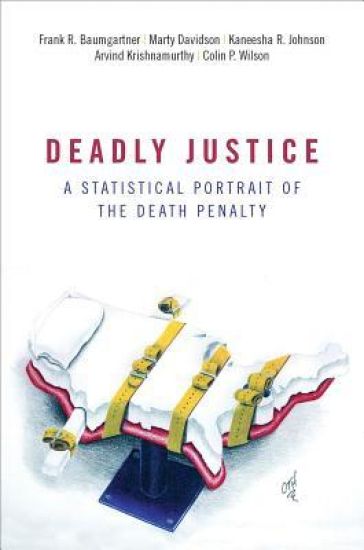
Deadly Justice
Frank Baumgartner; Marty Davidson; Kaneesha Johnson; Arvind Krishnamurthy; Colin Wilson
Oxford University Press Inc
2018
nidottu
In 1976, the US Supreme Court ruled in Gregg v. Georgia that the death penalty was constitutional if it complied with certain specific provisions designed to ensure that it was reserved for the 'worst of the worst.' The same court had rejected the death penalty just four years before in the Furman decision because it found that the penalty had been applied in a capricious and arbitrary manner. The 1976 decision ushered in the 'modern' period of the US death penalty, setting the country on a course to execute over 1,400 inmates in the ensuing years, with over 8,000 individuals currently sentenced to die. Now, forty years after the decision, the eminent political scientist Frank Baumgartner along with a team of younger scholars (Marty Davidson, Kaneesha Johnson, Arvind Krishnamurthy, and Colin Wilson) have collaborated to assess the empirical record and provide a definitive account of how the death penalty has been implemented. Each chapter addresses a precise empirical question and provides evidence, not opinion, about whether how the modern death penalty has functioned. They decided to write the book after Justice Breyer issued a dissent in a 2015 death penalty case in which he asked for a full briefing on the constitutionality of the death penalty. In particular, they assess the extent to which the modern death penalty has met the aspirations of Gregg or continues to suffer from the flaws that caused its rejection in Furman. To answer this question, they provide the most comprehensive statistical account yet of the workings of the capital punishment system. Authoritative and pithy, the book is intended for both students in a wide variety of fields, researchers studying the topic, and--not least--the Supreme Court itself.
Deadly Justice
Frank Baumgartner; Marty Davidson; Kaneesha Johnson; Arvind Krishnamurthy; Colin Wilson
Oxford University Press Inc
2018
sidottu
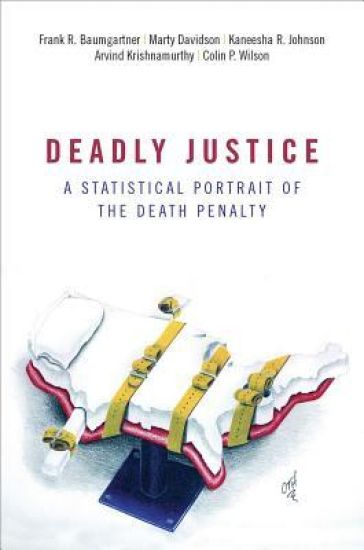
In 1976, the US Supreme Court ruled in Gregg v. Georgia that the death penalty was constitutional if it complied with certain specific provisions designed to ensure that it was reserved for the 'worst of the worst.' The same court had rejected the death penalty just four years before in the Furman decision because it found that the penalty had been applied in a capricious and arbitrary manner. The 1976 decision ushered in the 'modern' period of the US death penalty, setting the country on a course to execute over 1,400 inmates in the ensuing years, with over 8,000 individuals currently sentenced to die. Now, forty years after the decision, the eminent political scientist Frank Baumgartner along with a team of younger scholars (Marty Davidson, Kaneesha Johnson, Arvind Krishnamurthy, and Colin Wilson) have collaborated to assess the empirical record and provide a definitive account of how the death penalty has been implemented. Each chapter addresses a precise empirical question and provides evidence, not opinion, about whether how the modern death penalty has functioned. They decided to write the book after Justice Breyer issued a dissent in a 2015 death penalty case in which he asked for a full briefing on the constitutionality of the death penalty. In particular, they assess the extent to which the modern death penalty has met the aspirations of Gregg or continues to suffer from the flaws that caused its rejection in Furman. To answer this question, they provide the most comprehensive statistical account yet of the workings of the capital punishment system. Authoritative and pithy, the book is intended for both students in a wide variety of fields, researchers studying the topic, and--not least--the Supreme Court itself.
Religion and the Rebel, Colin Wilson's second volume from his internationally acclaimed Outsider Cycle, is a casebook about and for rebels. With inspirational wisdom and engaging clarity, Wilson shows us that the purpose of religion, of our personal relationship with the sacred and the all-pervading mystery of existence, is to expand our consciousness and intensify our sense of life. Wilson heroically claims that the power to create meaning resides in our mental and spiritual discipline. Examining the lives and works of Nietzsche, Kierkegaard, Rilke, Shaw, Pascal, Swedenborg, Rimbaud and Scott Fitzgerald, among others, Wilson explores the main existential questions and shows how these remarkable writers, scientists, philosophers and poets faced their need for transcendence. Like many of us, they were driven by a need to become more than men. Religion and the Rebel is an outstanding and enjoyable book that combines philosophical analysis, historical interest, and religious insight.

Colin Wilson's classic exploration of the rebel as genius, with a new introduction by Gary Lachman. When the upstart English writer Colin Wilson debuted on the literary scene with The Outsider in 1956, it marked one of the opening notes of the cultural revolution of the sixties. Wilson celebrated the misfit not as a figure be "fixed" and reintegrated into society, but as a lone journeyer who often had a stirring artistic, political, or spiritual innovation to convey to society. Wilson lived this book as much as wrote it. As an impoverished 23-year-old, the Englishman slept in a tent in a London park so that he could be free of material demands to dedicate himself fully to his study. When The Outsider appeared in 1956, it became a sensation among both critics and beats, who formed the vanguard of the dawning Aquarian Age. In Wilson's epic exploration of mystics, visionaries, literary pioneers, political troublemakers, and rule breakers of all sorts, he evoked a new kind of heroism, which changed how we view ourselves and our purpose in life. The Outsider is now reissued and reset in a beautiful Tarcher Cornerstone Edition, with a new introduction by Wilson's friend and biographer, Gary Lachman. This new volume coincides with Tarcher's publication of Lachman's biography of Wilson, Beyond the Robot.
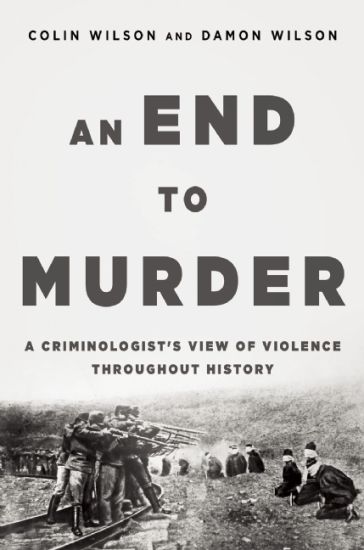
An End to Murder: A Criminologist's View of Violence Throughout History
Colin Wilson; Damon Wilson
Skyhorse Publishing
2015
sidottu
Human beings have always been cruel, savage, and murderous. Is that all about to change? Human history can be seen as a catalog of coldhearted murders, mindless blood feuds, appalling massacres, and devastating wars. Creatively and intellectually, there is no other species that has ever come close to equaling humanity's achievements, but neither is any other species as suicidally prone to internecine conflict. We are the only species on the planet whose ingrained habit of conflict and perpetual warfare constitutes the chief threat to our own survival. In An End to Murder, the Wilsons assess whether human beings are in reality as cruel and violent as is generally believed. The book explores the possibility that humankind is on the verge of a fundamental change: that we are about to become truly civilized. Covering a wide-reaching history of violence from the first hominids to the twenty-first century, the book touches on key moments of change while also indicating where things have not changed since the Stone Age. It follows the history of violence from fifteenth-century baron Gilles de Rais ("Bluebeard"), the first known and possibly most prolific serial killer in history; to Victorian domestic murder, the invention of psychiatry, Sherlock Holmes, and the invention of forensic science; the fifteenth-century Taiping Rebellion in China, in which more than twenty million died; World Wars I and II; more recent genocides and instances of "ethnic cleansing"; and contemporary terrorism. As well as offering an overview of violence throughout our history, the authors explore the latest psychological, forensic, and social attempts to understand and curb modern human violence.

Creatively and intellectually there is no other species that has ever come close to equalling humanity's achievements, but nor is any other species as suicidally prone to internecine conflict. We are the only species on the planet whose ingrained habit of conflict constitutes the chief threat to our own survival. Human history can be seen as a catalogue of cold-hearted murders, mindless blood-feuds, appalling massacres and devastating wars, but, with developments in forensic science and modern psychology, and with raised education levels throughout the world, might it soon be possible to reign in humanity's homicidal habits? Falling violent crime statistics in every part of the world seem to indicate that something along those lines might indeed be happening. Colin and Damon Wilson, who between them have been covering the field of criminology for over fifty years, offer an analysis of the overall spectrum of human violence. They consider whether human beings are in reality as cruel and violent as is generally believed and they explore the possibility that humankind is on the verge of a fundamental change: that we are about to become truly civilised. As well as offering an overview of violence throughout our history - from the first hominids to the twenty-first century, touching on key moments of change and also indicating where things have not changed since the Stone Age - they explore the latest psychological, forensic and social attempts to understand and curb modern human violence. To begin with, they examine questions such as: Were the first humans cannibalistic? Did the birth of civilisation also lead to the invention of war and slavery? Priests and kings brought social stability, but were they also the instigators of the first mass murders? Is it in fact wealth that is the ultimate weapon? They look at slavery and ancient Roman sadism, but also the possibility that our own distaste for pain and cruelty is no more than a social construct. They show how the humanitarian ideas of the great religious innovators all too quickly became distorted by organised religious structures. The book ranges widely, from fifteenth-century Baron Gilles de Rais, `Bluebeard', the first known and possibly most prolific serial killer in history, to Victorian domestic murder and the invention of psychiatry and Sherlock Holmes and the invention of forensic science; from the fifteenth-century Taiping Rebellion in China, in which up to 36 million died to the First and Second World Wars and more recent genocides and instances of `ethnic cleansing', and contemporary terrorism. They conclude by assessing the very real possibility that the internet and the greater freedom of information it has brought is leading, gradually, to a profoundly more civilised world than at any time in the past.
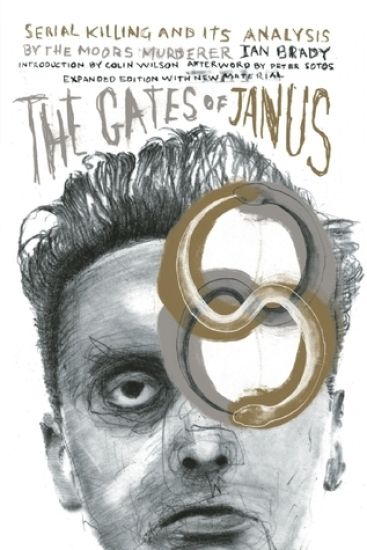
Ian Brady and Myra Hindley's spree of torture, sexual abuse, and murder of children in the 1960s was one of the most appalling series of crimes ever committed in England, and remains almost daily fixated upon by the tabloid press. In The Gates of Janus, Ian Brady himself allows us a glimpse into the mind of a murderer as he analyzes a dozen other serial crimes and killers.Criminal profiling by a criminal was not invented by the dramatists of Dexter.Novelist and true-crime writer Colin Wilson, author of the famous and influential book The Outsider, remarks in his introduction to Brady's book that one must first explore the depraved reaches of human consciousness to truly understand human character.When first released in 2001, The Gates of Janus sparked controversy attended by a huge media splash. The new edition, the first in paperback, provides the reader with a decade and a half of updates, including Brady's letters to the publisher, both providing information regarding his own demented history along with demands that Feral House remove its unflattering afterword written by author Peter Sotos.




The Stature of Man: An Essay on the Concept of the Hero
Colin Wilson
Literary Licensing, LLC
2012
nidottu

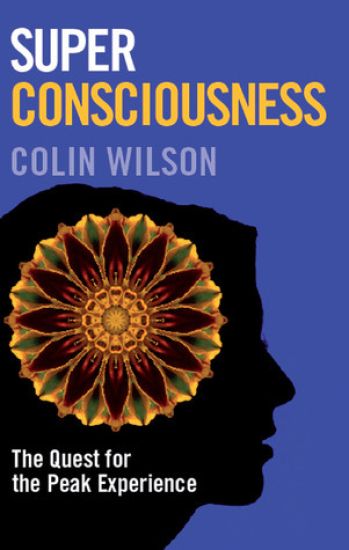
Super Consciousness: The Quest for the Peak Experience
Colin Stanley; Colin Wilson
Watkins Publishing
2009
nidottu
Blending existential and occult thought, a highly acclaimed author and scholar explains how we can find profound meaning and joy by inducing states of extreme awareness and emotion Throughout history there have been references and examples in literature, art and philosophy of an increased awareness of life while under the influence of extreme emotions. These have become known as Peak Experiences. Soon after Colin Wilson became aware of this phenomenon in the 1960s, he wondered about its history and how its power could be harnessed, and began an forty-year investigation. In Super Consciousness, we see how such luminaries as Yeats, Blake, Sartre, Nietzsche, and Robert Graves were affected by Peak Experiences, and how it has long been noted that we are least insightful when we are at our lowest ebb. By looking in detail through the different areas where this phenomenon has occurred--and by offering anecdotes and examples of how many people in history (as well as himself) were affected--Wilson reveals a pattern of insight with emotions. He ends the book with an instructional section on achieving power consciousness for yourself.

Twenty years after writing "The Occult", Colin Wilson re-examines the whole spectrum of the mystical and paranormal, producing a general occult theory that is as convincing and powerful as the evidence for the existence of atomic particles. A huge amount of new material has come to light in the past two decades, revealing new perspectives on many aspects of this crucially important subject. Linking fascinating glimpses into the realm of the paranormal with scientific thinking on the nature of 'physical' reality, he begins his study with the powers of the human mind: ESP, clairvoyance, psychometry, precognition, psychokinesis and dowsing.He then moves on to consider the more mysterious topics - poltergeists, spirit possession and reincarnation - that have convinced him of the reality of disembodied spirits. In "Beyond the Occult" Colin Wilson puts forward a powerful case that our so-called 'normal' experience may in fact be subnormal, and that evolution may have brought us near the edge of a quantum leap into a hugely expanded human consciousness.
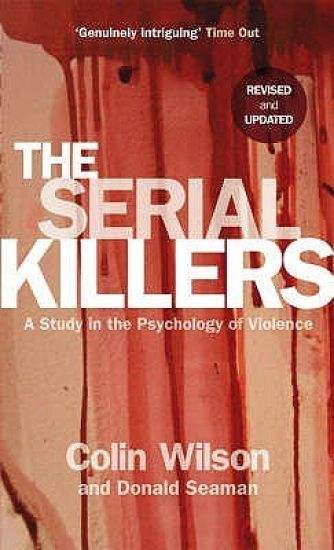
As the number of serial killers worldwide has risen steadily - from the emergence of Jack the Ripper in 1888 to Harold Shipman and Ivan Milat, the backpacker killer of the Australian outback - the need to understand mass murder is becoming more urgent.
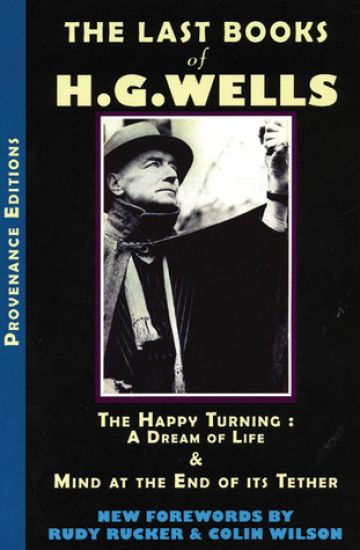
The Last Books of H.G. Wells
HG Wells; Rudy Rucker; Colin Wilson
Monkfish Book Publishing Company
2006
pokkari
This volume contains the two last works by HG Wells. Nearing the end of his life, increasingly distressed over the war, Wells deals with death and apocalypse, mortality and religion, and with "human insufficiency." Mind at the End of its Tether "One approaches it with awe. You come across references to it everywhere: Colin Wilson, Priestly, Koestler. It seems to have been a wounding work; something no one could agree with, but something that couldn't be taken lightly."--Art Beck "In the face of our universal inadequacy . . . man must go steeply up or down and the odds seem to be all in favor of his going down and out. If he goes up, then so great is the adaptation demanded of him that he must cease to be a man. Ordinary man is at the end of his tether."--HG Wells The Happy Turning Wells' barbed fantasies about the afterlife take the forms of "happy" dream walks. In one he converses with Jesus: But being crucified upon the irreparable things that one has done, realizing that one has failed, that you have let yourself down and your poor silly disciples down and mankind down, that the God in you has deserted you--that was the ultimate torment. Even on the cross I remember shouting out something about it.""Eli. Eli, lama sabachthani?" I said."Did someone get that down?" he replied."Don't you read the Gospels?""Good God, No " he said. "How can I? I was crucified before all that."