Kirjojen hintavertailu. Mukana 12 390 323 kirjaa ja 12 kauppaa.
Kirjailija
Colwyn Trevarthen
Kirjat ja teokset yhdessä paikassa: 7 kirjaa, julkaisuja vuosilta 1998-2024, suosituimpien joukossa Inklusion, leg og empati. Vertaile teosten hintoja ja tarkista saatavuus suomalaisista kirjakaupoista.
Inklusion, leg og empati er skrevet til lærere, pædagoger, psykologer og andre, der arbejder med børn, og som gerne vil etablere følelsesmæssigt modnende gruppefællesskaber med 4-12-årige børn. Bogens forfattere er fagpersoner fra mange steder i verden, som alle har støttet børns udviklingsproces gennem kreative tilgange, så børnene har fået mulighed for at udvikle sig til personer med en høj mentaliseringskapacitet, som kan indgå i konstruktive fællesskaber. Alle bogens kapitler handler om, hvordan gruppeoplevelser bidrager til og understøtter børns voksende kapacitet til at indgå i konstruktive og livsbekræftende samspil med andre. I denne nye udgave af bogen er kapitlet om det udviklingsbaserede børnegruppeprogram NUSSA blevet omskrevet, da programmet er overtaget af Susan Hart og tilpasset neuroaffektiv udviklingspsykologi. ”Når børn kommer i skole, møder de udfordringen i at tilegne sig nye kognitive færdigheder, men en lige så vigtig udfordring ligger i at tilegne sig nye former for samspil med en bredere gruppe af andre børn og voksne […] Kapitlerne i denne bog inviterer os til at se på de mange kreative metoder, forfatterne har fundet til at udstrække de kvaliteter og fordele, der kendetegner tidlige, legende og afstemte dyadiske relationer, til arbejdet med større børn i grupper.” Phyllis Booth i bogens forord
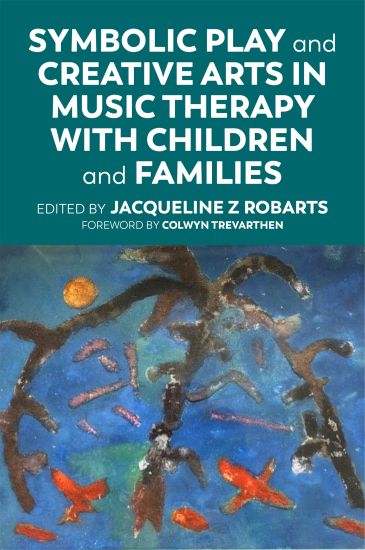
With verbal children and families increasingly referred to music therapy, this edited book explores the topic of play in music therapy and sets itself apart by focusing on child-led play and symbolic play.The book presents a wide range of experienced music therapists' creativity and professional skills in integrating music and expressive arts modalities, from musical, developmental, attachment, and psychodynamic perspectives. Examining the question of how all the expressive arts are intrinsic to music or 'mousike', the chapters explore various styles, clinical and theoretical approaches, providing a deeper understanding of play and symbolic play processes and the different ways they arise and are worked with in music therapy. Including chapters from diverse settings, and addressing work across age groups with children with emotional difficulties, attachment problems, early trauma, as well as children with autism, this comprehensive book is essential for music and other creative therapists who work with children in all forms of play, expressing their feelings, imaginations and internal worlds.
This third edition of the book was released after Jeremy Nahum's death and it is dedicated to the memory of three pioneers of the dialogue between psychoanalysis and infant research: Daniel Stern, Berry Brazelton and Jeremy Nahum. The book opens with Daniel S. Schechter's Memories of Dan Stern and Karlen Lyons-Ruth's Tribute to Jeremy Nahum. After the introduction written by the editor, Giuseppe Leo, the development of infant research methodologies is illustrated by the contribution written by Beatrice Beebe, whose 'journey' leads us through the 'creating' of a discipline with its creators, her traveling companions, such as Daniel Stern, Frank Lachmann, Joseph Jaffe and many others. Trevarthen's chapter is a discussion of his work with T. Berry Brazelton. Tronick's contribution focuses on mother-infant dyad as well as on analyst-patient one, conceived as open dynamic systems, capable of meaning making, in which coherence is at best imperfect, and coordination alternates with mismatching. Karlen Lyons-Ruth and Jeremy Nahum, two of the members of the Boston Change Process Study Group, focus on the representational world of the mother, particularly on the assessment of mother's representation of role-confusion in her relation with her child.
Roots of Musicality offers an accessible and original theoretical approach to a holistic music therapy based on the notion of musicality as an expression of self, with the power to energise, balance and harmonise.The author considers neuroscience and psychobiology to identify analogies with the potential of musical expression to bring about therapeutic change, as observed during his work with children with autistic spectrum and pervasive developmental disorders. Perret also explores the five elements - earth, water, fire, air and space - as means of connecting nature and human spirit. Taken together, these two approaches are instrumental in bridging the gap between music and life and fostering the expression and development of personal energy and spirit in a range of contexts, from arts therapy, music education, performance, and personal and spiritual growth.Roots of Musicality is a key text for music therapists, art therapists, sound healers, music teachers and musicians. It will be of particular interest to those using music therapy with children on the autism spectrum.
Increasingly, music therapy is being practised as an intervention in medical and special educational settings. Focusing on clinical work with developmental disability, paediatrics and neurology, this book informs music therapists through case studies and analyses of theory and practice. The contributors are specialised music therapists who have worked with premature infants in intensive care, children with physical and learning disabilities, children with autism, emotionally disturbed teenagers and adults with neurological illnesses. They describe and explain the planning and evaluation of music therapy intervention, how music therapy can be used for assessing complex organic and emotional disabilities, and aspects of supervision for the professional music therapist.Reflecting on and developing the applications of music therapy, this collection will help establish effective therapy methods in which the creative use of music is employed by skilled and clinically experienced music therapists in a client-oriented interactive process.Clinical Applications of Music Therapy in Psychiatry, & Clinical Applications of Music Therapy in Developmental Disability, Paediatrics and Neurology 2 volume set
This completely revised and substantially expanded new edition embraces new developments in this rapidly developing field. Every chapter has been rewritten with the addition of new material, and a new final chapter on `Putting the Pieces Together' reflects the authors' conviction that the complexity of autism means that many kinds of information are valuable and need to be taken into account in providing therapy or teaching for children with autism.Other chapters, updated from the first edition, include a description of the latest information on the findings of brain research (put into the context of the development of the human brain and its effect on communication in early childhood), and the contributions of music therapy and psychoanalysis. A very much enlarged chapter on educational provision for children with autism and Asperger's Syndrome provides information on the latest methods for improving the learning of these children, to give them the best possible preparation for a life of greater autonomy and maximum self-satisfaction in the pleasure of human company. New appendices summarise medical diagnostic systems, checklists and questionnaires for identifying autism, and the glossary has been considerably expanded. The wealth of up-to-date information provided will be invaluable not only for researchers and students but also for psychologists, teachers and other professionals, and parents, carers and family members in search of comprehensive and helpful information.